Artwork
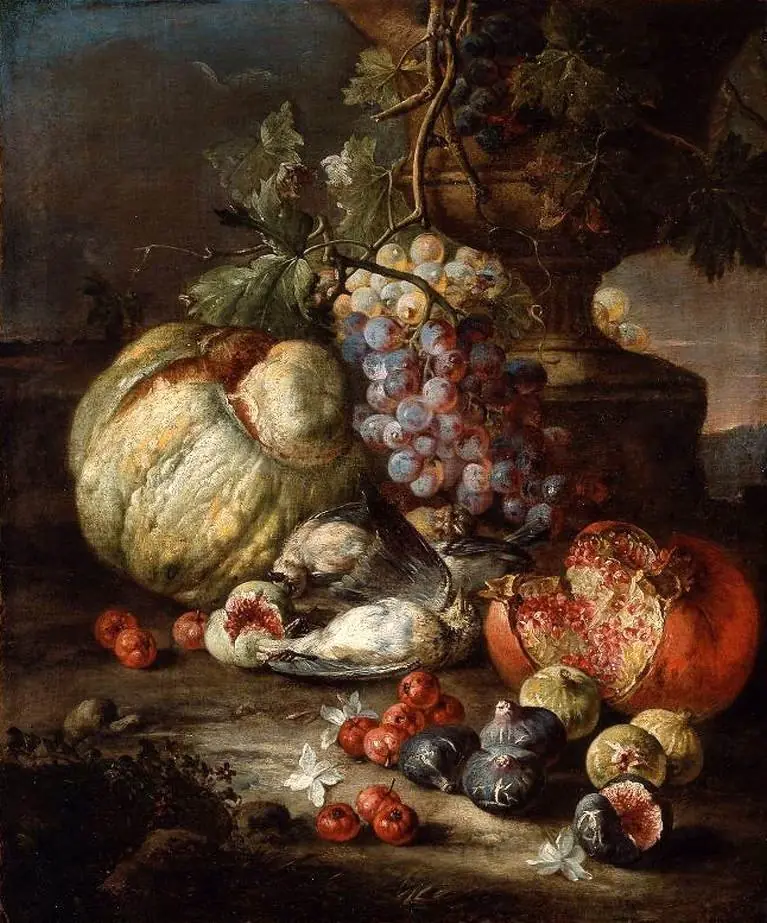
Still life of fruits with pomegranates and figs
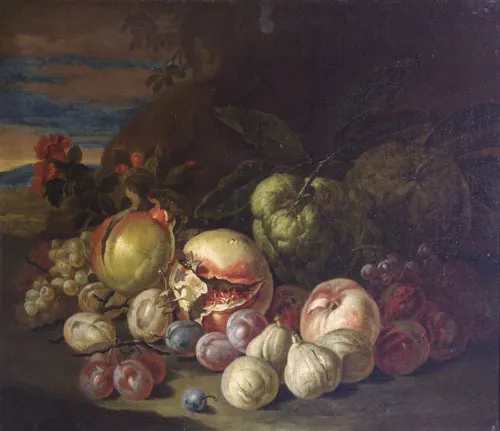
Still life of fruits with pomegranates and figs is an oil painting by the Rococo painting artist Jakob Bogdani. It dates from 1700 and is held in the collection of the Hungarian National Gallery.
About this work
Overview
Painted in 1700 by Jakob Bogdani, this oil-on-canvas still life presents a carefully arranged heap of fruits, prominently featuring pomegranates and figs.
Painted in 1700 by Jakob Bogdani, this oil-on-canvas still life presents a carefully arranged heap of fruits, prominently featuring pomegranates and figs. Bogdani, a Hungarian artist who spent much of his career in Britain, specialized in detailed naturalistic compositions. The work reflects the conventions of early 18th-century still life painting, emphasizing texture, form, and the quiet drama of everyday objects.
Subject & Meaning
The arrangement includes whole and halved fruits, revealing their internal structures—seeds, pulp, and membranes. This focus on interior detail suggests an interest in natural science and the hidden complexity of organic forms. While not overtly symbolic, the inclusion of exotic fruits like pomegranates may hint at global trade networks and the curiosity-driven collecting culture of the period.
Technique & Style
Bogdani employed subtle chiaroscuro to model the fruits with quiet realism, using soft transitions between light and shadow to suggest volume. The muted palette of greens, deep reds, and ochres enhances the tactile quality of skins, flesh, and rinds. Brushwork is precise but unobtrusive, prioritizing fidelity to nature over decorative flourish, aligning more with Dutch traditions than the ornate Rococo style often associated with the era.
History & Provenance
The painting has been part of the Hungarian National Gallery’s collection since at least the 19th century, likely acquired as part of broader efforts to preserve works by Hungarian artists abroad. Bogdani’s Hungarian origins and his international career made his work a point of cultural interest in his homeland, even though he lived and worked primarily in England.
Context
In early 18th-century Europe, still lifes often served as vehicles for observing nature with scientific precision. Bogdani’s work aligns with a broader trend among artists who combined artistic skill with empirical observation. While his bird paintings gained more contemporary attention, this fruit composition reflects the same meticulous attention to biological detail, rooted in the legacy of Dutch Golden Age still life.
Legacy
Though less widely known than his contemporaries, Bogdani’s still lifes contribute to the understanding of Central European artists working within broader European traditions. His careful rendering of fruit textures and use of shadow influenced later Hungarian painters interested in naturalism. This painting remains a quiet testament to the cross-cultural exchange of artistic techniques in the early modern period.
Artist & collection
Artist
Jakob Bogdani (6 May 1658 - 11 November 1724), whose names are sometimes spelt Jacob and Bogdány, was a Hungarian and British artist well known for his still life and exotic bird paintings.

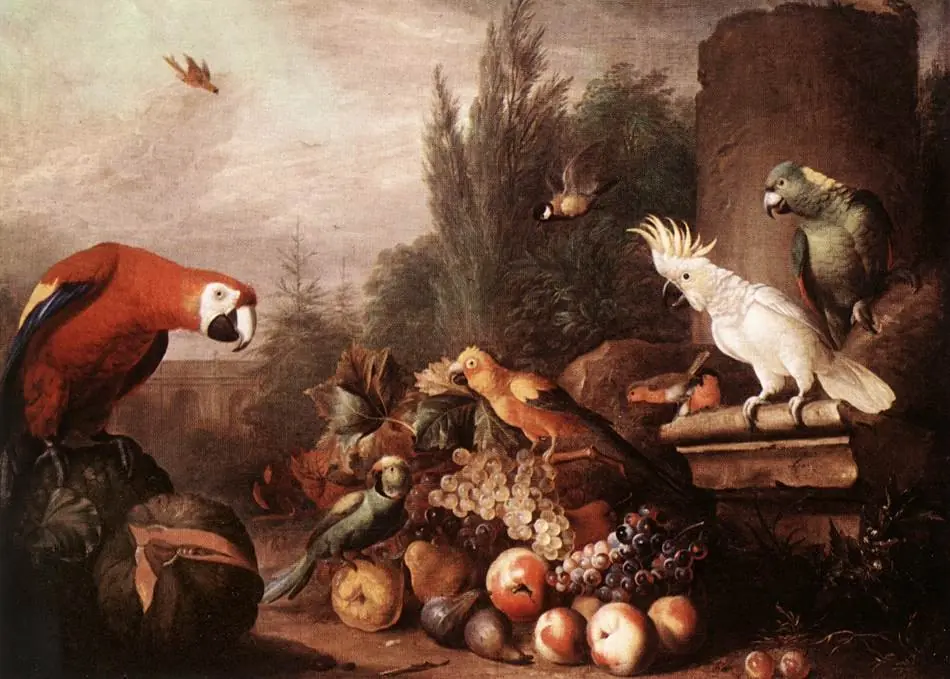 Still-life with Fruits, Parrots and White Cockatoo
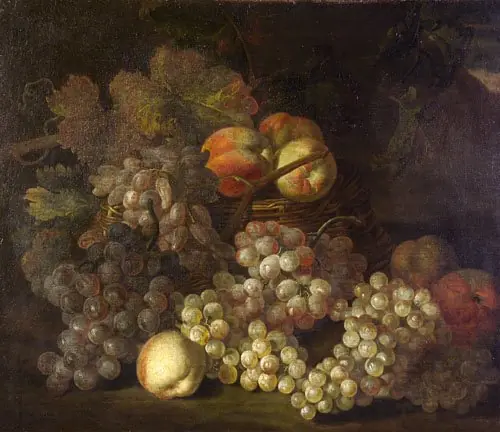 Fruit in a Wicker Basket: Grapes and Peaches
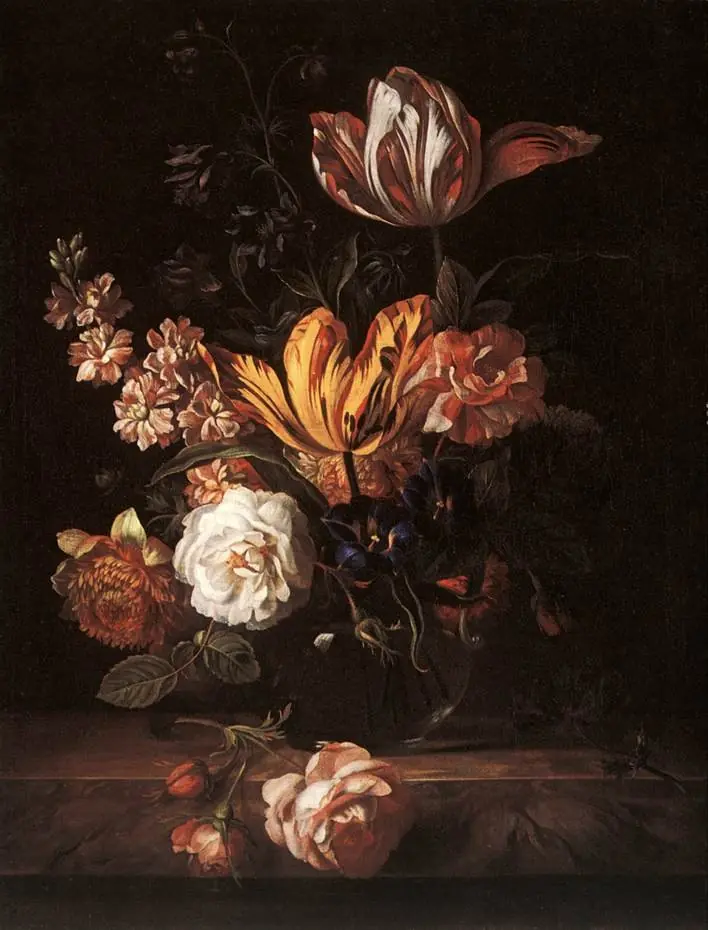 Flowers in a glass vase
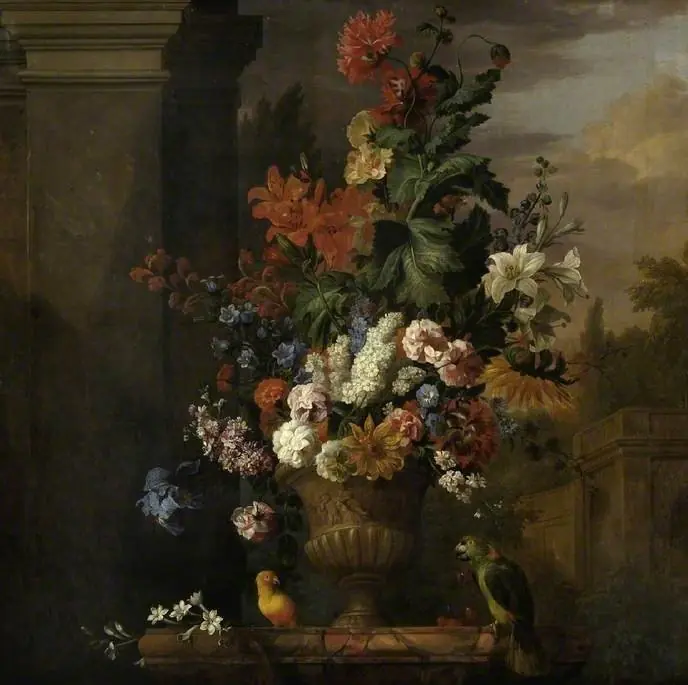 A stone vase of flowers
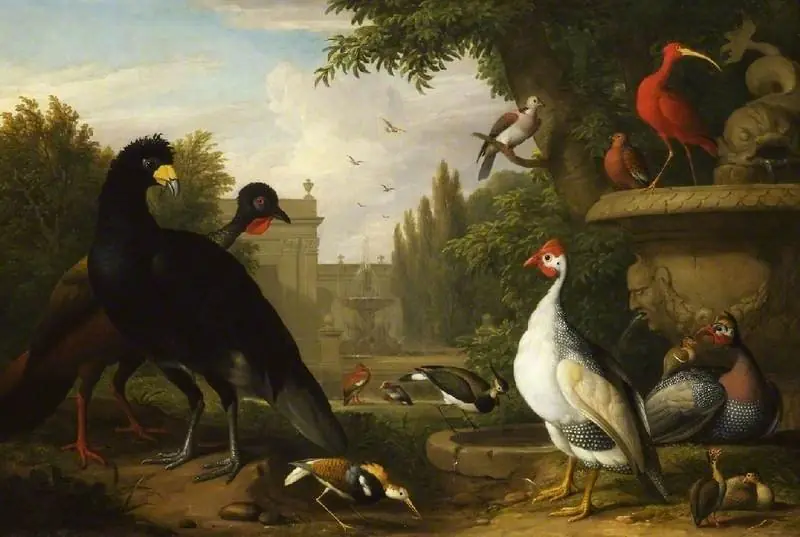 Exotic fowl in an ornamental garden beside a stone vase, a fountain beyond
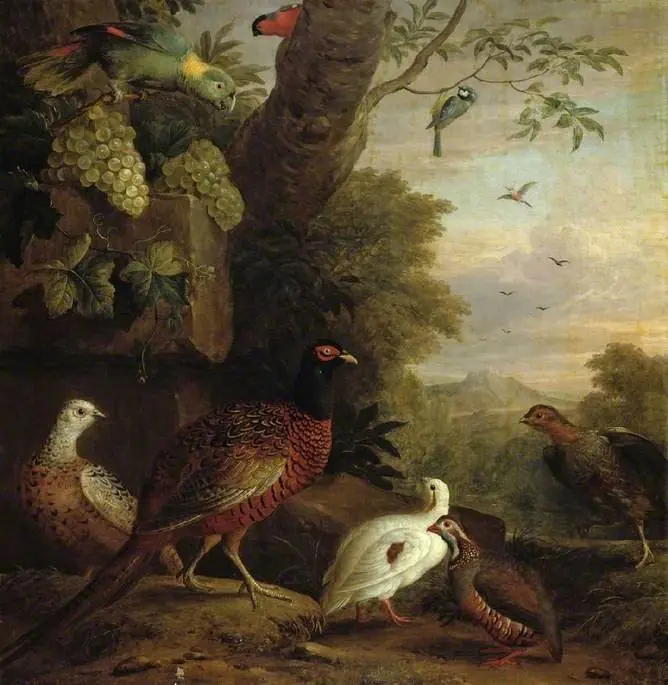 Birds in a landscape
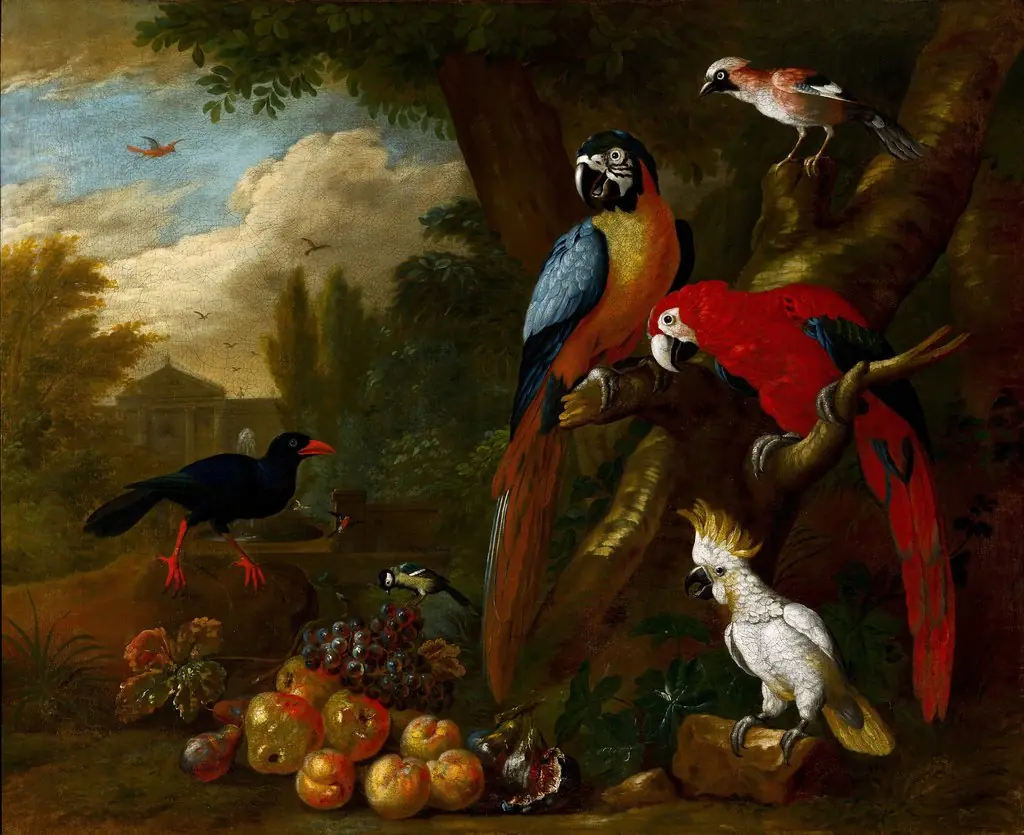 Two Macaws, a Cockatoo and a Jay, with Fruit
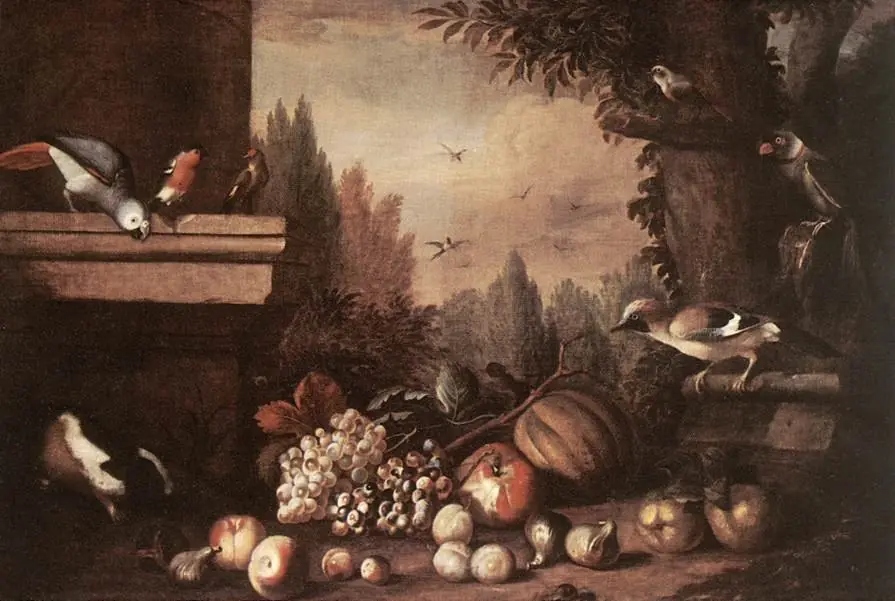 Fruit with Birds and Guinea-pig