Artwork
Mater amabilis
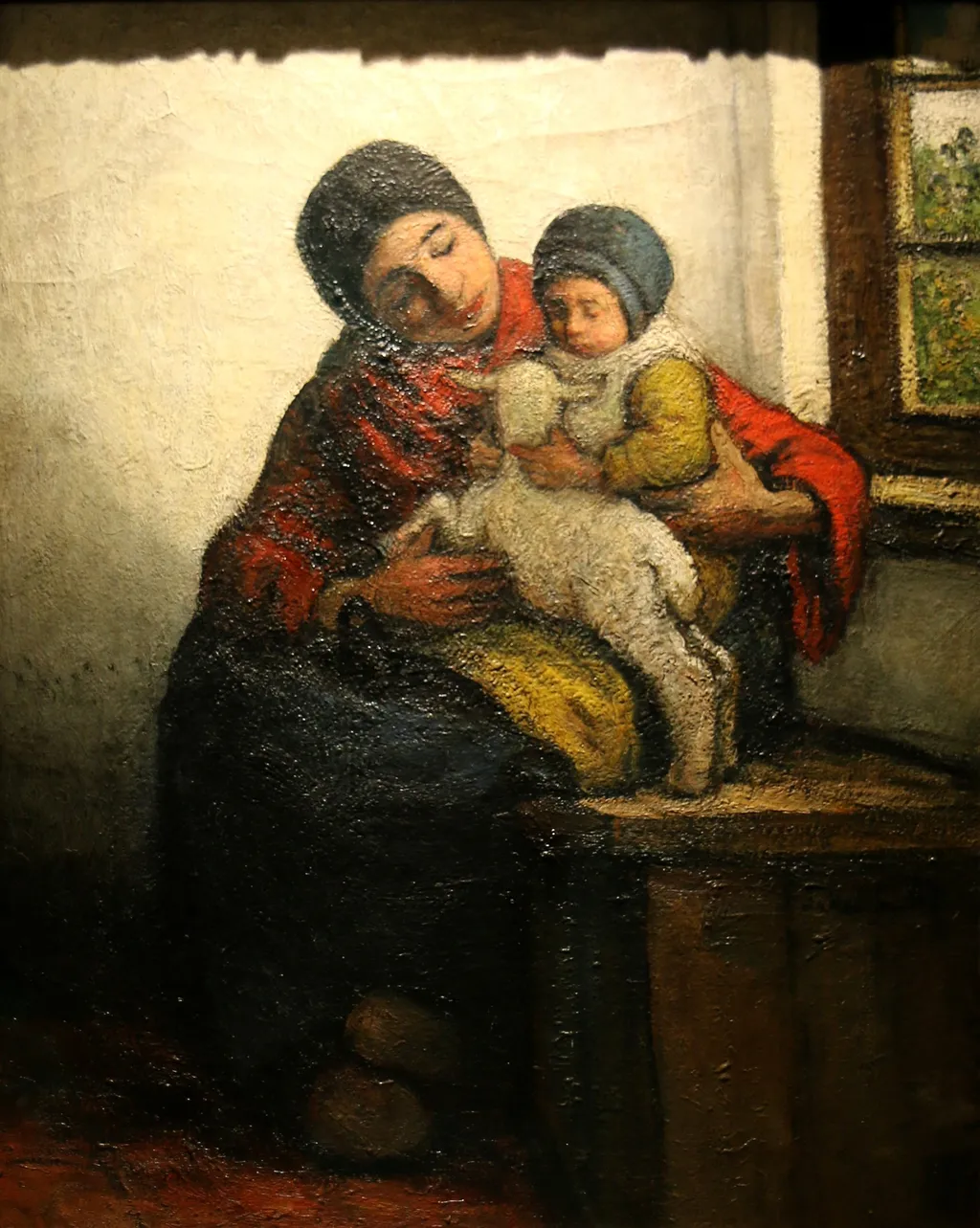
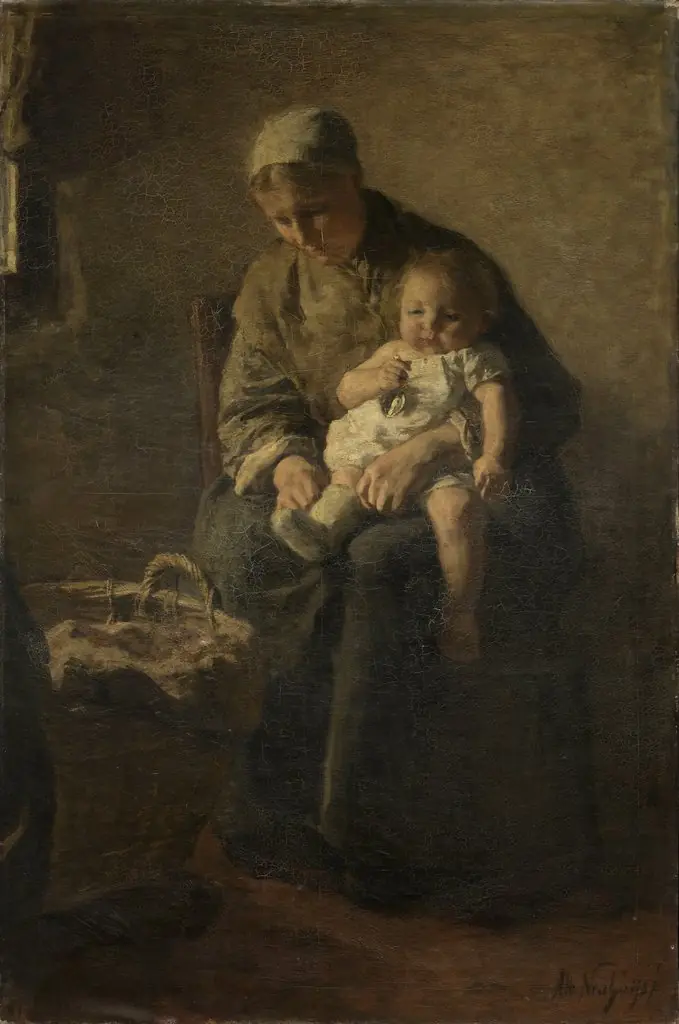
Mater amabilis is an oil painting by the Post-Impressionist artist Jakob Smits. It dates from 1901 and is held in the collection of the Royal Museums of Fine Arts of Belgium.
About this work
Overview
Painted in 1901 by Jakob Smits, Mater amabilis is an oil-on-canvas work currently in the collection of the Royal Museums of Fine Arts of Belgium.
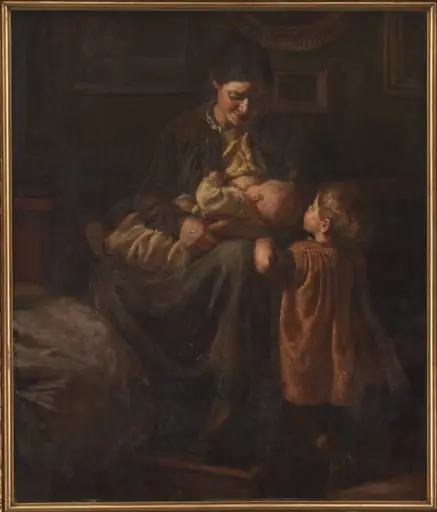
Painted in 1901 by Jakob Smits, Mater amabilis is an oil-on-canvas work currently in the collection of the Royal Museums of Fine Arts of Belgium. It presents a quiet domestic moment, focusing on a mother and infant in a modest interior. The composition is restrained, emphasizing emotional stillness over narrative detail. Smits uses subtle lighting and muted tones to anchor the scene in a sense of private, unremarkable time.
Subject & Meaning
The painting portrays a mother cradling her infant, her gaze soft and inward, suggesting contemplation rather than performance. The title, Latin for 'lovable mother,' frames the image as an archetype of maternal care, stripped of religious or idealized symbolism. The absence of ornament or context reinforces the universality of the moment, inviting recognition of tenderness in ordinary life.
Technique & Style
Smits employs a restrained chiaroscuro to model the figures, with light falling gently from a window on the right, defining the contours of the mother’s shawl and the child’s hat without harsh contrast. Colors are subdued—deep red, black, and muted yellow—creating harmony rather than drama. Brushwork is smooth and deliberate, avoiding texture or flourish, which enhances the painting’s quiet, intimate tone.
History & Provenance
Completed in 1901, the painting entered the collection of the Royal Museums of Fine Arts of Belgium shortly after its creation. It has remained in public ownership since, with no documented private transactions. Its presence in the museum’s holdings reflects institutional interest in early 20th-century Belgian genre painting, particularly works that emphasize emotional realism over spectacle.
Context
Created during a period when Belgian artists were turning toward intimate, everyday subjects, Mater amabilis aligns with broader trends in regional realism. Unlike the symbolic or mythological themes favored in academic circles, Smits focused on unadorned domestic life, echoing influences from Dutch and French genre painting. The work reflects a cultural shift toward valuing private emotion as worthy of artistic attention.
Legacy
Though not widely exhibited beyond Belgian collections, Mater amabilis remains a quiet example of early 20th-century Flemish realism. It contributes to the understanding of how artists like Smits redefined maternal imagery without religious or romantic tropes. Its endurance in museum storage suggests a sustained, if understated, appreciation for its emotional restraint and technical clarity.
Artist & collection


Museum
Royal Museums of Fine Arts of Belgium
Continue through works from the same source collection.