Artwork
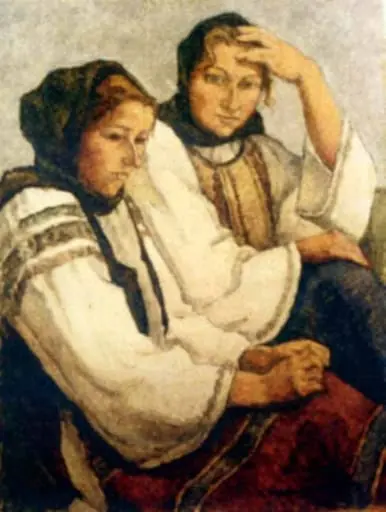
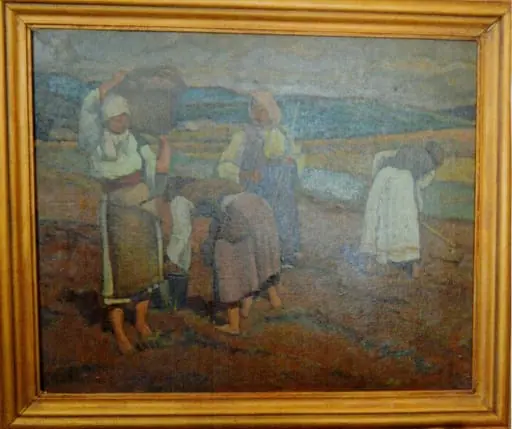
Compoziție cu țărănci
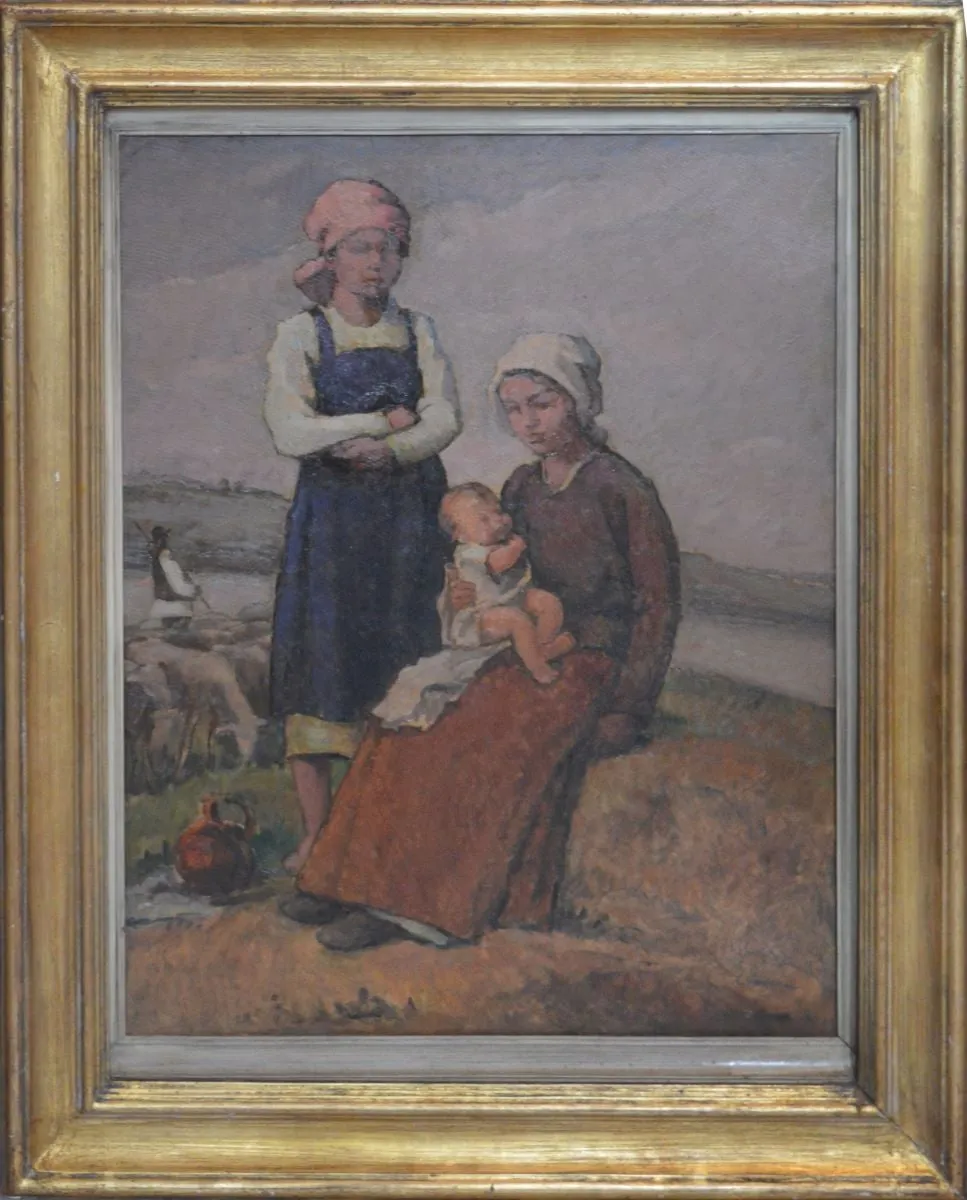
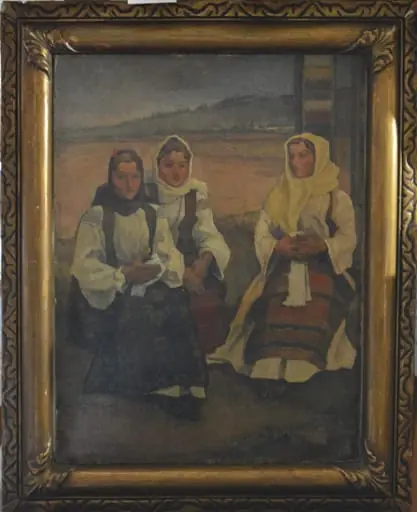
Compoziție cu țărănci is a print by Camil Ressu. It dates from 1930 and is held in the collection of the Bucharest Municipality Museum.
About this work
Overview
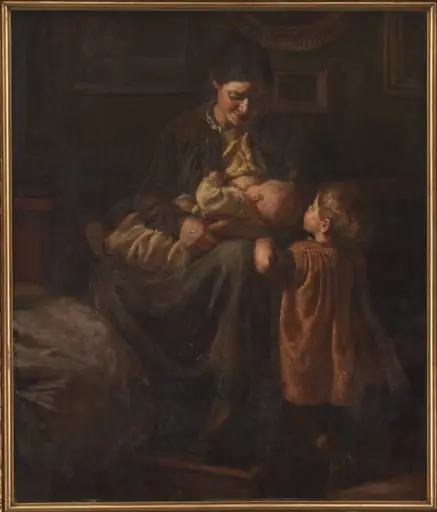
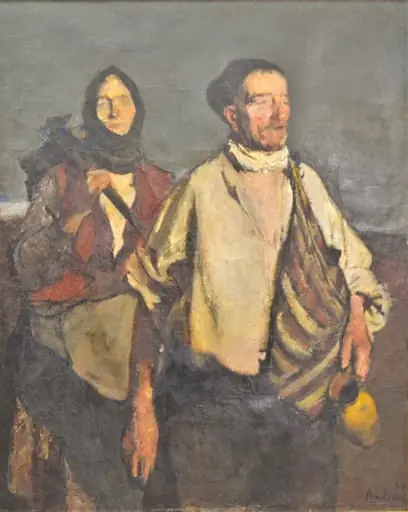
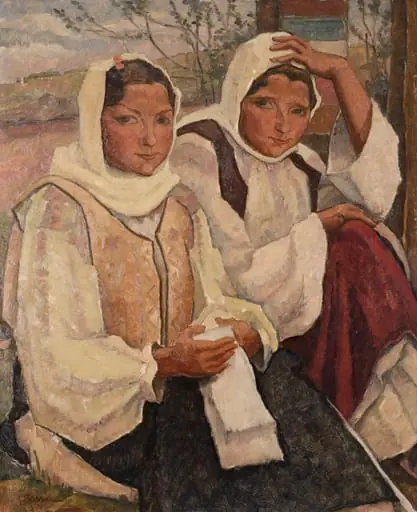
Painted around 1930 by Camil Ressu, this work depicts rural women in a quiet outdoor setting. It is part of the collection at the Museum of Ethnography, where it serves as a record of Romanian peasant life in the early 20th century. The composition centers on three figures arranged in a calm, grounded formation, with minimal background detail to emphasize their presence.
Subject & Meaning
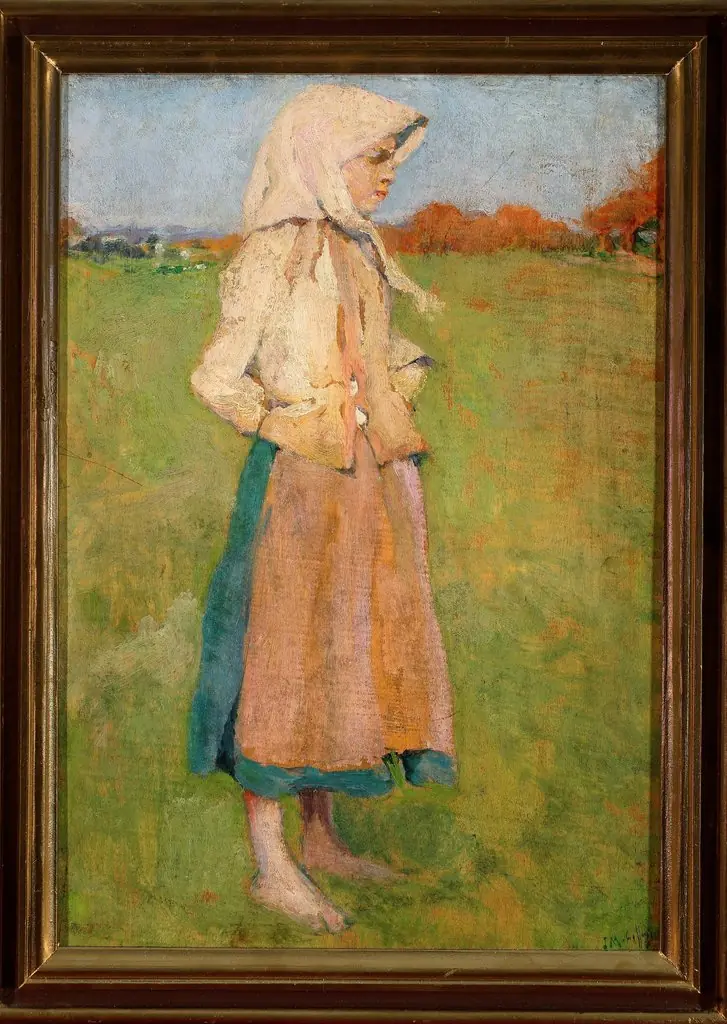
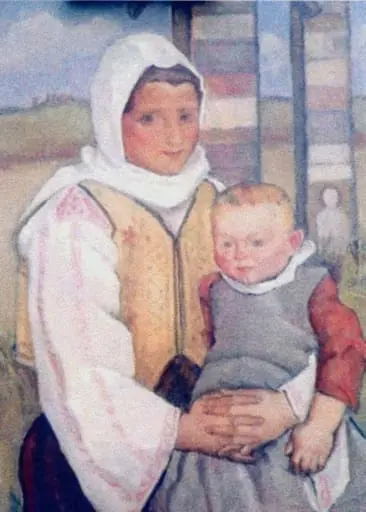
The standing figure, dressed in a blue dress and pink headscarf, may represent resilience, while the seated woman with the child evokes continuity and nurture.
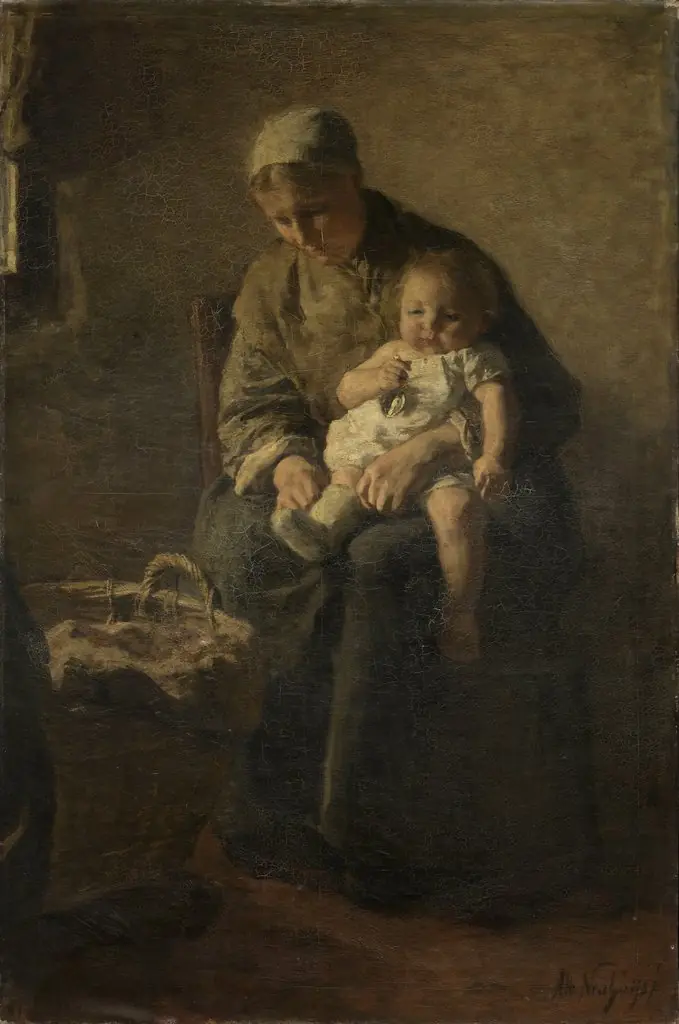
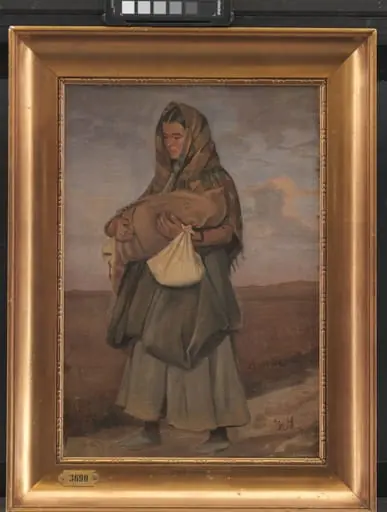
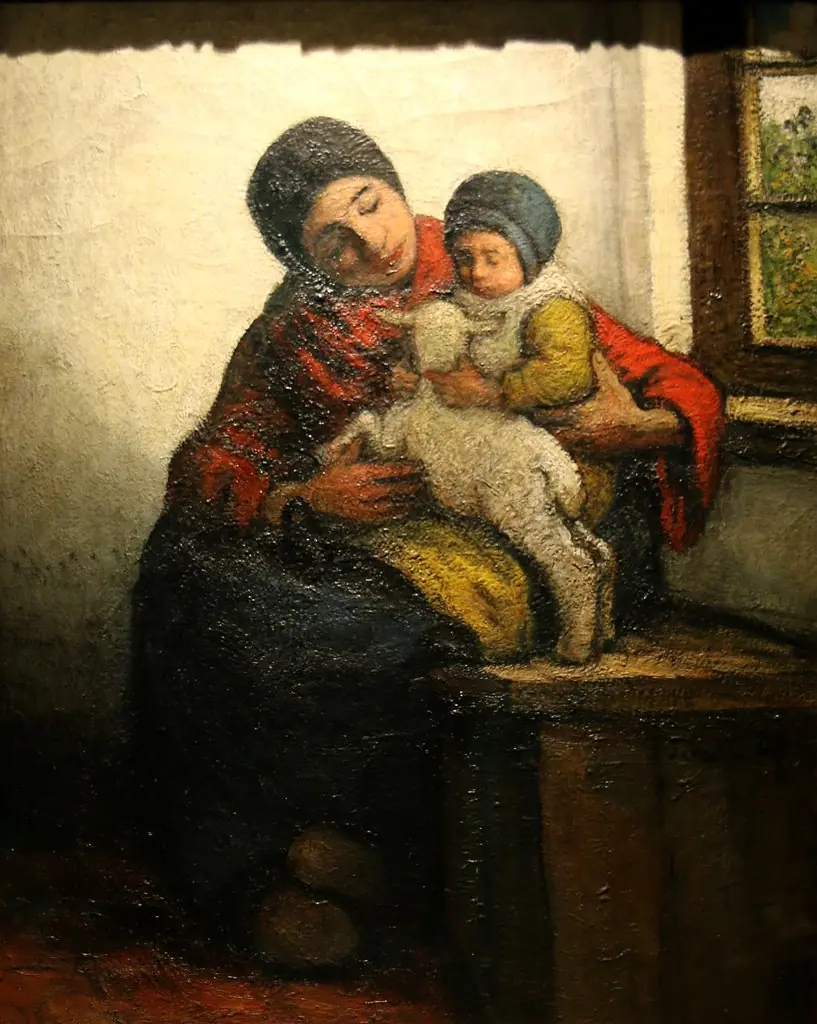
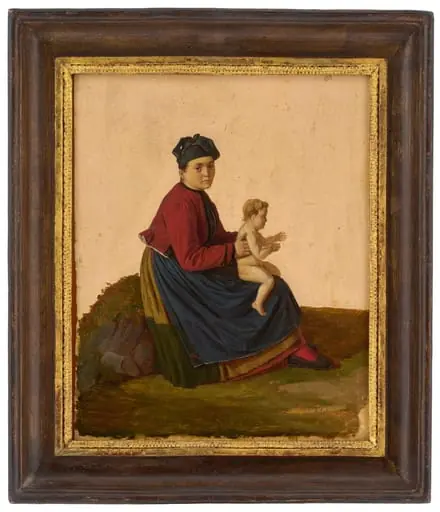
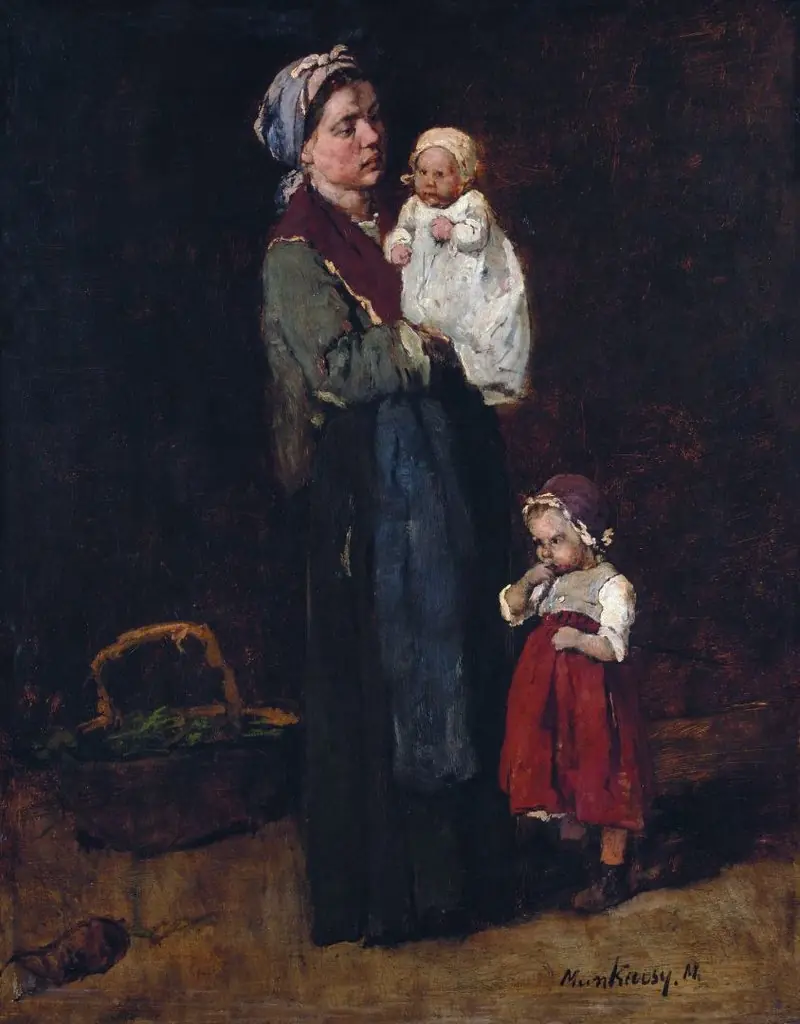
The painting portrays two women and an infant in a moment of stillness, suggesting daily labor and domestic care. The standing figure, dressed in a blue dress and pink headscarf, may represent resilience, while the seated woman with the child evokes continuity and nurture. The grazing sheep in the distance reinforce the connection between people and land, reflecting a life shaped by subsistence and tradition.
Technique & Style
Ressu employed thick, textured brushwork, using impasto to build surface and weight in the clothing and terrain. Colors are deliberately restrained—deep blues, earthy browns, and a single vivid pink—creating visual emphasis without ornamentation. The rough application of paint gives the figures a tactile presence, grounding them in physical reality rather than idealized form.
History & Provenance
The painting entered the Museum of Ethnography’s collection in the decades following its creation, likely through acquisition or donation tied to cultural preservation efforts. Its placement in an ethnographic institution, rather than a fine arts gallery, signals its role as a document of social life, valued for its representation of rural customs over formal artistic innovation.
Context
Created during a period of national reflection in Romania, the work aligns with broader efforts to define cultural identity through depictions of peasant communities. While urban modernism gained traction in European art, Ressu’s focus on rural subjects reflected a deliberate engagement with tradition, offering a counterpoint to industrialization and urban displacement.
Legacy
The painting remains a quiet reference point in Romanian art for its unembellished portrayal of rural existence. It contributes to a visual archive of peasant life, influencing later artists and scholars interested in the intersection of folk culture and modernist representation. Its enduring presence in the Museum of Ethnography underscores its role as a historical witness rather than a decorative object.
Artist & collection

Artist
Camil Ressu was a Romanian painter and academic, one of the most significant art figures of Romania.