Artwork
Night
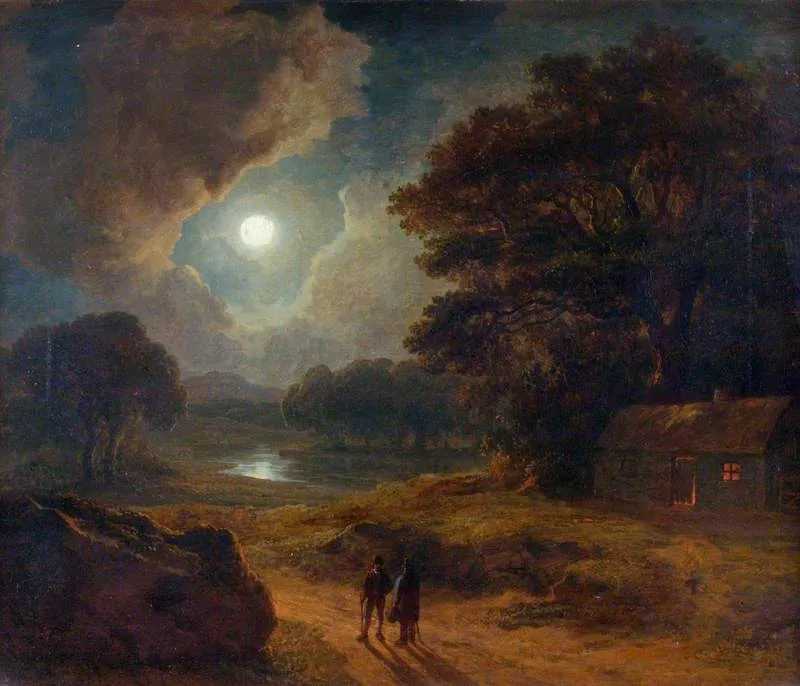
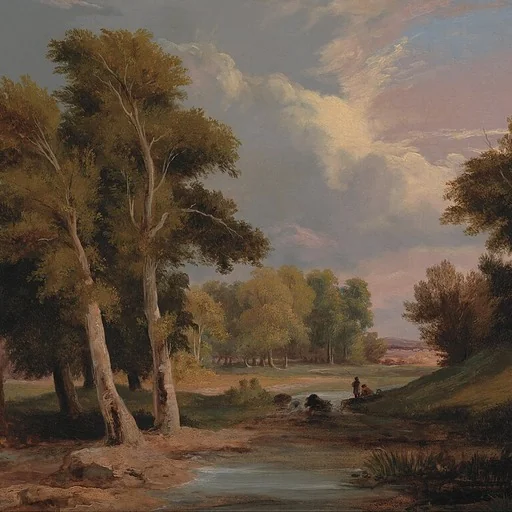
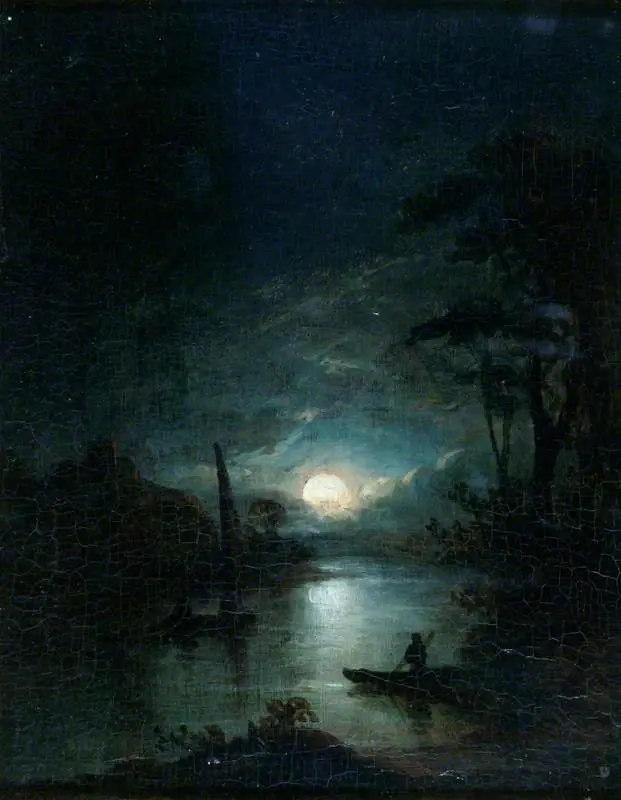
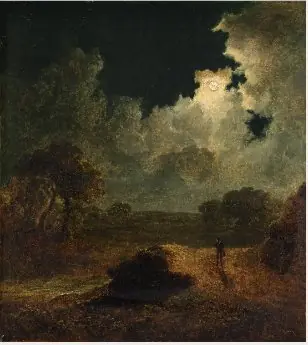
Night is an oil painting by the British Romanticist artist James Arthur O'Connor. It dates from 1834 and is held in the collection of the Victoria and Albert Museum.
About this work
Overview
James Arthur O'Connor painted Night in 1834 using oil on canvas, capturing a quiet rural scene under moonlight. The work is part of the Victoria and Albert Museum’s collection, where it remains as a representative example of early 19th-century British landscape painting. Its subdued palette and intimate scale reflect a preference for atmospheric detail over grand narrative.
Subject & Meaning
Moonlight, the sole source of illumination, softens edges and unifies the composition, reinforcing a mood of calm solitude.
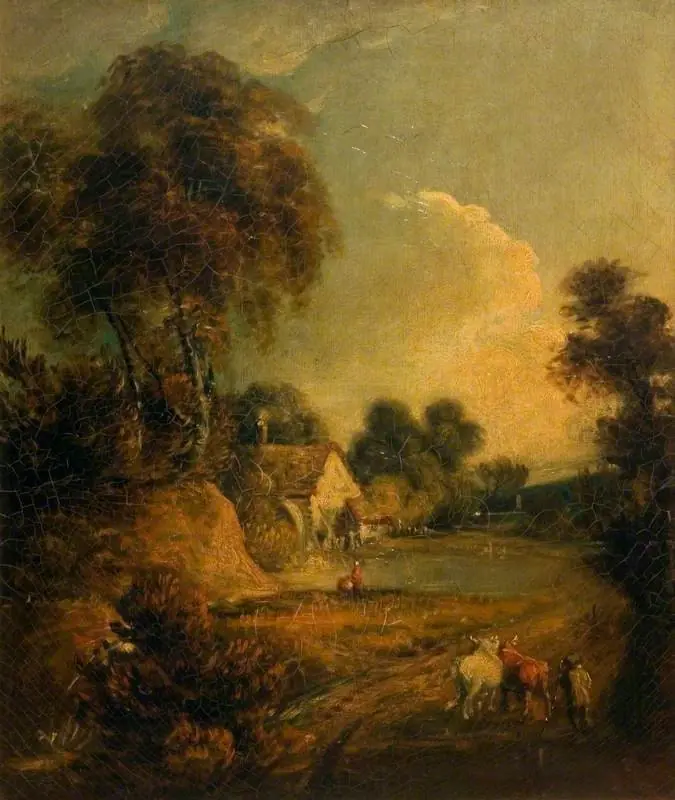
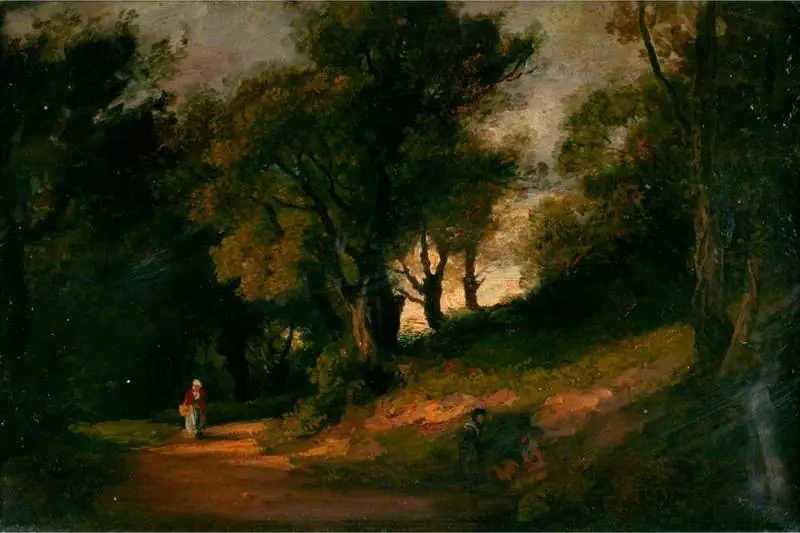
The painting depicts a solitary figure standing near a modest cottage, framed by dense trees and a winding path. The stillness of the moment suggests introspection rather than action. Moonlight, the sole source of illumination, softens edges and unifies the composition, reinforcing a mood of calm solitude. The absence of human activity beyond the lone figure deepens the sense of quiet withdrawal from daily life.
Technique & Style
O'Connor employed layered oil glazes to achieve subtle gradations of light and shadow, particularly in the rendering of the moon’s glow across foliage and earth. The texture of the foreground rock contrasts with the smooth, blended tones of the sky, enhancing spatial depth. Brushwork remains controlled, avoiding dramatic flourish in favor of restrained observation, characteristic of Romantic-era landscape sensibilities.
History & Provenance
Created in 1834, the painting entered the Victoria and Albert Museum’s collection through its predecessor institutions, which systematically acquired British art of the period. No significant alterations or documented ownership changes are recorded between its completion and acquisition, suggesting it remained in private hands until institutional preservation.
Context
O'Connor worked during a time when British artists increasingly turned to nocturnal and rural subjects as alternatives to historical or mythological themes. Night aligns with a growing interest in emotional resonance through natural settings, influenced by poets like Wordsworth and painters such as Constable. The scene reflects a cultural shift toward valuing quiet, personal experience in nature.
Legacy
Though not widely exhibited today, Night contributes to the understanding of O'Connor’s role within the broader tradition of British landscape painting. It exemplifies how lesser-known artists of the period engaged with mood and light, offering a counterpoint to more dramatic Romantic visions. Its preservation allows continued study of 19th-century approaches to twilight and solitude in art.
Artist & collection