Artwork
The Baptism of the King of Cashel by Saint Patrick
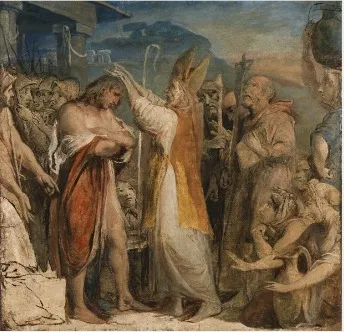
The Baptism of the King of Cashel by Saint Patrick is an unspecified painting by the British Romanticist artist James Barry. It dates from 1800 and is held in the collection of the National Gallery of Ireland.
About this work
Overview
Executed in the early Romantic tradition, the painting reflects Barry’s interest in grand historical and moral narratives.
Painted in 1800 by Irish artist James Barry, this work depicts a pivotal moment in Ireland’s religious history: the baptism of the King of Cashel by Saint Patrick. Executed in the early Romantic tradition, the painting reflects Barry’s interest in grand historical and moral narratives. It is now part of the National Gallery of Ireland’s collection, where it stands as one of his significant religious compositions outside his better-known series on human culture.
Subject & Meaning
The scene illustrates the conversion of a pagan Irish king to Christianity, symbolizing the spiritual and cultural transformation of early medieval Ireland. Saint Patrick, identified by his staff and clerical attire, performs the rite over the king, who kneels in a white robe beneath a red cloak. The composition emphasizes the moment of transition—authority yielding to faith—while the surrounding landscape suggests a landscape both sacred and earthly.
Technique & Style
Barry employs chiaroscuro to model the figures with sculptural weight, using strong contrasts of light and shadow to define form and depth. The textures of fabric, skin, and stone are rendered with careful attention, grounding the scene in realism. Though rooted in academic tradition, the dramatic lighting and emotional gravity align with emerging Romantic sensibilities, moving beyond mere illustration toward psychological resonance.
History & Provenance
Completed in 1800, the painting remained in private hands until entering the National Gallery of Ireland’s collection. Barry, who faced professional isolation during his lifetime, saw his reputation decline after his death. A major retrospective at the Tate Gallery in 1983 revived scholarly interest, leading to renewed recognition of his historical and religious works, including this baptismal scene as a key example of his ambition.
Context
Barry painted this during a period of heightened interest in national identity and religious history in Ireland and Britain. The subject of Saint Patrick’s mission resonated with contemporary debates over cultural heritage and colonial memory. While the scene is not historically documented, it draws on longstanding hagiographic tradition, reflecting a desire to anchor Irish identity in a mythologized Christian past.
Legacy
Though overshadowed in his time by contemporaries, Barry’s work, including this painting, has been reassessed as part of a broader Romantic engagement with national myth. The painting contributes to a corpus of Irish-themed historical art that sought to elevate indigenous narratives through European academic techniques. Its continued presence in a national collection underscores its role in shaping visual understandings of Ireland’s religious origins.
Artist & collection
Artist
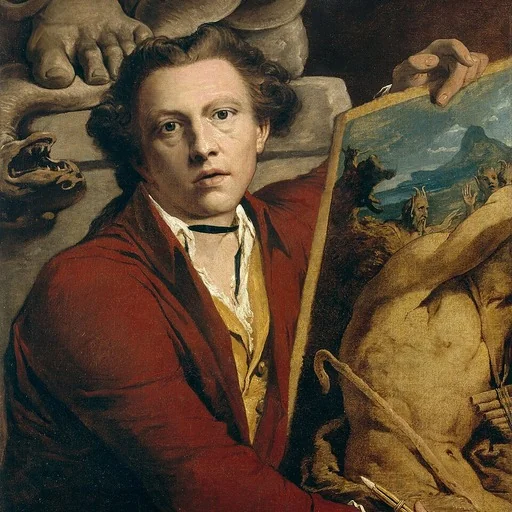
James Barry (11 October 1741 – 22 February 1806) was an Irish painter, best remembered for his six-part series of paintings entitled The Progress of Human Culture in the Great Room of the Royal Society of Arts in London.

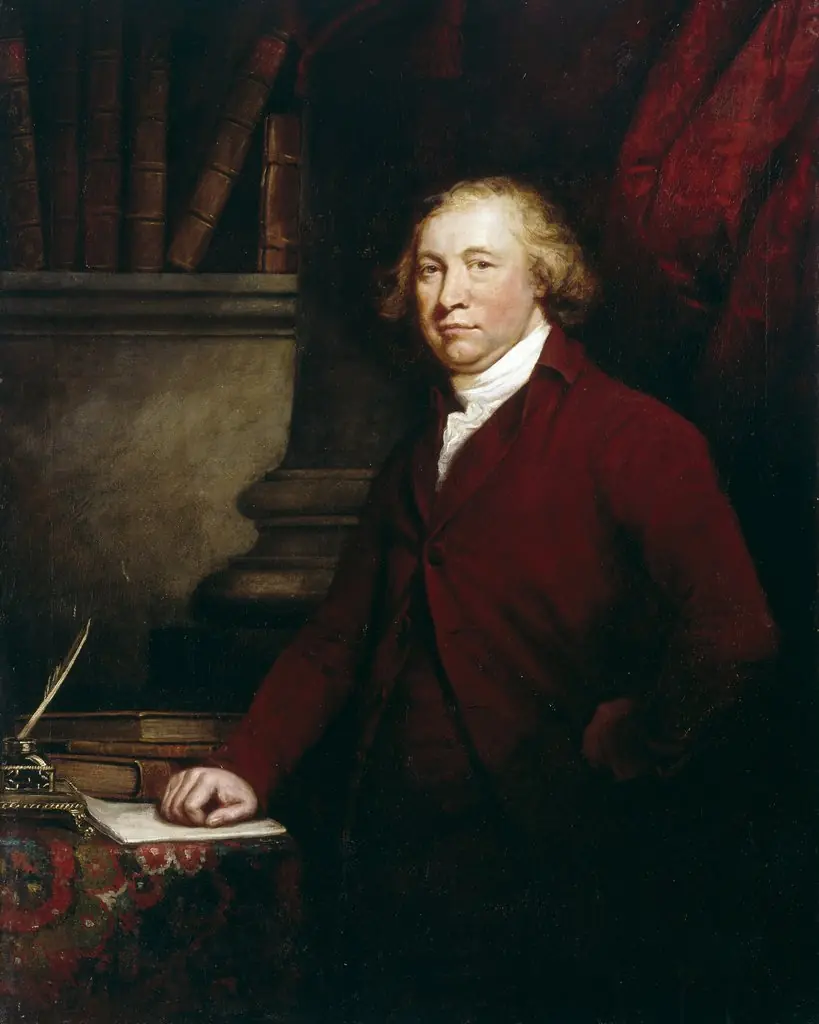 Portrait of Edmund Burke (1729-1797), Statesman, Orator and Writer
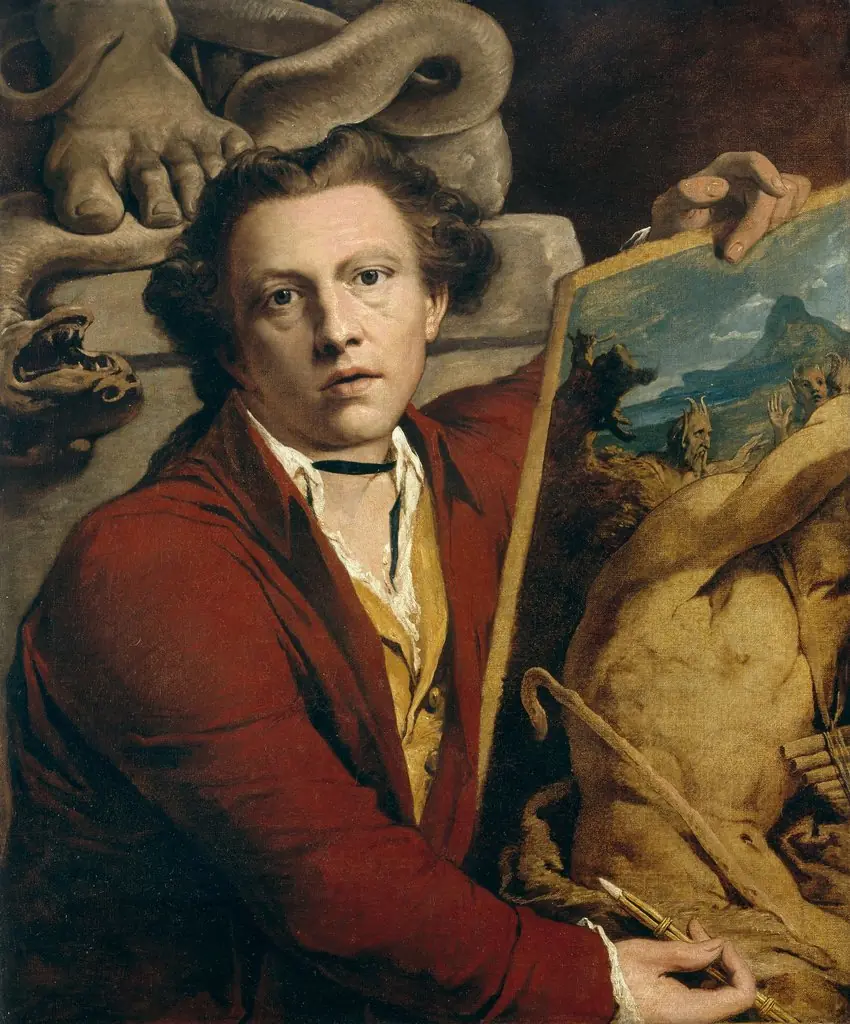 Self-Portrait as Timanthes
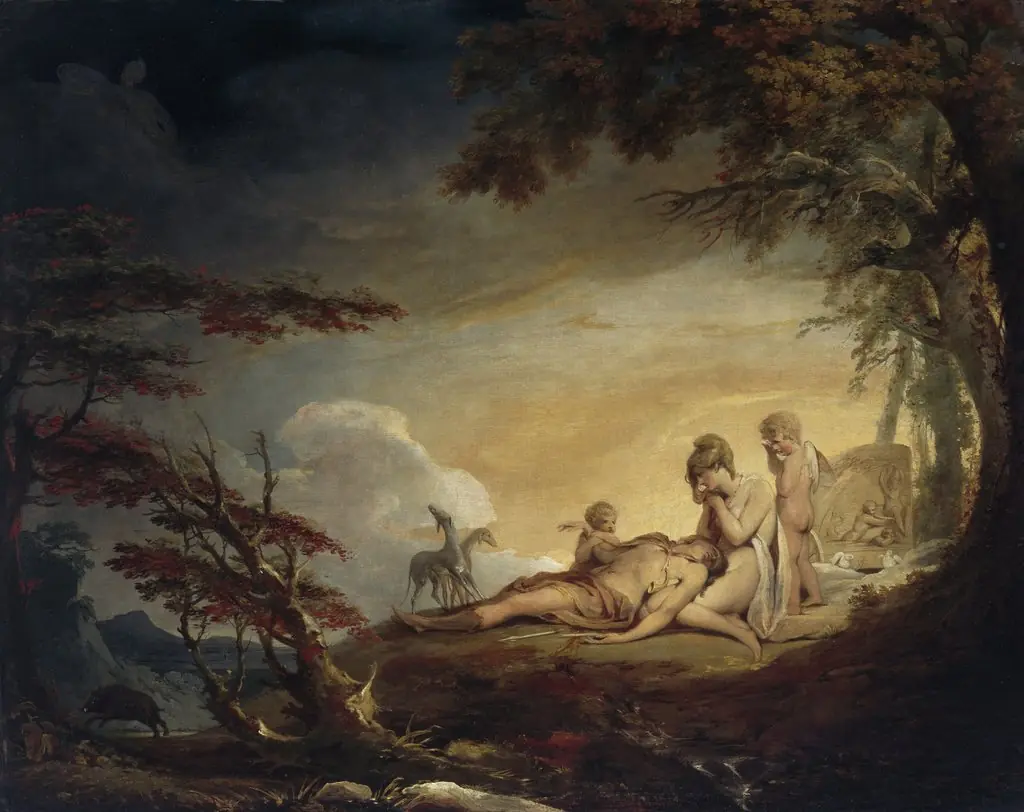 The Death of Adonis
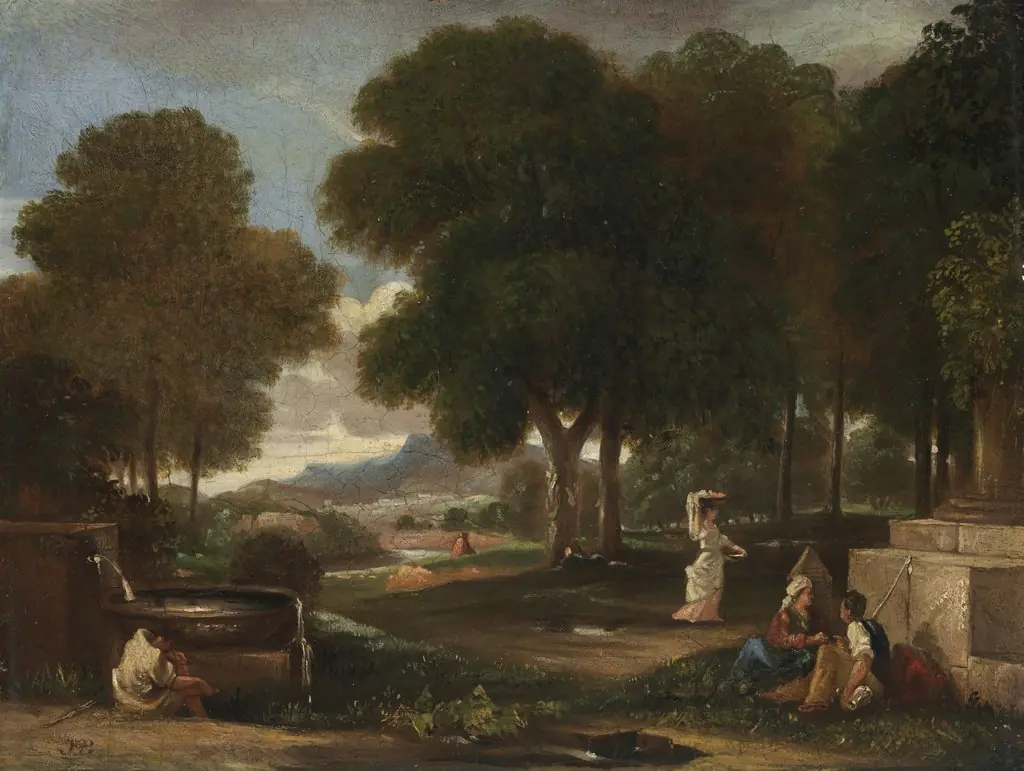 Landscape with a Man Washing his Feet at a Fountain
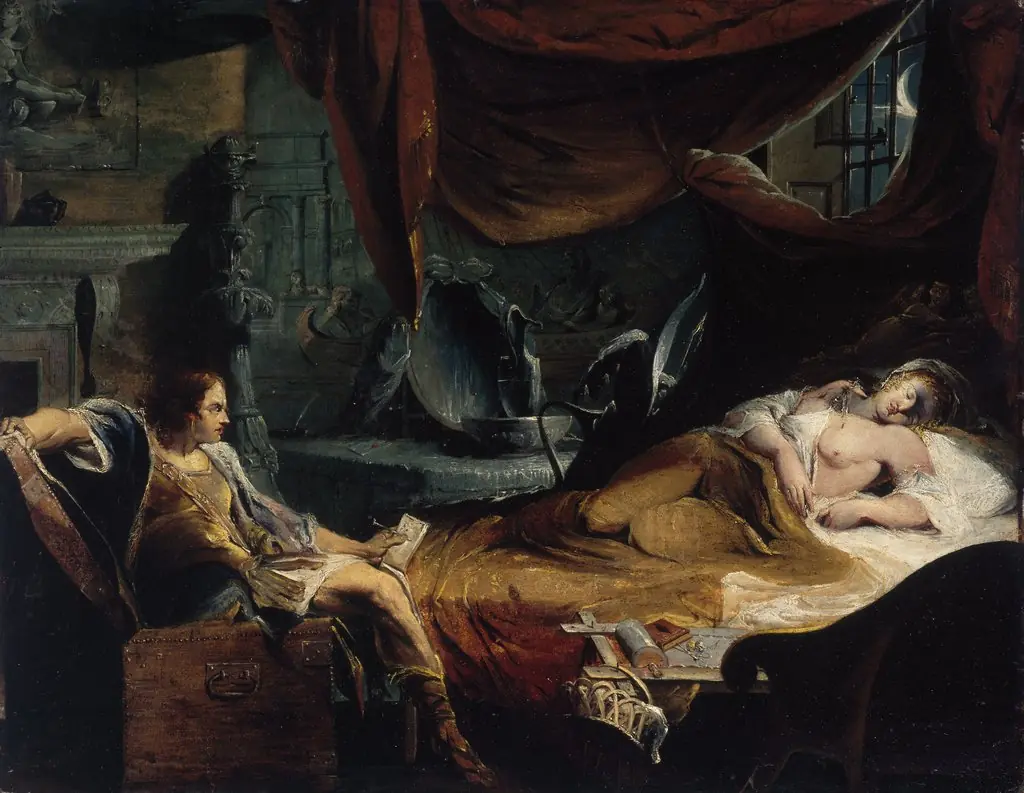 Iachimo Emerging from the Chest in Imogen's Chamber
 The Temptation of Adam
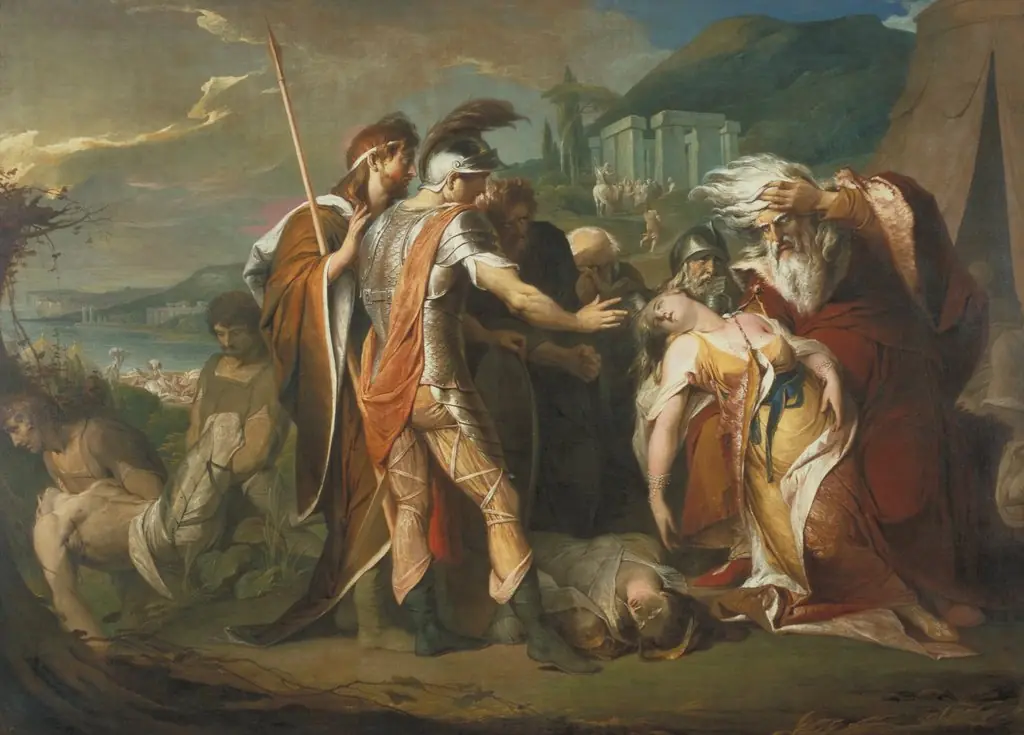 King Lear Weeping over the Dead Body of Cordelia
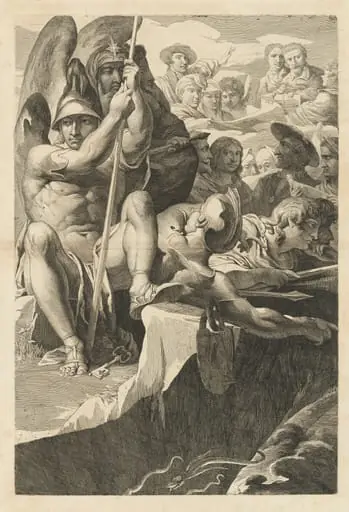 The Angelic Guards
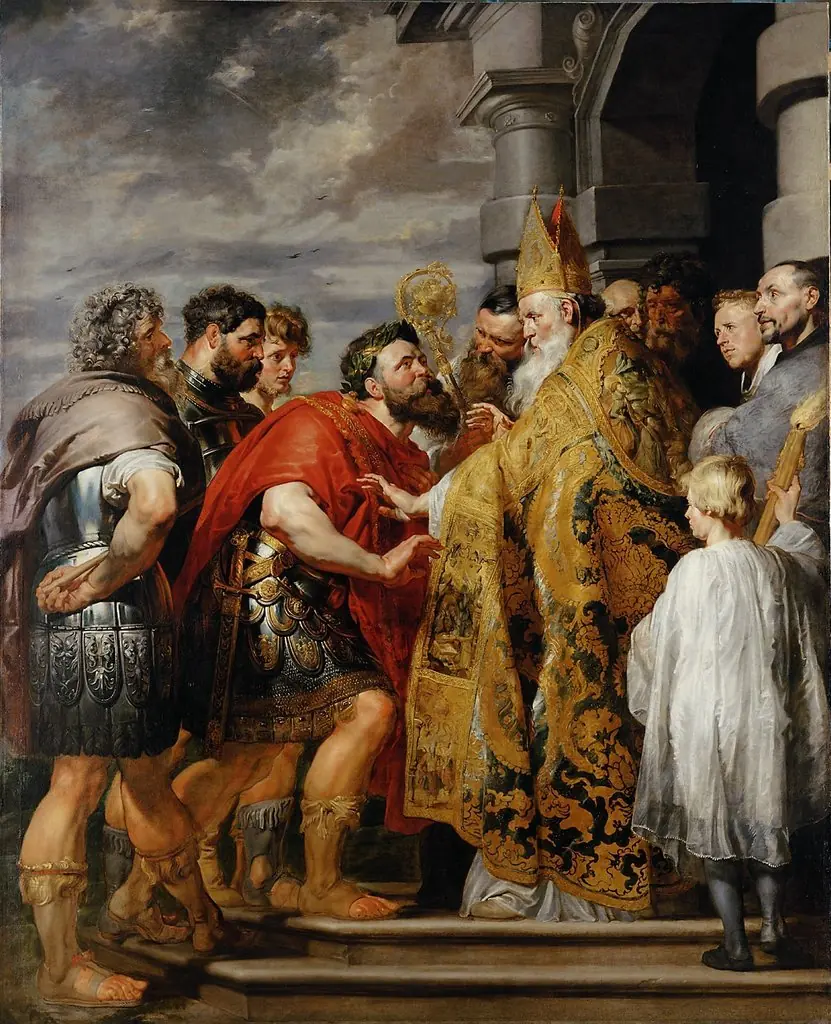 Theodosius and Saint Ambrose
 Saint Louis IX, King of France, Receives Pierre de Corbie
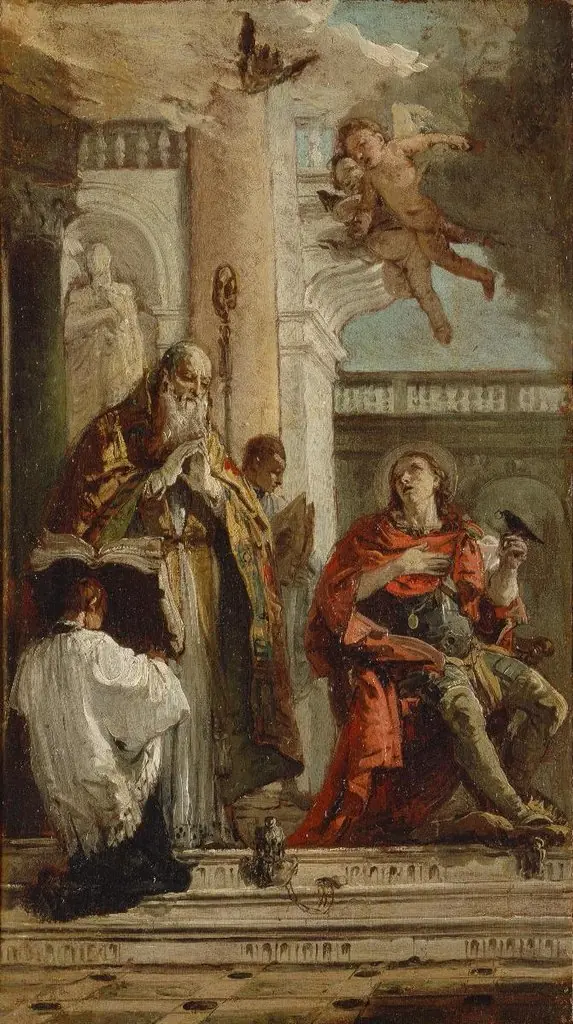 Santi Massimo e Osvaldo
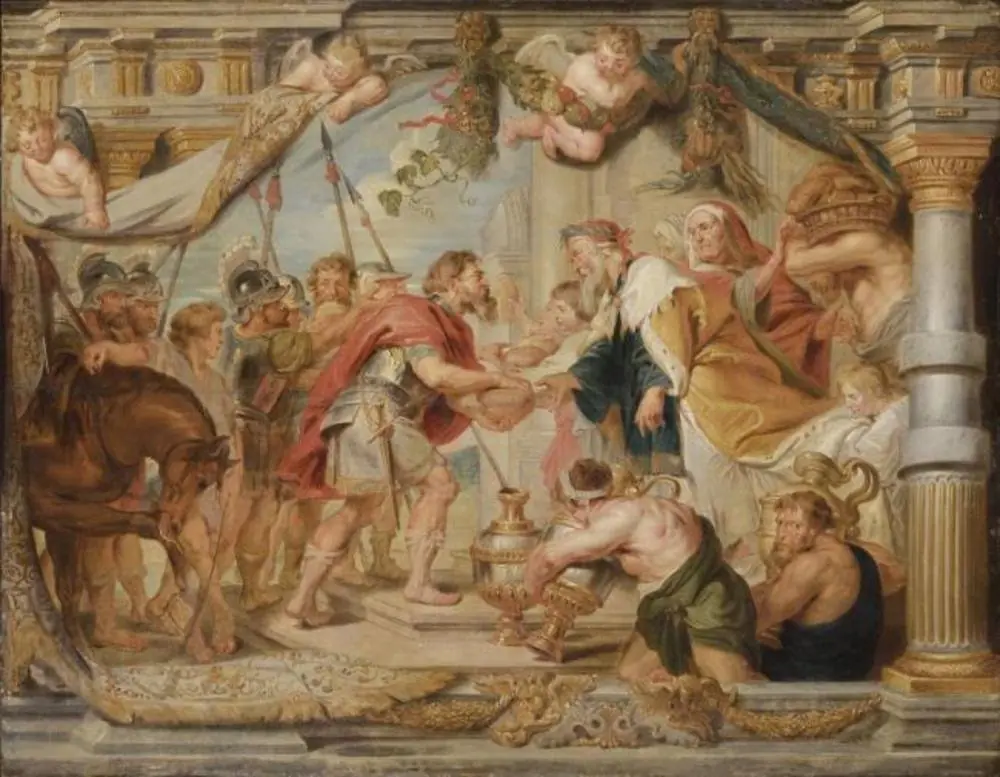 The Meeting of Abraham and Melchizedek
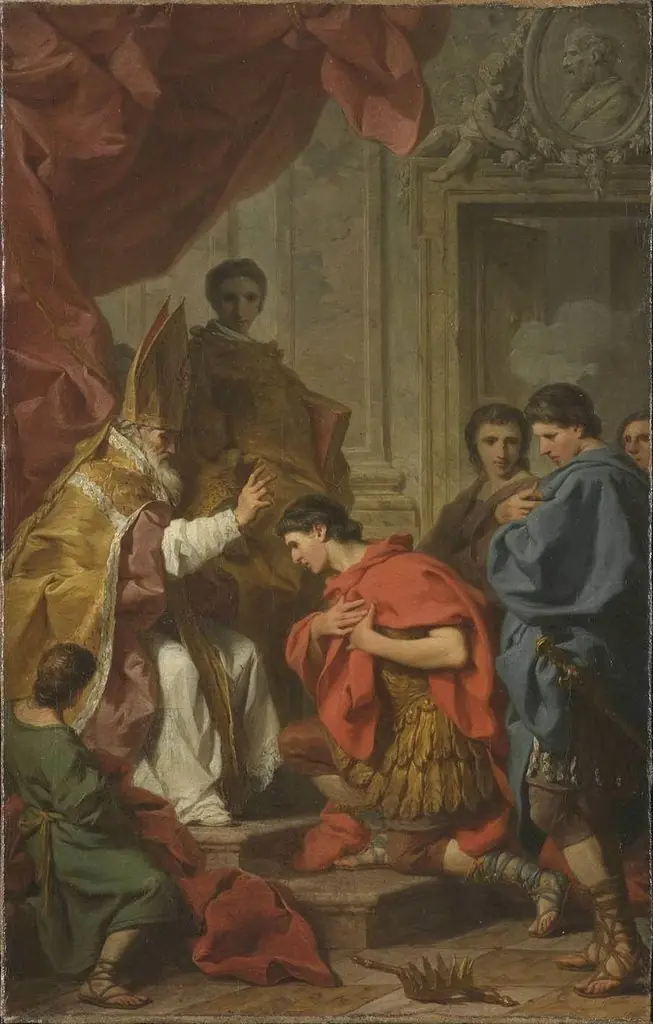 Kaiser Theodosius vor dem hl. Ambrosius
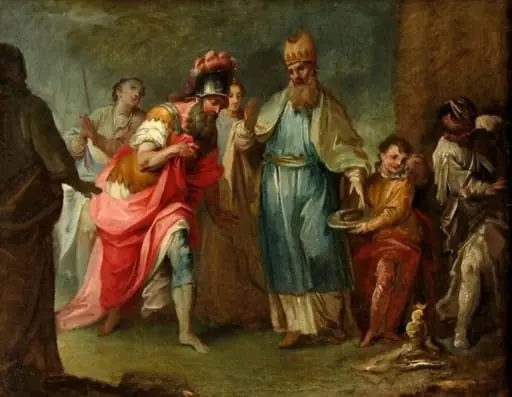 Saul uns rege de către Samuel
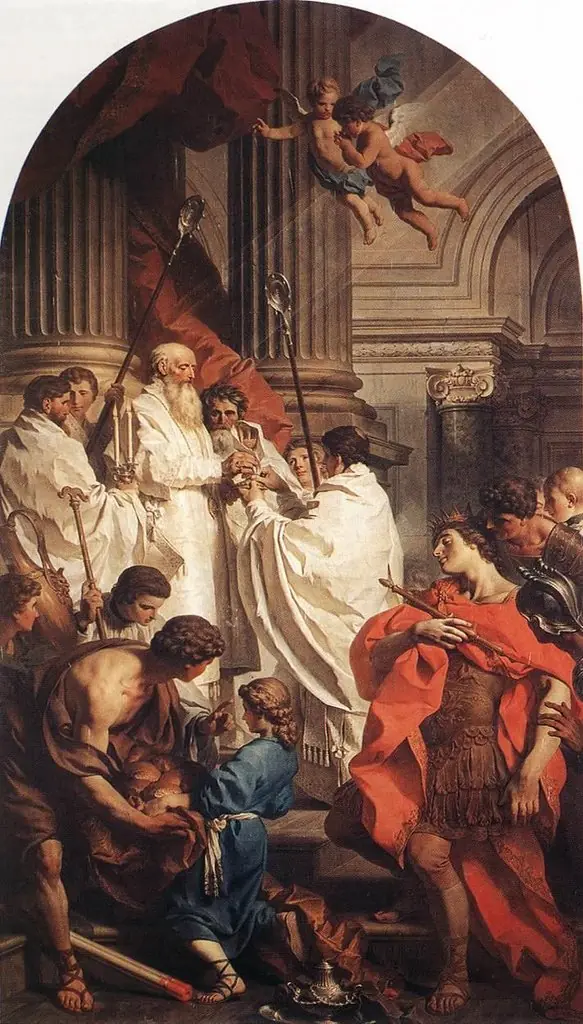 Emperor Valens before Bishop Basil (The Mass of St Basil)
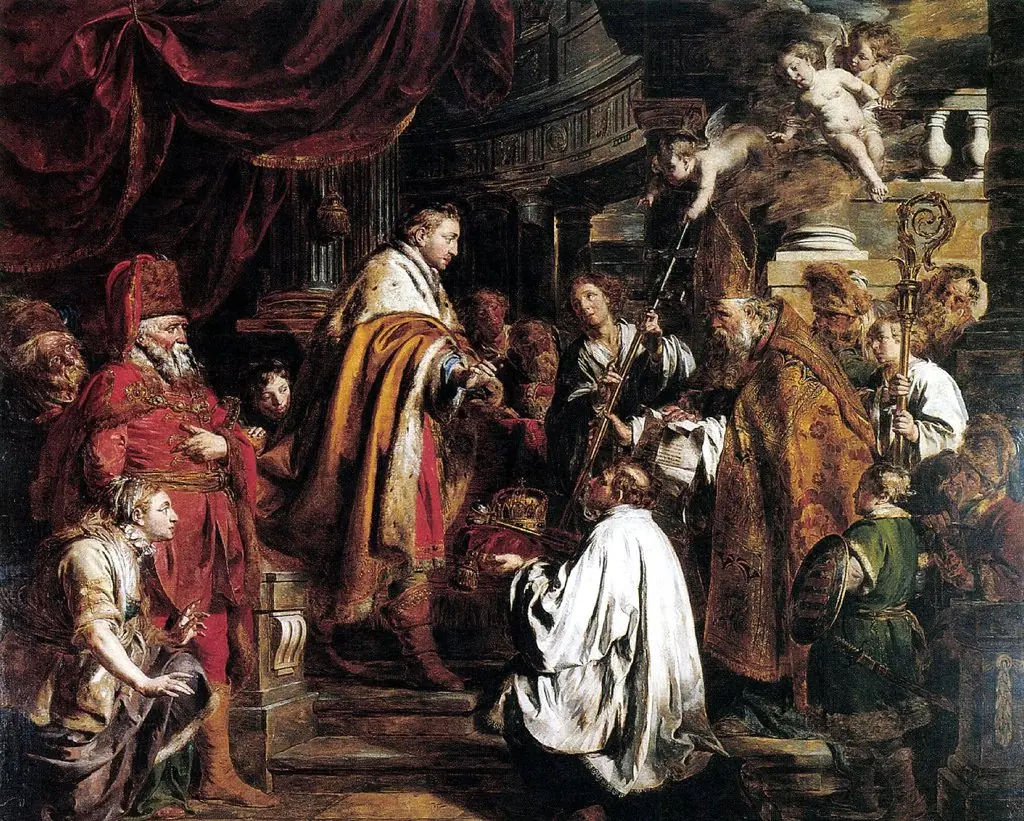 Saint Stephen, king of Hungary Receiving the Legate
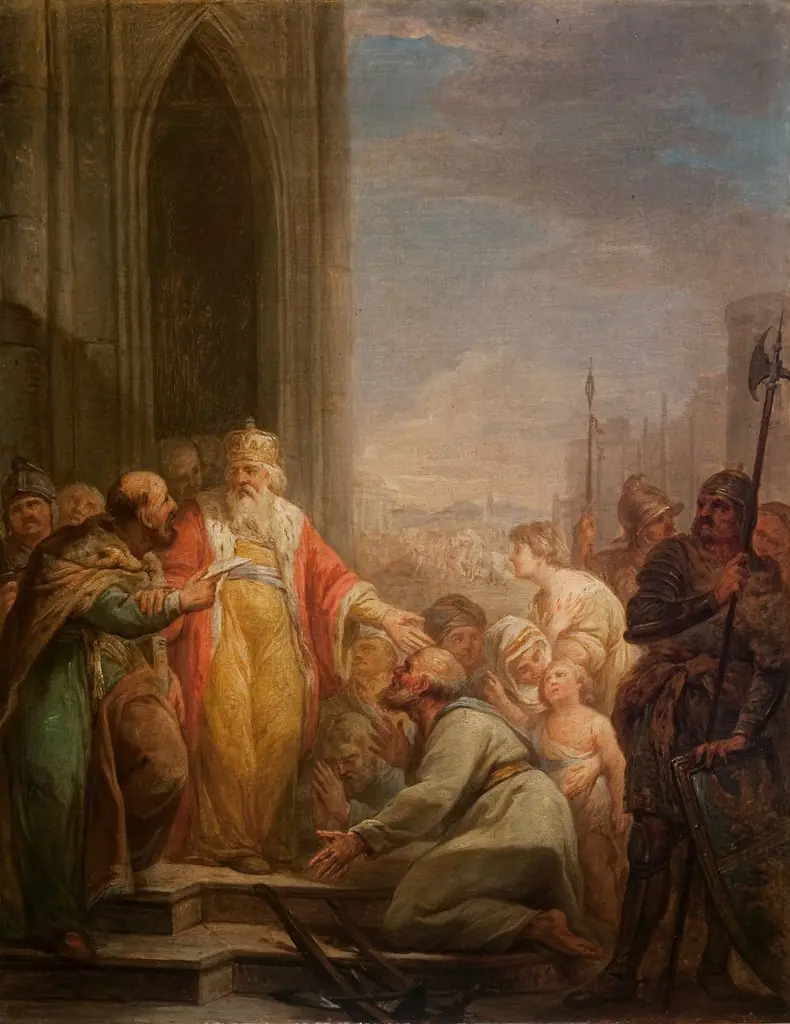 Casimir the Great
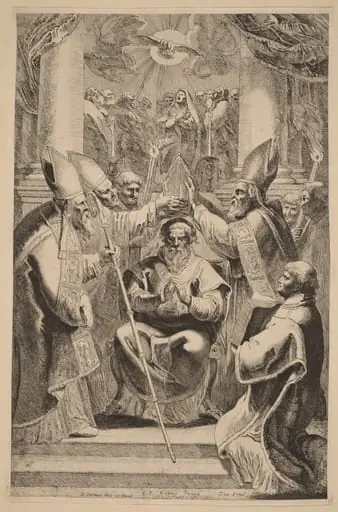 The Consecration of a Bishop
 Continence of Scipio
 Alexandru cel Mare și Diogene