Artwork
Boats by a Sandy Estuary
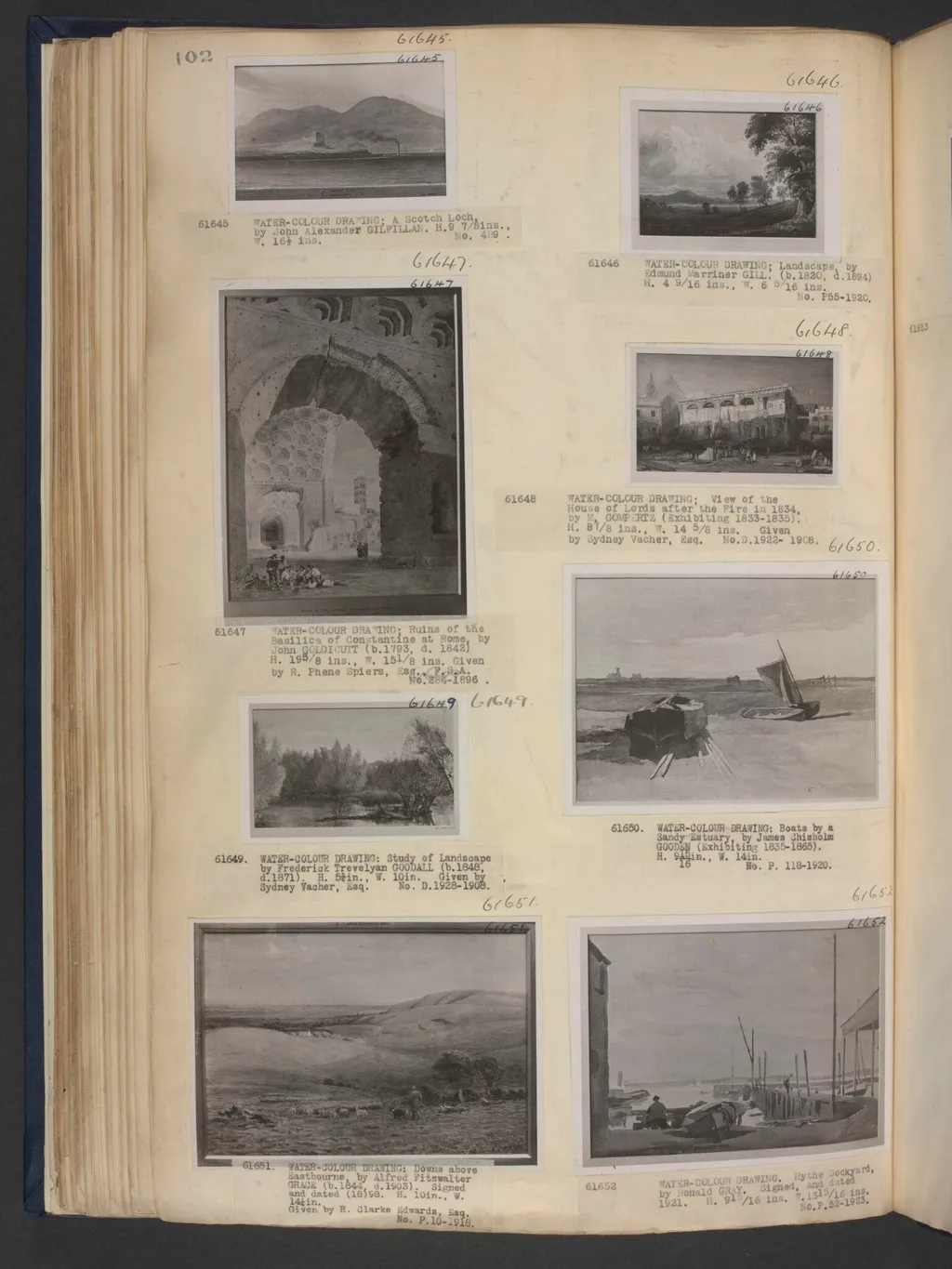
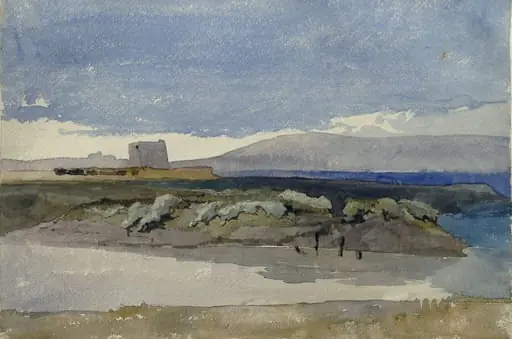
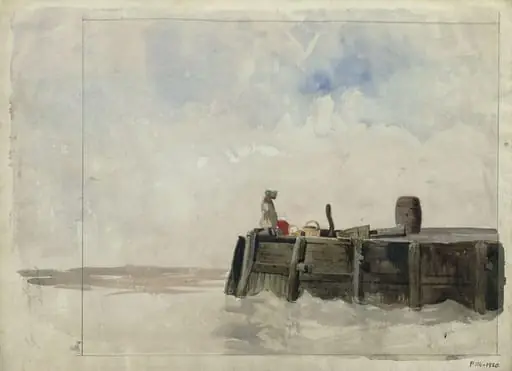
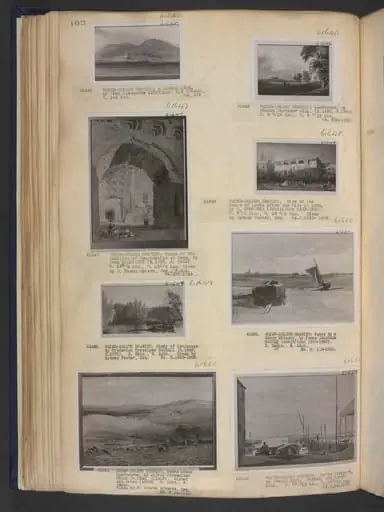
Boats by a Sandy Estuary is a watercolor work on paper by the British Romanticist artist James Chisholm Gooden. It dates from 1835 and is held in the collection of the Victoria and Albert Museum.
About this work
Overview
The work reflects Gooden’s interest in subtle natural transitions, particularly the liminal space between land and sea.
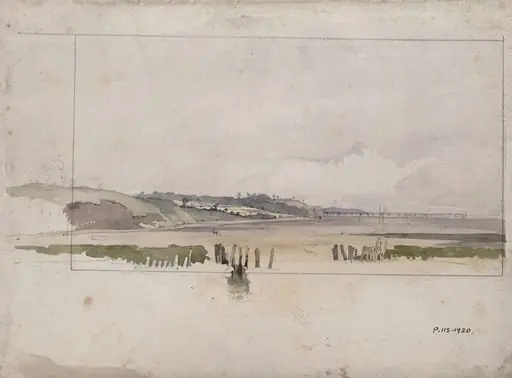
Painted in 1835 by James Chisholm Gooden, this watercolour captures a quiet coastal scene at low tide. Two modest boats rest on damp sand, their placement suggesting temporary abandonment. The composition emphasizes stillness, with minimal detail in the background and a pale, open sky. The work reflects Gooden’s interest in subtle natural transitions, particularly the liminal space between land and sea.
Subject & Meaning
The scene depicts a moment of pause in the tidal cycle, where boats lie idle on wet sand, neither fully in use nor removed. The absence of figures or activity invites contemplation of solitude and routine. The faint outline of distant trees and a building hints at human presence without intrusion, reinforcing a sense of quiet endurance rather than drama or narrative.
Technique & Style
Gooden employed delicate washes of watercolour to suggest the sheen of wet sand and the soft diffusion of light across the sky. Forms are suggested rather than sharply defined, with muted tones of grey, pale blue, and ochre creating harmony. The brushwork is restrained, avoiding bold lines, which enhances the atmosphere of calm and atmospheric unity.
History & Provenance
Created in 1835, the work is one of several watercolours by Gooden documenting coastal landscapes of southern England. Its early date places it within his formative period, when he was refining his approach to light and topography. The painting’s survival suggests it was retained within private collections, though its specific ownership history remains undocumented.
Context
In the 1830s, British watercolourists increasingly turned to quiet, everyday landscapes as subjects worthy of artistic attention. Gooden’s work aligns with this trend, rejecting grandeur in favor of understated naturalism. His focus on estuaries and tidal zones reflects broader scientific and aesthetic interest in coastal ecology during the early Victorian era.
Legacy
Though not widely exhibited or reproduced, Gooden’s watercolours, including this one, contribute to a quiet tradition of English topographical art that valued observation over spectacle. His restrained technique and sensitivity to light influenced later regional artists who sought to capture the subtleties of the British coastline without romantic embellishment.
Artist & collection
Artist
James Chisholm Gooden painted watercolors of British coastal and countryside scenes in the mid-1800s.