Artwork
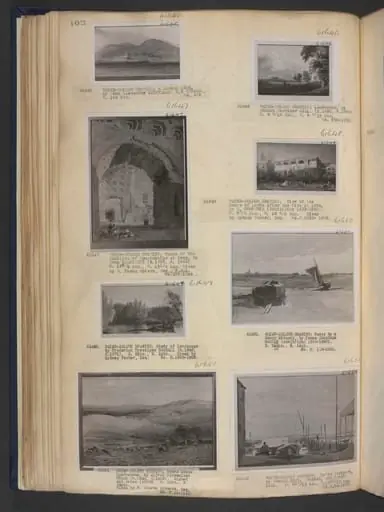
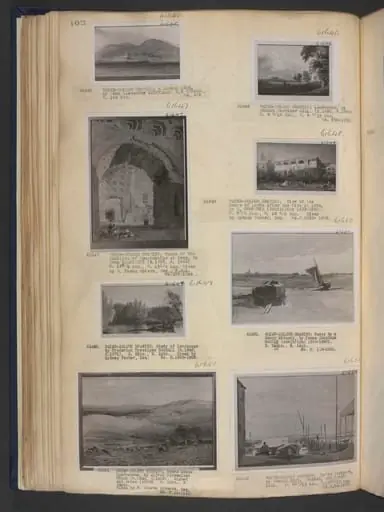
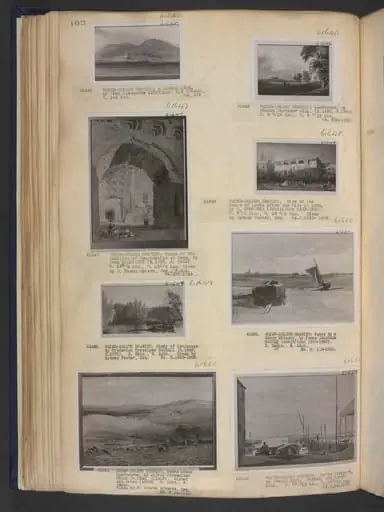
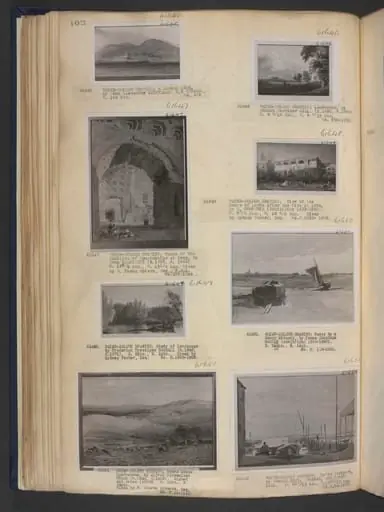
Exterior view of the ruins of Cowling (or Cooling) Castle, Kent
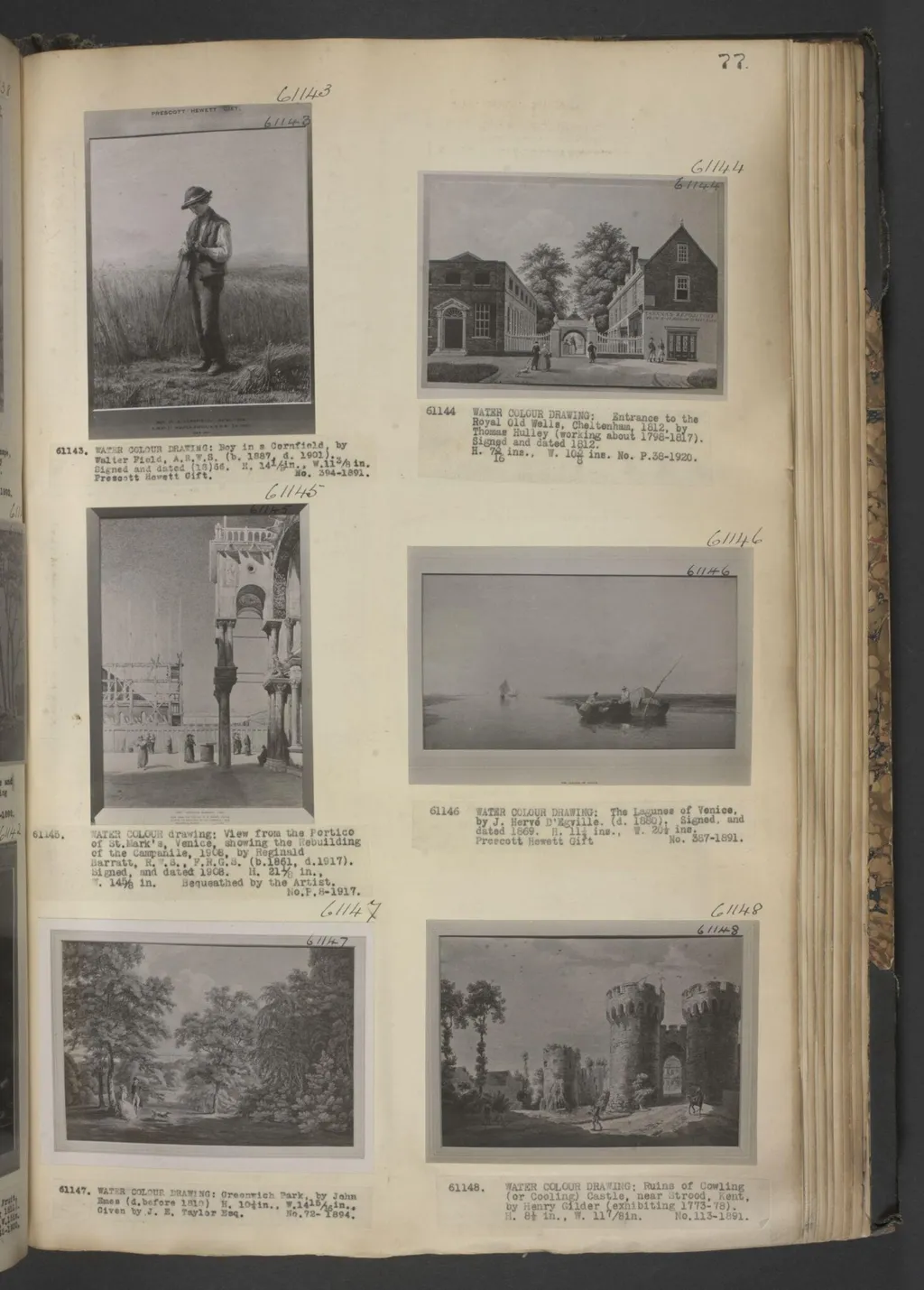
Exterior view of the ruins of Cowling (or Cooling) Castle, Kent is a watercolor work on paper by the Rococo painting artist Henry Gilder. It dates from 1775 and is held in the collection of the Victoria and Albert Museum.
About this work
Trees grow close to the ruins, and a few people stand near the base, looking small.
This drawing shows a crumbling castle with a tall tower and arched windows. The walls are uneven, and the roof is missing in spots. Trees grow close to the ruins, and a few people stand near the base, looking small. The sky is light, and the whole scene feels quiet and old.
The artist made this around 1770–1780, focusing on decaying buildings as a subject. The soft edges and muted colors suggest it’s meant to feel dreamy, not harsh.
Look up Romanticism next to see how artists used ruins to show emotion.
Overview
This watercolour, created by Henry Gilder between 1770 and 1780, depicts the exterior of Cowling Castle, a medieval structure in disrepair near Strood, Kent. Rendered in soft, muted tones, the work captures the quiet decay of the site with careful attention to atmospheric detail. The medium and composition reflect a growing 18th-century interest in architectural ruins as subjects worthy of artistic contemplation.
Subject & Meaning
The painting focuses on the crumbling remains of Cowling Castle, emphasizing its neglected state through uneven walls, missing roof sections, and arched windows now open to the elements. Small figures at the base underscore the scale of abandonment. The scene invites reflection on time and impermanence, aligning with emerging sensibilities that found emotional resonance in decay rather than grandeur.
Technique & Style
Gilder employed delicate watercolour washes to create soft transitions and subdued hues, avoiding sharp contrasts. The edges of forms blend gently into the landscape, enhancing a sense of stillness. Trees encroach on the ruins, their forms echoing the castle’s irregular silhouette. This restrained technique conveys a contemplative mood, prioritizing atmosphere over topographical precision.
History & Provenance
Cowling Castle, originally built in the 14th century, had been abandoned for centuries by the time Gilder painted it. The structure suffered gradual deterioration after falling out of use, with no major restoration efforts. Gilder’s work is among the few surviving visual records from this period, offering insight into how such sites were perceived before the rise of formal heritage preservation.
Context
In the late 18th century, British artists increasingly turned to ruins as subjects, influenced by literary and philosophical currents that valued melancholy and the sublime. Gilder’s depiction aligns with this trend, where decay was not merely documented but imbued with emotional weight. Such works preceded the Romantic movement’s full expression but helped shape its visual language.
Legacy
Gilder’s watercolour contributes to a broader archive of British topographical art that documented vanishing structures before industrialization transformed the landscape. While not widely known today, it remains a quiet testament to early efforts to preserve the visual memory of medieval heritage through art, influencing later antiquarian and Romantic traditions.
Artist & collection
Artist
Henry Gilder painted watercolours of a crumbling Kent castle in the 1770s. His two sheets show the same ruins, one inside the courtyard and one from the outside, both in soft blues and browns. He recorded details like…

 Entrance to the Royal Old Wells, Cheltenham, 1812
 Rebuilding of the Campanile, St. Mark's, Venice : View of the portico of St. Mark's
 Boy in a cornfield
 Taking down the houses on old London Bridge
 Town and lake of Como, Italy
 A Devonshire Cottage
 Temple at Nasik, on the Godavery
 The Challenge: A Lady Interposing Between Two Cavaliers