Artwork
View in a Quarry
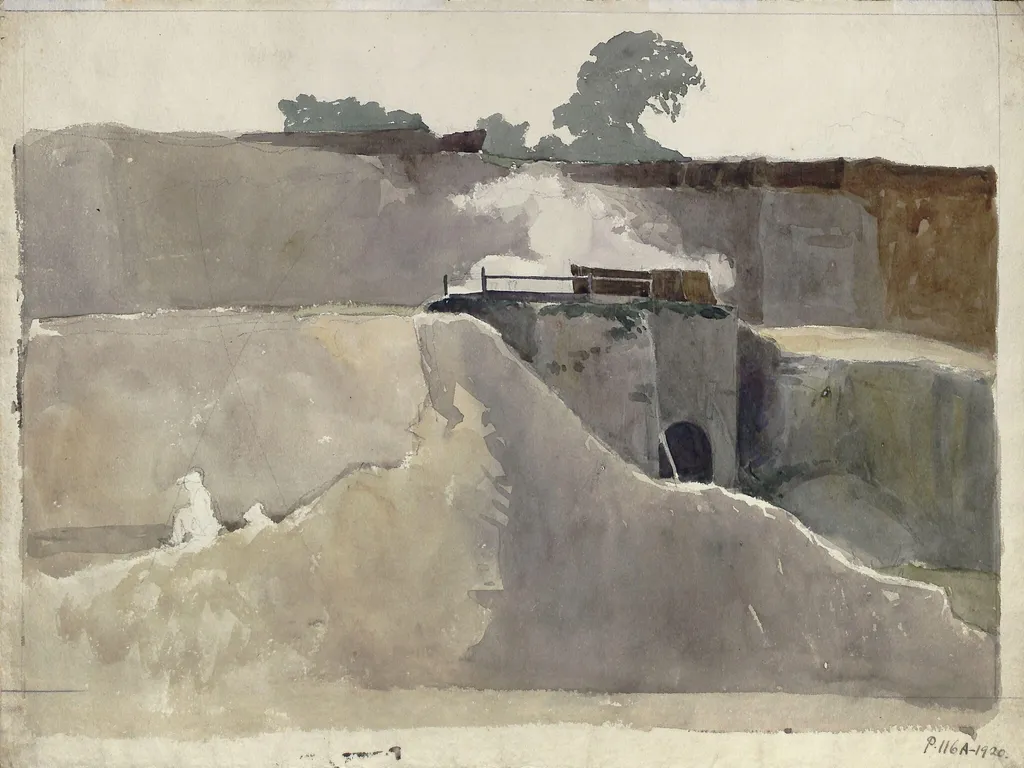
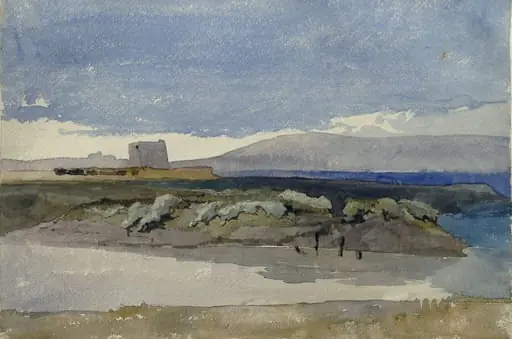
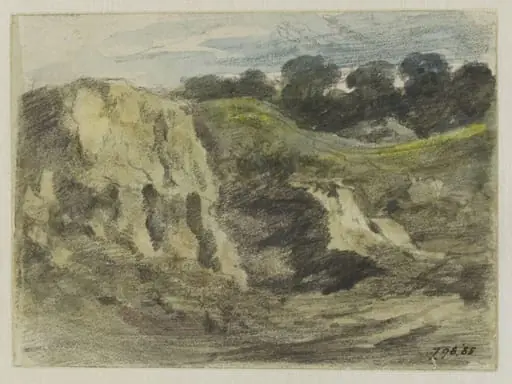
View in a Quarry is a watercolor work on paper by the British Romanticist artist James Chisholm Gooden. It dates from 1835 and is held in the collection of the Victoria and Albert Museum.
About this work
Overview
James Chisholm Gooden’s watercolour *View in a Quarry* presents a quiet interior landscape, rendered in soft washes of brown, grey, and muted green.
James Chisholm Gooden’s watercolour *View in a Quarry* presents a quiet interior landscape, rendered in soft washes of brown, grey, and muted green. The scene captures the stillness of a stone excavation site, with natural elements subtly reclaiming the man-made space. A solitary figure sits on a rock in the foreground, observing the surroundings. The work’s delicate handling and restrained palette evoke a contemplative mood, typical of 19th-century British watercolour practice.
Subject & Meaning
The quarry, half-overgrown with vegetation, suggests the passage of time and the quiet reclamation of industrial sites by nature. The lone figure, neither working nor interacting, appears absorbed in reflection, reinforcing a sense of solitude and introspection. The absence of human activity or machinery shifts focus from labor to atmosphere, aligning the image with Romantic-era sensibilities that valued quiet contemplation over grandeur.
Technique & Style
Gooden employs transparent watercolour washes to build subtle tonal gradations, avoiding sharp lines in favor of blended edges. The softness of the brushwork and the limited color range create a hazy, atmospheric effect. Highlights are minimal, and shadows are rendered with diluted pigments rather than opaque detail, contributing to the painting’s gentle, dreamlike quality. The technique reflects the influence of Turner and other watercolourists who prioritized mood over precision.
History & Provenance
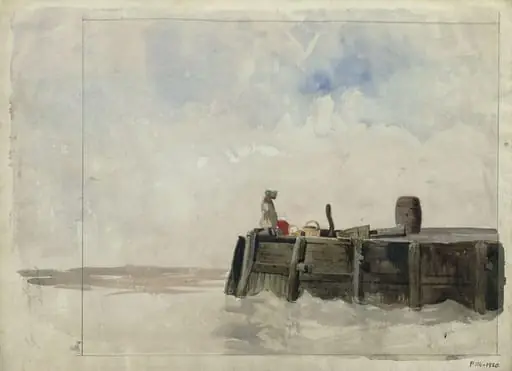
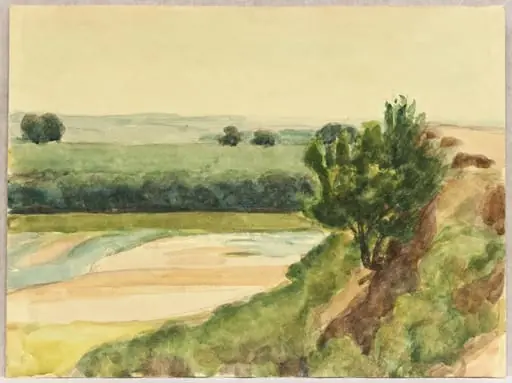
The artwork is painted on a single sheet, with a second watercolour, *Woman on a Jetty at Gravesend*, on the reverse. This practice was common among artists reusing materials or working on portable studies. The dual imagery suggests the piece may have been part of a sketchbook or a private collection of observational studies, rather than a finished exhibition piece. Its survival in this form offers insight into the artist’s working habits.
Context
Created during a period when British artists increasingly turned to landscape as a subject for personal expression, Gooden’s work reflects broader trends in watercolour painting. Quarries and industrial ruins were becoming subjects of quiet interest, contrasting with idealized pastoral scenes. The emphasis on solitude and natural decay aligns with Romanticism’s fascination with transience and the sublime in ordinary places.
Legacy
Though not widely exhibited during Gooden’s lifetime, *View in a Quarry* remains a representative example of amateur and professional watercolourists’ engagement with everyday landscapes. Its preservation, particularly with the reverse image intact, provides valuable evidence of 19th-century artistic practices. The work contributes to understanding how ordinary scenes were transformed into meditative studies through careful observation and restrained technique.
Own this work as a print
Artist & collection
Artist
James Chisholm Gooden painted watercolors of British coastal and countryside scenes in the mid-1800s.