Artwork
Untitled
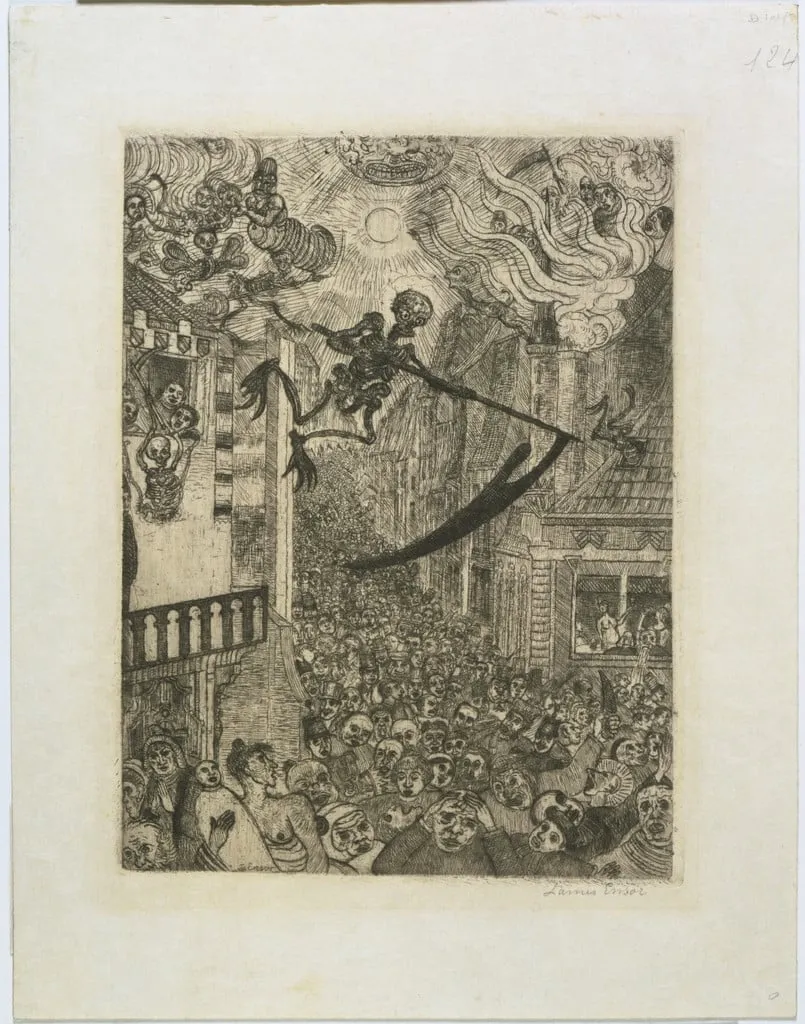
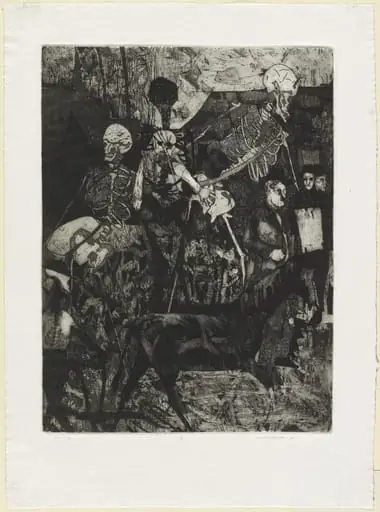
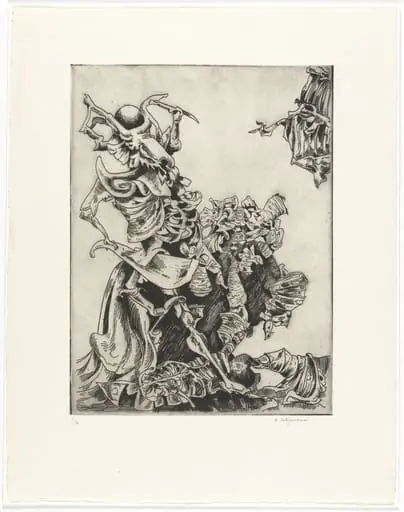
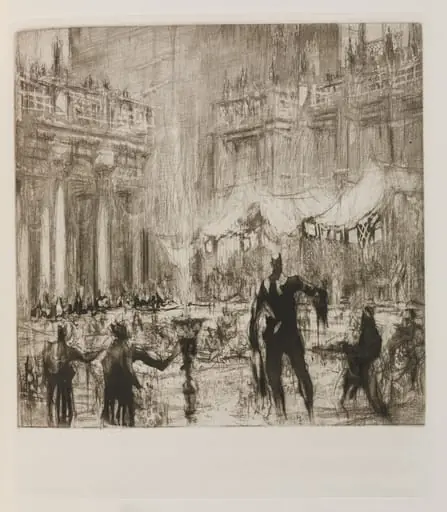
Untitled is an ink print by the Impressionist artist James Ensor. It dates from 1896 and is held in the collection of the Museum of Modern Art.
About this work
Overview
Executed in his Ostend studio, the work reflects his deep engagement with printmaking as a medium for psychological and satirical expression.
Created in 1896 by Belgian artist James Ensor, this drypoint and etching is one of many prints from his late career that delve into themes of mortality and social absurdity. Executed in his Ostend studio, the work reflects his deep engagement with printmaking as a medium for psychological and satirical expression. Unlike his paintings, these prints often amplify distortion and tension through fine, incised lines.
Subject & Meaning
The scene depicts a dense assembly of identical skull-like faces beneath a balcony, where a solitary dark-clad figure holds a long rod pointing toward a floating skeletal angel. The crowd’s uniformity suggests anonymity and collective mindlessness, while the angel and rod imply judgment or divine intervention. The swirling sky, filled with spectral forms, amplifies an atmosphere of dread and cosmic unease, evoking themes of death and societal decay.
Technique & Style
Ensor employed drypoint and etching to achieve sharp, jagged lines that convey agitation and motion. The dense cross-hatching and deep incisions create high contrast, emphasizing the grotesque forms and claustrophobic composition. The uniformity of the skull faces is rendered with repetitive, almost mechanical strokes, reinforcing their dehumanized quality. The technique allows for both precision and raw expressiveness, characteristic of Ensor’s printmaking approach.
History & Provenance
This print emerged during a period when Ensor was increasingly focused on printmaking, producing works that challenged academic norms. Though unsigned and untitled, it aligns with a series of prints he made in the mid-1890s, often circulated among avant-garde circles in Belgium. It was likely produced in limited editions, shared with members of Les XX, and later entered private and institutional collections through direct acquisition or estate distribution.
Context
In late 19th-century Belgium, Ensor stood apart from traditional realism, aligning with the experimental group Les XX. His work responded to rising anxieties around modernity, religion, and identity. While contemporaries explored Impressionism or Symbolism, Ensor turned to satire and the grotesque, using printmaking to bypass gallery constraints and reach audiences directly with unsettling, personal visions.
Legacy
Ensor’s prints, including this one, influenced early 20th-century Expressionists and Surrealists through their psychological intensity and rejection of naturalism. The work’s fusion of satire and horror prefigured later explorations of collective fear and alienation in art. Though less celebrated than his paintings, these prints remain vital for understanding his role in expanding the expressive potential of graphic media.
Artist & collection
Artist
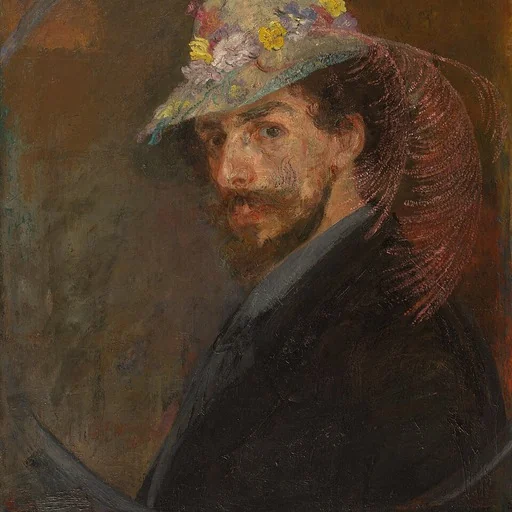
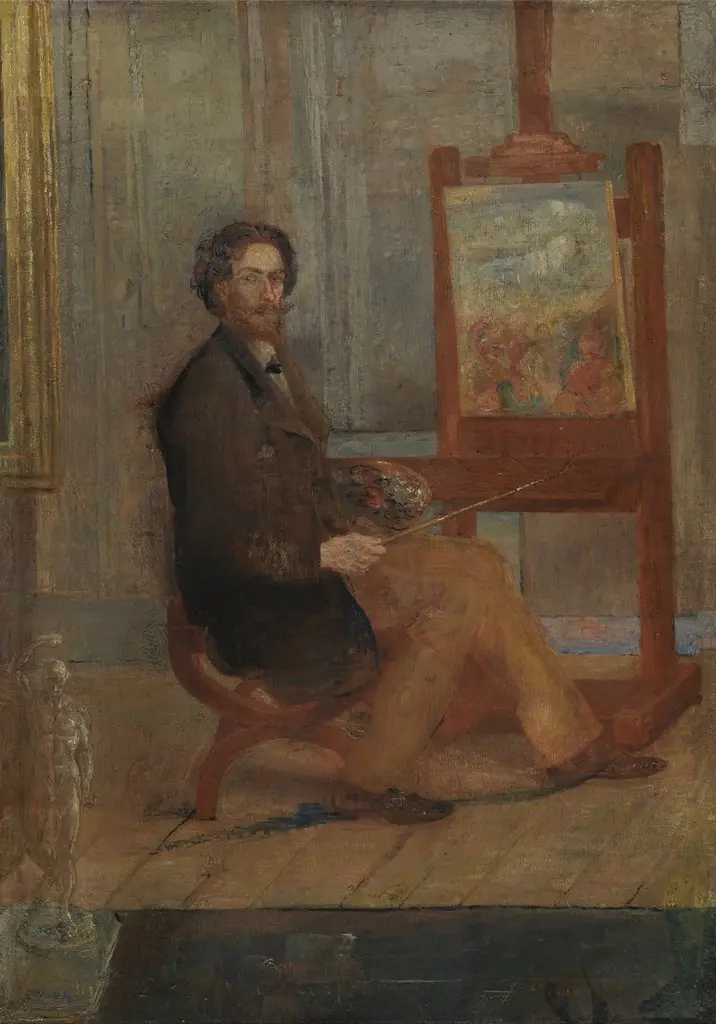
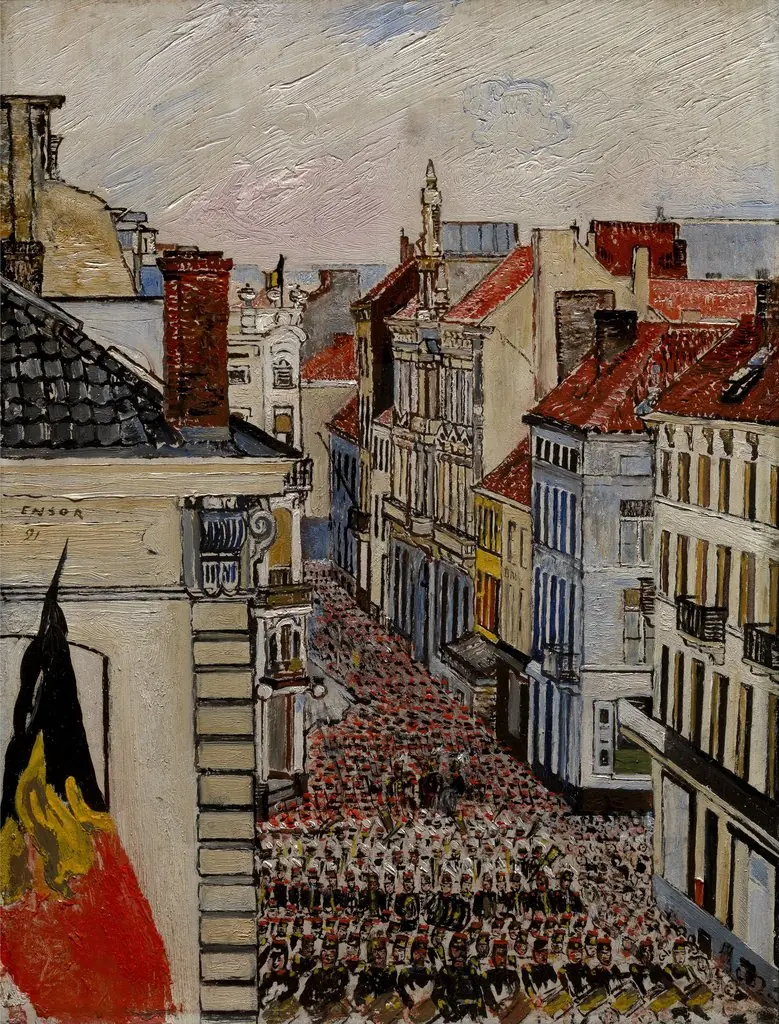
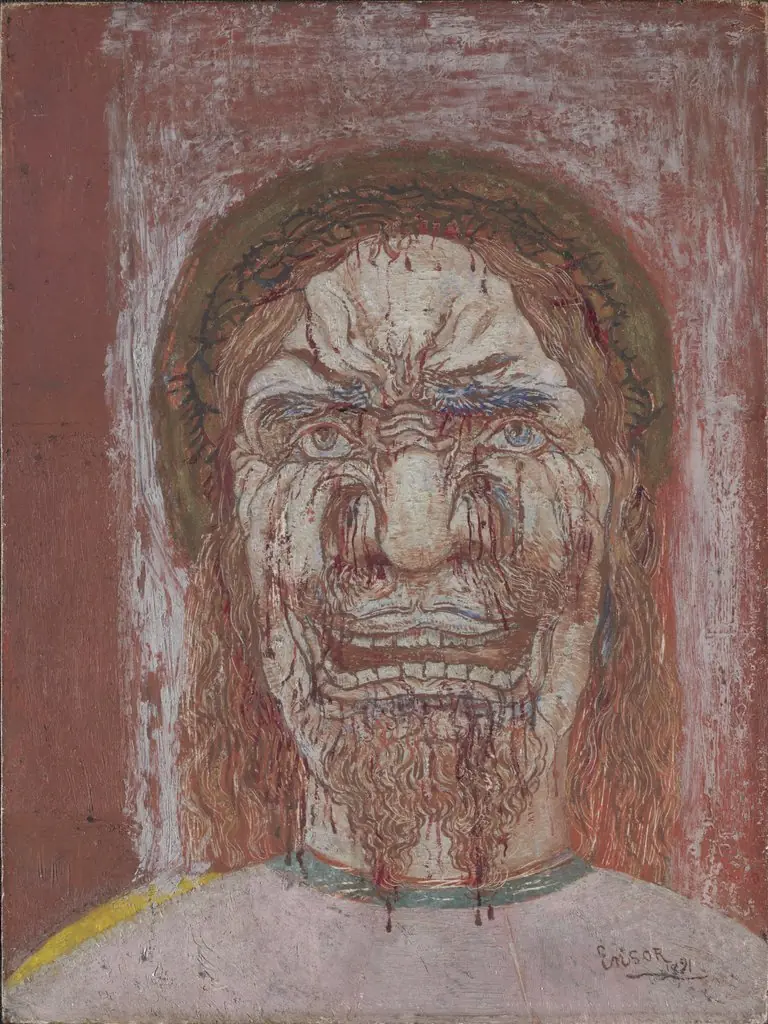
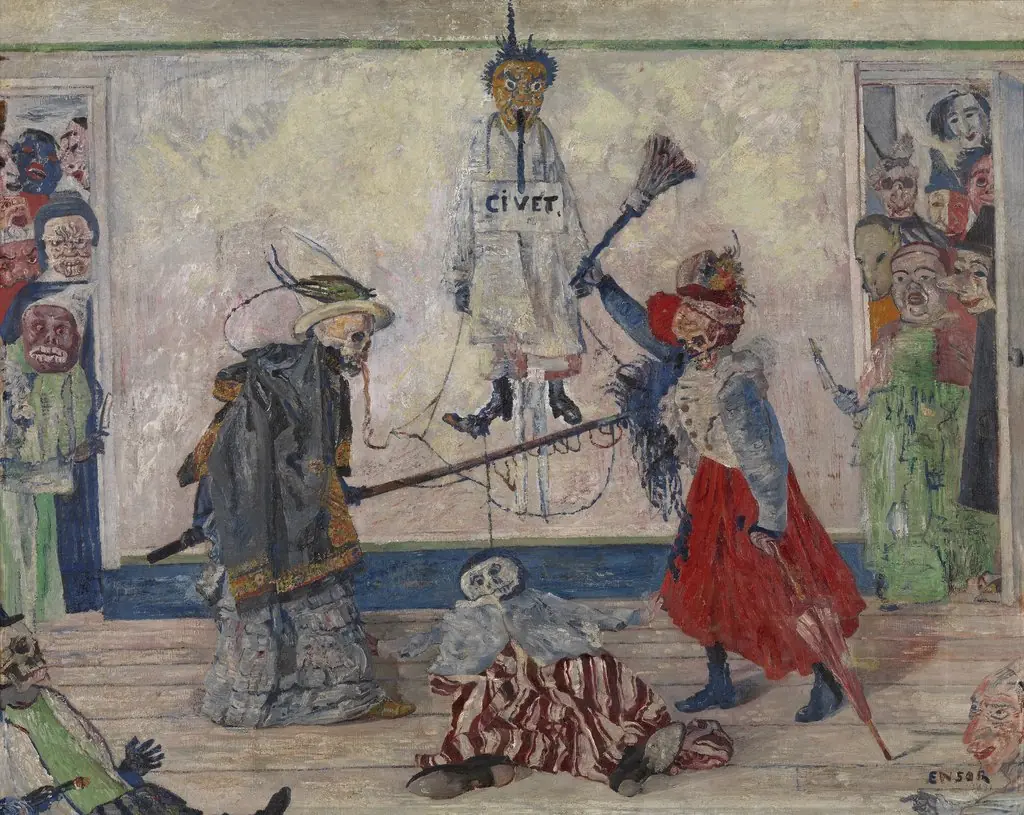
James Sidney Edouard, Baron Ensor (13 April 1860 – 19 November 1949) was a Belgian painter and printmaker, an important influence on expressionism and surrealism who lived in Ostend for most of his life.

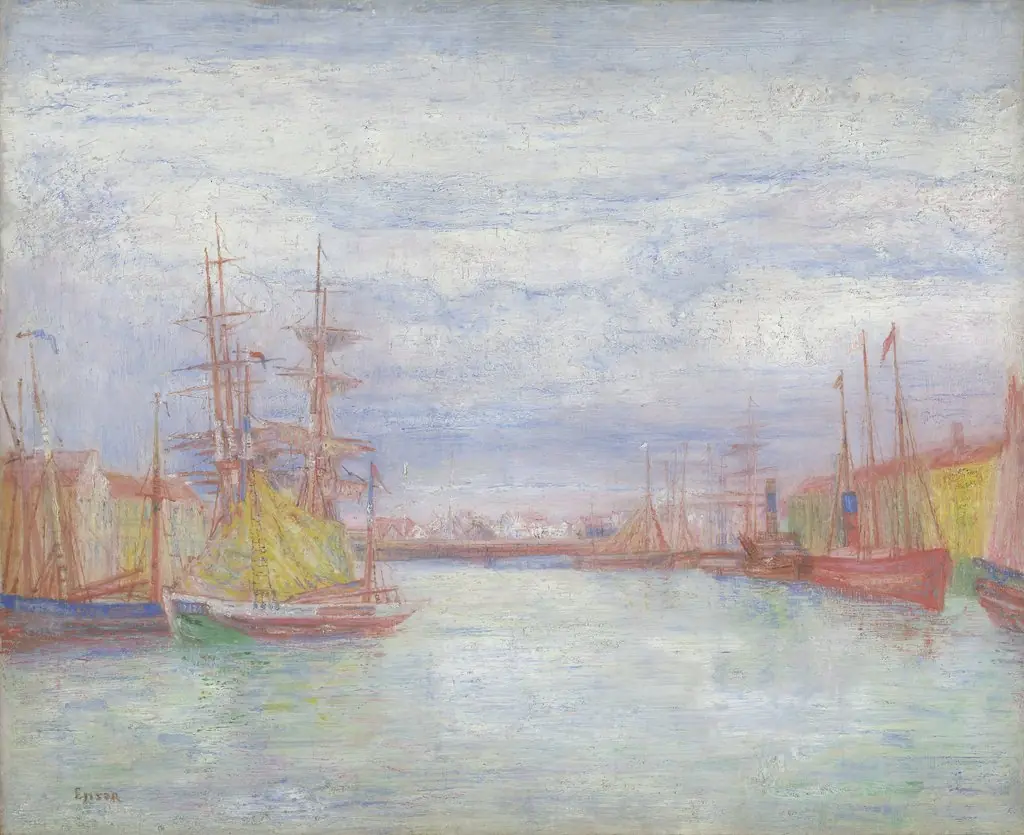
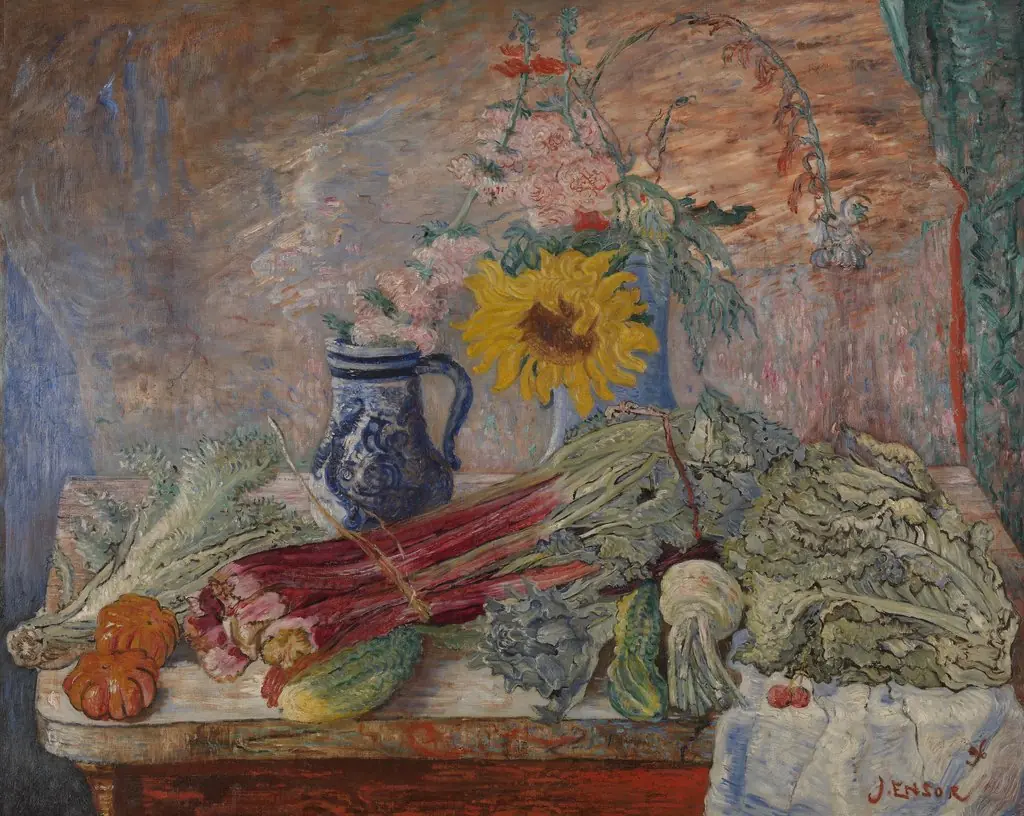
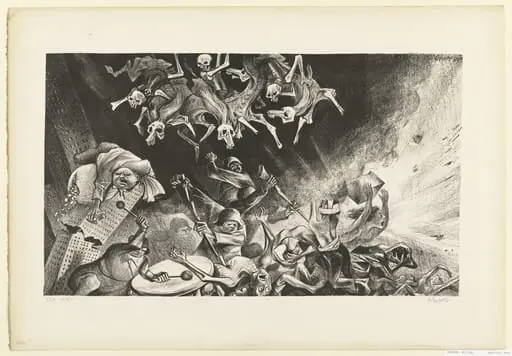 Untitled
 Untitled
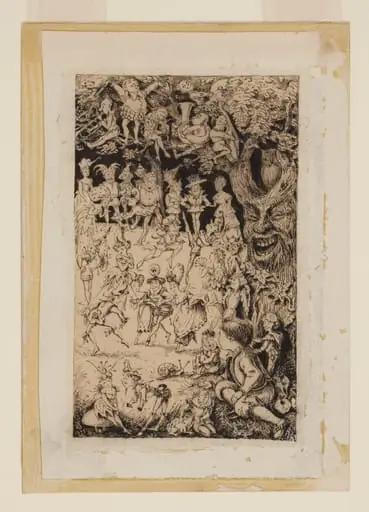 Untitled
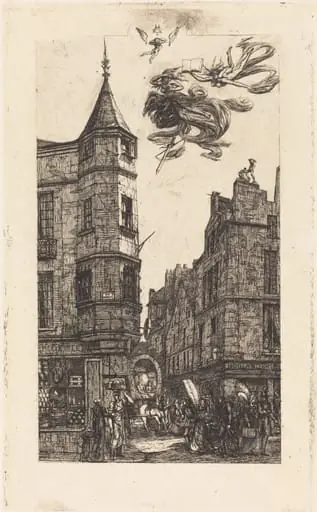 Tourelle, Rue de l'École de Médecine, 22, Paris (House with a Turret, No. 22, Street of the School of Medecine, Paris)
 Untitled
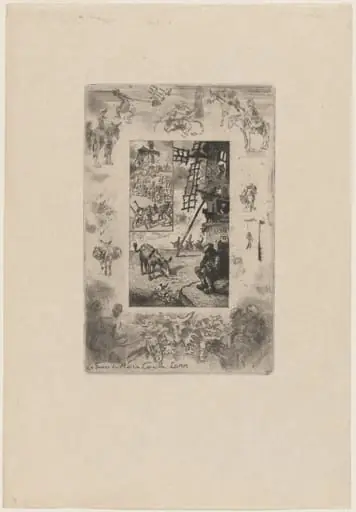 Le Secret du Maîtres Cornille
 Herodias: Page 45, But now beginning at the farthest end of the banquet hall a murmur of surprise and admiration. A young girl began to enter