Artwork
In a Monastery Garden
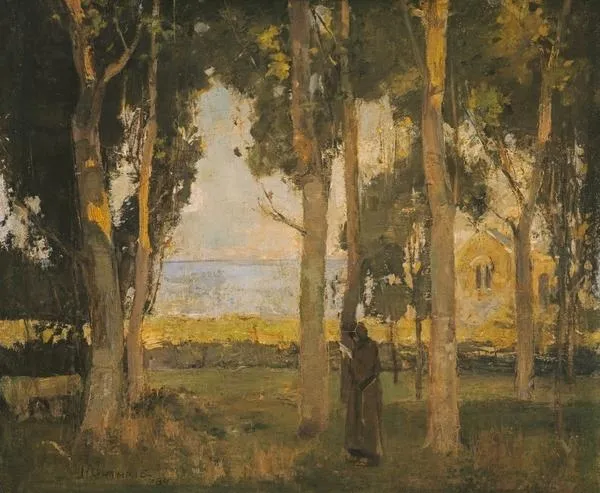
In a Monastery Garden is an oil painting by the Post-Impressionist artist James Guthrie. It dates from 1892 and is held in the collection of the National Galleries Scotland.
About this work
Overview
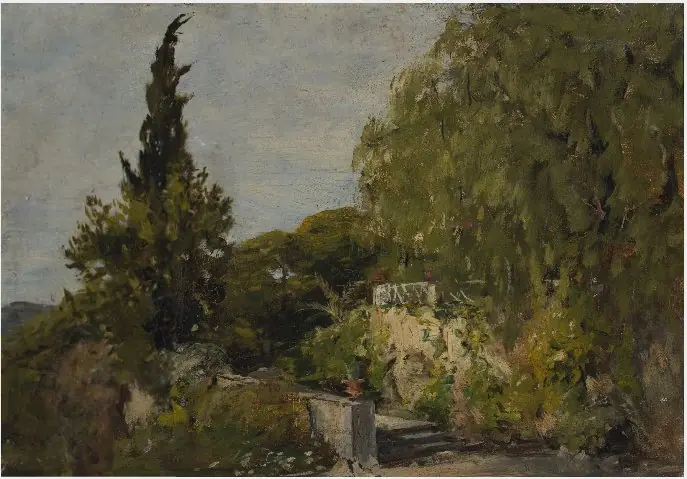
In a Monastery Garden, painted in 1892 by Scottish artist James Guthrie, is a post-impressionist work characterized by a serene monastery garden landscape. Executed in oil paint, the piece conveys depth and texture, guiding the viewer through the tranquil scene.
Subject & Meaning
The painting depicts a peaceful monastery garden dominated by tall, slender trees and lush foliage, set against a distant building and water body. The subtle interplay of light and shadow imbues the scene with warmth and tranquility, evoking an atmosphere of contemplation.
Technique & Style
Guthrie's use of oil paint in this work achieves a sense of depth and texture. The post-impressionist approach is evident in the emphasis on capturing the emotional and psychological depth of the scene through light and shadow effects.
History & Provenance
James Guthrie, later knighted and associated with both portraiture and Scottish Realism, created this piece during his affiliation with the Glasgow Boys. The painting is now part of the collection at the Scottish National Gallery.
Context
As a post-impressionist work from 1892, In a Monastery Garden reflects the artistic shift towards emphasizing emotional and psychological depth in landscapes during the late 19th century, a period when Scottish artists were exploring new modes of expression.
Legacy
While Guthrie was renowned for portraiture in his lifetime, works like In a Monastery Garden have contributed to his modern association with Scottish Realism, highlighting his versatility across genres.
Artist & collection
Artist
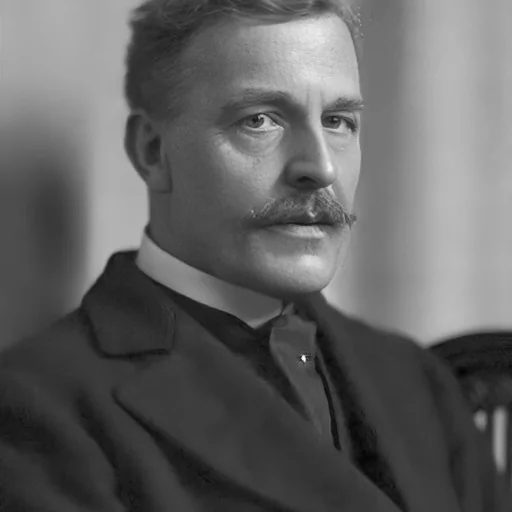
Sir James Guthrie (10 June 1859 – 6 September 1930) was a Scottish painter, associated with the Glasgow Boys. He is best known in his own lifetime for his portraiture, although today more generally regarded as a painter of Scottish Realism.

 View of Asia Minor. From the journey to Constantinople
 The Sunny South
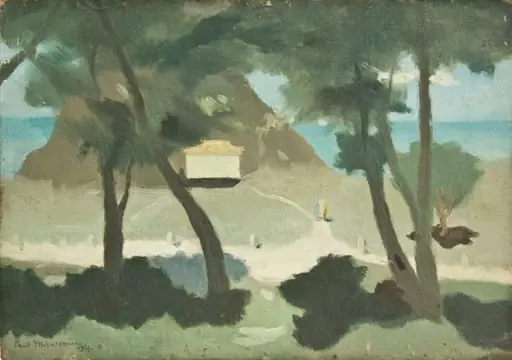 Peisaj dobrogean
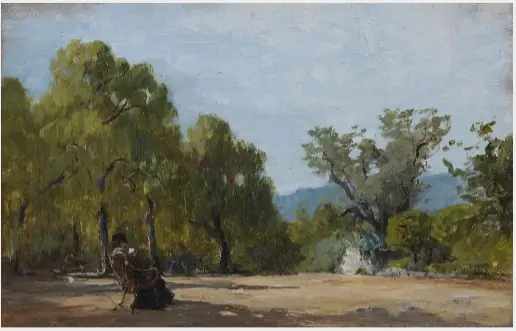 A View in a Park with the Seated Figure of a Lady
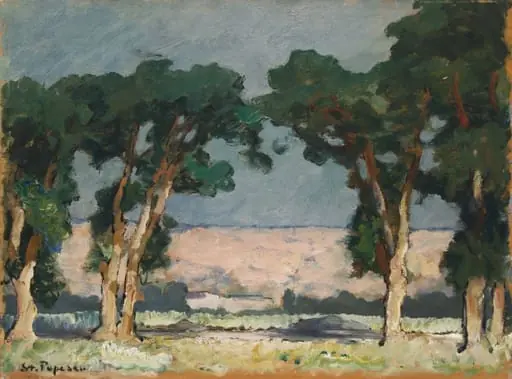 Peisaj
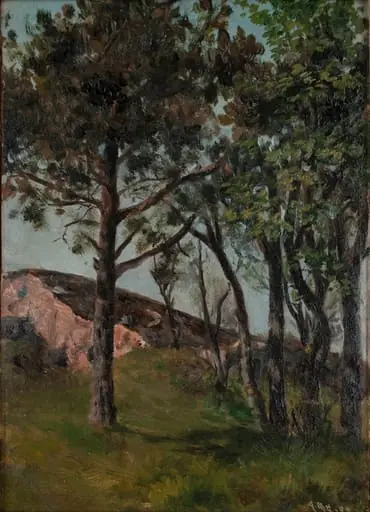 Kaartin puutarhassa
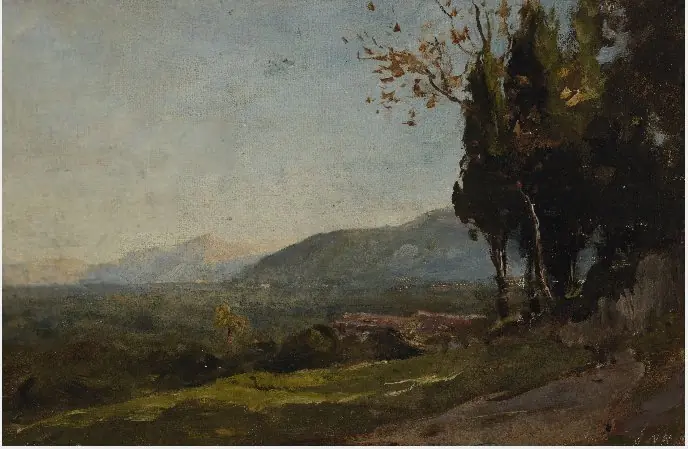 A View of the Maritime Alps
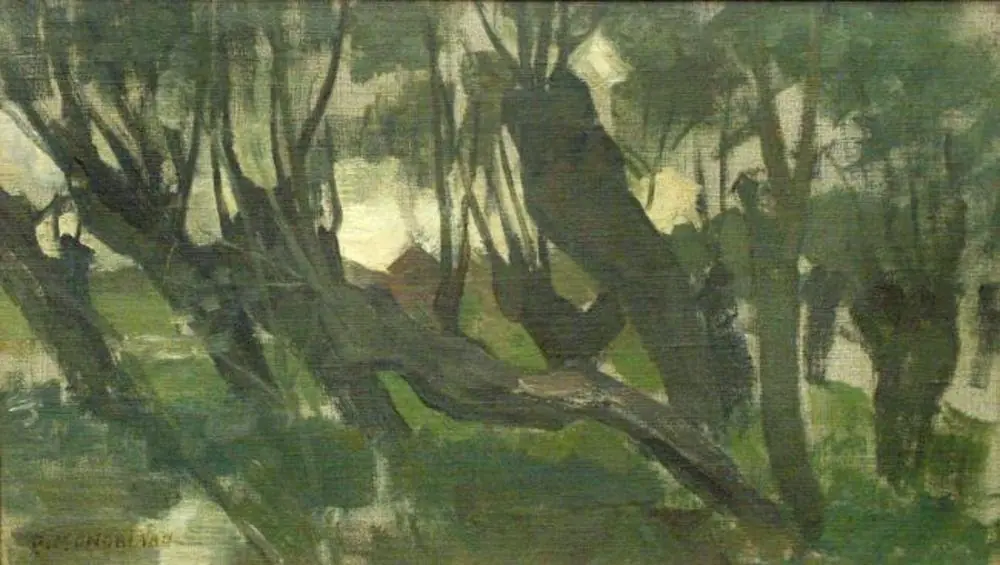 Willow grove, trunks leaning left II
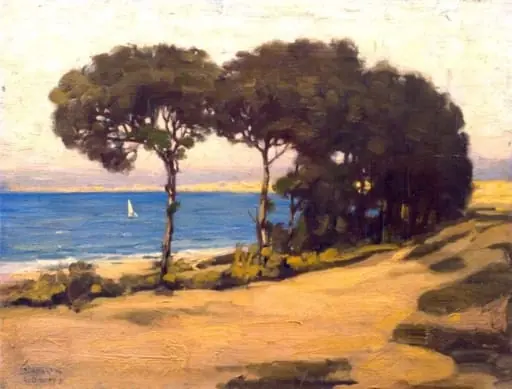 Pomi la malul mării
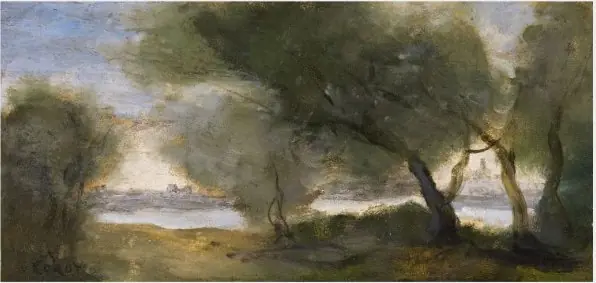 Willows
 The milking shed
 The Terrace of Villa Monticello, Nice