Artwork
Sheepshearing
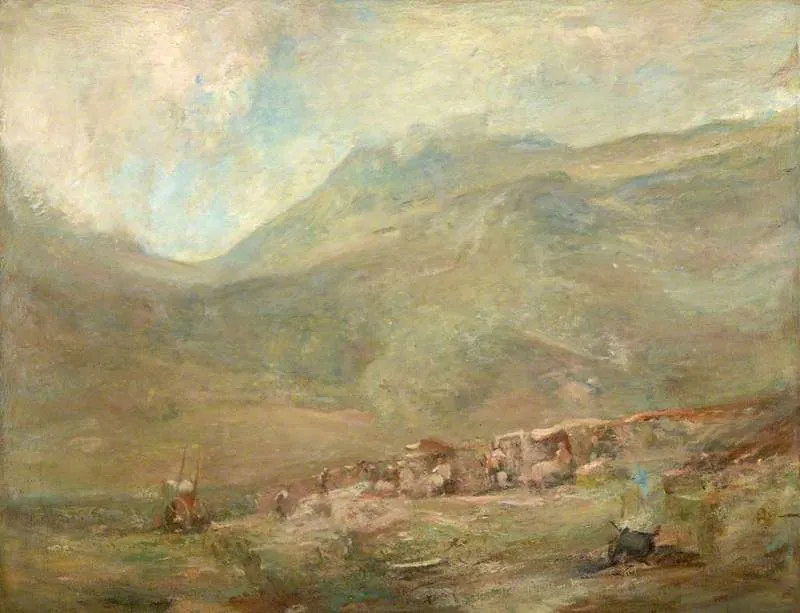
Sheepshearing is an oil painting by James Lawton Wingate. It dates from 1895 and is held in the collection of the National Galleries Scotland.
About this work
Overview
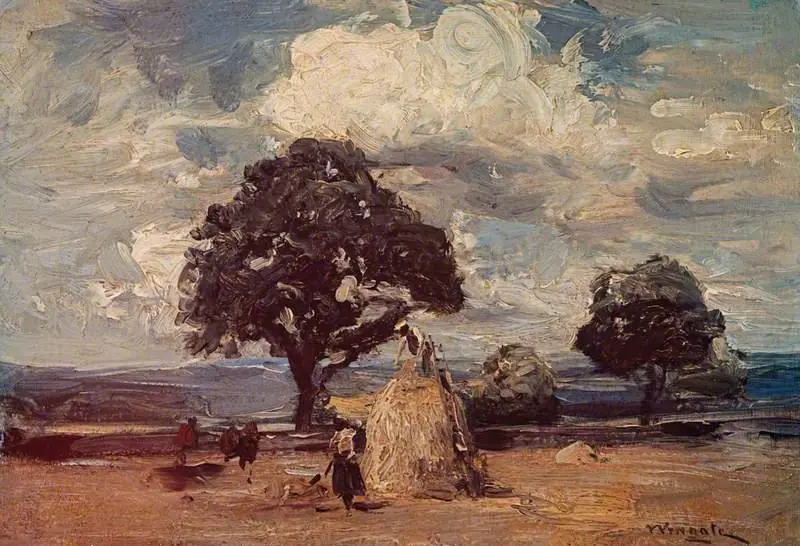
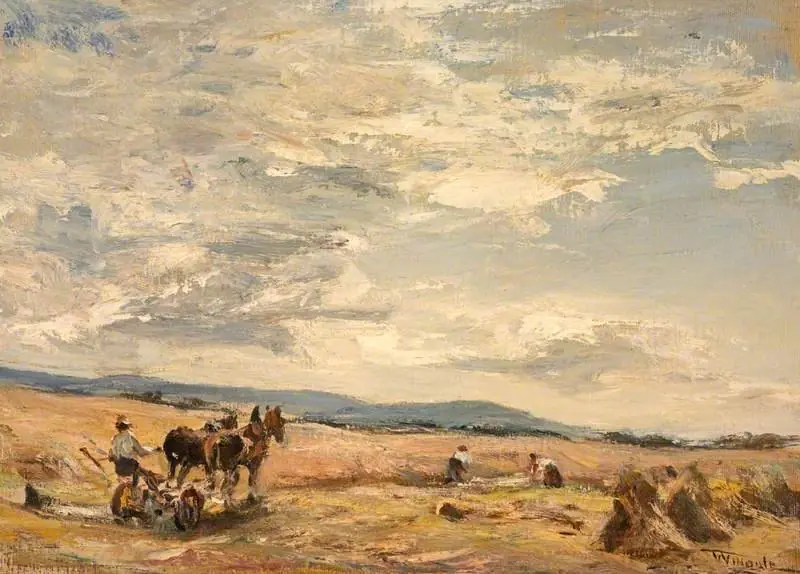
The work portrays a quiet rural scene where a flock of sheep gathers beside a stone wall while a shepherd attends to them, all set beneath a softly clouded sky.
James Lawton Wingate’s oil painting Sheepshearing, executed around 1895, is part of the Scottish National Gallery’s collection. The work portrays a quiet rural scene where a flock of sheep gathers beside a stone wall while a shepherd attends to them, all set beneath a softly clouded sky. The composition balances open landscape with intimate activity, inviting the viewer to linger in its calm atmosphere.
Subject & Meaning
The canvas captures a moment of traditional agricultural labor, emphasizing the relationship between man, animal, and land. By focusing on the shepherd’s careful handling of the flock, the painting reflects the rhythms of rural life in late‑19th‑century Scotland, suggesting themes of stewardship, community, and the seasonal cycles that shape countryside existence.
Technique & Style
Wingate employs a palette of muted earth tones punctuated by the pale whites of the sheep, using light to model the rolling hills and give depth to the sky. His brushwork is loose yet deliberate, allowing forms to suggest rather than delineate, which creates a sense of atmospheric perspective and contributes to the work’s tranquil mood.
History & Provenance
Created circa 1895, Sheepshearing entered the Scottish National Gallery’s holdings at an unspecified later date, becoming a representative example of Wingate’s rural subjects. The painting has remained in public view, offering insight into the artist’s oeuvre and the visual documentation of Scottish pastoral practices during the period.
Context
During the 1890s, Scottish artists often turned to the countryside for inspiration, responding to industrial change with nostalgic depictions of agrarian life. Wingate’s focus on everyday tasks such as shearing aligns with this broader movement, situating the work within a national dialogue about identity, tradition, and the visual celebration of the rural landscape.
Artist & collection