Artwork
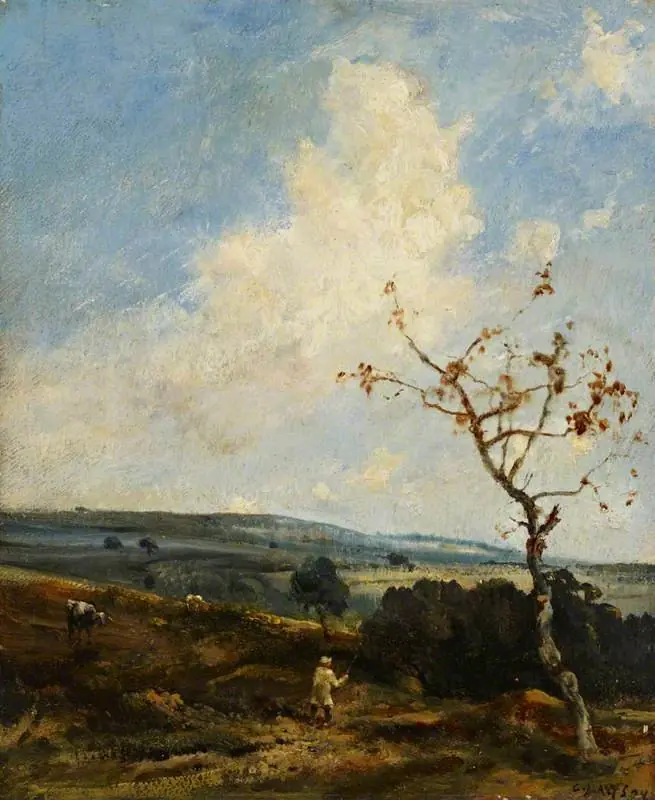
The White Cloud
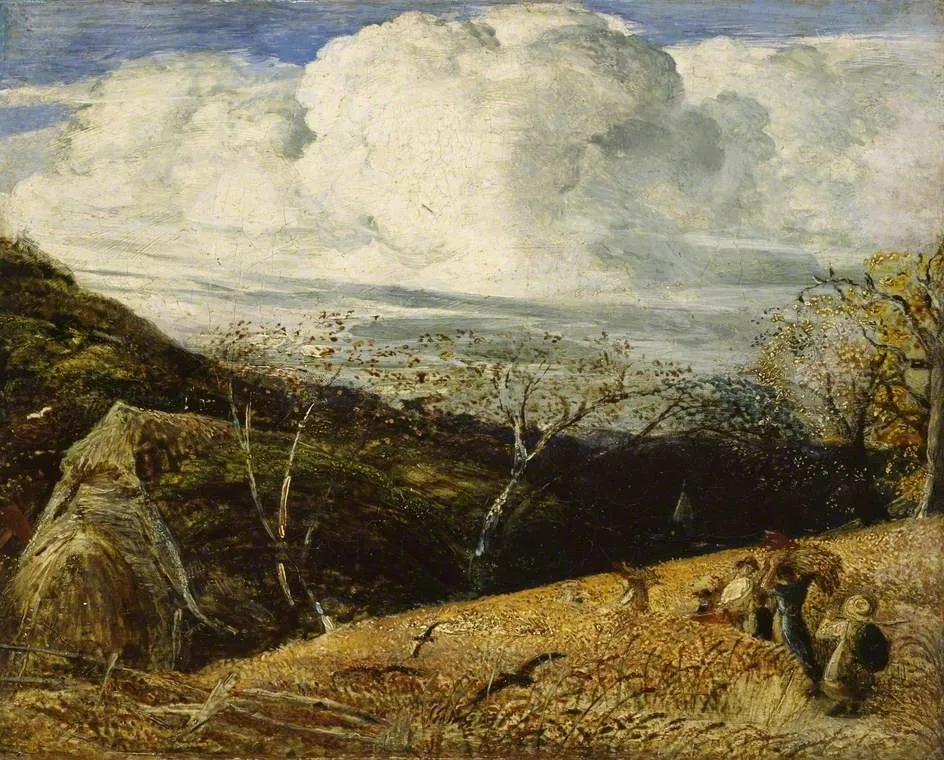
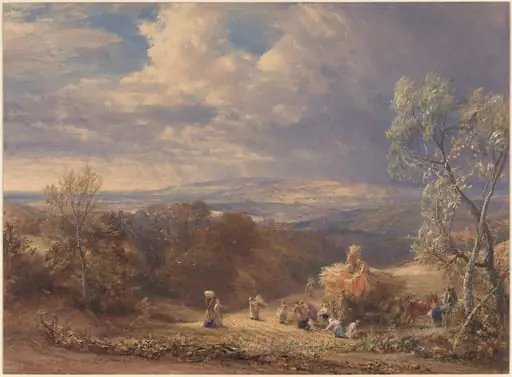
The White Cloud is an oil painting by Samuel Palmer. It dates from 1833 and is held in the collection of the Ashmolean Museum.
About this work
Overview
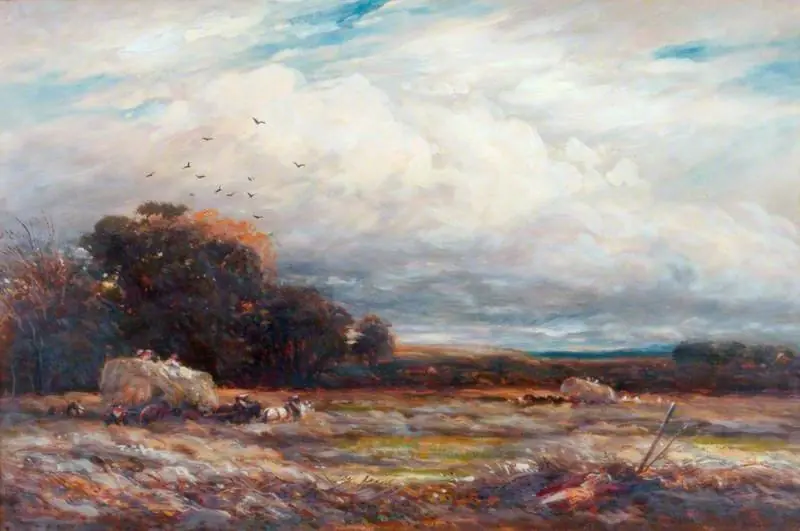
It is a landscape that captures a quiet moment in the English countryside, marked by a dominant white cloud and subdued earth tones.
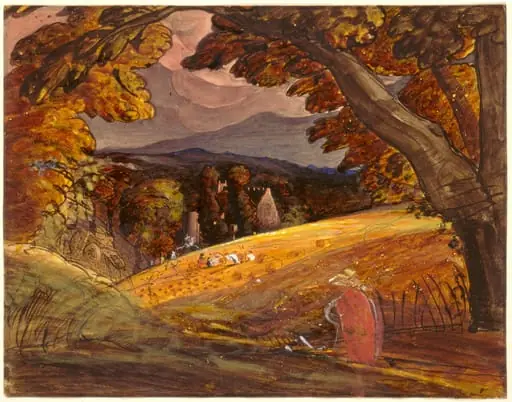
Samuel Palmer painted *The White Cloud* in 1833 using oil on canvas. It is a landscape that captures a quiet moment in the English countryside, marked by a dominant white cloud and subdued earth tones. Palmer, associated with the Shoreham group, infused his scenes with a contemplative stillness. The work is part of the Ashmolean Museum’s permanent collection, reflecting his enduring role in 19th-century British art.
Subject & Meaning
The painting portrays rural laborers tending a field beneath a vast, luminous cloud. The figures are small and integrated into the land, suggesting harmony between human activity and nature. The cloud, unusually prominent, evokes a sense of the sublime—not as dramatic or threatening, but as serene and watchful. This reflects Palmer’s spiritual view of the natural world, shaped by mystical and pastoral ideals.
Technique & Style
Palmer employed thick, textured brushwork to build the surface of the painting, enhancing the tactile quality of the landscape. Earthy greens and browns ground the scene, while the white cloud is rendered with soft, layered strokes that catch the light. The composition directs attention upward, emphasizing the sky’s emotional weight. His style blends realism with a dreamlike softness, characteristic of his Romantic vision.
History & Provenance
Created during Palmer’s time in Shoreham, Kent, *The White Cloud* belongs to a series of works from the early 1830s when he was deeply influenced by William Blake’s visionary aesthetics. The painting remained in private hands until acquired by the Ashmolean Museum, where it has been held since the mid-20th century. Its preservation reflects its significance within British Romantic painting.
Context
Palmer worked in the shadow of industrial expansion, and his landscapes offered a retreat into an idealized rural past. *The White Cloud* aligns with the broader Romantic movement’s fascination with nature as a source of spiritual renewal. Unlike urban-focused contemporaries, he turned to quiet, pastoral settings, drawing from biblical and poetic imagery to elevate ordinary scenes into meditative experiences.
Legacy
Though less widely known than some of his peers, Palmer’s influence grew in the 20th century as critics reevaluated his unique synthesis of realism and mysticism. *The White Cloud* exemplifies his ability to transform ordinary landscapes into quiet, luminous visions. His work continues to inspire artists interested in the emotional resonance of nature and the quiet dignity of rural life.
Artist & collection
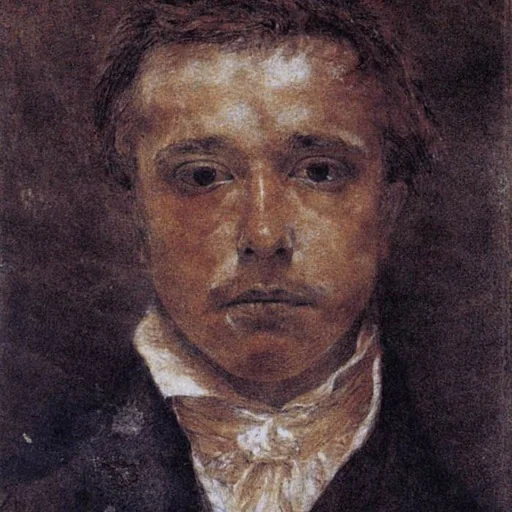
Artist
Samuel Palmer Hon.RE (Hon. Fellow of the Society of Painter-Etchers) (27 January 1805 – 24 May 1881) was a British landscape painter, etcher and printmaker. He was also a prolific writer. Palmer was a key figure in…