Artwork
The Carrara Mountains from Pisa
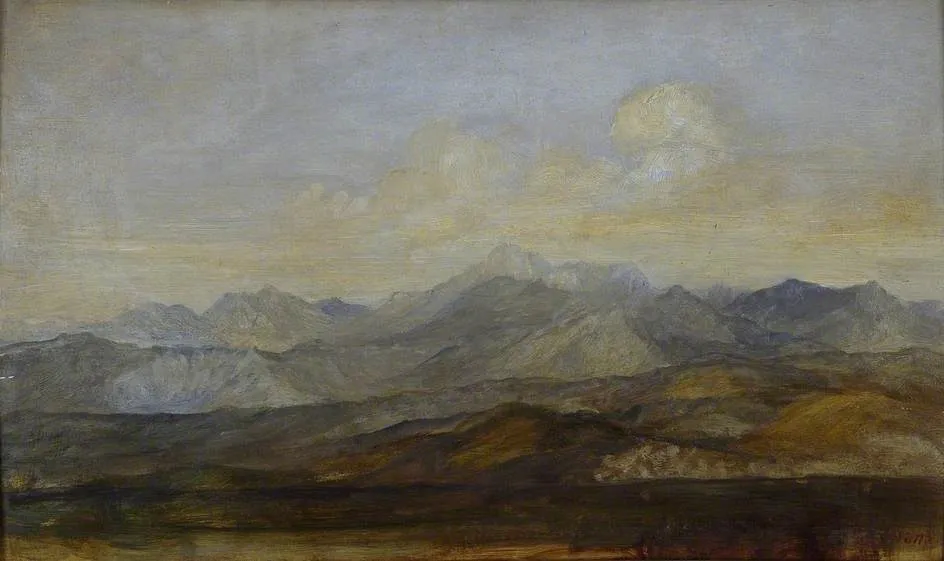
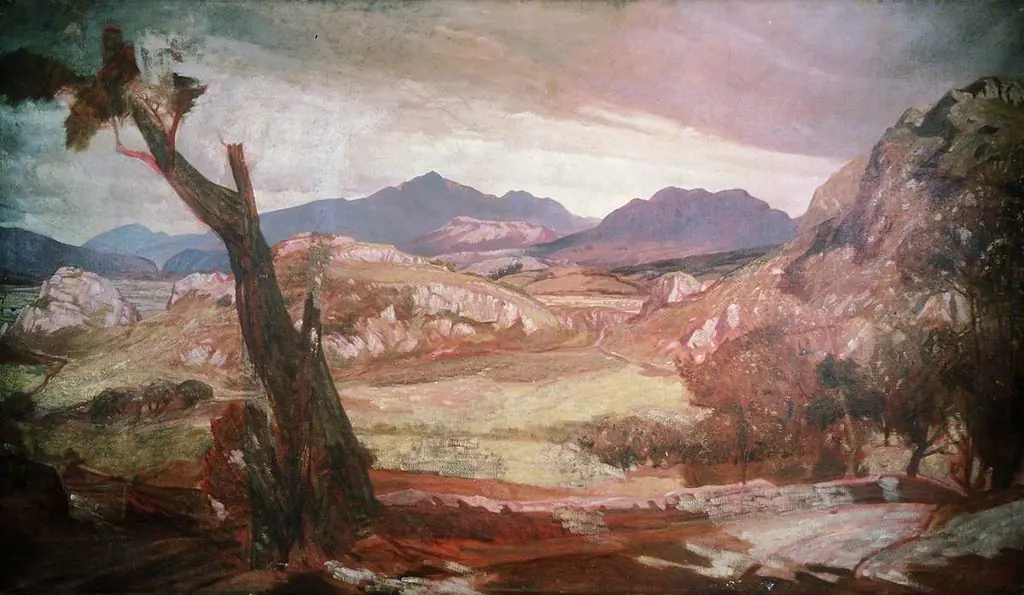
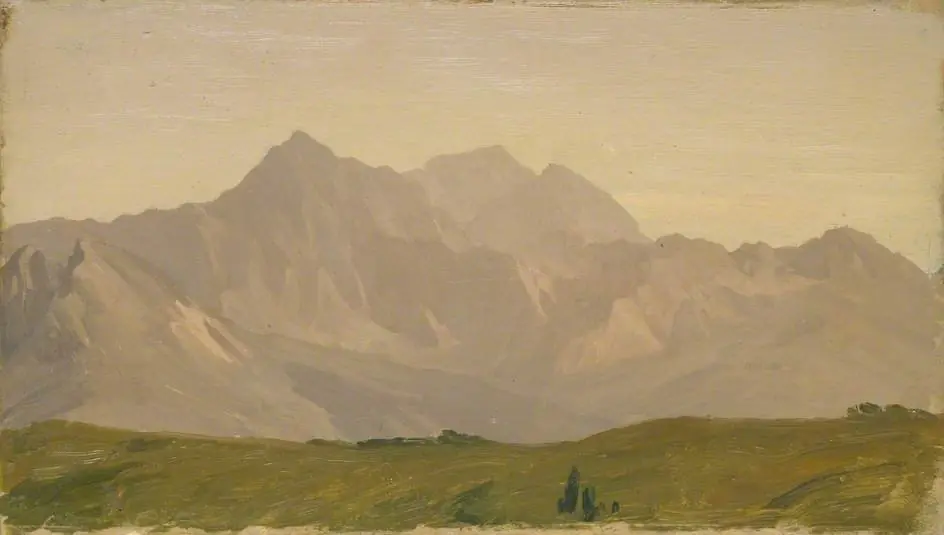
The Carrara Mountains from Pisa is an oil painting by George Frederic Watts. It dates from 1867 and is held in the collection of the Ashmolean Museum.
About this work
Overview
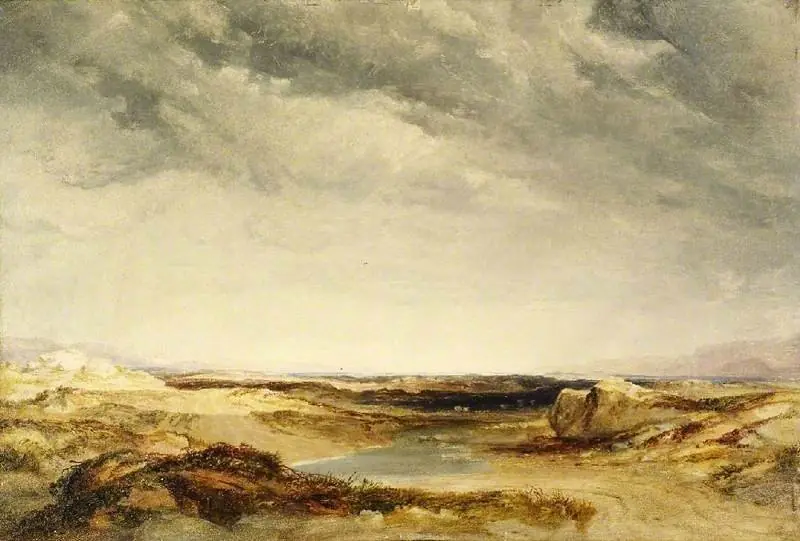
Painted around 1867, *The Carrara Mountains from Pisa* is an oil landscape by British artist George Frederic Watts. Though best known for allegorical subjects, this work reflects his engagement with natural scenery during a period of travel in Italy. The painting captures a distant view of the Apuan Alps as seen from the plains near Pisa, rendered with restrained tonality and quiet composition.
Subject & Meaning
The painting presents the Carrara Mountains not as a tourist vista but as a silent, enduring presence.
The painting presents the Carrara Mountains not as a tourist vista but as a silent, enduring presence. Their mass dominates the upper half of the canvas, suggesting geological time and natural permanence. The absence of human figures or narrative elements shifts focus to the landscape itself, evoking contemplation rather than storytelling, consistent with Watts’s broader interest in universal themes.
Technique & Style
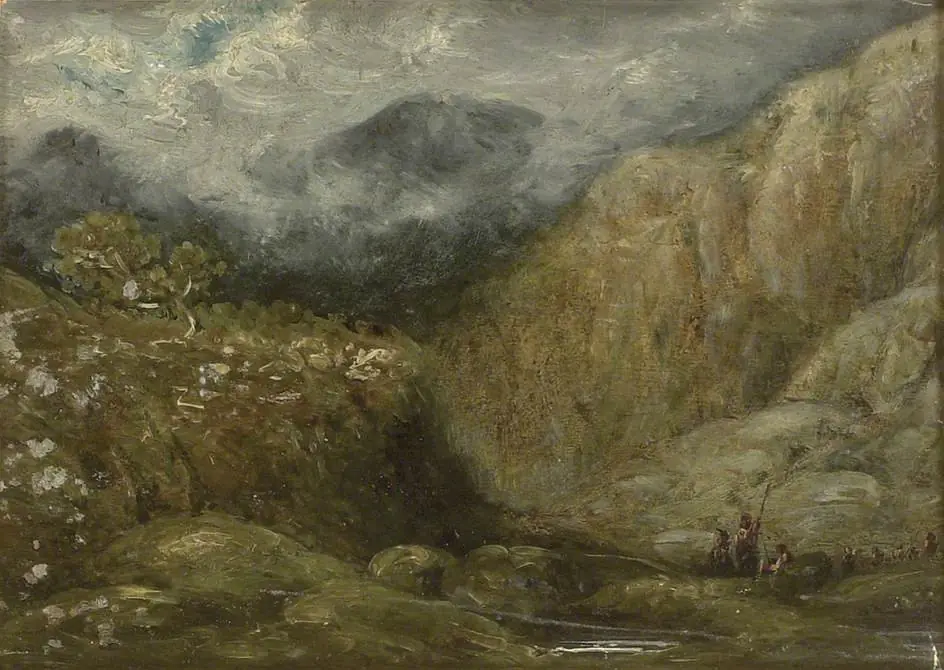
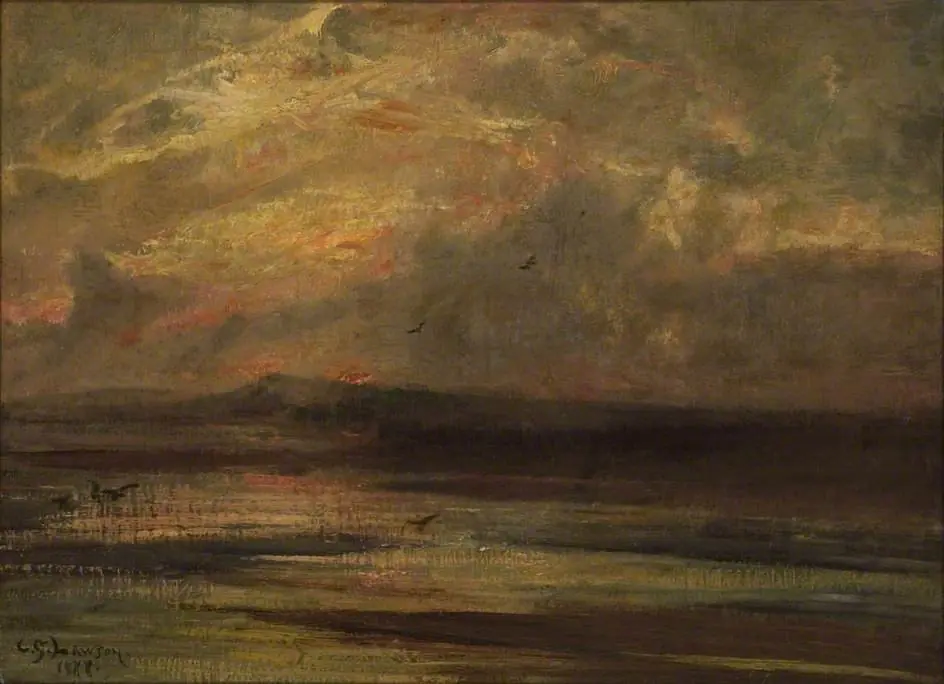
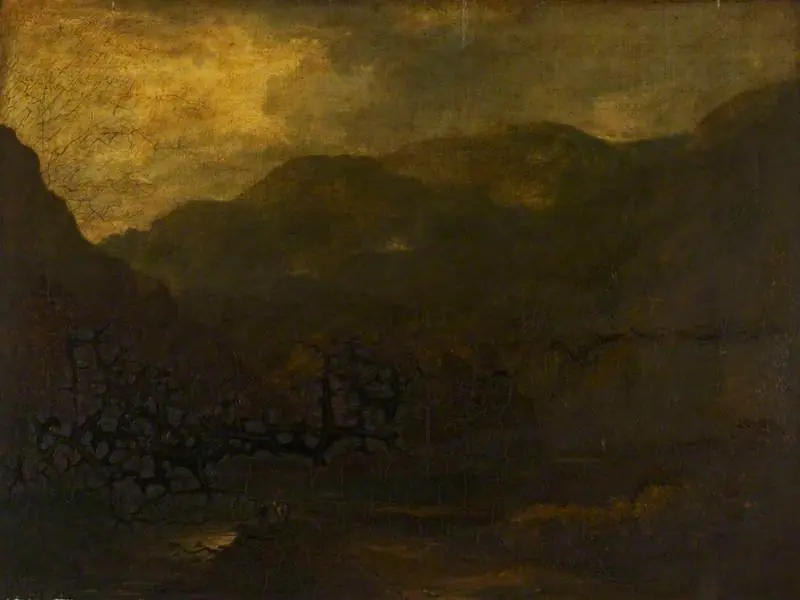
Watts employed a muted palette of grays, browns, and blacks to convey the limestone peaks and shadowed valleys. Brushwork is subdued, with soft transitions between tones and minimal detail in the distant forms. The sky, lightly washed with pale gray and scattered cloud highlights, balances the weight of the mountains, creating a sense of calm spatial harmony without dramatic contrast.
History & Provenance
The painting entered the Ashmolean Museum’s collection in the late 19th century, likely through direct acquisition or donation following Watts’s growing reputation in Britain. Its presence there reflects institutional interest in his lesser-known landscapes, which contrast with his more widely exhibited symbolic works. The work has remained in the museum’s care since its acquisition.
Context
Watts painted this during a stay in Italy, a time when many British artists sought inspiration in classical and natural landscapes. Unlike contemporaries who emphasized picturesque detail, Watts favored atmospheric suggestion. This work aligns with his broader artistic philosophy: to convey emotional and philosophical weight through restrained visual means.
Legacy
While not among Watts’s most famous works, *The Carrara Mountains from Pisa* illustrates his capacity to infuse landscape with introspective tone. It stands as a quiet counterpoint to his allegories, revealing his sensitivity to nature’s quiet grandeur. The painting continues to be studied for its role in understanding the breadth of his artistic vision beyond symbolism.
Artist & collection
Artist
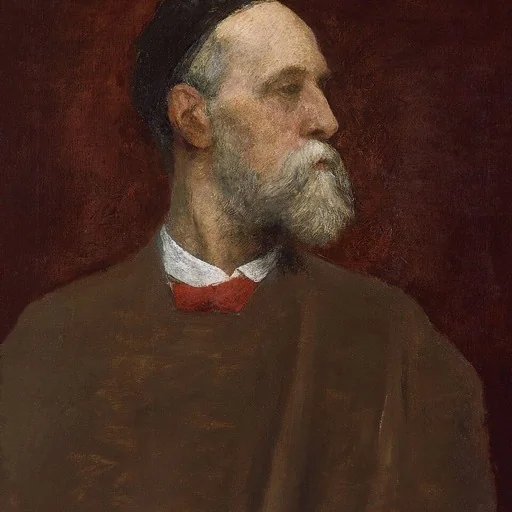
George Frederic Watts (23 February 1817 – 1 July 1904) was a British painter and sculptor associated with the Symbolist movement.