Artwork
Drouet
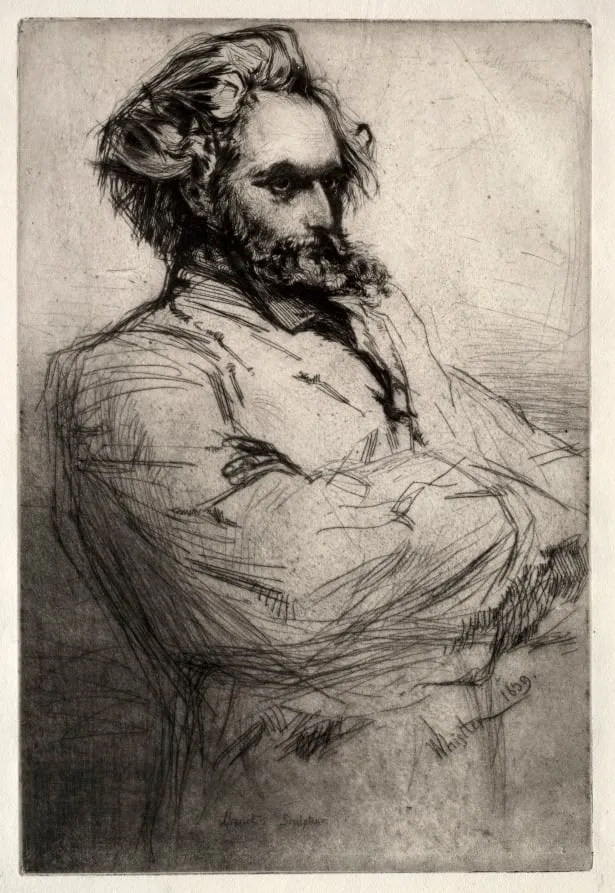
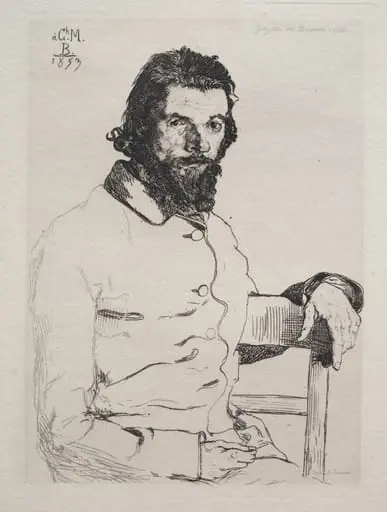
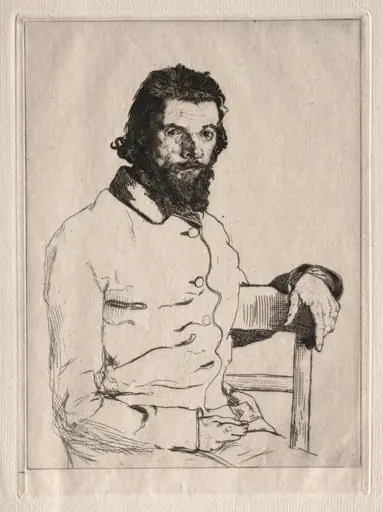
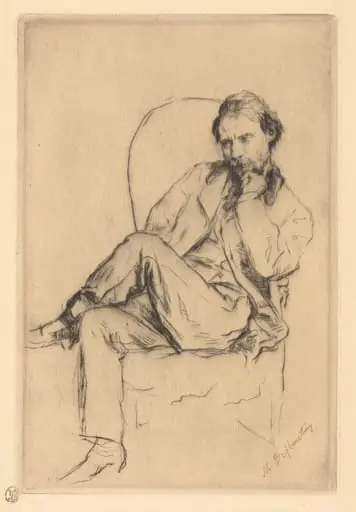
Drouet is a print by the Impressionist artist James McNeill Whistler. It dates from 1859 and is held in the collection of the Cleveland Museum of Art.
About this work
Overview
The work presents a seated male figure in a quiet, introspective pose, rendered with minimal detail and a restrained tonal range.
Created in 1859 by James McNeill Whistler, Drouet is a charcoal and pencil drawing on paper. It resides in The Cleveland Museum of Art’s collection. The work presents a seated male figure in a quiet, introspective pose, rendered with minimal detail and a restrained tonal range. Its simplicity and focus on the individual reflect Whistler’s early interest in capturing character through understated means.
Subject & Meaning
The subject is believed to be a French laborer named Drouet, depicted in a moment of stillness. His crossed arms, lowered gaze, and unadorned attire suggest contemplation or fatigue. Whistler avoids idealization, presenting the man with unembellished dignity. The absence of narrative context invites viewers to consider the inner life of an ordinary person, aligning with 19th-century shifts toward human-centered observation.
Technique & Style
Whistler employed charcoal and pencil with subtle gradations to model form and suggest volume. The background is left largely unworked, allowing the figure to emerge through contrast and soft shading. Loose, economical lines define the rolled sleeves and disheveled hair, while the face is rendered with careful attention to texture and shadow. The technique prioritizes atmosphere over detail, anticipating later tonalist approaches.
History & Provenance
Drouet was made during Whistler’s time in Paris, where he studied under academic painters but gravitated toward independent subjects. The drawing remained in his personal collection until his death, later entering the Cleveland Museum of Art through a bequest in 1932. Its preservation reflects Whistler’s own valuation of these intimate studies as significant works, not mere preparatory sketches.
Context
In the late 1850s, European art saw growing interest in depicting non-elite subjects with sincerity. While Realism, as championed by Courbet, emphasized social commentary, Whistler’s approach was more psychological. Drouet aligns with this quieter strain of observation, distinct from the theatricality of academic portraiture and the emerging Impressionist focus on light and movement.
Legacy
Drouet exemplifies Whistler’s early commitment to capturing the essence of individuals through restraint. Though less known than his later nocturnes, this work influenced his evolving aesthetic of mood and minimalism. It stands as a quiet precursor to his mature style, demonstrating how simplicity and focus could convey depth without ornamentation.
Artist & collection
Artist
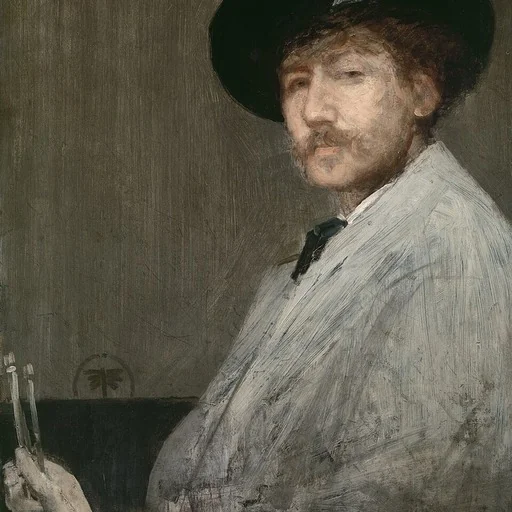
James Abbott McNeill Whistler was an American painter in oils and watercolor, and printmaker, active during the American Gilded Age and based primarily in the United Kingdom.

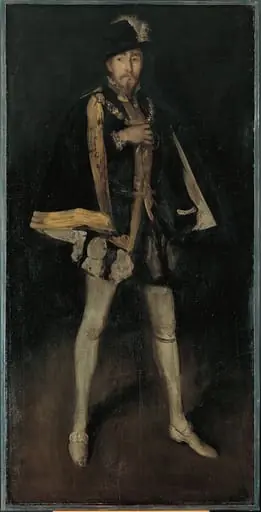 Arrangement in Black, No. 3: Sir Henry Irving as Philip II of Spain
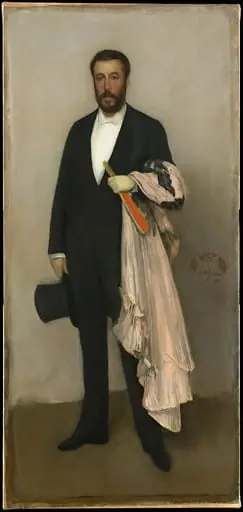 Arrangement in Flesh Colour and Black: Portrait of Theodore Duret
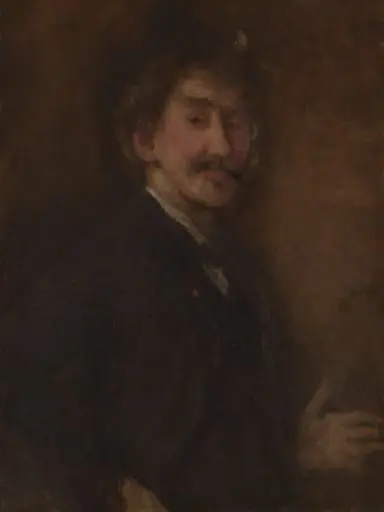 Gold and Brown: Self-Portrait
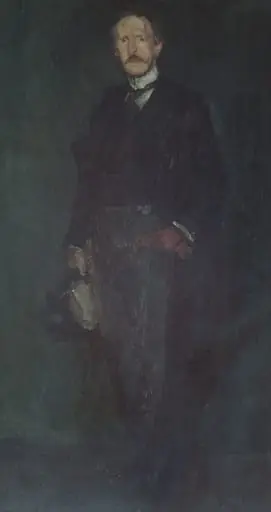 Edward Guthrie Kennedy
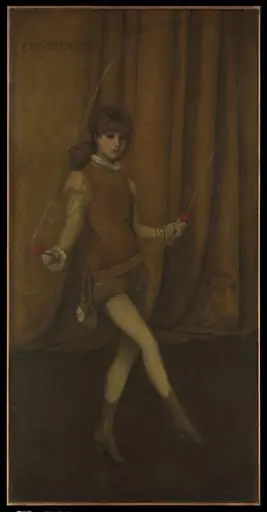 Harmony in Yellow and Gold: The Gold Girl—Connie Gilchrist
 George W. Vanderbilt
 Symphony in White, No. 1: The White Girl
 Henry Irving as Philip II of Spain