Artwork
Antonin Proust
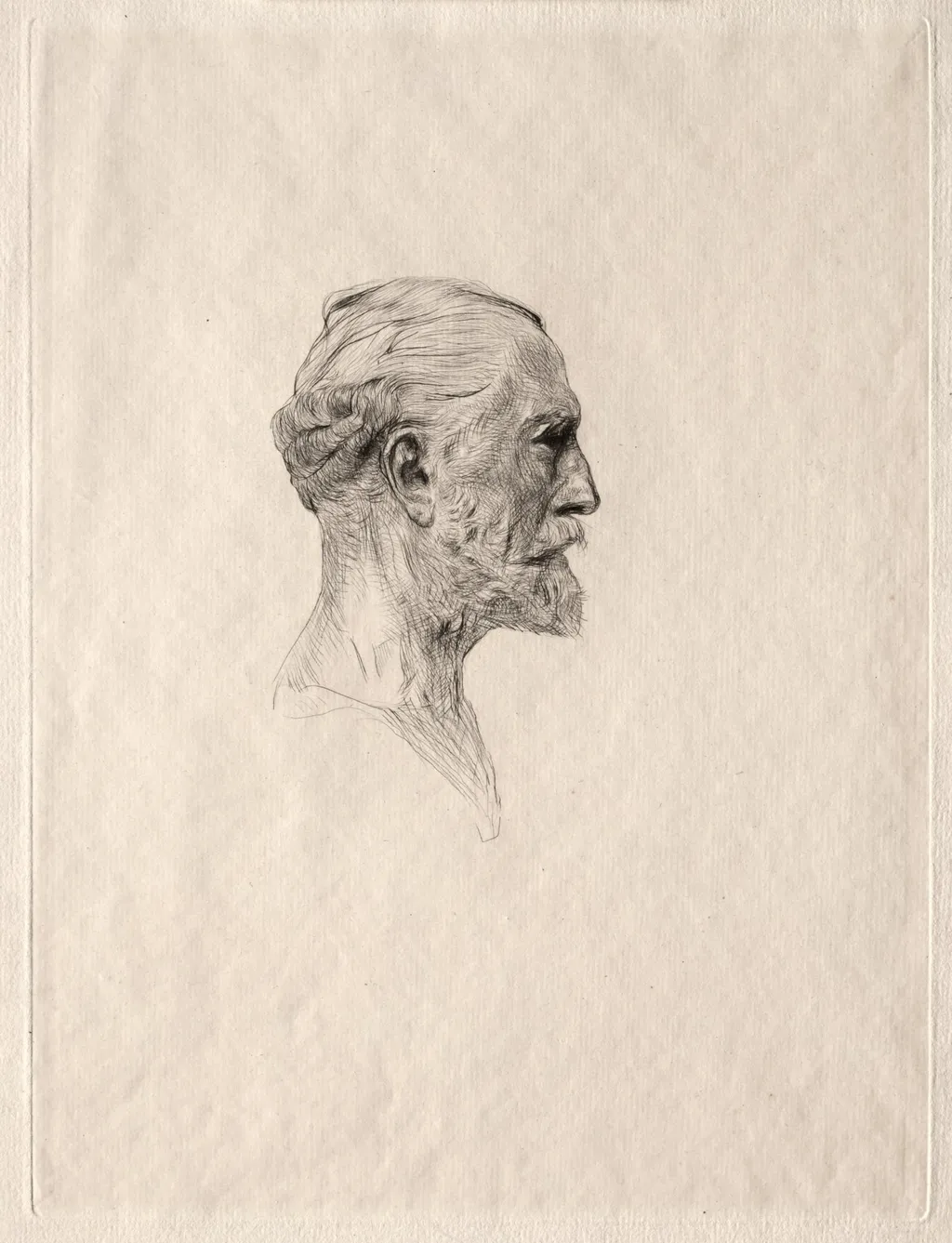
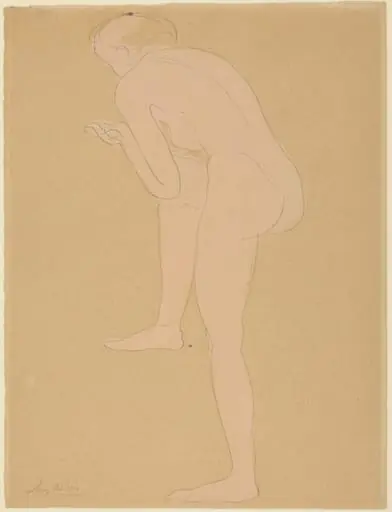
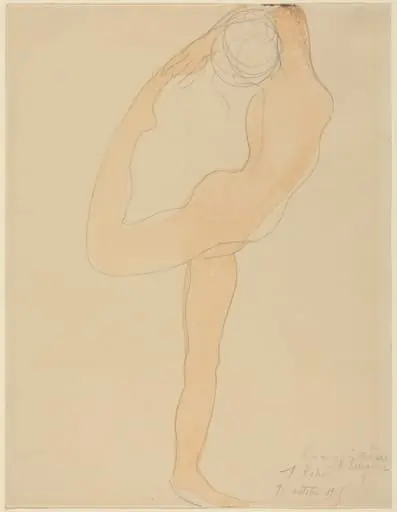
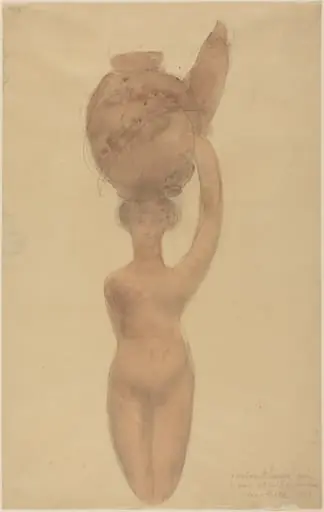
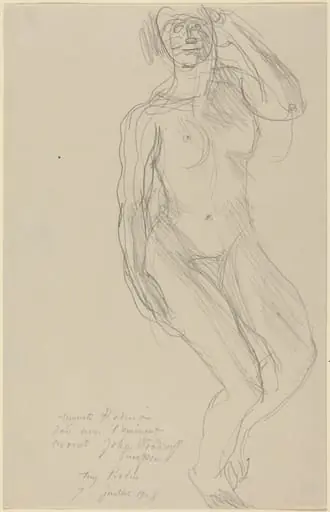
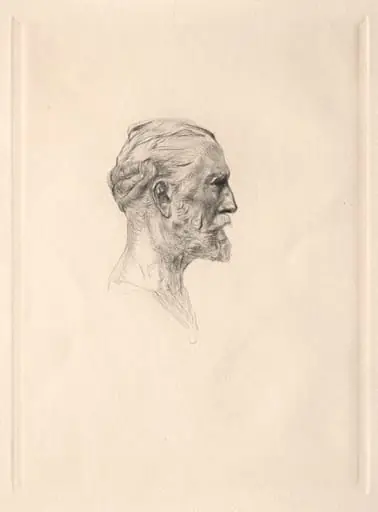
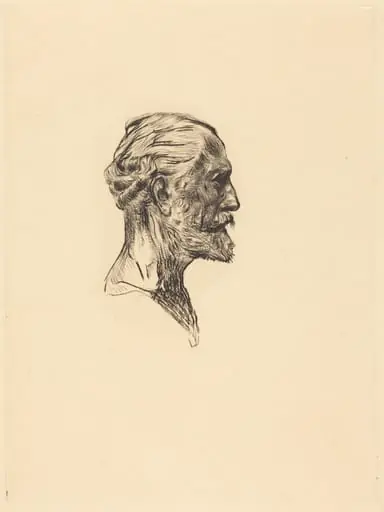
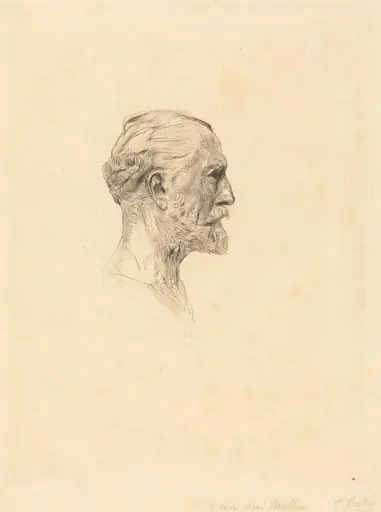
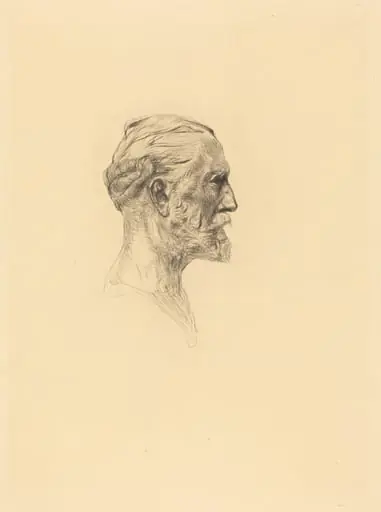
Antonin Proust is a print by the Impressionist artist Auguste Rodin. It dates from 1885 and is held in the collection of the Cleveland Museum of Art.
About this work
Overview
Unlike finished portraits, the work functions as a preparatory study, reflecting Rodin’s habit of exploring form through direct, unpolished observation.
Created in 1885, this drawing by Auguste Rodin depicts Antonin Proust, a French journalist and art critic. Executed in a rapid, linear style, it captures the subject’s profile with minimal detail. Unlike finished portraits, the work functions as a preparatory study, reflecting Rodin’s habit of exploring form through direct, unpolished observation. It resides in the collection of The Cleveland Museum of Art.
Subject & Meaning
Antonin Proust was a close associate of Rodin and a vocal advocate for contemporary art. The portrait focuses on his aged features—wrinkled skin, receding gray curls, and a firm jaw—conveying character through physical presence rather than idealization. Rodin’s choice to emphasize texture and structure suggests an interest in the psychological weight of age and experience, not mere likeness.
Technique & Style
Rodin rendered the face with loose, energetic strokes, avoiding smooth modeling or tonal gradation. The lines are abrupt and directional, outlining contours and folds with economy. This sketchy approach prioritizes gesture and volume over refinement, aligning with Rodin’s broader practice of using drawing as a tool for rapid exploration rather than completion.
History & Provenance
The drawing was made during a period when Rodin was deeply engaged in portraiture, often creating studies for larger sculptural commissions. It remained in the artist’s possession until after his death, eventually entering the Cleveland Museum of Art’s collection through established acquisition channels. Its survival as a standalone work reflects Rodin’s evolving view of preparatory sketches as autonomous expressions.
Context
In the late 19th century, academic art favored polished, idealized portraiture. Rodin’s sketches like this one challenged those norms by valuing immediacy and structural truth. His drawings were not merely studies but assertions of a new artistic language—one rooted in observation, imperfection, and the physicality of form.
Legacy
This drawing exemplifies Rodin’s influence on modern portraiture, shifting focus from surface perfection to emotional and physical authenticity. Later artists adopted his method of treating sketches as vital, expressive works in their own right. The piece endures as evidence of a radical rethinking of how a face could be seen—and drawn.
Artist & collection
Artist
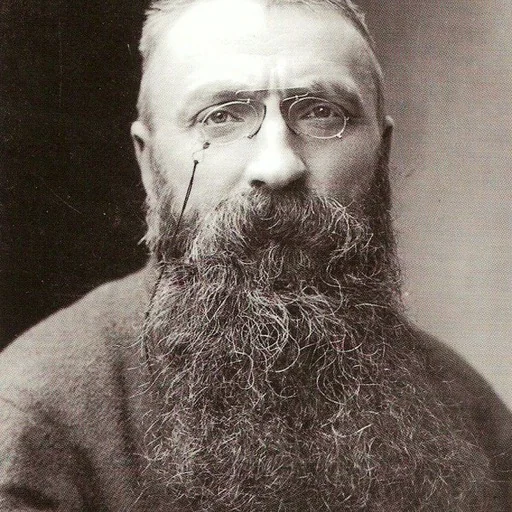
François Auguste René Rodin (; French: ; 12 November 1840 – 17 November 1917) was a French sculptor generally considered the founder of modern sculpture.