Artwork
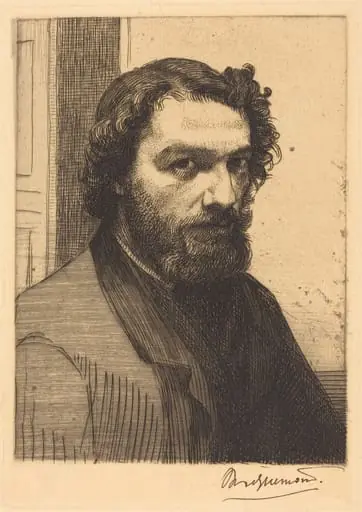
Portrait of Meryon, Seated
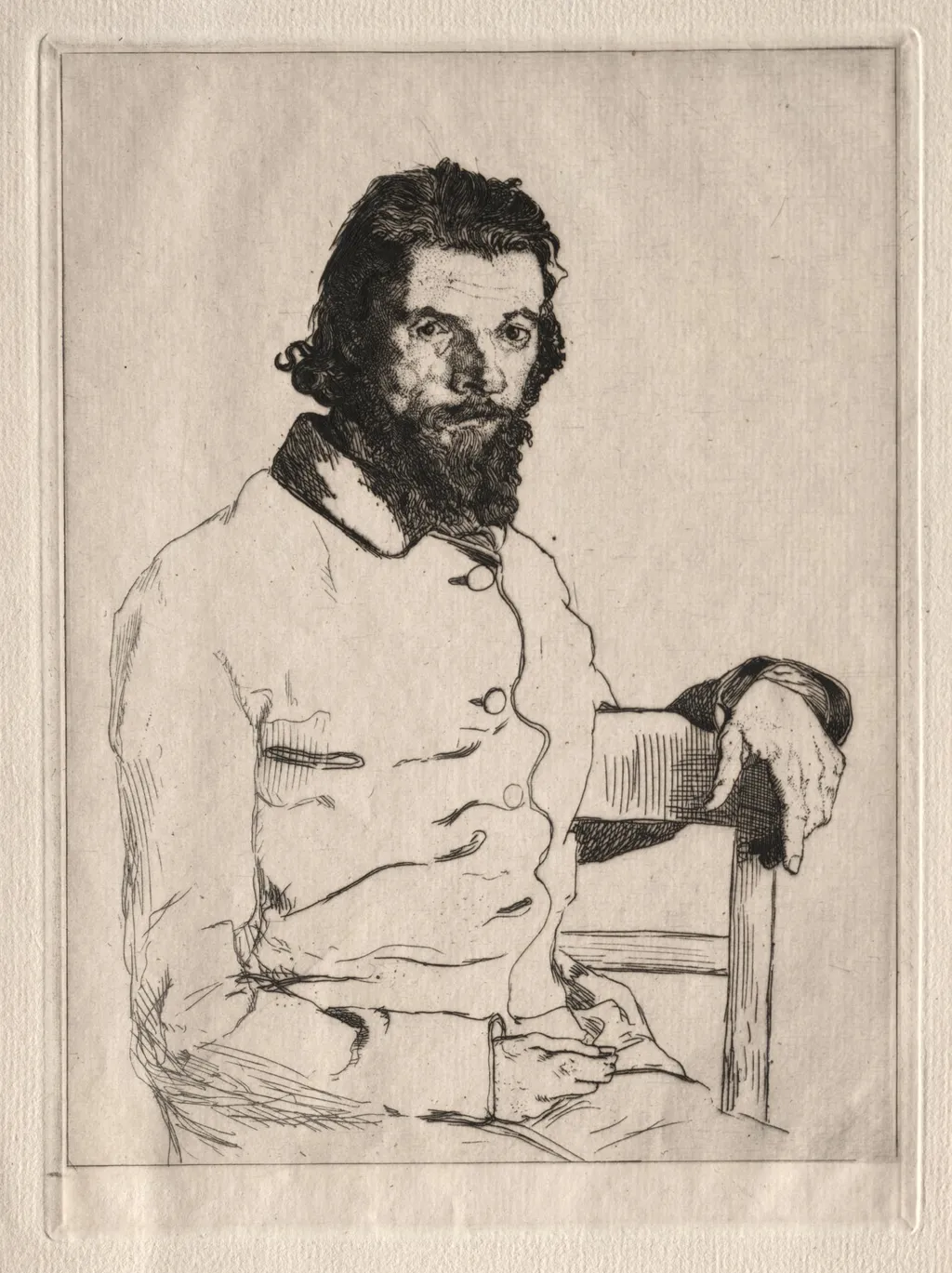
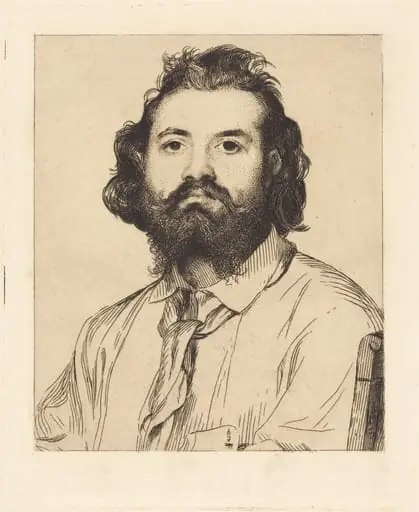
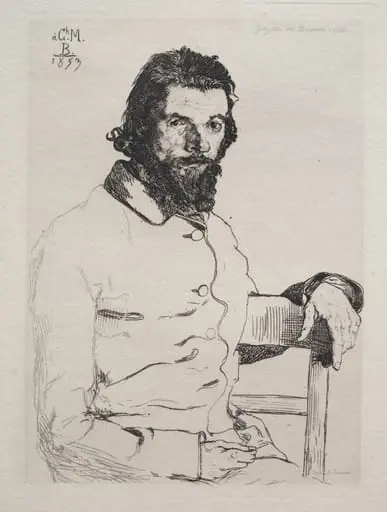
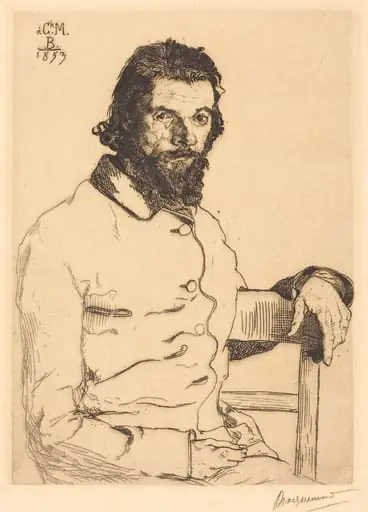
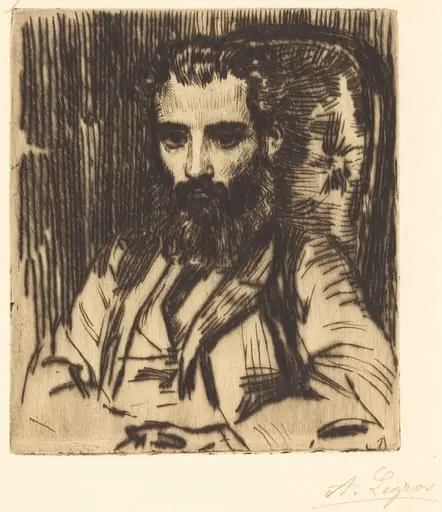
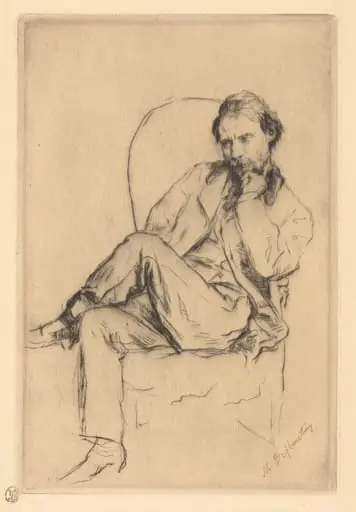
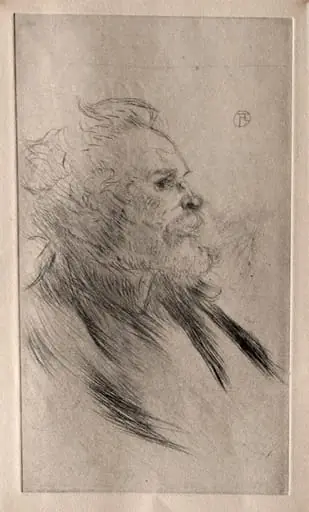
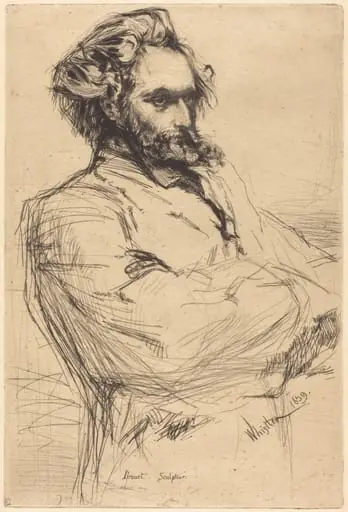
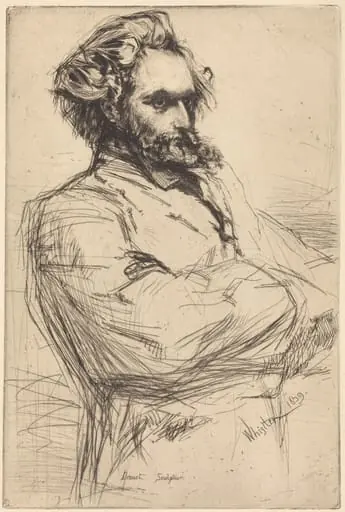
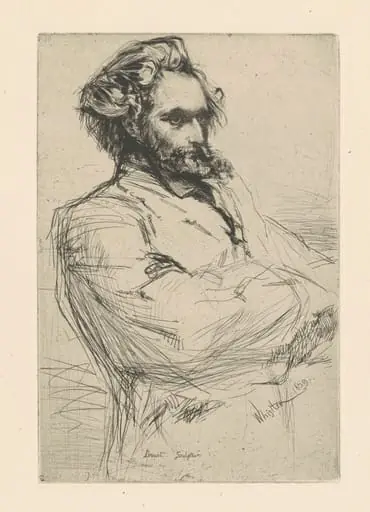
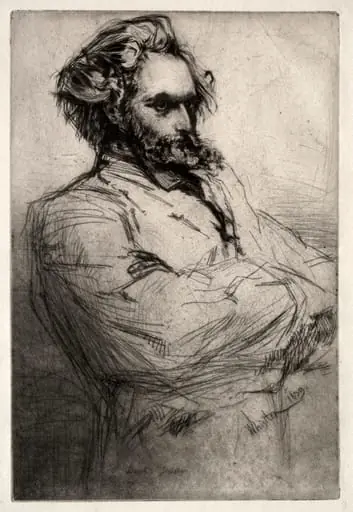
Portrait of Meryon, Seated is a print by the Impressionist artist Félix Bracquemond. It dates from 1853 and is held in the collection of the Cleveland Museum of Art.
About this work
The artist used quick, sketchy lines to capture the man’s pose and face, giving it a lively feel.
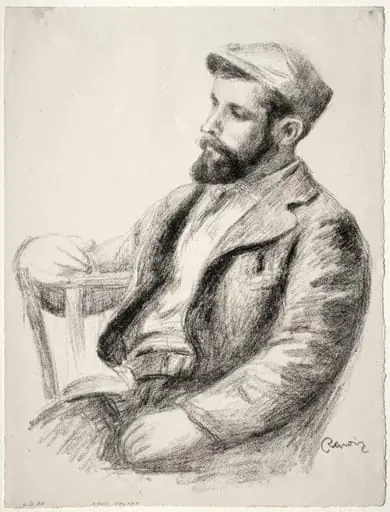
This sketch shows a bearded man sitting on a chair, holding a hat in one hand. His loose jacket has three buttons visible, and his hair is long and slightly messy. The drawing is mostly in black lines, with some shading to show shadows and texture.
The artist used quick, sketchy lines to capture the man’s pose and face, giving it a lively feel. This style was common in the 1850s for quick studies or personal portraits.
Next, check out Félix Bracquemond (French, 1833–1914) to see more of his work.
Overview
Created in 1853 by French artist Félix Bracquemond, this ink drawing depicts Meryon seated in a relaxed posture. Executed with swift, expressive lines, the work captures a moment of quiet introspection. The medium is primarily black ink, with subtle tonal variations to suggest volume and fabric texture. It is part of the collection at The Cleveland Museum of Art, where it is preserved as an example of 19th-century draftsmanship.
Subject & Meaning
The subject is Charles Meryon, a French artist known for his etchings of Paris. Seated with a hat resting in his hand, he appears in informal attire, suggesting an intimate, unposed moment. The portrait conveys neither grandeur nor formality but rather a sense of personal presence. Bracquemond’s choice to depict Meryon in this manner reflects a mutual respect between artists, valuing authenticity over idealization.
Technique & Style
Bracquemond employed rapid, fluid linework to define the figure’s form, emphasizing gesture over detail. Shading is minimal but effective, using hatching to suggest the weight of fabric and the contours of the face. The sketchy quality reflects a tradition of artistic studies, where immediacy and observation took precedence over finish. This approach aligns with mid-century French drawing practices focused on capturing character through economy of line.
History & Provenance
The drawing was made in 1853, during Bracquemond’s early career, likely as a personal study or gift to Meryon. It remained in private hands until entering the Cleveland Museum of Art’s collection, where it is now preserved as part of its holdings in 19th-century prints and drawings. Its provenance reflects its status as a modest, intimate work rather than a commissioned portrait.
Context
In the 1850s, French artists increasingly turned to informal portraiture as a means of exploring individuality outside academic conventions. Bracquemond, influenced by emerging realist tendencies and Japanese prints, favored direct observation. This portrait aligns with a broader shift toward capturing the artist’s inner life, not just social status, reflecting a growing appreciation for the creative personality.
Legacy
Though not widely exhibited, the drawing stands as a quiet testament to the artistic networks of mid-19th-century Paris. It illustrates Bracquemond’s skill as a draftsman and his engagement with contemporaries like Meryon. Today, it contributes to scholarly understanding of how artists documented one another, preserving the human dimension behind their public works.
Artist & collection

Artist
Félix Henri Bracquemond (French pronunciation: ; 22 May 1833 – 29 October 1914) was a French painter, etcher, and printmaker.