Artwork
The Lime-burner
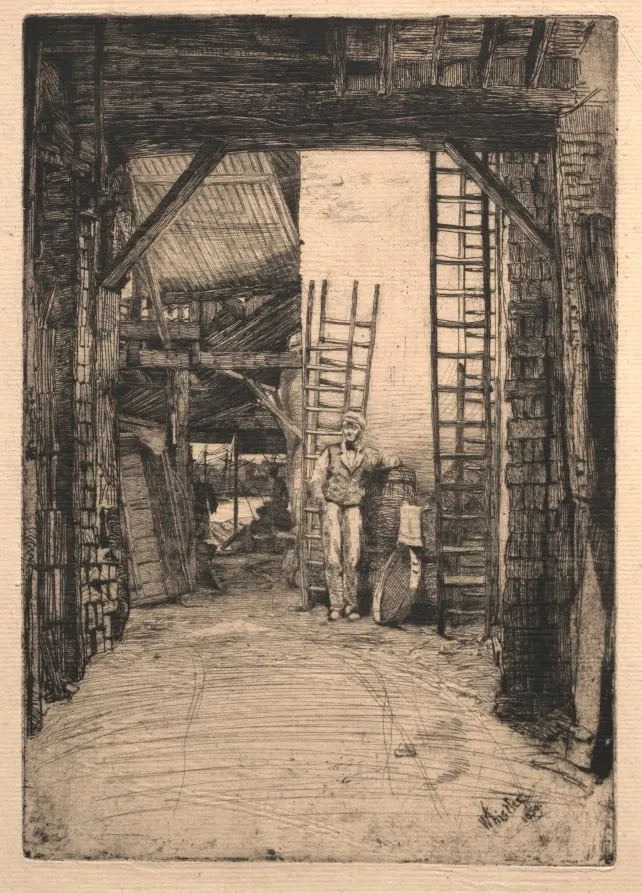
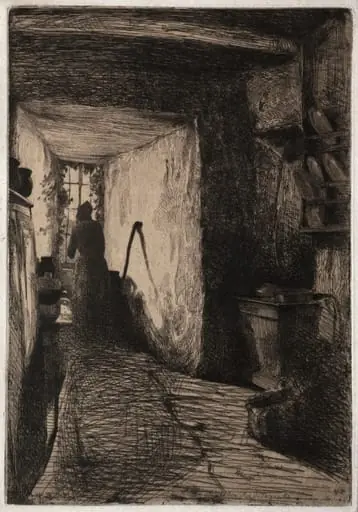
The Lime-burner is a print by the Impressionist artist James McNeill Whistler. It dates from 1851 and is held in the collection of the Cleveland Museum of Art.
About this work
Overview
Unlike his later, more abstract compositions, this piece grounds his artistic development in direct observation of working-class life.
Created in 1851, The Lime-burner is an etching by James McNeill Whistler, capturing a quiet moment in a rural laborer’s workspace. The work is part of the collection at The Cleveland Museum of Art and reflects Whistler’s early interest in everyday scenes, rendered with meticulous attention to atmosphere and tonal variation. Unlike his later, more abstract compositions, this piece grounds his artistic development in direct observation of working-class life.
Subject & Meaning
The scene depicts a lime-burner, a laborer involved in the production of quicklime, standing with a child inside a modest shed. The presence of the child suggests generational continuity in manual labor, while the dim interior and sparse furnishings emphasize the harshness of the environment. Whistler avoids sentimentality, presenting the figures with dignity through restraint, allowing the setting to convey the weight of their daily existence.
Technique & Style
Whistler employed fine, controlled etching lines to build a range of tones, emphasizing the interplay of light and shadow. Gaps in the wooden walls become channels for natural light, carving out forms against deep blacks. The textures of rough-hewn timber, woven baskets, and coarse clothing are rendered with precision, demonstrating his early mastery of chiaroscuro—a method borrowed from printmaking traditions to evoke depth and mood without color.
History & Provenance
The print was made during Whistler’s formative years in Europe, shortly after his return from military training in the United States. It was likely produced in London or Paris, where he was absorbing the influence of Dutch and French genre scenes. The work entered The Cleveland Museum of Art’s collection in the 20th century, part of a broader acquisition of 19th-century prints that highlighted Whistler’s role in elevating etching as a serious artistic medium.
Context
In the early 1850s, European artists increasingly turned to the lives of laborers as subjects, moving away from idealized narratives. Whistler’s focus on the lime-burner aligns with this trend, yet his approach is more atmospheric than social commentary. The work reflects the influence of Realism and the growing interest in tonal harmony over narrative clarity, foreshadowing his later emphasis on aesthetic arrangement over storytelling.
Legacy
The Lime-burner stands as an early indicator of Whistler’s lifelong preoccupation with light, tone, and composition. While not widely exhibited during his lifetime, it contributed to his reputation as a printmaker of refined sensitivity. Its quiet intensity influenced later artists exploring mood and minimalism, and it remains a key example of how etching could convey psychological depth through subtle gradations of shadow and surface.
Artist & collection
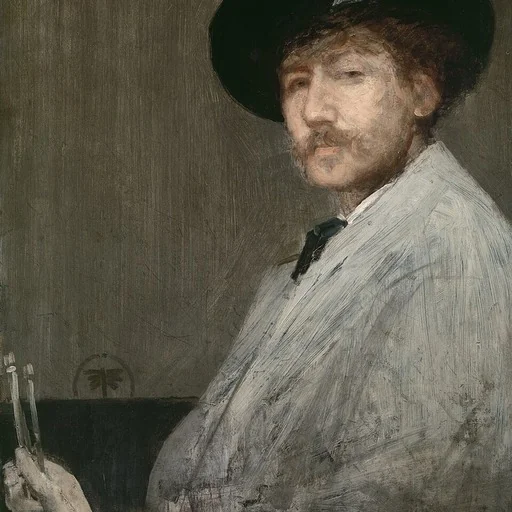
Artist
James Abbott McNeill Whistler was an American painter in oils and watercolor, and printmaker, active during the American Gilded Age and based primarily in the United Kingdom.

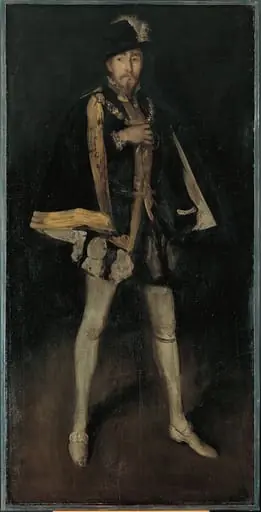 Arrangement in Black, No. 3: Sir Henry Irving as Philip II of Spain
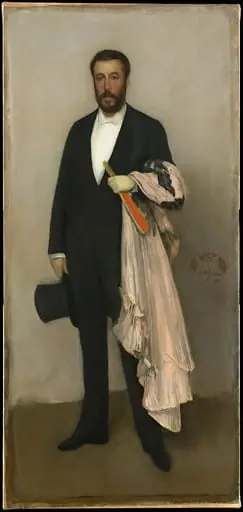 Arrangement in Flesh Colour and Black: Portrait of Theodore Duret
 Gold and Brown: Self-Portrait
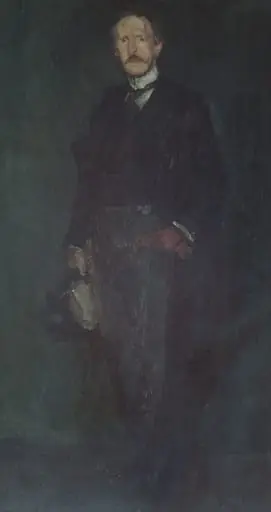 Edward Guthrie Kennedy
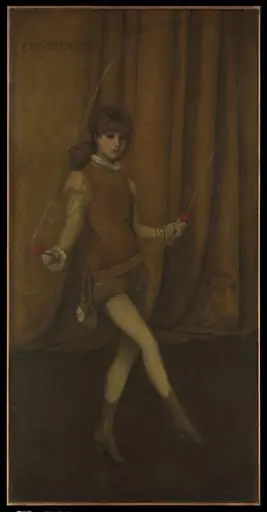 Harmony in Yellow and Gold: The Gold Girl—Connie Gilchrist
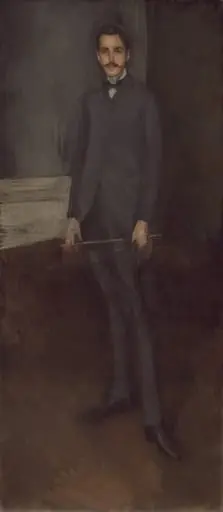 George W. Vanderbilt
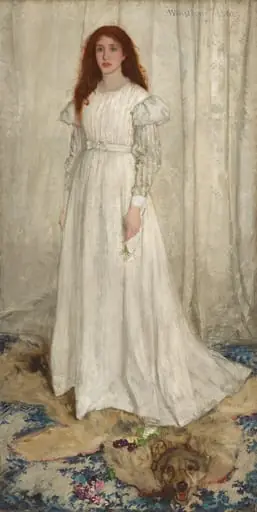 Symphony in White, No. 1: The White Girl
 Henry Irving as Philip II of Spain