Artwork
The Gobelin Quarter
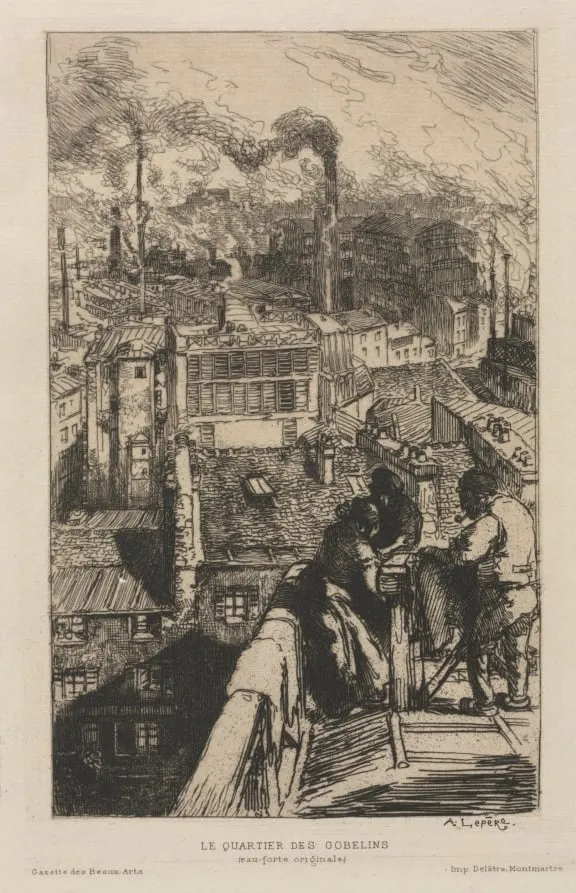
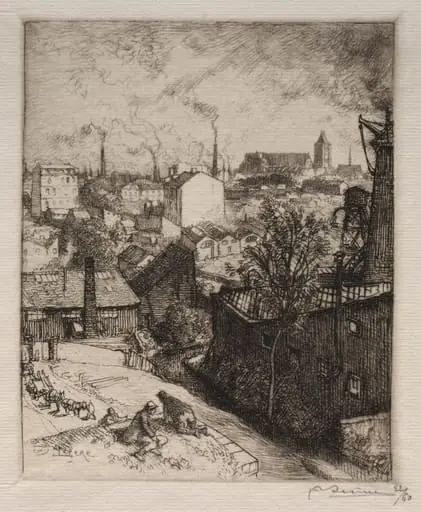
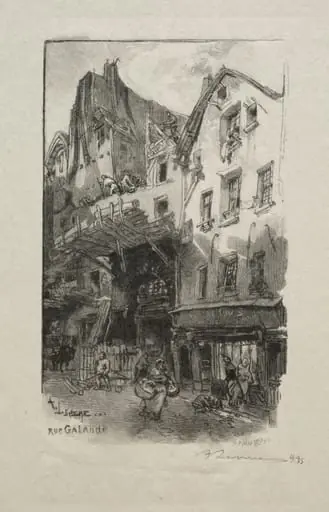
The Gobelin Quarter is a print by the Impressionist artist Auguste Lepère. It dates from 1893 and is held in the collection of the Cleveland Museum of Art.
About this work
Overview
The Gobelin Quarter, an 1893 etching by Auguste Louis Lepère, captures a late 19th-century Parisian neighborhood, focusing on the area surrounding the historic Gobelin tapestry workshops.
Subject & Meaning
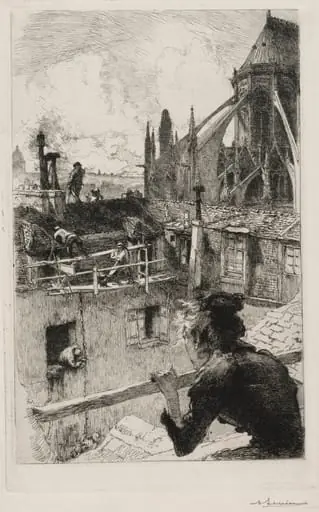
The print depicts a densely populated, industrial urban landscape, hinting at a working-class environment through its portrayal of simple architecture, factory smoke, and everyday activity. Two figures in the foreground observe the bustling scene below.
Technique & Style
Lepère employed sharp lines and pronounced dark shading to achieve depth and texture in the etching, characteristic of his contributions to the European wood engraving revival.
History & Provenance
Created in 1893, The Gobelin Quarter reflects Lepère's interest in urban themes and printmaking techniques during this period. Specific provenance details are not provided.
Context
This work aligns with the Realist movement's emphasis on depicting everyday life, in this case, the industrial and residential realities of a Parisian working-class quarter.
Legacy
As part of Lepère's oeuvre, The Gobelin Quarter contributes to the broader legacy of the wood engraving revival in Europe, though its individual impact within this movement is not specified.
Artist & collection
Artist
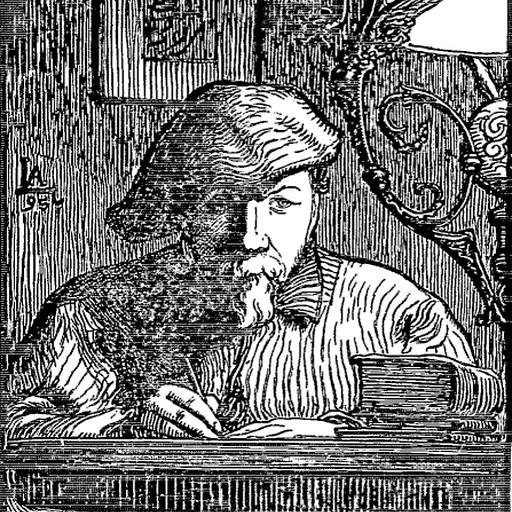
Louis-Auguste Lepère (30 November 1849 – 20 November 1918) was a French painter and etcher. Lepère is also considered a leader in the creative revival of wood engraving in Europe.

![House of Dante da Castiglione [Casa di Dante da Castiglione], by Telemaco Signorini](https://artifactworldgallery.com/img/telemaco-signorini--house-of-dante-da-castiglione-casa-di-dante-da-castiglione--92db125a9a8d04db-w320.webp)