Artwork
Narrow Street, Beauvais (Une Ruelle, Beauvais)
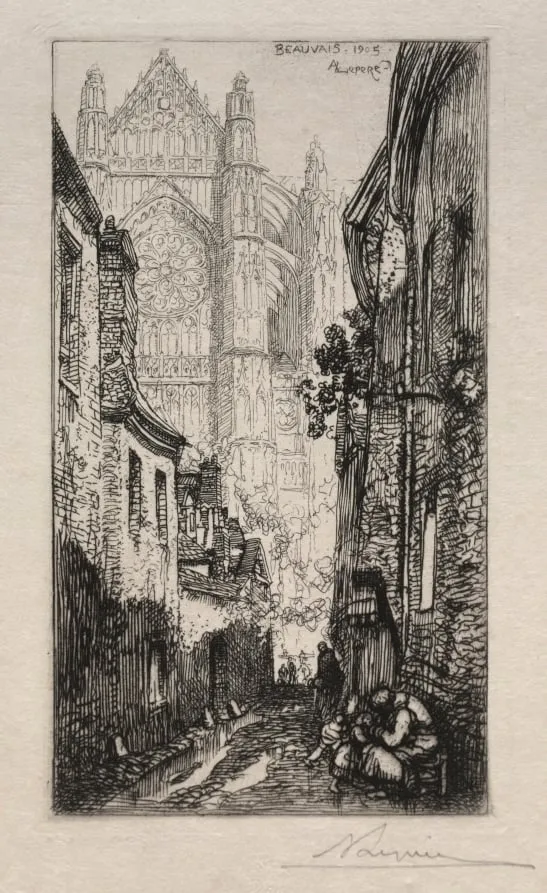
Narrow Street, Beauvais (Une Ruelle, Beauvais) is a print by Auguste Lepère. It dates from 1905 and is held in the collection of the Cleveland Museum of Art.
About this work
Overview
Created in 1905 by French artist Auguste Louis Lepère, *Narrow Street, Beauvais* is a wood engraving that captures a quiet urban alley in northern France.
Created in 1905 by French artist Auguste Louis Lepère, *Narrow Street, Beauvais* is a wood engraving that captures a quiet urban alley in northern France. The work is part of the Cleveland Museum of Art’s collection and exemplifies Lepère’s contribution to the early 20th-century revival of wood engraving as a fine art medium. Its intricate line work and atmospheric detail reflect a deliberate return to handcrafted printmaking techniques.
Subject & Meaning
The scene depicts a narrow, sun-dappled street in Beauvais, framed by closely spaced buildings and terminating in the silhouette of a Gothic church with pointed spires and a rose window. Figures and a resting dog suggest daily life, while hanging laundry, signs, and potted plants hint at domestic routines. The composition conveys stillness rather than narrative, emphasizing the quiet rhythm of ordinary urban existence.
Technique & Style
Lepère employed fine, controlled incisions to render texture across surfaces—brickwork, wooden balconies, and tiled roofs. The scratchy, linear quality mimics etching but is achieved through woodblock carving. Light and shadow are suggested through density of lines rather than tonal gradation, creating depth without chiaroscuro. The signature appears in the lower corner, while the title and date are inscribed above, following traditional print conventions.
History & Provenance
The print entered the Cleveland Museum of Art’s collection through documented acquisition, though its earlier ownership history remains unrecorded in public sources. Lepère’s prints from this period were widely exhibited in Europe and influenced a generation of printmakers seeking to elevate wood engraving beyond reproductive use. This work reflects his mature style, developed after decades of experimentation with the medium.
Context
In early 1900s France, wood engraving was being reevaluated as an artistic medium, moving away from commercial illustration. Lepère, alongside contemporaries like Félix Buhot, championed its potential for expressive detail. *Narrow Street, Beauvais* aligns with a broader interest in documenting everyday architecture and urban life, paralleling trends in Realist painting and early documentary photography.
Legacy
Lepère’s technical precision in this print helped reestablish wood engraving as a legitimate form of artistic expression in modern printmaking. While not widely known today, his work influenced later artists who valued hand-carved surfaces and intimate urban scenes. The print remains a quiet testament to the dignity of ordinary spaces, preserved through meticulous craftsmanship.
Artist & collection
Artist
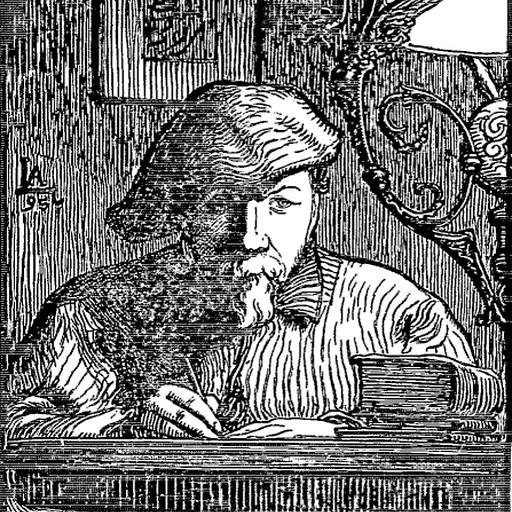
Louis-Auguste Lepère (30 November 1849 – 20 November 1918) was a French painter and etcher. Lepère is also considered a leader in the creative revival of wood engraving in Europe.

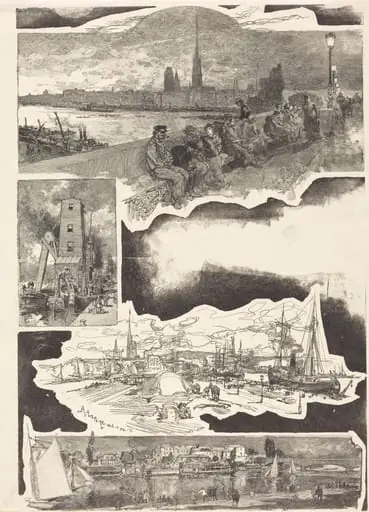
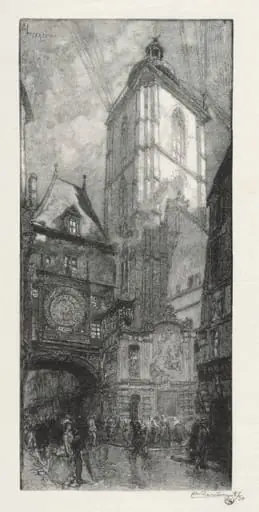 Rouen Illustré: La Gros Horloge
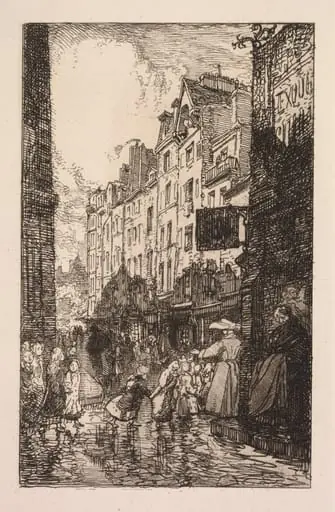 La Biévre, Les Gobelins, Saint-Séverin: Le Quartier Saint-Séverin: La Rue des Prêtres Saint-Séverin
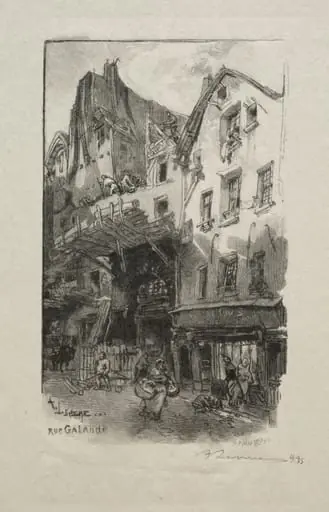 Rue Galande
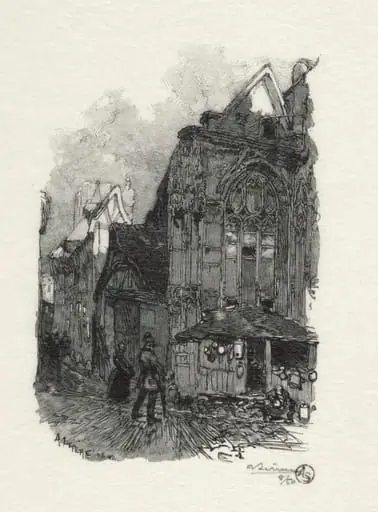 Rouen Illustré: Saint Etienne des Tonneliers
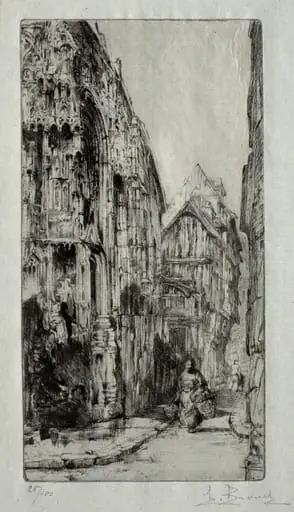 Saint-Etienne des Tonneliers a Rouen
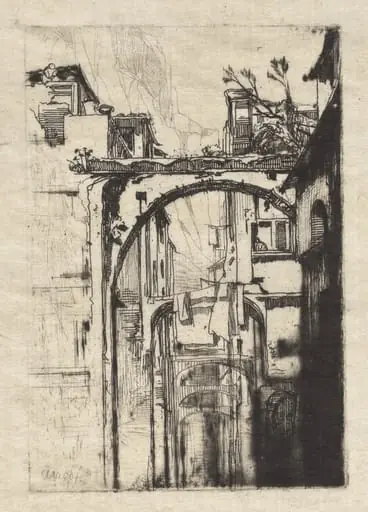 Amalfi
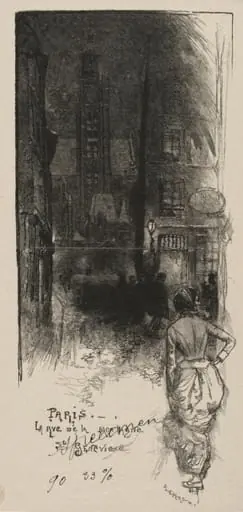 Rue de la Montagne, St. Geneviève
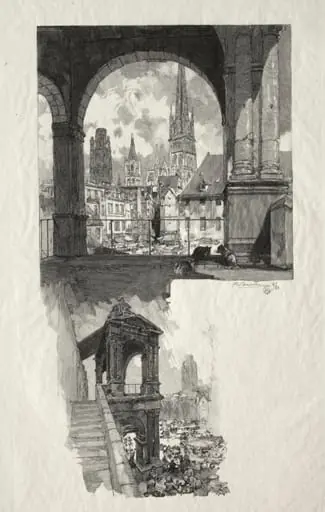 Place de la Haute Vieille Tour; Edicule de la Fierte
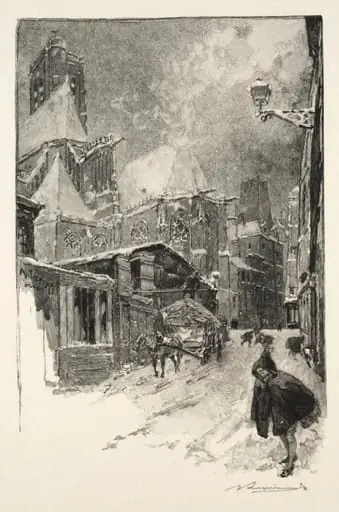 La Rue des Barres
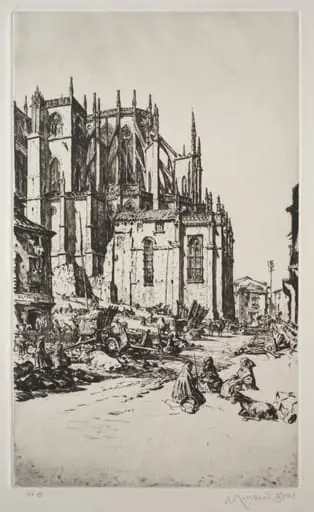 Study for Leon Apse
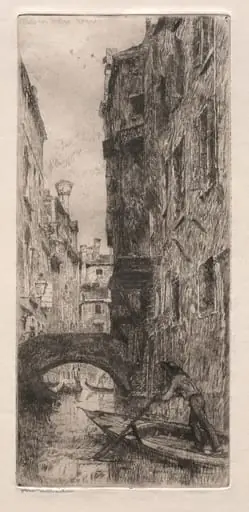 Etchings of Venice: Ponte del Pistor, Venice
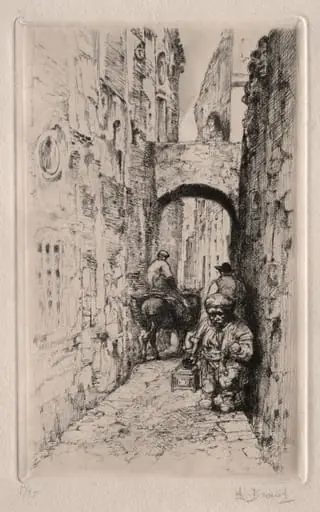 Dwarf in Narrow Street