Artwork
The Limehouse
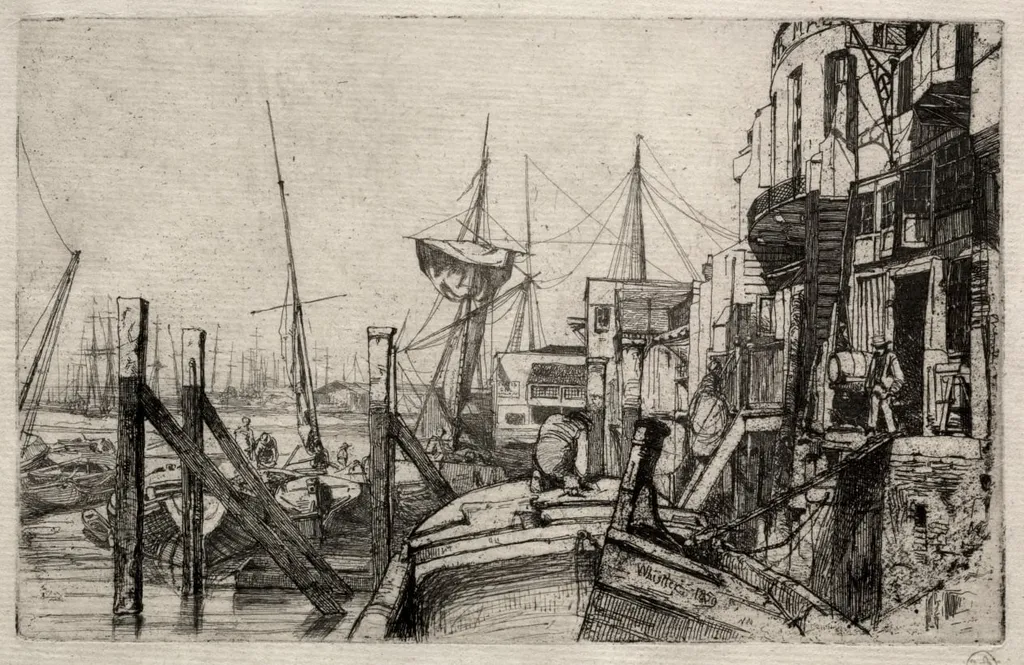
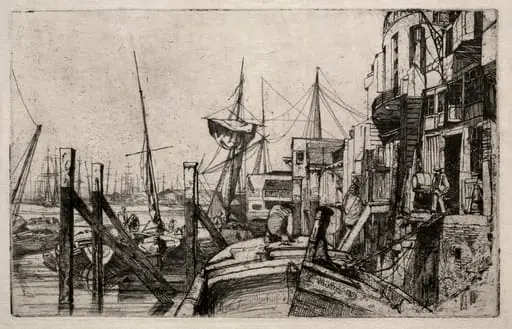
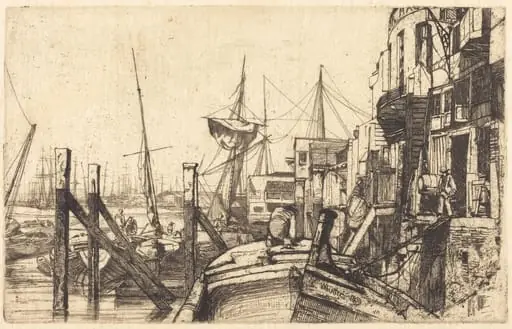
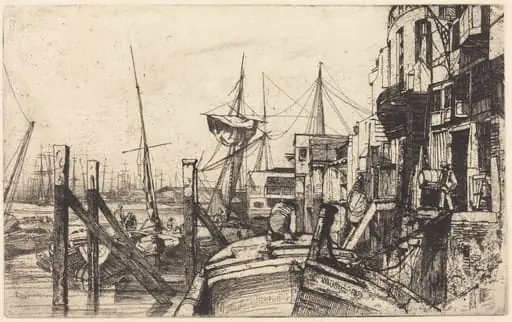
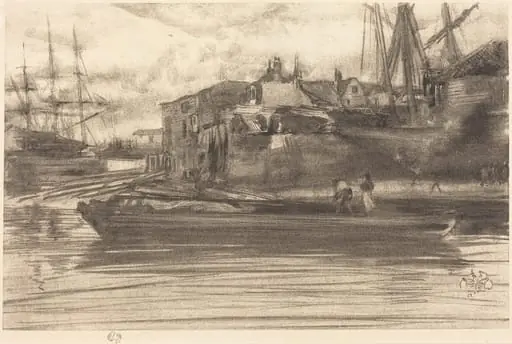
The Limehouse is a print by the Impressionist artist James McNeill Whistler. It dates from 1871 and is held in the collection of the Cleveland Museum of Art.
About this work
Overview
Though sometimes misattributed to American subjects, the scene is distinctly English, capturing the atmospheric stillness of the Limehouse district at twilight.
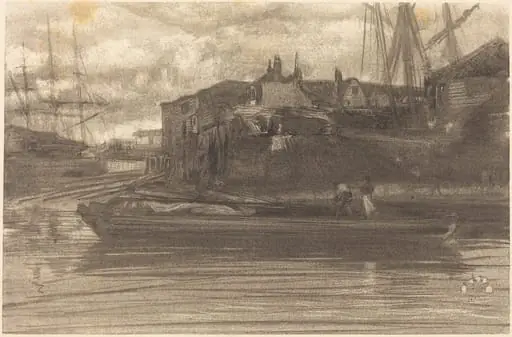
Created in 1871, The Limehouse is a print by James McNeill Whistler depicting a quiet stretch of London’s dockside along the Thames. It is part of the collection at The Cleveland Museum of Art. Though sometimes misattributed to American subjects, the scene is distinctly English, capturing the atmospheric stillness of the Limehouse district at twilight. Whistler favored this locale for its subtle interplay of light and mist.
Subject & Meaning
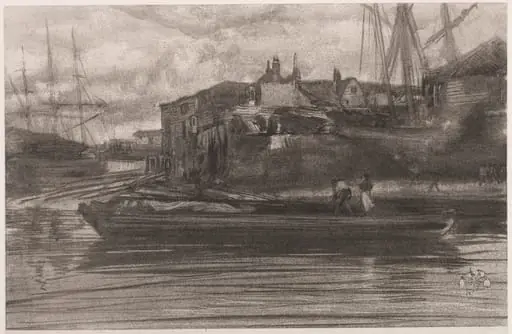
The scene portrays a dim riverbank at dusk, where the water and sky blur into a hazy continuum. Faint, scattered lights hint at distant vessels or buildings, offering no clear narrative. Whistler sought not to document but to evoke mood—this is a meditation on obscurity, solitude, and the quiet decay of industrial waterfronts. The absence of human figures amplifies the sense of stillness and detachment.
Technique & Style
Whistler employed delicate, translucent brushwork that mimics watercolor, allowing the paper’s texture to show through. Lines dissolve into soft gradients, and edges are deliberately blurred, creating a sense of atmospheric depth. This approach echoes the Renaissance technique of sfumato, though applied with a modern sensitivity to tonal harmony rather than form. The result is a quiet, melancholic luminosity.
History & Provenance
The print was made during Whistler’s period of intense focus on nocturnal and maritime scenes in London. It was produced as part of his broader exploration of etching and drypoint, mediums he used to capture fleeting effects of light. The work entered The Cleveland Museum of Art’s collection in the early 20th century, where it has remained as a key example of his tonalist approach to printmaking.
Context
In the 1870s, Whistler turned away from traditional narrative painting toward evocative, mood-driven compositions. The Limehouse reflects his interest in Japanese prints and the Aesthetic Movement’s emphasis on beauty over moral or historical content. His focus on industrial London’s overlooked corners challenged the era’s preference for grand or picturesque subjects.
Legacy
The Limehouse exemplifies Whistler’s influence on modern printmaking and tonal painting. His emphasis on atmosphere over detail inspired later artists, including the American Impressionists and early 20th-century printmakers. The work remains a touchstone for those exploring the emotional potential of subtle gradations of light and shadow in urban landscapes.
Artist & collection
Artist
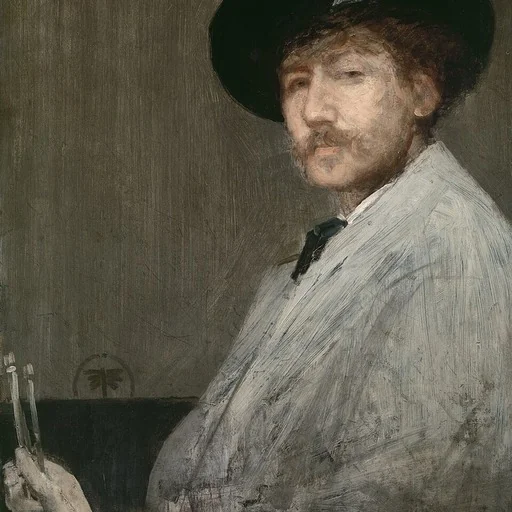
James Abbott McNeill Whistler was an American painter in oils and watercolor, and printmaker, active during the American Gilded Age and based primarily in the United Kingdom.

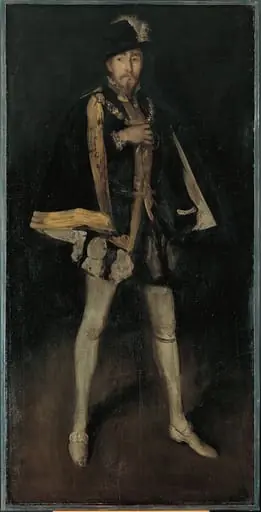 Arrangement in Black, No. 3: Sir Henry Irving as Philip II of Spain
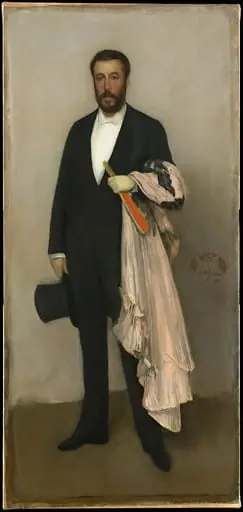 Arrangement in Flesh Colour and Black: Portrait of Theodore Duret
 Gold and Brown: Self-Portrait
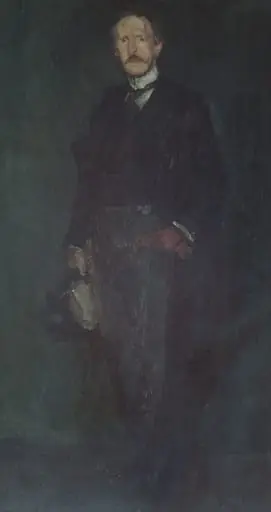 Edward Guthrie Kennedy
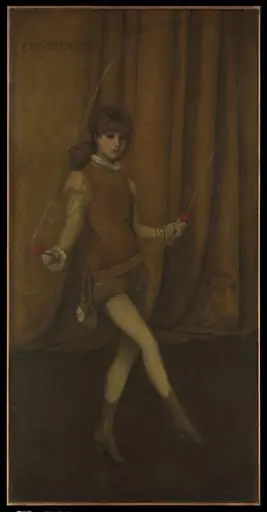 Harmony in Yellow and Gold: The Gold Girl—Connie Gilchrist
 George W. Vanderbilt
 Symphony in White, No. 1: The White Girl
 Henry Irving as Philip II of Spain