Artwork
Untitled
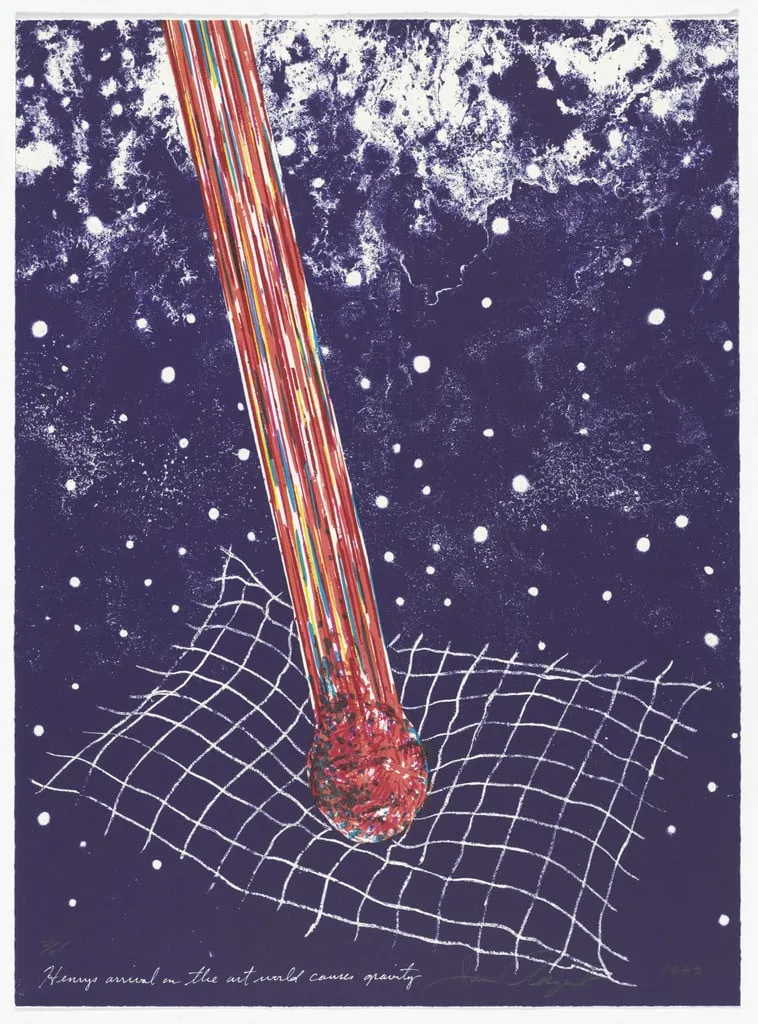
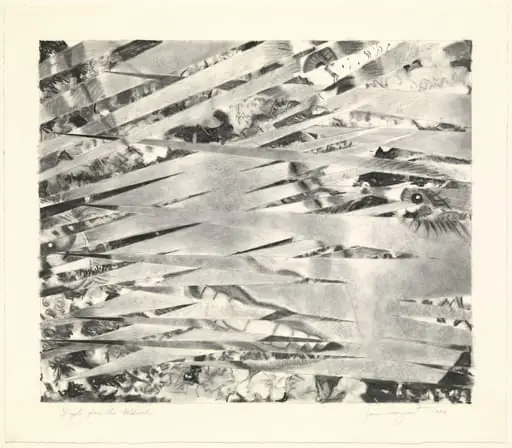
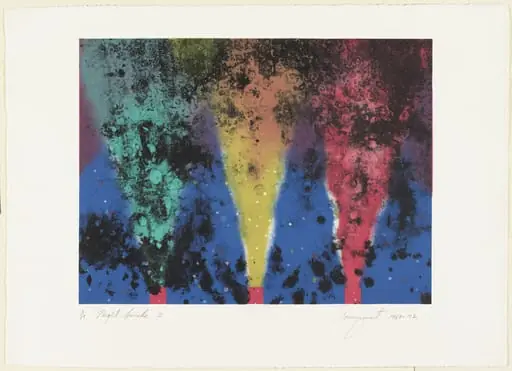
Untitled is an ink print by James Rosenquist. It dates from 1997 and is held in the collection of the Museum of Modern Art.
About this work
Overview
Unlike his earlier large-scale paintings, this piece operates within the intimate scale of print, yet retains his signature layered complexity.
Created in 1997, this print is one component of a diverse portfolio by James Rosenquist, combining multiple printmaking methods including lithography, screenprinting, and digital processes. The work reflects Rosenquist’s long-standing engagement with commercial imagery and industrial techniques, repurposing them to explore visual fragmentation and cultural overload. Unlike his earlier large-scale paintings, this piece operates within the intimate scale of print, yet retains his signature layered complexity.
Subject & Meaning
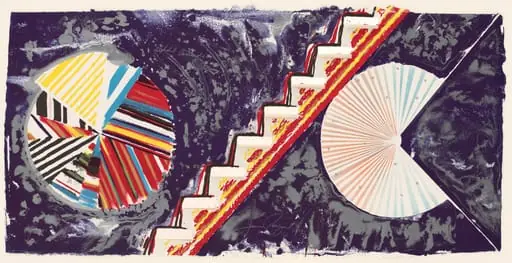
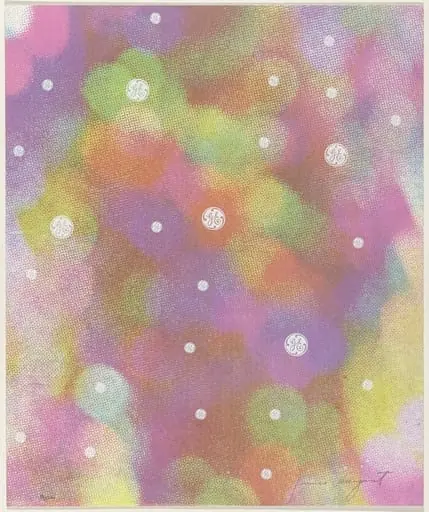
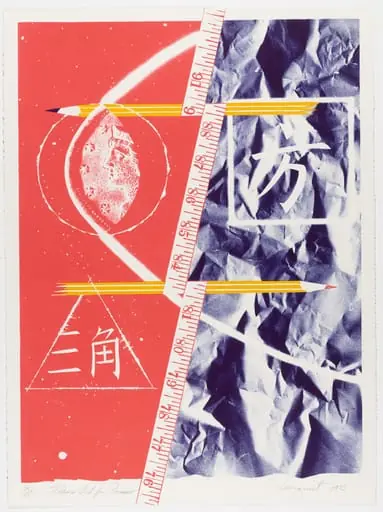
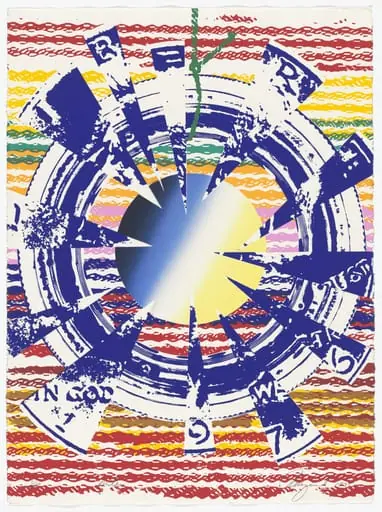
The composition features a dark, star-speckled field suggesting cosmic space, anchored by a bulbous red form at the base. Thick, multicolored ropes surge upward, entangled in fine white lines that resemble electrical wiring or neural pathways. The cryptic title, 'Henry arrival on the art world cause gravity,' introduces an enigmatic narrative, possibly alluding to an individual’s disruptive entrance into cultural systems, with gravity as metaphor for influence or disruption.
Technique & Style
Rosenquist employed lithography alongside screenprint, digital transfer, and intaglio to build texture and color contrast. The deep blue background with stippled white dots was likely achieved through lithographic screening, while the vibrant ropes and tangled lines combine layered inks and fine etched details. The abrupt shifts in scale and texture—smooth fields against jagged lines—mirror his commercial sign-painting roots, where clarity and impact were paramount.
History & Provenance
The work is part of a limited portfolio produced in 1997 and later acquired by The Museum of Modern Art. Its inclusion in the museum’s collection situates it within Rosenquist’s broader printmaking practice, which expanded significantly after his 1960s paintings. The portfolio reflects his late-career interest in hybrid techniques, blending traditional methods with emerging digital tools, and underscores his sustained experimentation with print as a medium for complex visual narratives.
Context
In the 1990s, Rosenquist turned increasingly toward printmaking as a way to deconstruct imagery without the physical demands of large-scale painting. This period saw artists across disciplines interrogating media saturation and the collapse of meaning in post-industrial society. His use of fragmented, overlapping forms and non sequitur text aligns with broader conceptual trends in contemporary art, where ambiguity replaces direct commentary.
Legacy
This print exemplifies Rosenquist’s enduring influence on how commercial aesthetics are recontextualized in fine art. By integrating advertising-derived techniques with abstract, almost cosmic imagery, he expanded the possibilities of printmaking beyond reproduction into the realm of layered symbolism. His late works, including this one, continue to inform contemporary artists exploring the intersection of technology, mass media, and visual overload.
Artist & collection
Artist
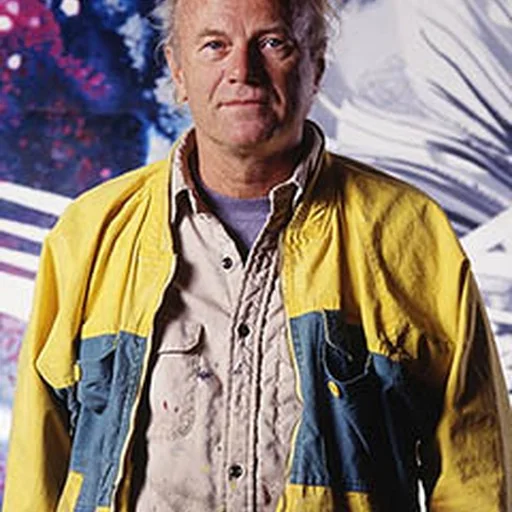
James Albert Rosenquist (November 29, 1933 – March 31, 2017) was an American artist and one of the proponents of the pop art movement.