Artwork
Landscape with Sand Dunes
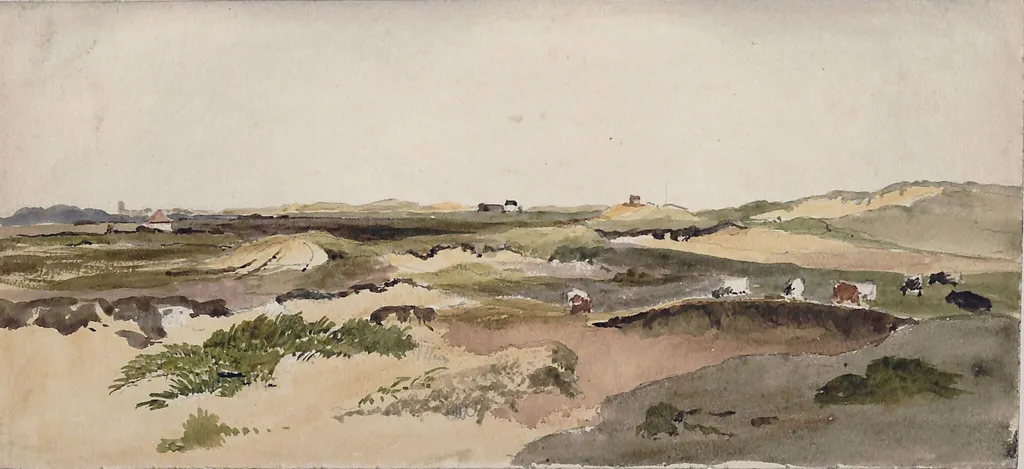
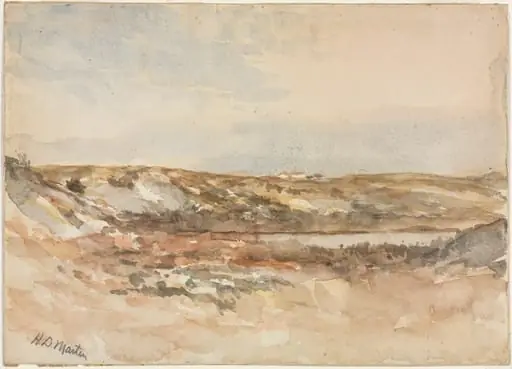
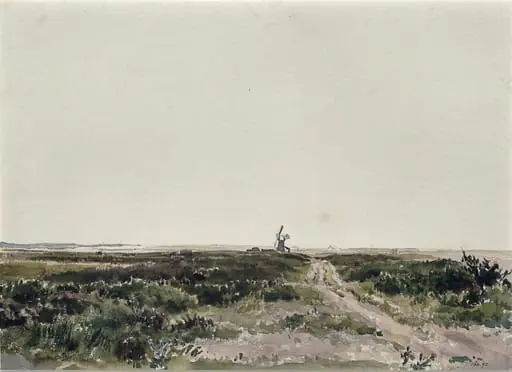
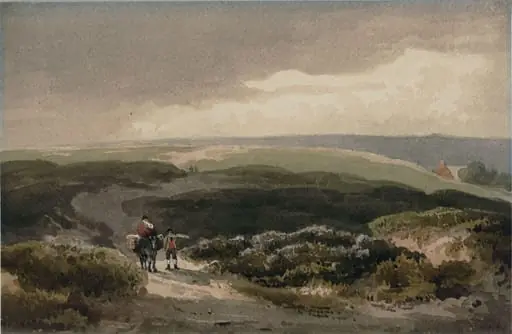
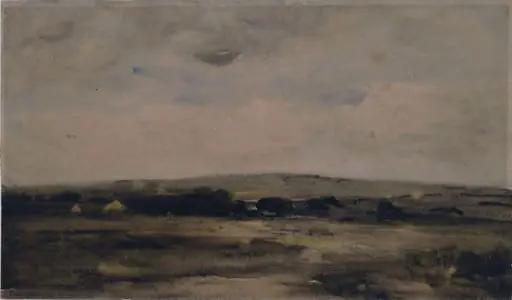
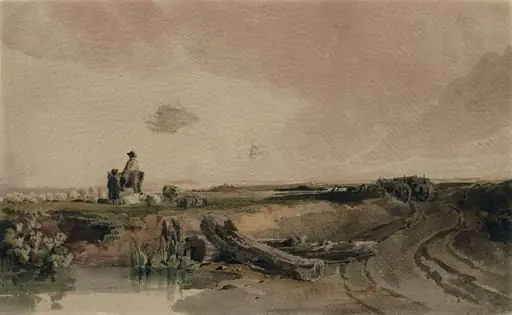
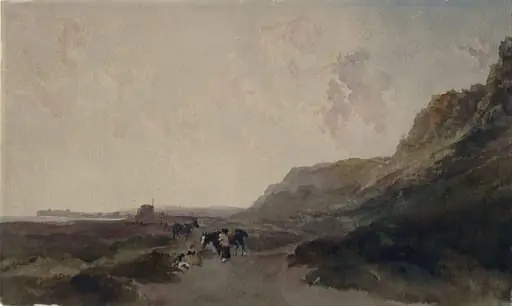
Landscape with Sand Dunes is a watercolor work on paper by the Hudson River School artist James Stark. It dates from 1820 and is held in the collection of the Victoria and Albert Museum.
About this work
Overview
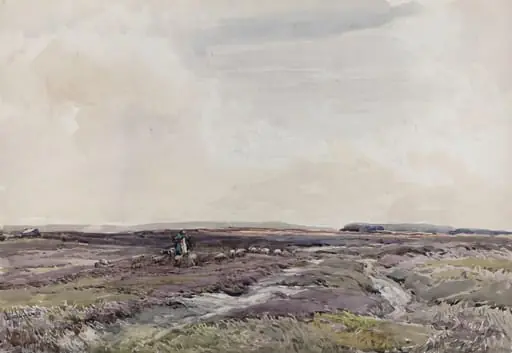
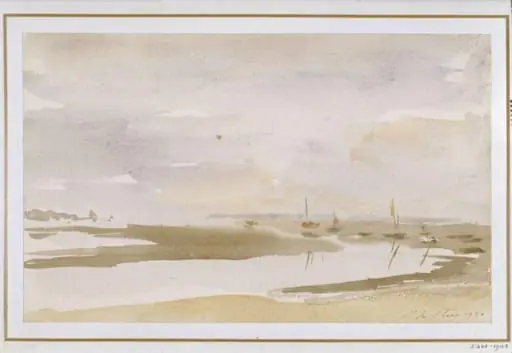
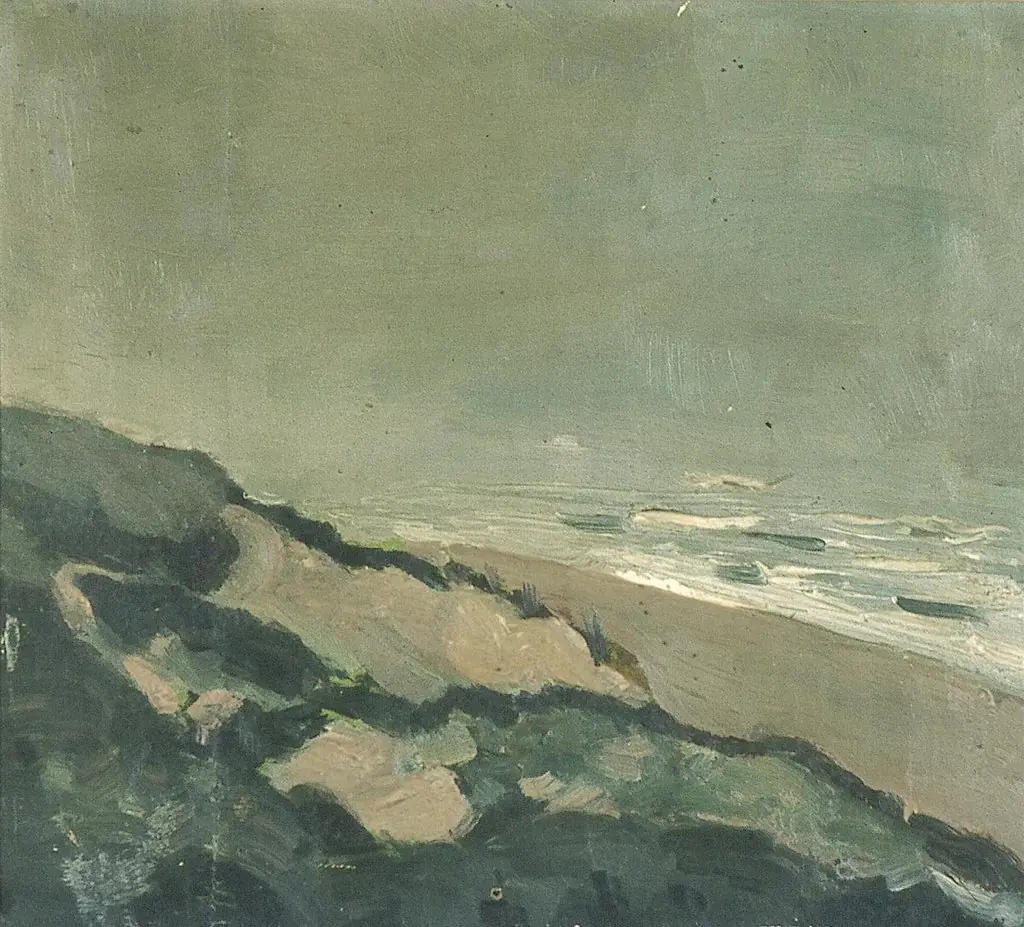
Painted in 1820 by James Stark, this watercolour presents a quiet coastal expanse defined by undulating sand dunes. Executed in delicate washes, the work conveys a sense of transient light and atmospheric haze. The composition avoids dramatic focal points, instead favoring a gentle rhythm of earth and sky that suggests observation over idealization.
Subject & Meaning
The scene depicts a sparsely inhabited stretch of shoreline, with minimal human presence—only a few distant structures and grazing horses. These elements imply rural life adapted to a harsh, shifting environment. The absence of narrative or symbolic detail invites contemplation of nature’s quiet endurance rather than human intervention.
Technique & Style
Stark employed loose, rapid brushwork to suggest the irregular contours of dunes and the thin vegetation clinging to them. Watercolour washes were layered lightly, allowing the paper’s texture to show through. The muted palette—pale browns, washed greens, and soft whites—enhances the sense of atmospheric diffusion, giving the work the immediacy of a field study.
History & Provenance
Created during Stark’s early career, this piece reflects his interest in English coastal landscapes, a recurring theme in his oeuvre. While its exact provenance before the 20th century is undocumented, it aligns with the tradition of topographical watercolours popular among British artists of the period, often made for private collections rather than public exhibition.
Context
In the early 19th century, watercolour was gaining recognition as a medium for serious landscape study, not merely preliminary sketching. Stark, influenced by the Norwich School, contributed to this shift by treating natural forms with observational rigor. This work exemplifies the era’s growing appreciation for unembellished, everyday scenery.
Legacy
Though not among Stark’s most celebrated works, this painting illustrates his consistent engagement with the subtleties of light and terrain. It contributes to a broader understanding of how British artists of the time documented the natural world with quiet precision, laying groundwork for later landscape traditions that valued restraint over grandeur.
Artist & collection
Artist
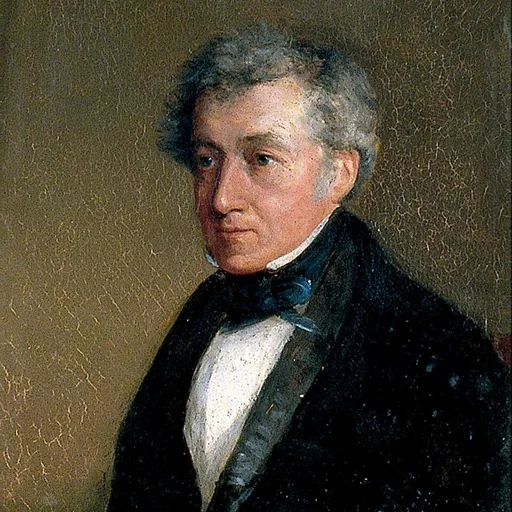
James Stark (19 November 1794 – 24 March 1859) was an English landscape painter. A leading member of the Norwich School of painters, he was elected vice-president of the Norwich Society of Artists in 1828 and became…