Artwork
Seaside (July: Specimen of a Portrait)
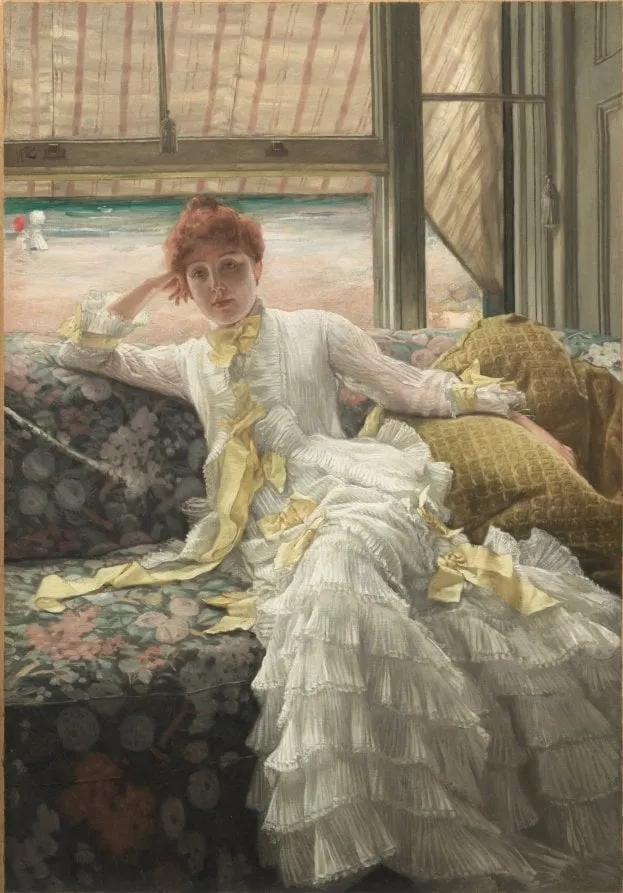
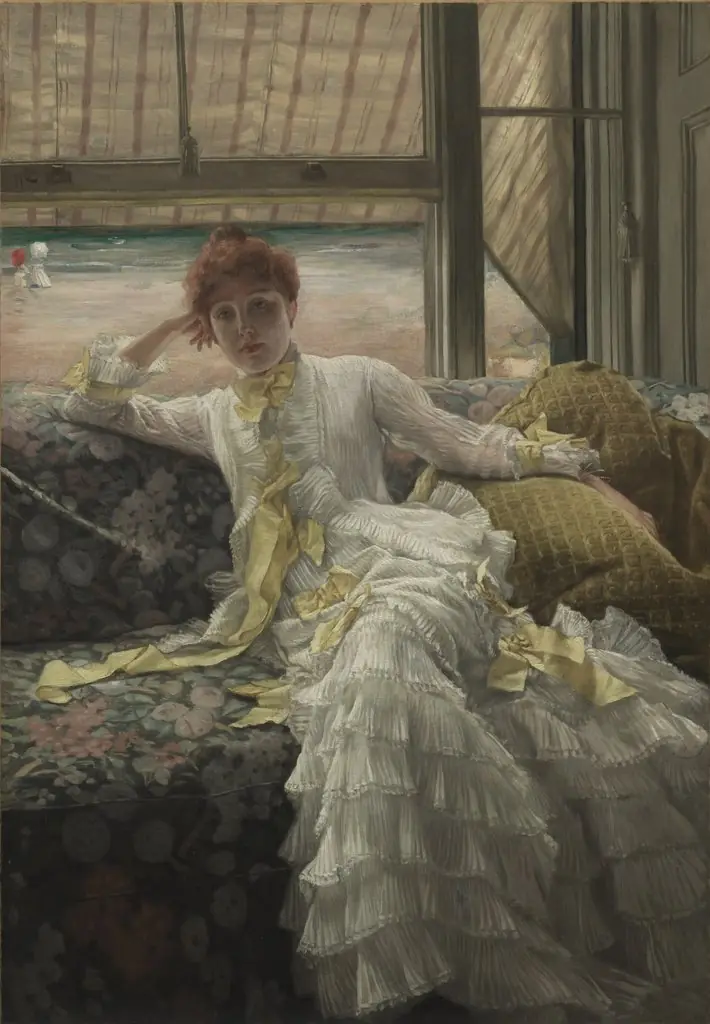
Seaside (July: Specimen of a Portrait) is an unspecified painting by the Impressionist artist James Tissot. It dates from 1878 and is held in the collection of the Cleveland Museum of Art.
About this work
The woman is Kathleen Newton, Tissot’s partner, and her presence gives the scene a personal, almost secret mood.
A woman lounges on a striped couch, one hand behind her head, the other resting on her lap. Sunlight spills through a half-closed awning, casting soft shadows across the room. Outside, a hazy beach stretches into the distance.
This painting feels like a quiet moment stolen from time. The woman is Kathleen Newton, Tissot’s partner, and her presence gives the scene a personal, almost secret mood. There’s no story here—just the slow, warm weight of a summer afternoon.
If you like this, look up more works in the subject *france, 19th century, mod euro*.
Overview
The canvas presents a woman reclining on a striped, upholstered settee, her posture relaxed as one hand supports her head and the other rests on her lap. Sunlight filters through a partially drawn awning, creating gentle shadows that illuminate the interior and hint at a distant, misty shoreline beyond the window. The composition captures a still, sun‑warmed afternoon.
Subject & Meaning
The figure is Kathleen Newton, the artist’s companion from the mid‑1870s until her early death. Rather than illustrating a narrative episode, the work conveys the atmosphere of a languid summer day, emphasizing the intimacy of a private moment and the quiet presence of the sitter within a domestic setting.
Technique & Style
Executed in oil, the painting employs a soft, diffused palette that balances warm sunlight with cooler interior tones. Tissot renders the fabric textures and the play of light with meticulous brushwork, while the background is suggested rather than detailed, allowing the viewer’s eye to linger on the figure’s repose and the fleeting glimpse of the beach.
History & Provenance
Created during the later phase of James Tissot’s career, the work reflects his shift toward mood‑oriented scenes. It was painted shortly before Newton’s death in 1882 and remained within the artist’s circle before entering public collections. Its provenance traces back to early private ownership, later passing to museum holdings where it is displayed as part of 19th‑century French painting.
Artist & collection
Artist
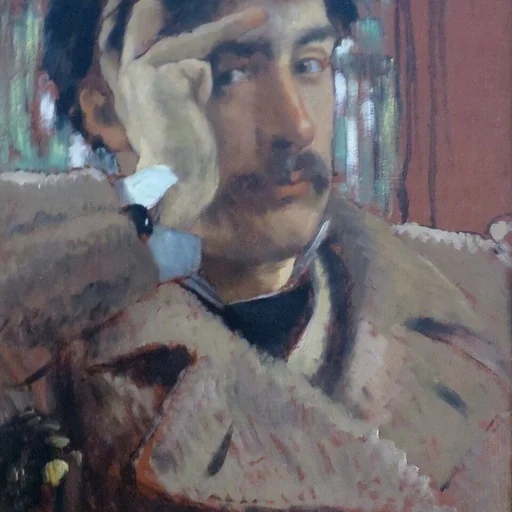
Jacques Joseph Tissot (French: ; 15 October 1836 – 8 August 1902), better known as James Tissot (UK: TISS-oh, US: tee-SOH), was a French painter, illustrator, and caricaturist.