Artwork
La convalescente
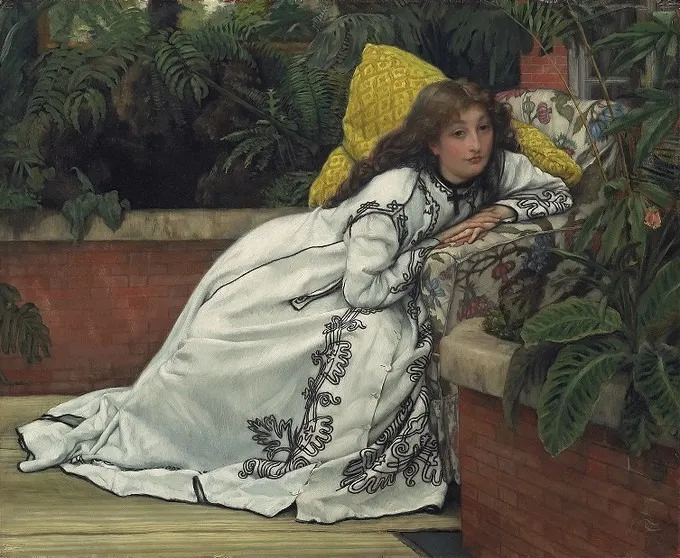
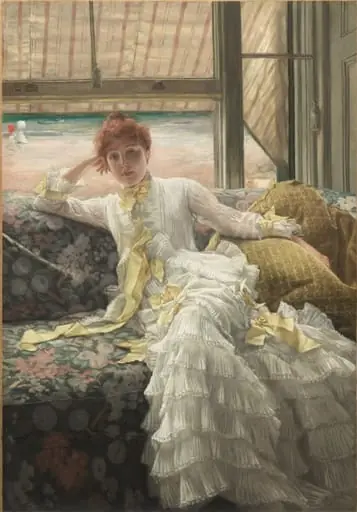
La convalescente is an oil painting by the Impressionist artist James Tissot. It dates from 1872 and is held in the collection of the Art Gallery of Ontario.
About this work
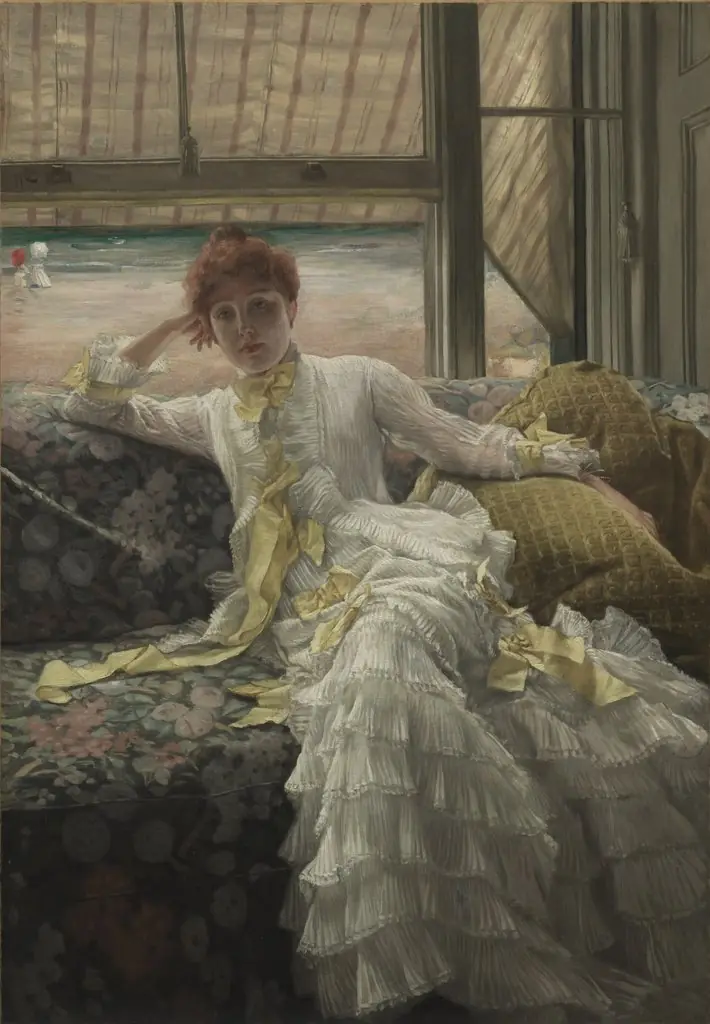
She wears a long, white dress adorned with black designs and has her head resting on her right arm, which is propped up on the back of the couch.
The painting depicts a woman reclining on a couch, surrounded by lush greenery. She wears a long, white dress adorned with black designs and has her head resting on her right arm, which is propped up on the back of the couch. Her left arm rests on the edge of the couch, and her gaze is directed to the right.
The woman's hair is a rich, dark brown, and her dress features a high neckline and long sleeves. The couch behind her is yellow, and the room is filled with an abundance of plants, including ferns and other foliage. The overall atmosphere of the painting exudes a sense of serenity and tranquility.
This painting, created by James Tissot in 1872, showcases his skillful use of chiaroscuro, a technique that emphasizes contrasts between light and dark to create a sense of depth and volume.
Overview
Painted in 1872, *La convalescente* is an oil on canvas work by French artist James Tissot. It portrays a woman in quiet repose, capturing a moment of private stillness within a domestic interior. Tissot, trained in academic traditions, incorporated subtle Impressionist influences in his handling of light and texture, while maintaining a refined attention to detail characteristic of his genre scenes.
Subject & Meaning
The painting presents a woman recovering from illness, reclining on a couch with a composed, introspective demeanor. Her stillness and the enclosed, plant-filled space suggest a pause in daily life, emphasizing vulnerability and calm. Tissot avoids overt drama, instead conveying dignity in solitude. The focus on contemporary attire and setting reflects his interest in the nuances of middle-class life during the Third Republic.
Technique & Style
Tissot employed precise brushwork to render the textures of fabric, foliage, and upholstery, blending academic precision with softer, atmospheric lighting. The interplay of light and shadow, particularly on the white dress and greenery, demonstrates a nuanced use of chiaroscuro. The composition is deliberately quiet, with the woman’s gaze directed off-canvas, inviting contemplation rather than narrative resolution.
History & Provenance
Created in 1872, the painting entered the collection of the Art Gallery of Ontario, where it remains today. While not widely exhibited during Tissot’s lifetime, it reflects his broader body of work from the early 1870s, a period when he was refining his style between academic conventions and emerging modern sensibilities. Its preservation underscores its value as a representative example of his genre painting.
Context
In post-1870 France, domestic interiors became a favored subject for artists exploring everyday life. Tissot’s work aligned with this trend, capturing the refined habits of the urban bourgeoisie. The abundance of indoor plants reflects contemporary tastes in interior decoration, while the woman’s attire signals fashion-consciousness. The painting avoids sentimentality, instead offering a restrained observation of private moments.
Legacy
Though Tissot is often remembered for his later biblical illustrations, *La convalescente* exemplifies his early mastery of psychological subtlety and visual harmony. It contributes to the understanding of how French painters navigated realism and modernity in the decades before full Impressionist dominance. The work remains a quiet testament to his ability to elevate ordinary moments through careful observation and refined technique.
Artist & collection
Artist
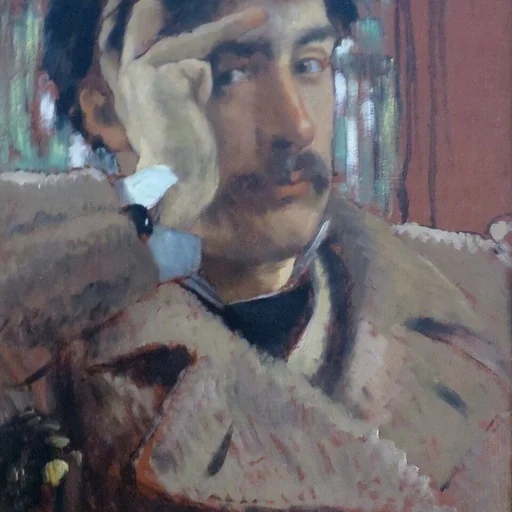
Jacques Joseph Tissot (French: ; 15 October 1836 – 8 August 1902), better known as James Tissot (UK: TISS-oh, US: tee-SOH), was a French painter, illustrator, and caricaturist.