Artwork
The Andrews Family
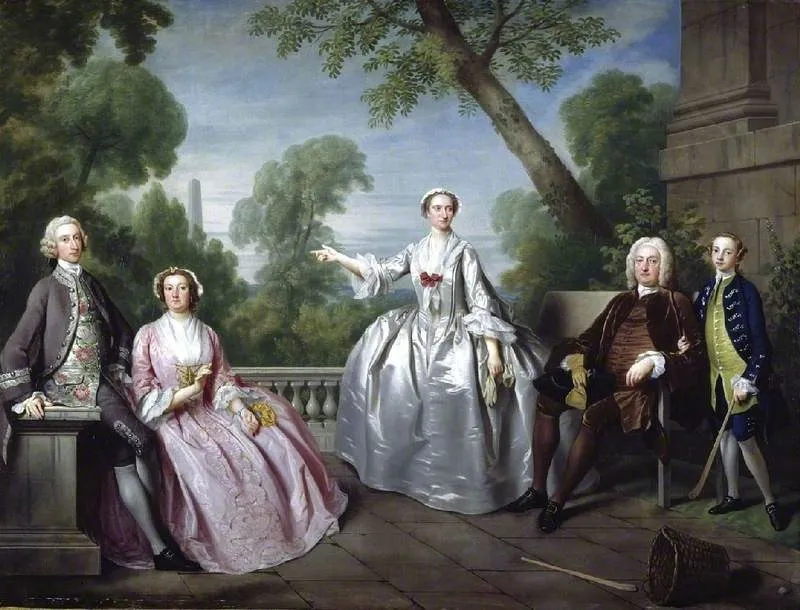
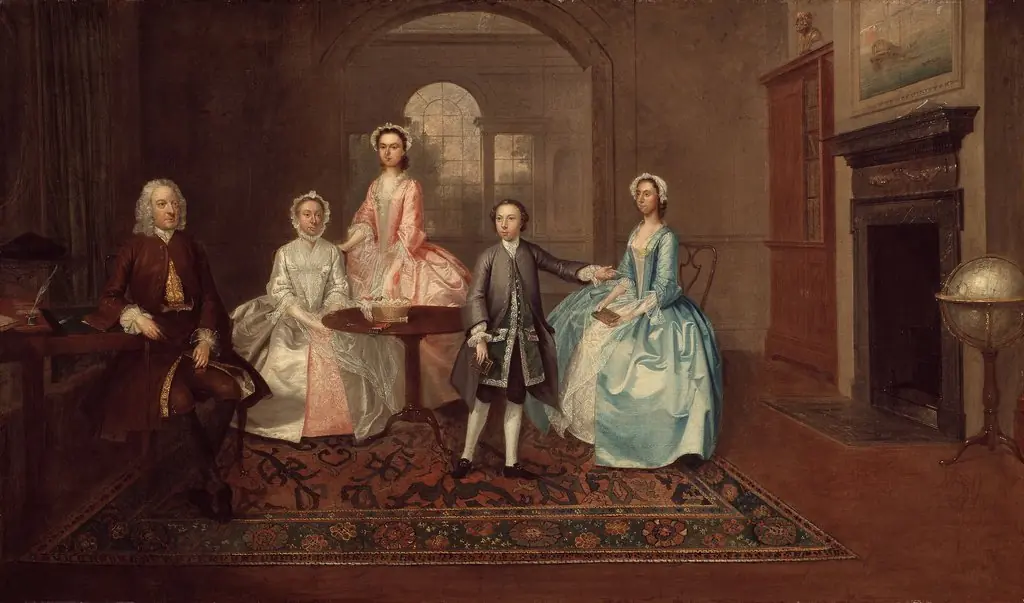
The Andrews Family is an oil painting by James Wills. It dates from 1749 and is held in the collection of the Fitzwilliam Museum.
About this work
Overview
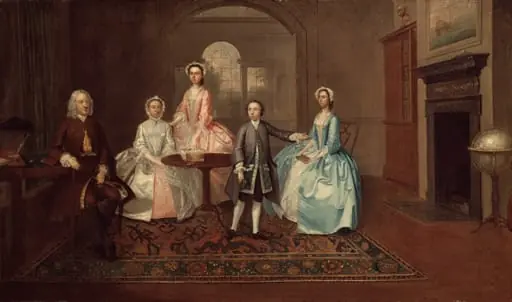
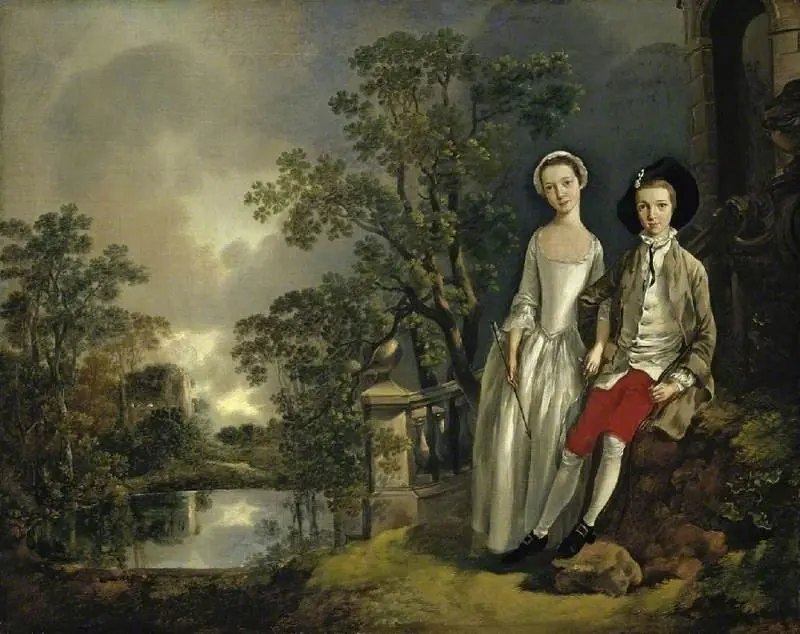
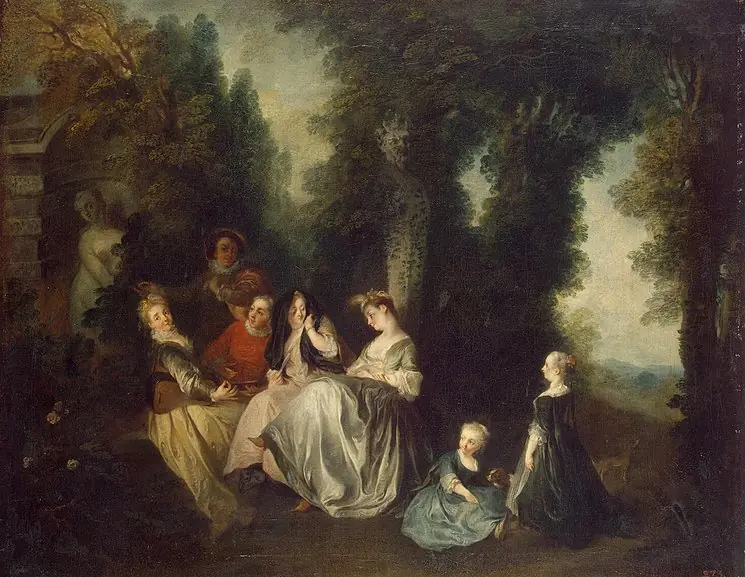
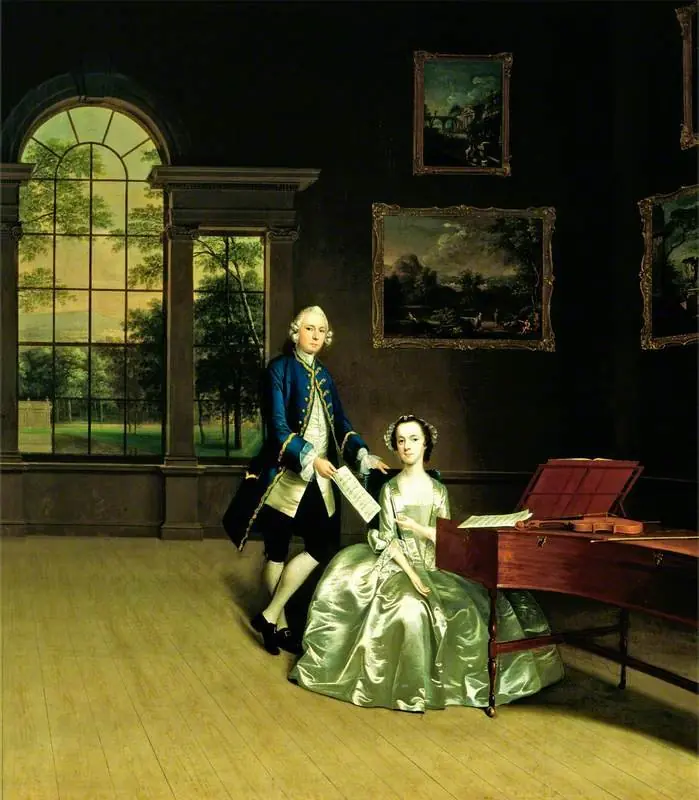
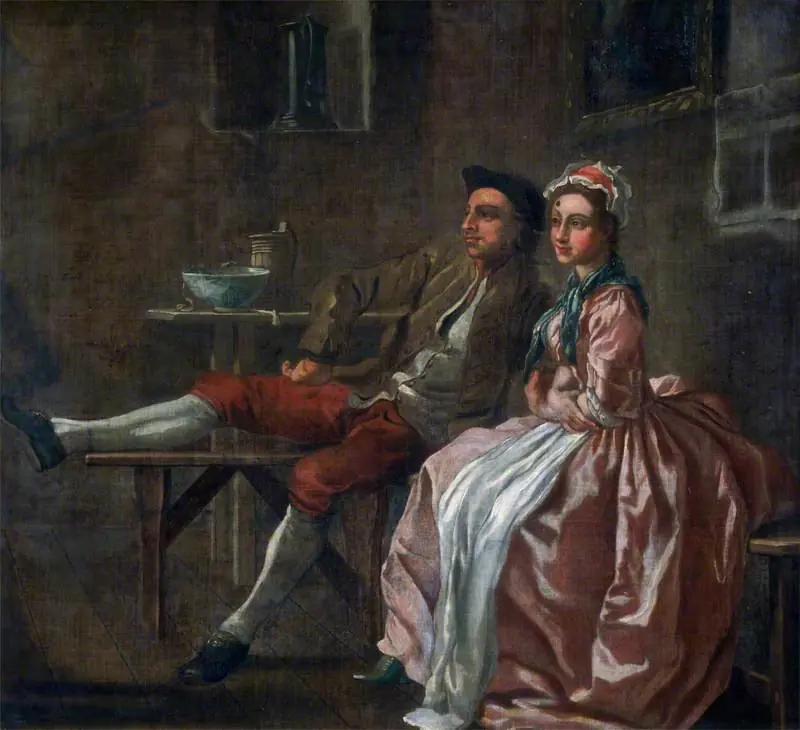
James Wills painted The Andrews Family in 1749 using oil on canvas. The work is part of the collection of the Fitzwilliam Museum. It presents a small group portrait set outdoors, featuring five individuals arranged in a relaxed yet formal composition.
Subject & Meaning
At the centre of the scene stands a woman in a white dress, gesturing toward the left, suggesting a narrative focus or familial interaction. Flanking her are three men in period attire—a brown‑coated gentleman on the left and a figure in a yellow waistcoat on the right—while a fourth figure completes the group, reinforcing the portrait’s emphasis on family ties and social standing.
Technique & Style
Wills employs a restrained palette, allowing the white dress to dominate the visual field against more muted clothing tones. The background features trees and a distant landscape rendered with subtle chiaroscuro, which creates depth and a three‑dimensional presence for the figures. The overall effect balances elegance with a naturalistic setting.
History & Provenance
Since its creation in the mid‑18th century, the painting has remained in the United Kingdom and is now housed in the Fitzwilliam Museum, Cambridge. The work’s provenance traces back to its original commission by the Andrews family, though detailed records of its early ownership are limited.
Context
The portrait reflects mid‑Georgian tastes for outdoor family groupings, a departure from the more formal indoor settings common earlier in the century. Wills’s approach aligns with contemporary British portraiture that sought to convey both status and a connection to the pastoral landscape.
Artist & collection