Artwork
Cup
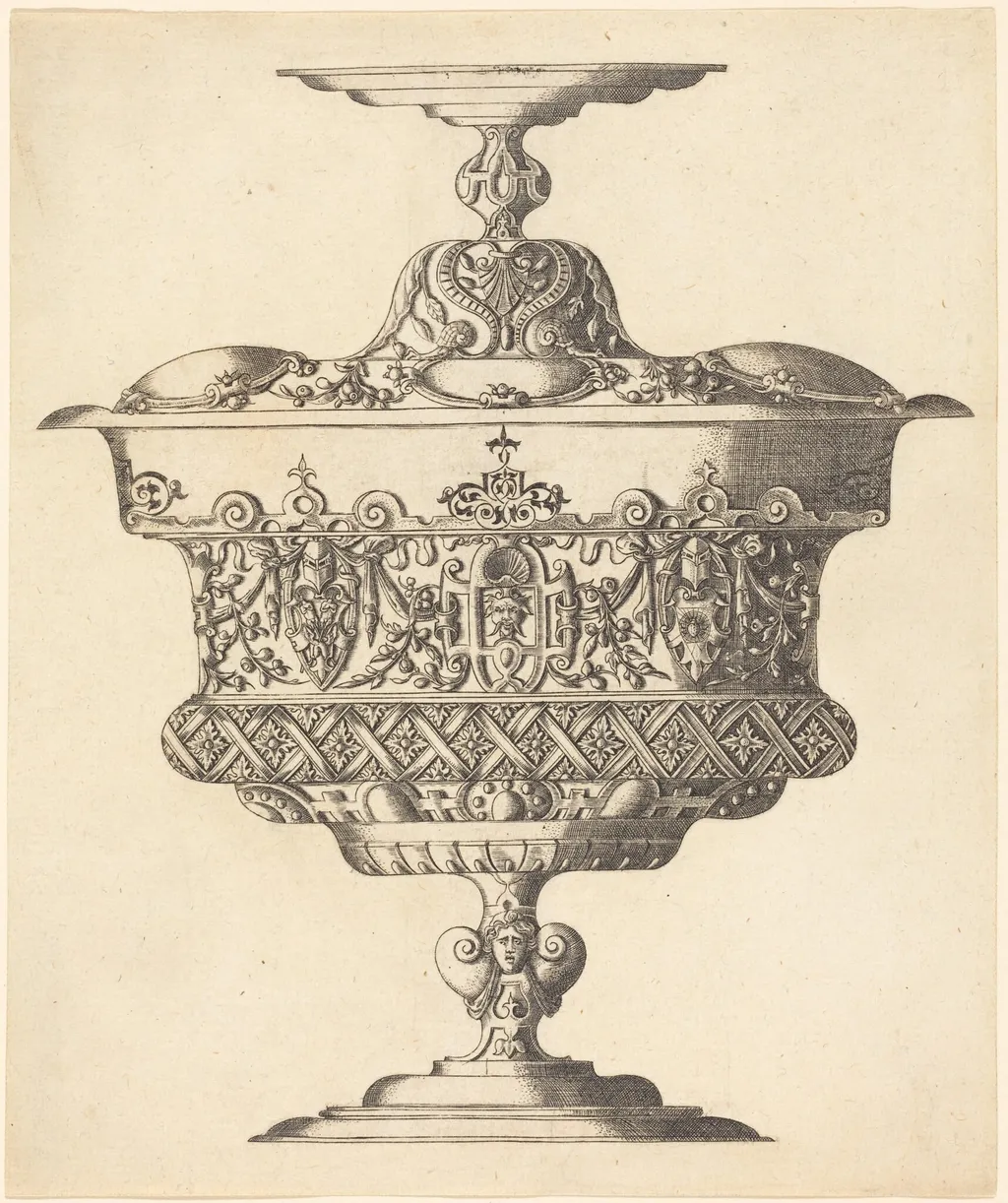
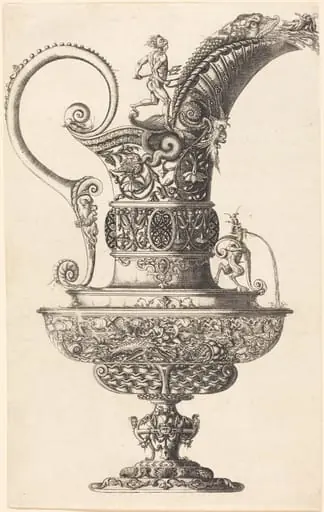
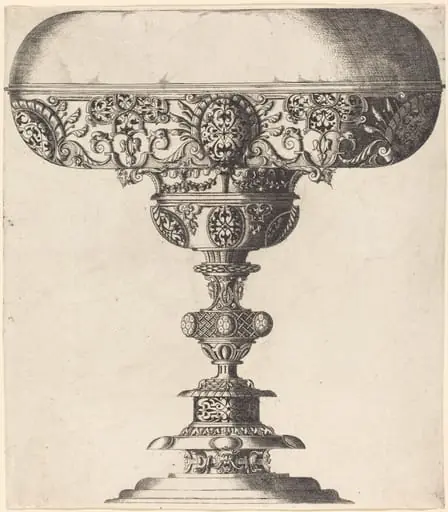
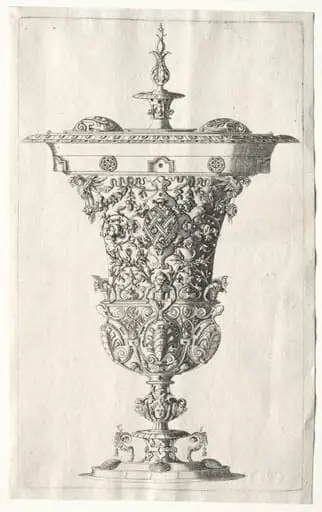
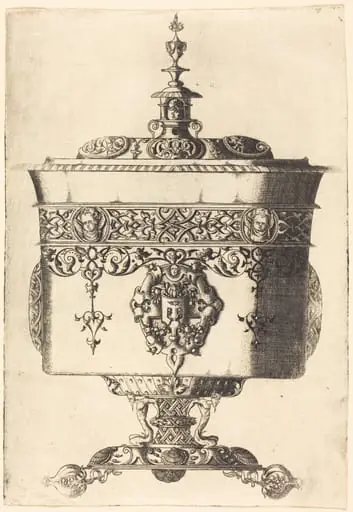
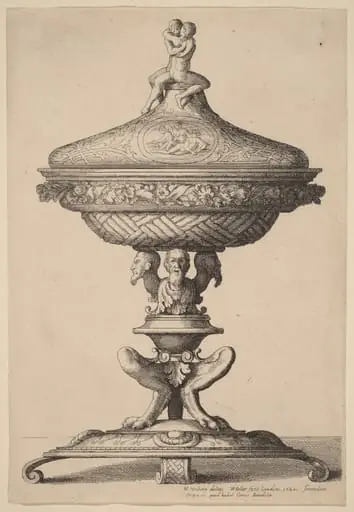
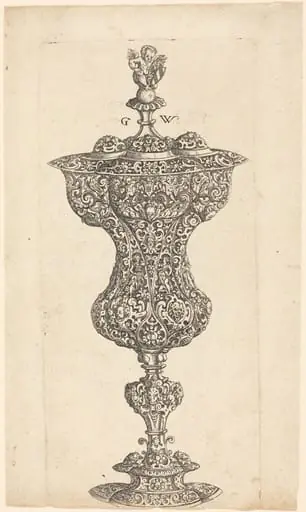
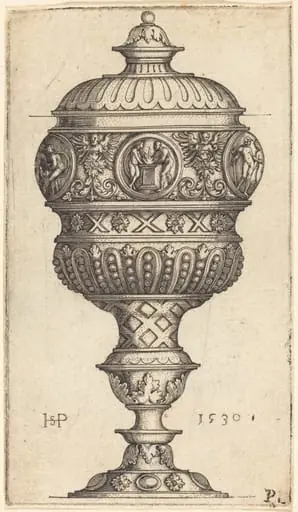
Cup is an ink print by the Renaissance artist Wenzel Jamnitzer I. It dates from 1546 and is held in the collection of the National Gallery of Art.
About this work
Overview
Created in 1546, *Cup* is an etching by Wenzel Jamnitzer, a prominent Northern Mannerist goldsmith and printmaker based in Nuremberg. The work depicts a richly ornamented metal cup, its surface covered with intricate leaf and vine motifs rendered in fine line work.
Subject & Meaning
The image presents a ceremonial drinking vessel whose decorative program emphasizes the fusion of functional objects with artistic excess, a hallmark of the period’s fascination with turning everyday items into displays of wealth and craftsmanship.
Technique & Style
Jamnitzer incised the design onto a copper plate, then transferred the image to paper by pressing it through the inked surface. The resulting print showcases delicate, raised lines that suggest the play of light on the cup’s embossed relief, reflecting the precise, ornamental style associated with Mannerist aesthetics.
History & Provenance
Jamnitzer, who served as court goldsmith to several Holy Roman Emperors, came from a Moravian German family of artisans. *Cup* was produced during his mature period, when his reputation as Germany’s leading goldsmith was at its height, and it circulated among collectors interested in both metalwork and printmaking.
Context
The work belongs to a broader Renaissance German trend of elevating utilitarian objects through elaborate decoration. Its detailed rendering parallels the meticulous approach of contemporary printmakers such as Albrecht Dürer, who similarly emphasized minute surface detail.
Artist & collection
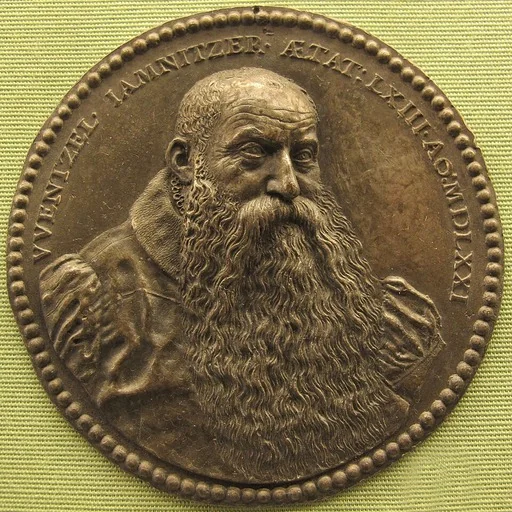
Artist
Wenzel Jamnitzer (sometimes Jamitzer, or Wenzel Gemniczer) (1507/1508 – 19 December 1585) was a Northern Mannerist goldsmith, artist, and printmaker in etching, who worked in Nuremberg.