Artwork
Jar with Neptune
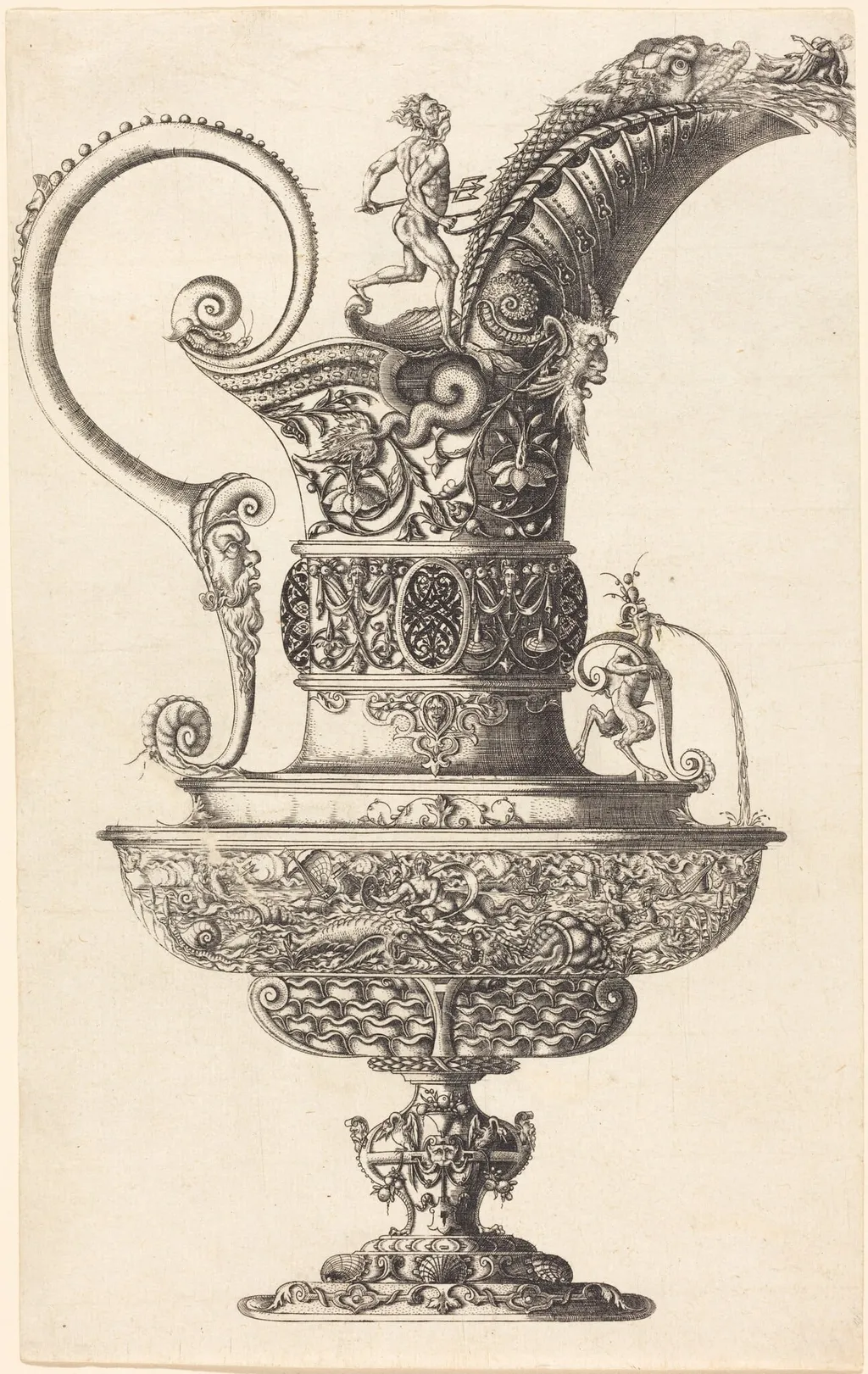
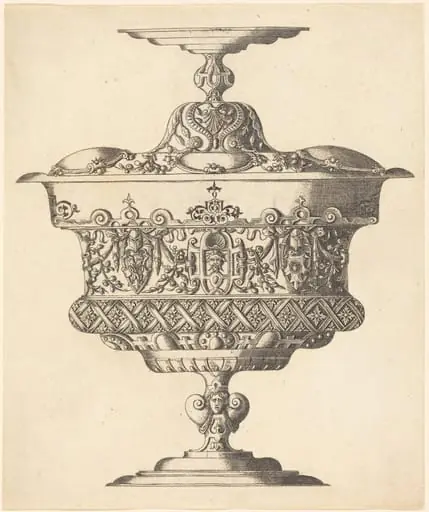
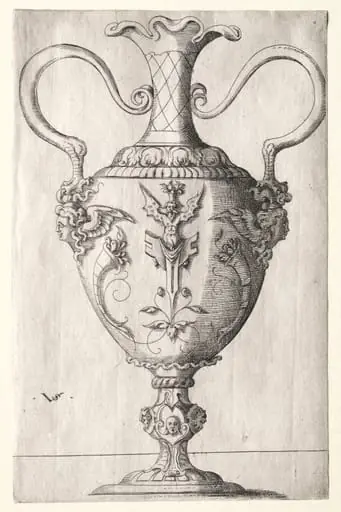
Jar with Neptune is an ink print by the Renaissance artist Wenzel Jamnitzer I. It dates from 1546 and is held in the collection of the National Gallery of Art.
About this work
Overview
Though primarily known for elaborate metal objects, he translated his three-dimensional craftsmanship into intricate black-and-white compositions.
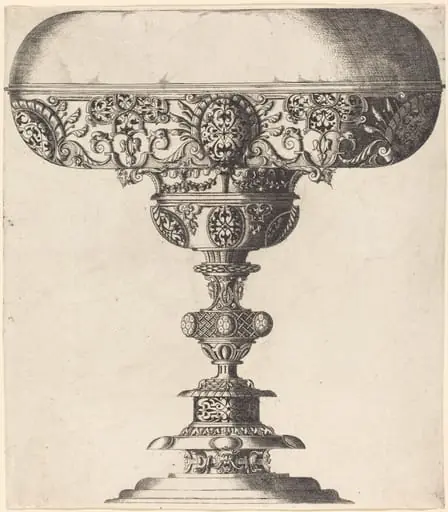
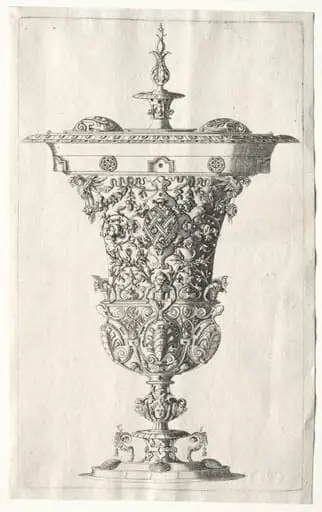
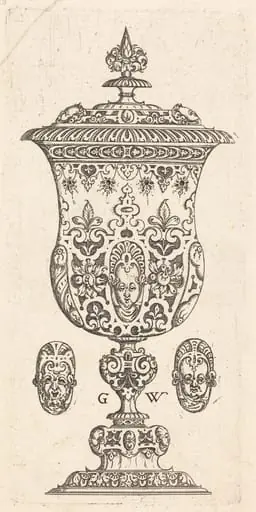
Wenzel Jamnitzer produced the etching *Jar with Neptune* in 1546, demonstrating his dual mastery as a goldsmith and printmaker. Though primarily known for elaborate metal objects, he translated his three-dimensional craftsmanship into intricate black-and-white compositions. This print captures a fantastical vessel, rendered with precision and dense ornamentation, reflecting the Northern Mannerist fascination with complexity and allegory.
Subject & Meaning
The vessel depicts Neptune, god of the sea, standing atop a hybrid creature that forms the jar’s spout. Surrounding forms include marine motifs, scrolling foliage, and small mythological faces, suggesting a symbolic fusion of aquatic power and artisanal ingenuity. The design evokes the classical world reinterpreted through Renaissance humanism, where mythological figures embody ideals of order, nature, and divine authority.
Technique & Style
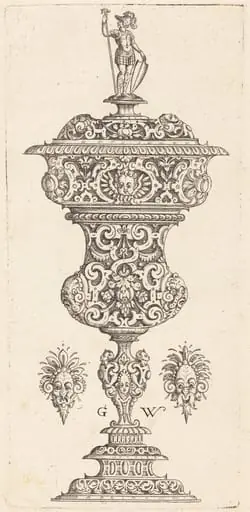
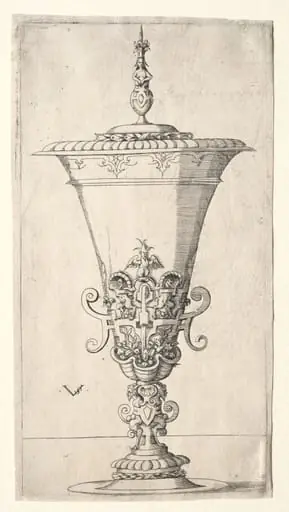
Jamnitzer employed etching to achieve fine, controlled lines that mimic the texture of engraved metal. The surface is densely packed with swirling patterns, minute figures, and organic forms, creating a visual richness akin to jeweled surfaces. His technique prioritizes detail over spatial depth, emphasizing surface decoration in the manner of contemporary goldsmith work, where ornamentation itself carried symbolic weight.
History & Provenance
Created during Jamnitzer’s tenure as court goldsmith to the Holy Roman Emperors, the print likely served as a design template or artistic statement for elite patrons. As a member of a long-standing Moravian artisan family, he operated within a network of imperial workshops. This etching may have circulated among craftsmen or collectors, reinforcing his reputation beyond metalwork into the realm of printed imagery.
Context
In mid-16th-century Germany, Mannerist aesthetics favored elaborate, intellectualized decoration over naturalism. Jamnitzer’s work aligned with a broader trend among court artists who merged classical themes with technical virtuosity. Etchings like this were not merely illustrations but demonstrations of artistic authority, bridging the worlds of fine craft and print culture in an era when such distinctions were fluid.
Legacy
Jamnitzer’s etchings, including *Jar with Neptune*, influenced later generations of decorative artists by codifying a visual language of mythological ornament. Though his metalwork survives in museums, his prints remain vital records of how three-dimensional design was translated into two-dimensional form. His integration of classical allegory with meticulous technique helped shape the visual vocabulary of Northern European decorative arts.
Artist & collection
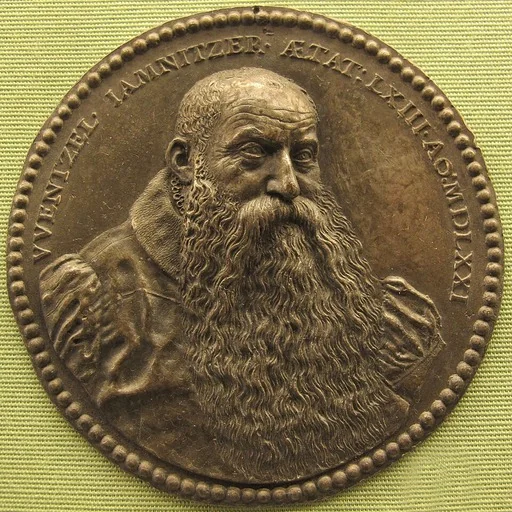
Artist
Wenzel Jamnitzer (sometimes Jamitzer, or Wenzel Gemniczer) (1507/1508 – 19 December 1585) was a Northern Mannerist goldsmith, artist, and printmaker in etching, who worked in Nuremberg.