Artwork
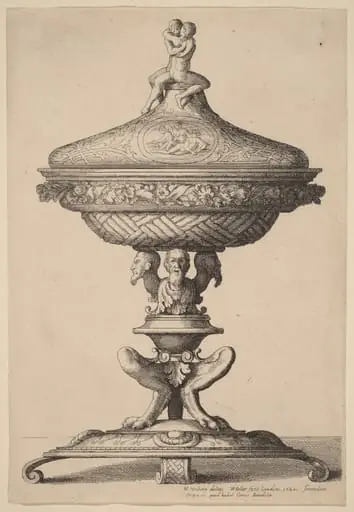
Goblet with Putto on lid
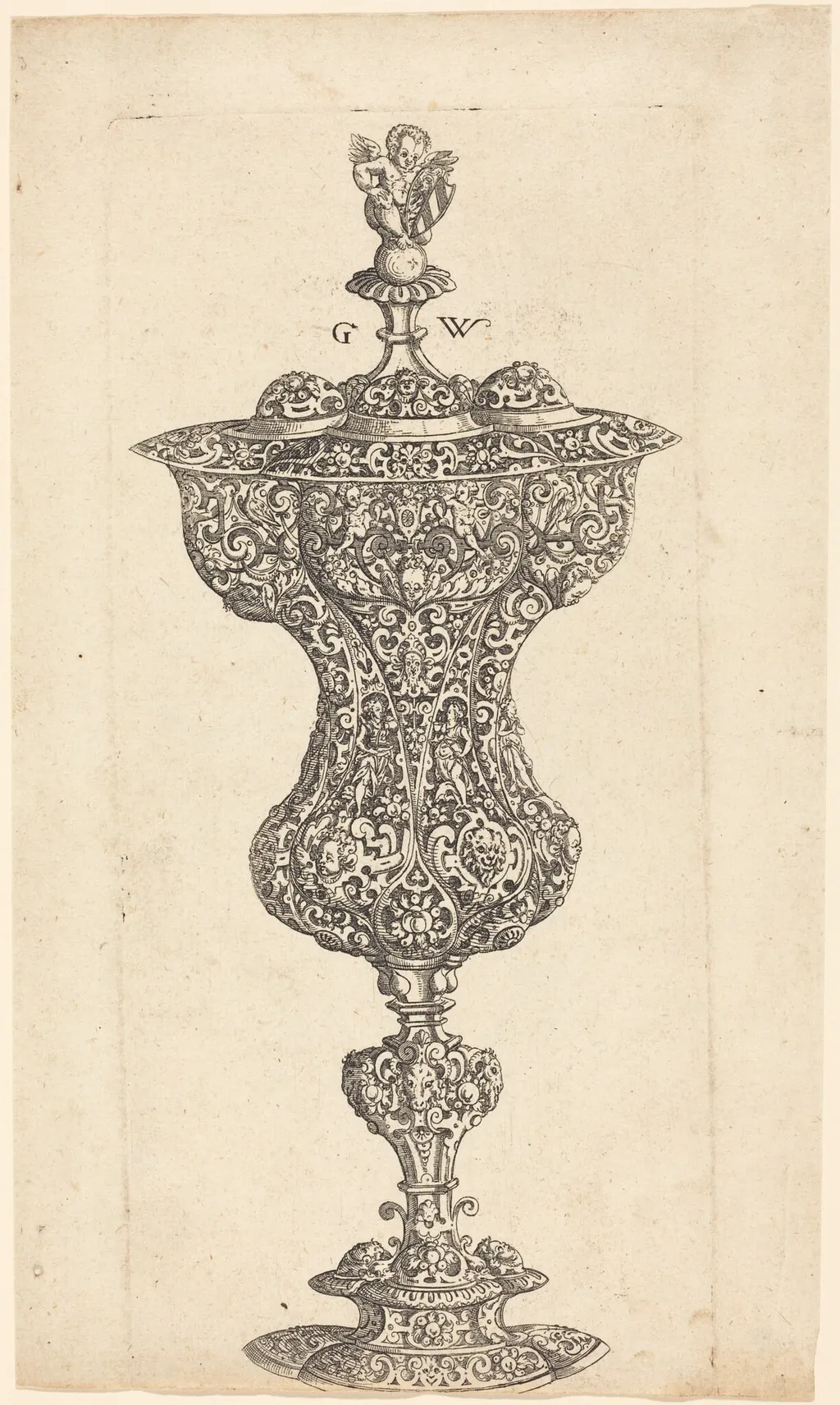
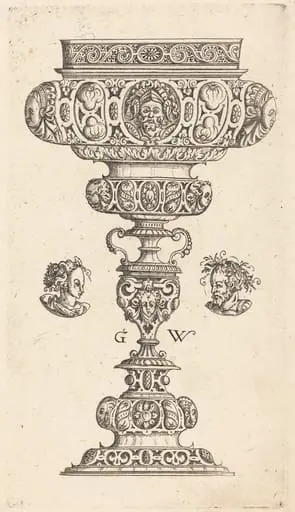
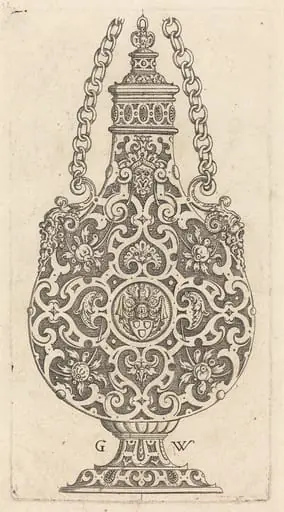
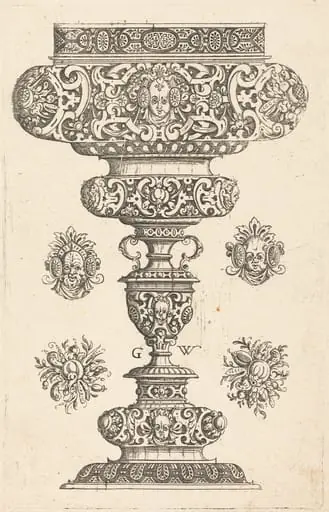
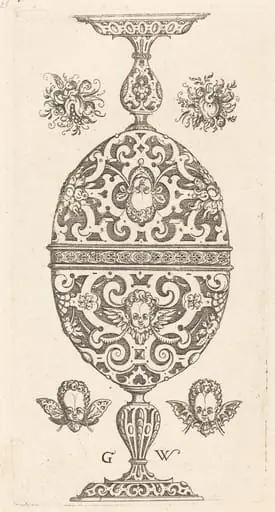
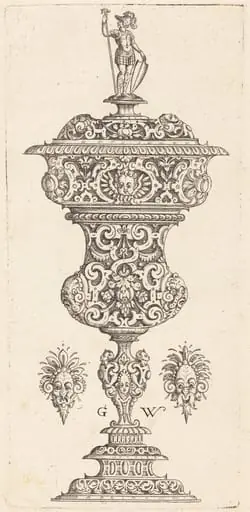
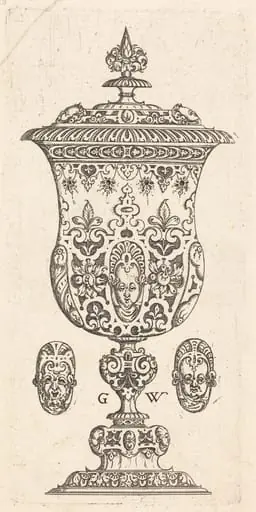
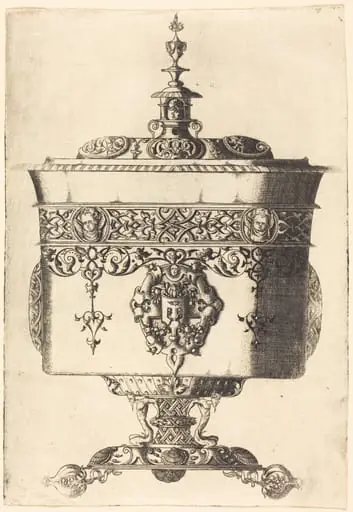
Goblet with Putto on lid is an ink print by the Renaissance artist Georg Wechter I. It dates from 1579 and is held in the collection of the National Gallery of Art.
About this work
Overview
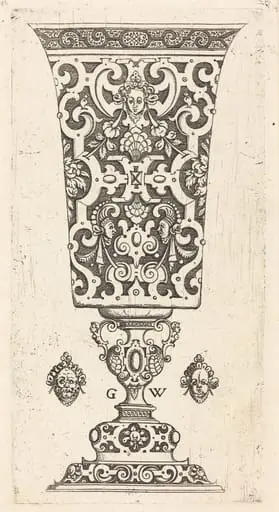
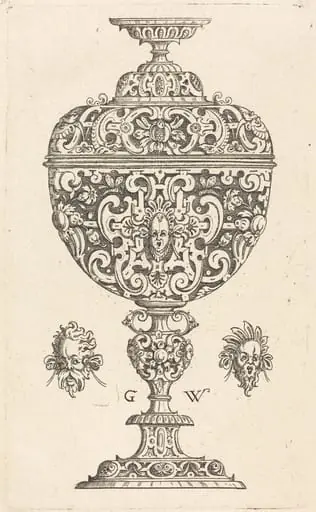
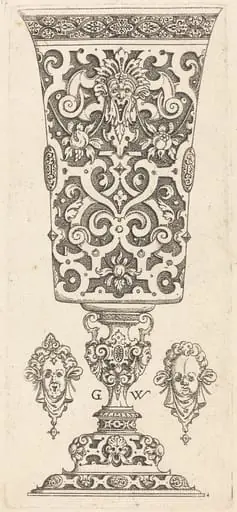
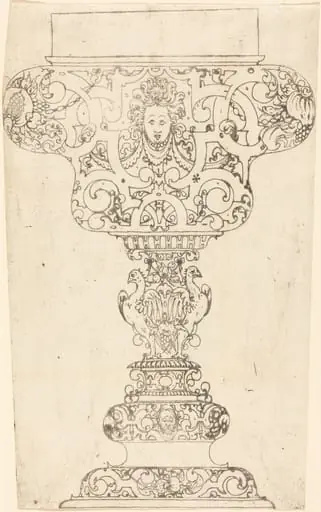
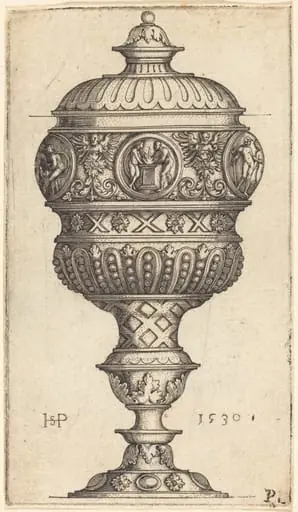
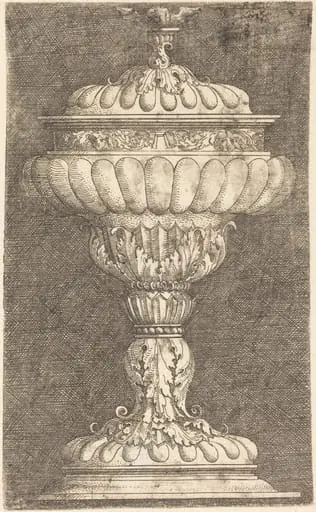
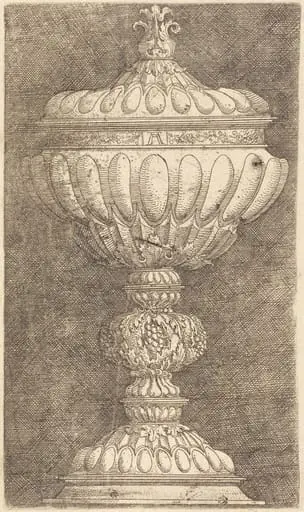
Created in 1579 by Georg Wechter I, this engraving depicts a highly detailed goblet with a putto resting on its lid. The work is not a functional object but a printed image, likely intended for dissemination among artisans or collectors. Its intricate linear patterns reflect the ornamental aesthetic favored in late 16th-century German decorative arts.
Subject & Meaning
The central figure is a putto, a cherubic child often symbolizing innocence or divine favor, holding a fruit—possibly an apple or pomegranate—that may allude to abundance or temptation. The elaborate design of the vessel, with swirling motifs and dense ornamentation, suggests a celebration of craftsmanship rather than a specific narrative, aligning with Renaissance ideals of virtuosity in design.
Technique & Style
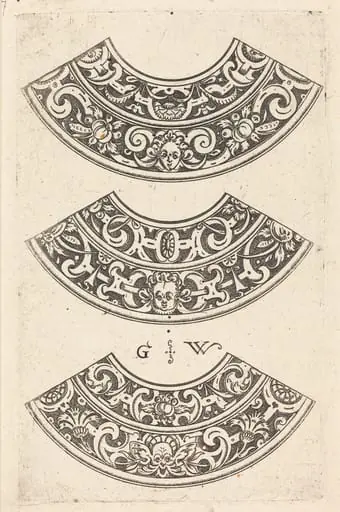
Executed in fine-line engraving, the image uses precise, controlled incisions to render every surface with minute detail. The entire composition is densely filled with decorative elements resembling lace or filigree, leaving no empty space. This technique was typical of Nuremberg goldsmiths who translated metalwork designs into printed form for wider circulation.
History & Provenance
Georg Wechter I, a Nuremberg goldsmith and engraver, produced this print during a period when artisans increasingly documented their designs through prints. While the original goblet is unlocated, the engraving survives as evidence of workshop practices and the transmission of ornamental motifs across media. Its survival suggests it was valued as a reference or specimen.
Context
In late 16th-century Germany, engraved plates of decorative objects were circulated among craftsmen as pattern books. This work reflects the integration of humanist ideals with artisanal tradition, where classical motifs like putti were adapted into secular luxury items. Such prints helped standardize and disseminate stylistic trends across regional workshops.
Legacy
Wechter’s engraving contributes to a broader archive of Renaissance decorative arts documentation. Though not widely exhibited today, it remains a valuable record of how goldsmiths conceptualized and reproduced ornamental forms. Its meticulous detail offers insight into the visual language of craftsmanship before the rise of industrial design.
Artist & collection