Artwork
Jan van Gelder (1647-73), Naval Captain, Stepson of Michiel Adriaensz de Ruyter
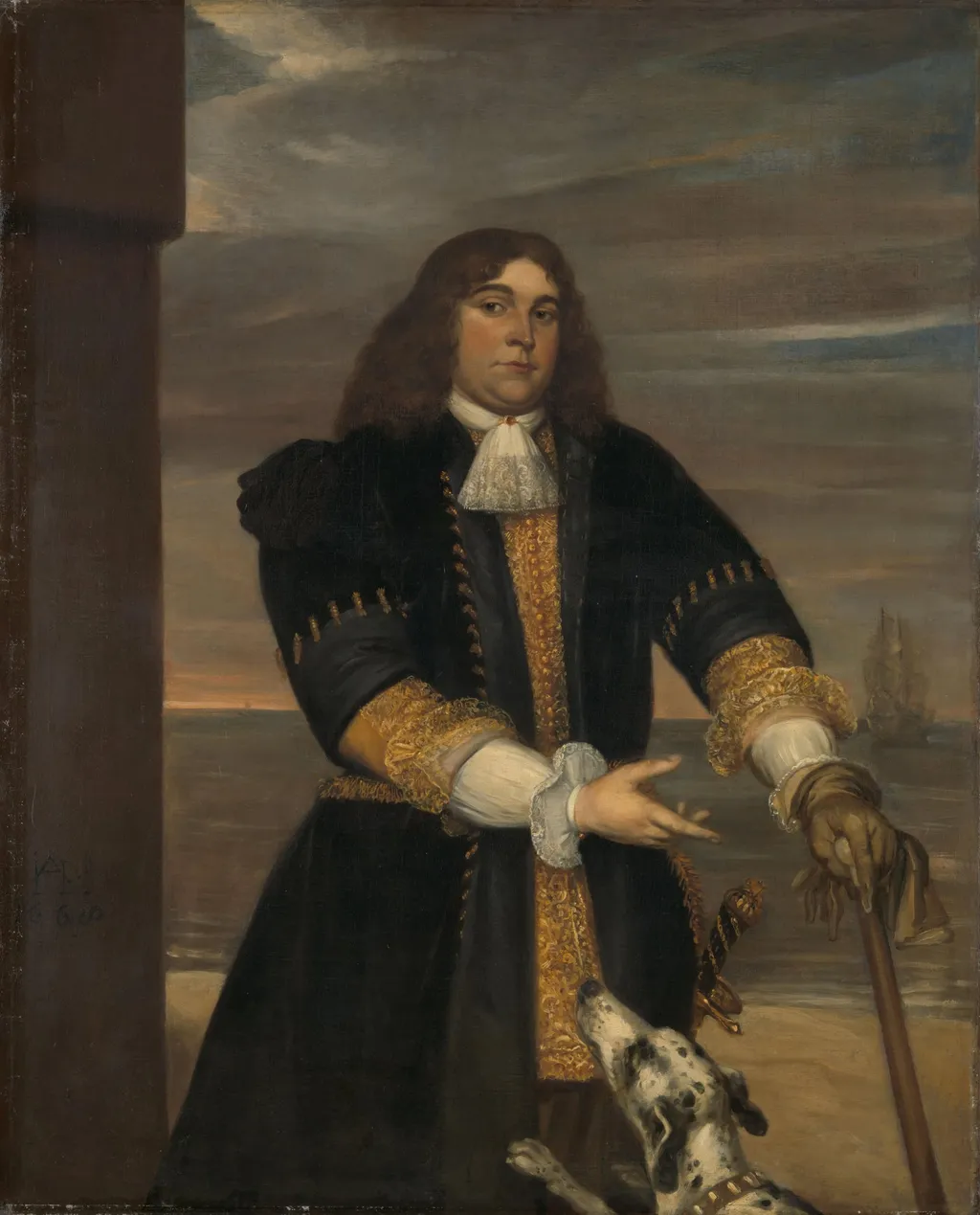
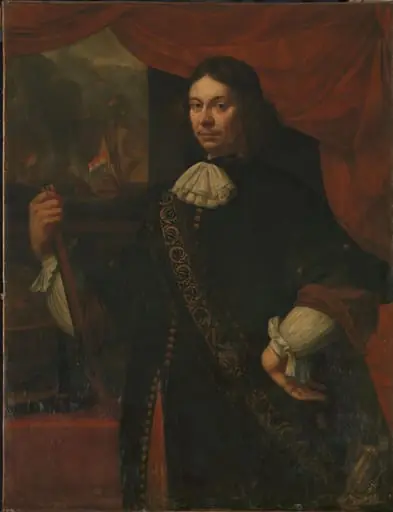
Jan van Gelder (1647-73), Naval Captain, Stepson of Michiel Adriaensz de Ruyter is an unspecified painting by the Dutch Golden Age artist Jan Andrea Lievens. It dates from 1668 and is held in the collection of the Rijksmuseum. The work is a half‑length portrait of Jan van Gelder, a Dutch naval captain and stepson of the celebrated admiral Michiel de Ruyter.
About this work
Overview
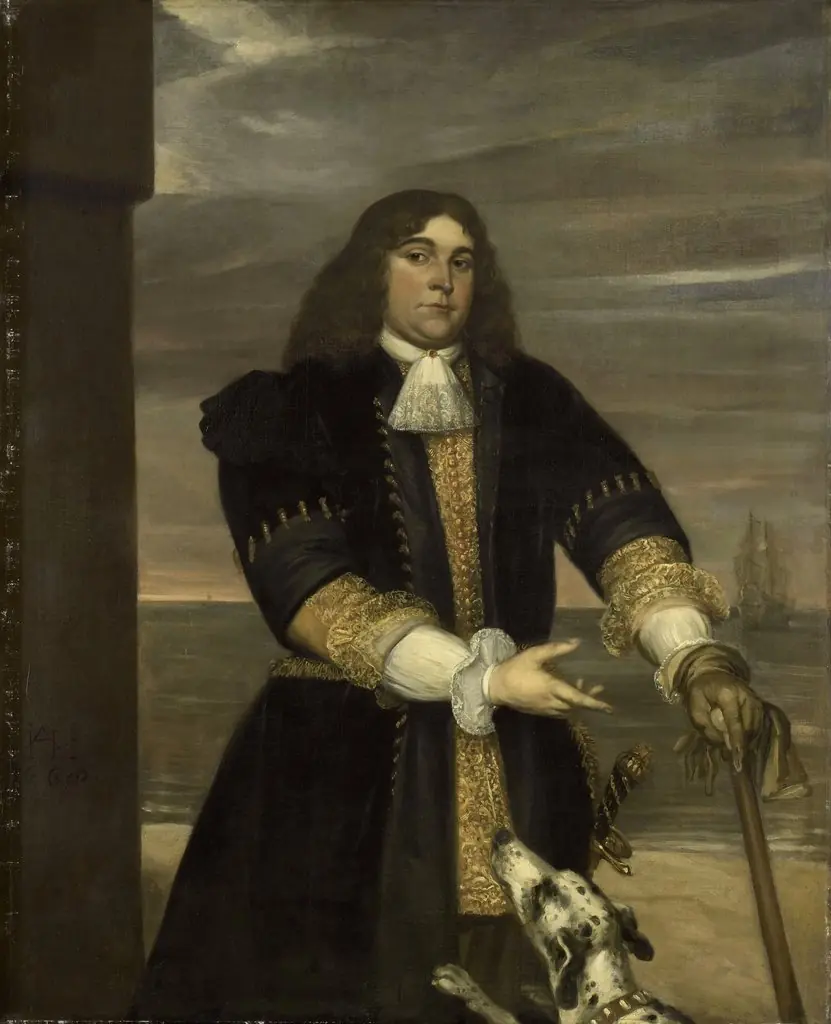
The work is a half‑length portrait of Jan van Gelder, a Dutch naval captain and stepson of the celebrated admiral Michiel de Ruyter. Executed in oil on canvas, the composition places the young officer on a rocky shoreline, with a distant ship navigating the sea behind him.
Subject & Meaning
Van Gelder is depicted in a dark uniform, holding a walking stick and a glove in his left hand while his right hand is raised in a commanding gesture. A small dog leaps at his side, softening the formal military presentation and suggesting a personal, approachable aspect to the sitter.
Technique & Style
The unknown artist employs a realistic approach typical of mid‑17th‑century Dutch portraiture, using chiaroscuro to model the figure against a muted landscape. Fine brushwork renders the texture of the uniform and the fur of the dog, while the distant ship is suggested with loose, atmospheric strokes.
History & Provenance
The portrait was painted when Jan van Gelder was about twenty‑one years old, an unusually young age for a sea captain in the Dutch navy. The painting’s early ownership records are sparse, but it has remained in Dutch collections, eventually entering the Rijksmuseum’s holdings.
Context
In the Dutch Golden Age, naval officers were often commemorated in portraiture to emphasize the Republic’s maritime power. Van Gelder’s connection to de Ruyter underscores the familial networks that supported naval careers, while the inclusion of a pet reflects contemporary conventions of portraying personal virtue and domesticity.
Legacy
Although the artist’s identity remains unknown, the portrait provides valuable visual documentation of Dutch naval attire and the social status of young officers in the 1660s. It continues to serve as a reference point for scholars studying the intersection of military, family, and portrait conventions of the period.
Artist & collection

 Portrait of Cornelis Jacobsz de Boer, Captain in the Navy
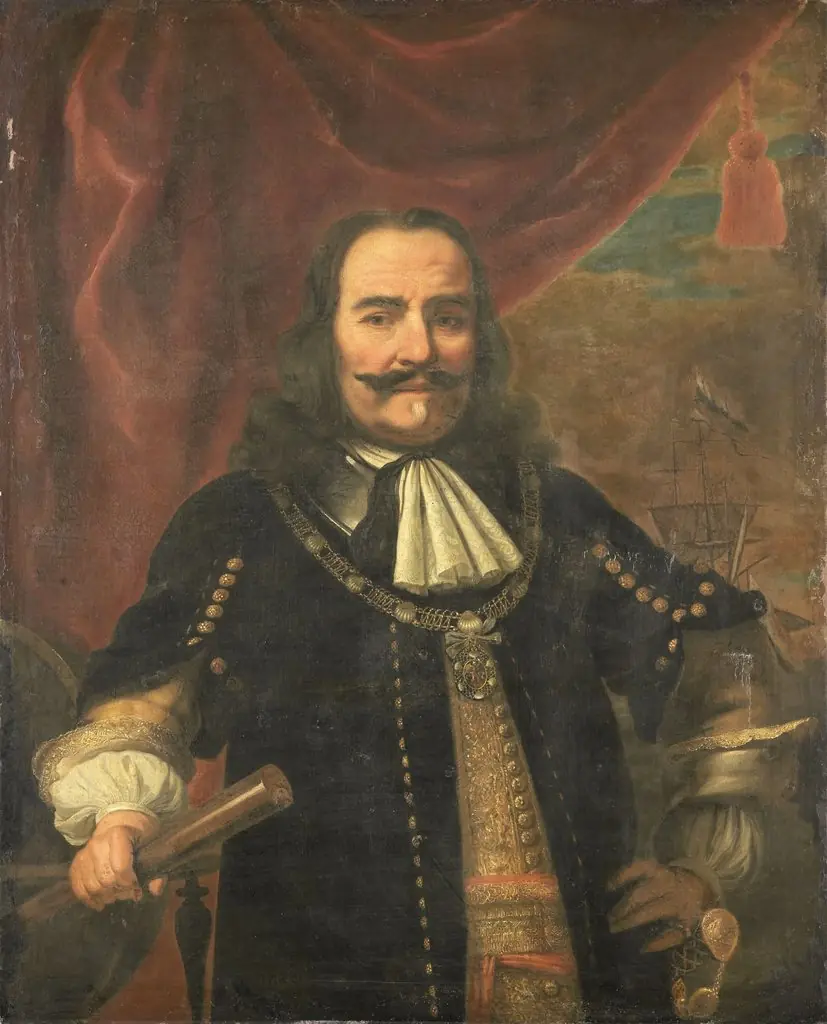 Michiel Adriaensz de Ruyter (1607-76), vice admiral
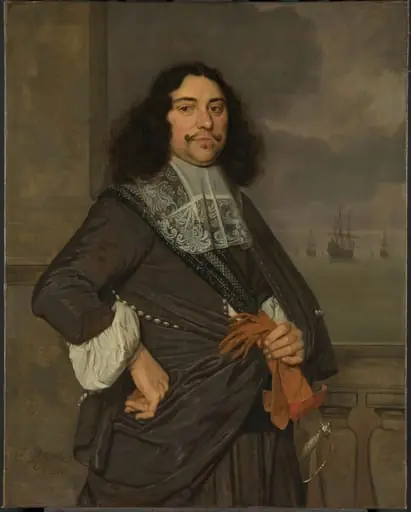 Jan van Nes (1631-80), Vice admiral of Holland and West-Friesland
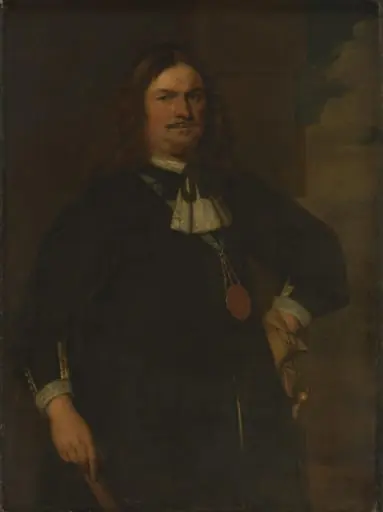 Portrait of Adriaen Banckert (c. 1620-1684), Vice Admiral of Zeeland
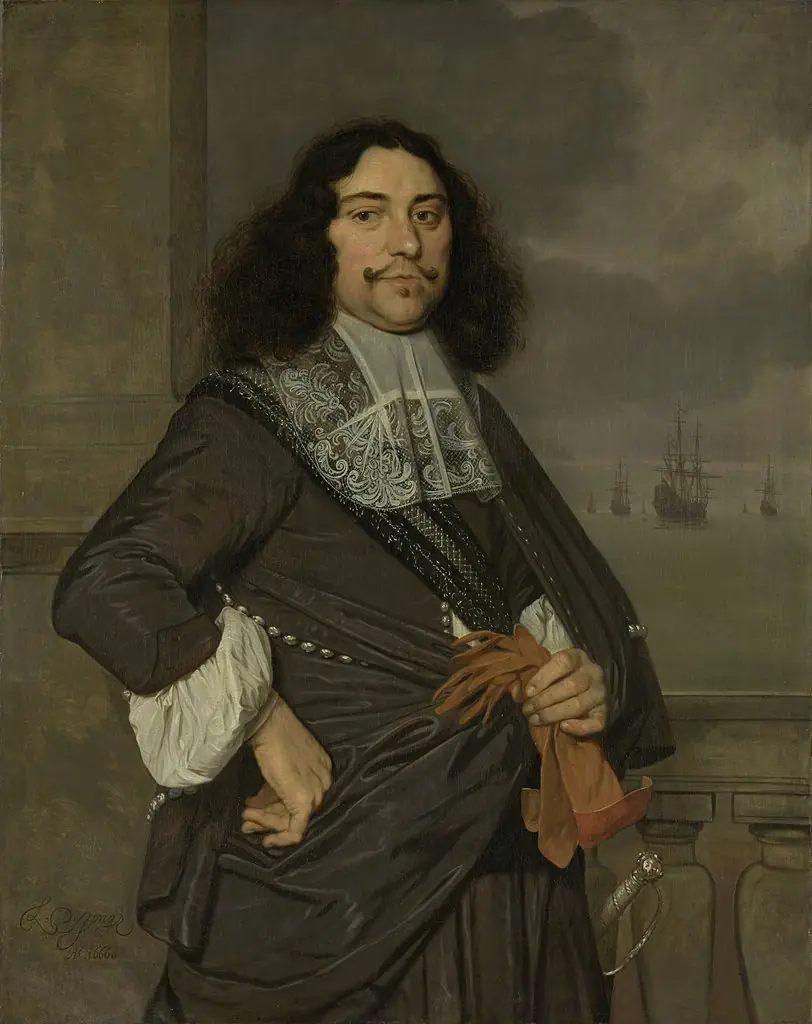 Portrait of Jan van Nes (1631-80). Vice admiral of Holland and West-Friesland
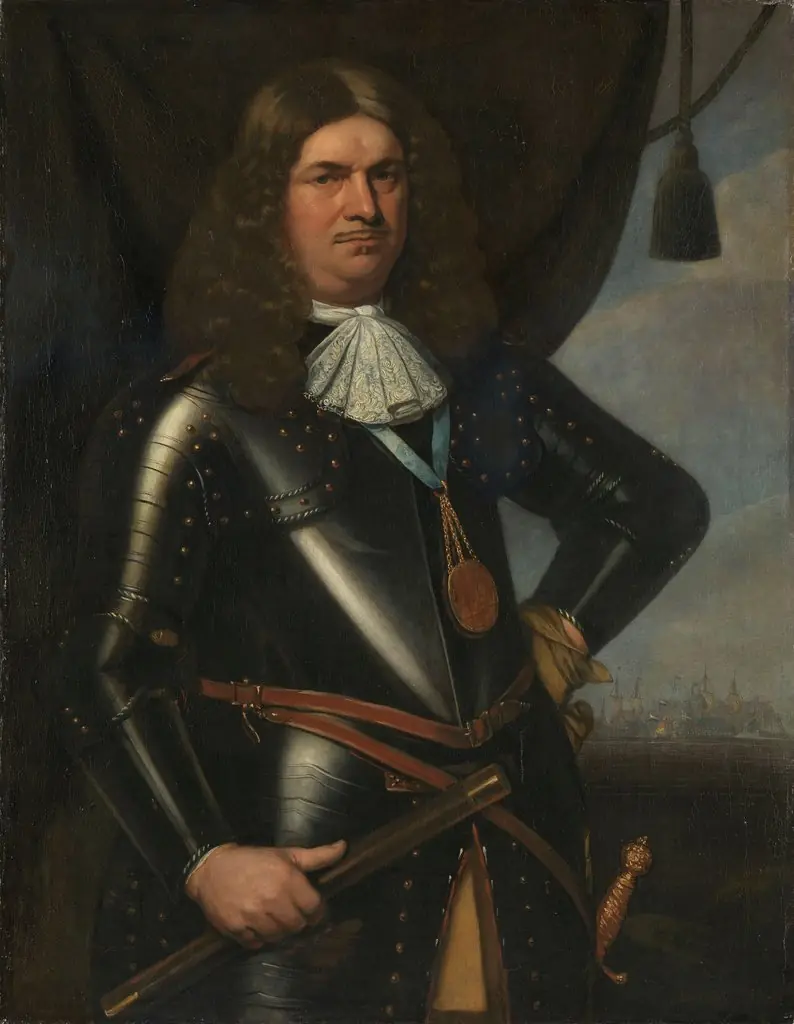 Adriaen Banckert (c 1620-1684), Vice Admiral of Zeeland
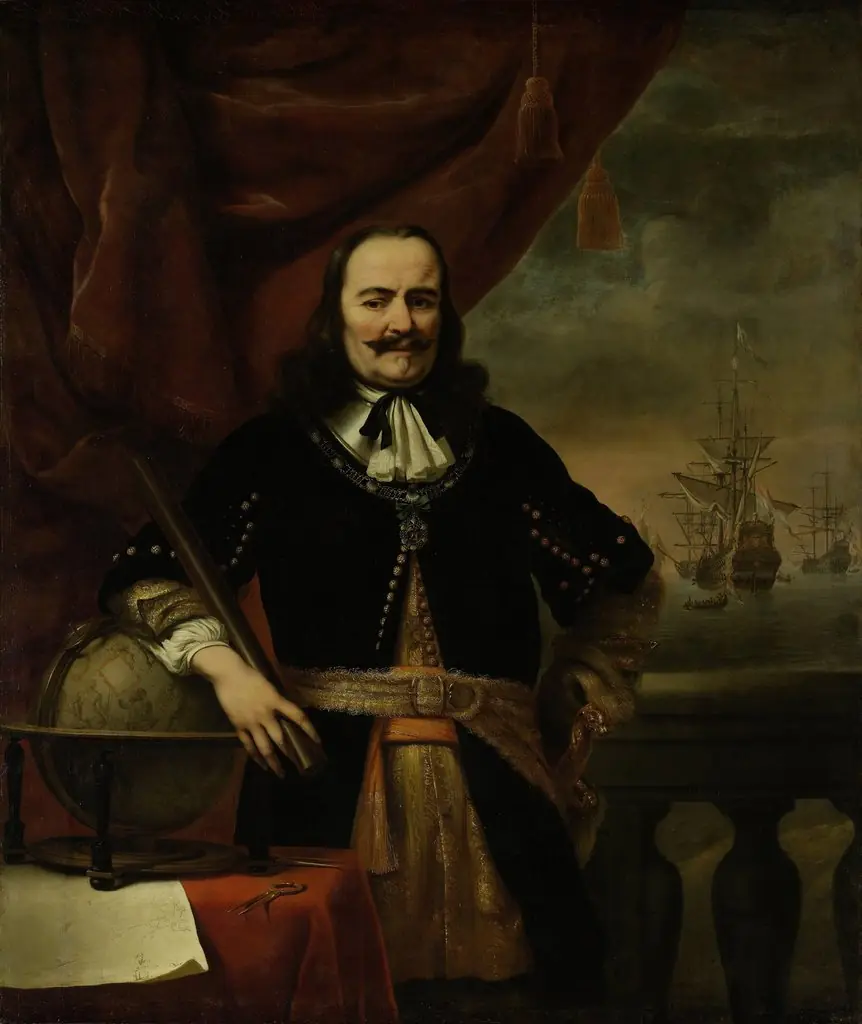 Michiel de Ruyter as Lieutenant-Admiral