Artwork
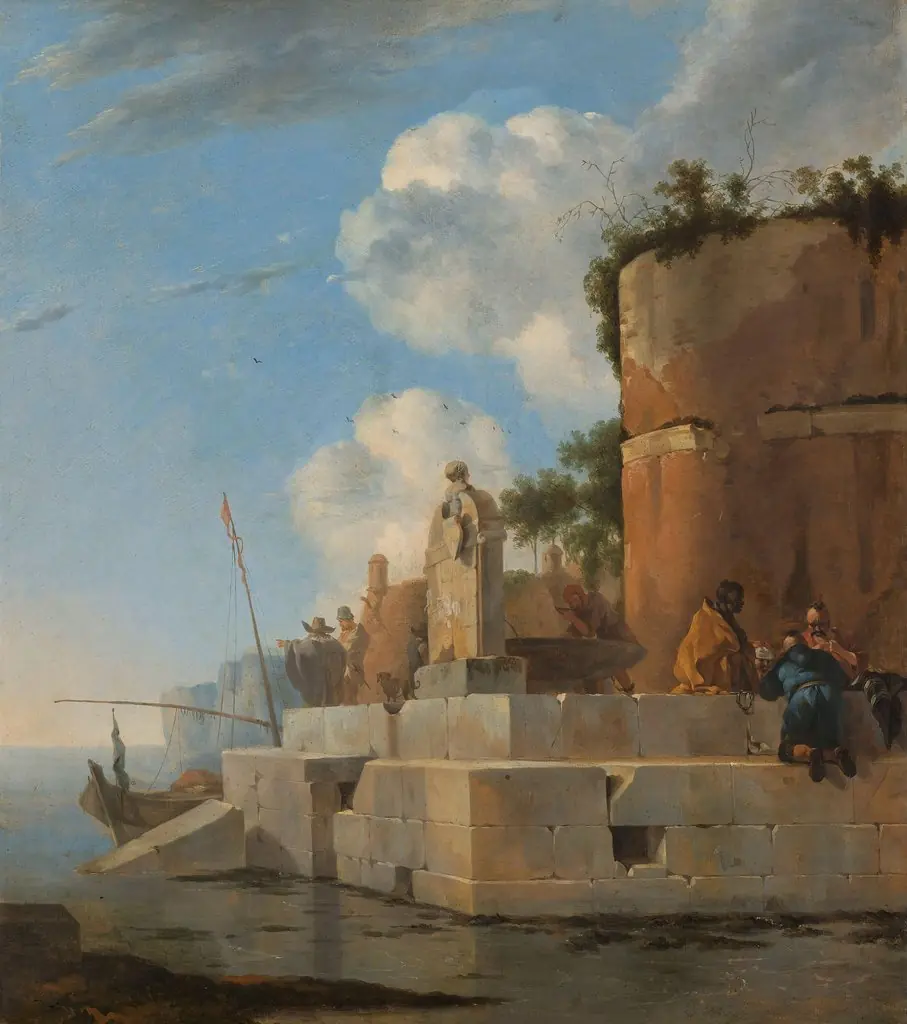
A Coastal Ruin in Italy
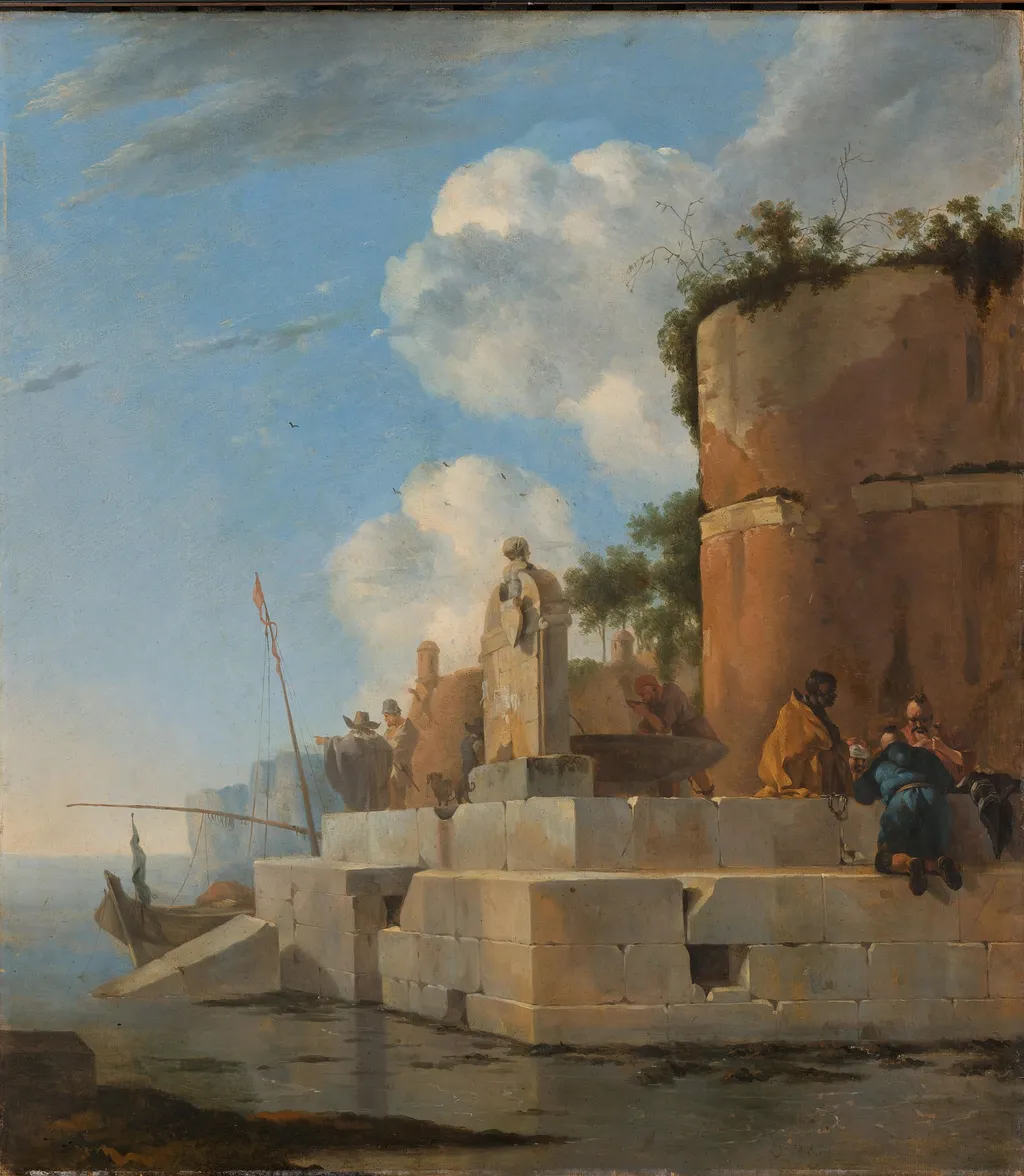
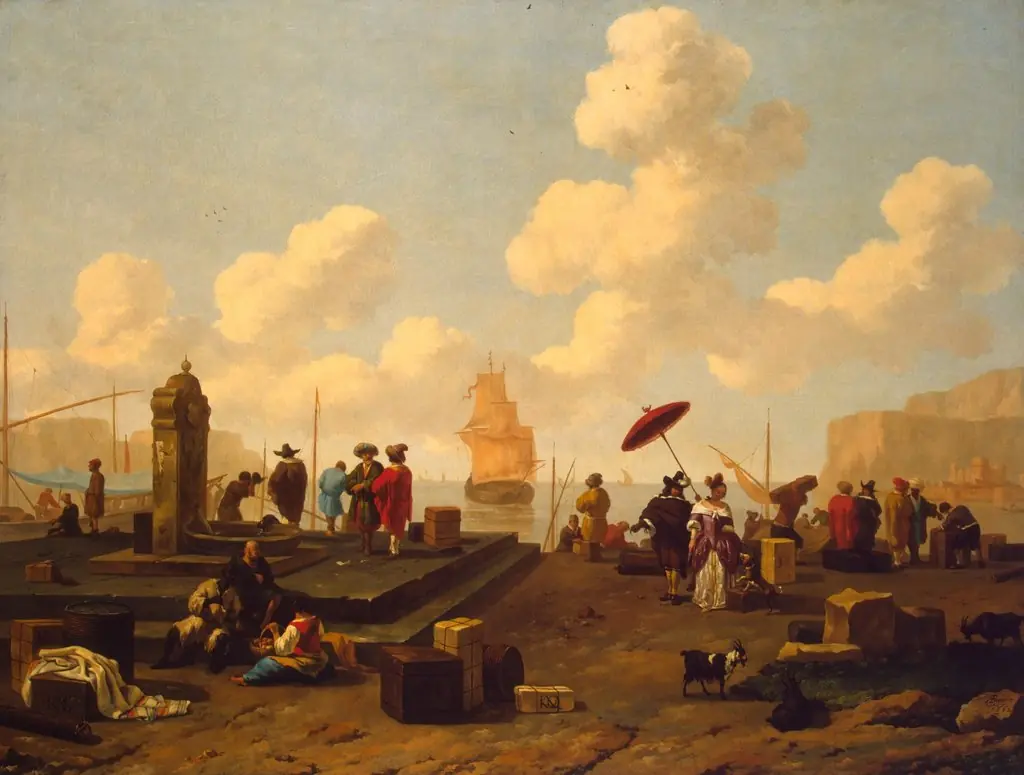
A Coastal Ruin in Italy is an unspecified painting by the Baroque artist Jan Asselijn. It dates from 1646 and is held in the collection of the Rijksmuseum. The canvas presents an imagined Mediterranean harbour, its stone quay in decay and a solitary ruined tower rising in the distance.
About this work
Overview
Figures of diverse origin populate the scene: an African individual, two Turkish merchants, and a Northern European gentleman gesturing toward the sea.
The canvas presents an imagined Mediterranean harbour, its stone quay in decay and a solitary ruined tower rising in the distance. Figures of diverse origin populate the scene: an African individual, two Turkish merchants, and a Northern European gentleman gesturing toward the sea. The composition blends architectural decay with bustling trade, creating a staged exotic tableau popular among 17th‑century Dutch patrons.
Subject & Meaning
The work juxtaposes the remnants of a once‑thriving port with the presence of foreign traders, suggesting the continuity of commerce despite ruin. The African and Turkish figures signal the reach of Mediterranean trade networks, while the European gesturing outward hints at curiosity and the allure of distant markets that fascinated contemporary viewers.
Technique & Style
Rendered in the Dutch Baroque idiom, the painting employs a balanced arrangement of architectural elements and human activity. Careful attention to light renders the crumbling stone with texture, while the figures are depicted in modest detail, emphasizing their cultural dress without overt dramatization. The overall tone remains subdued, characteristic of the period’s realistic yet imagined landscapes.
History & Provenance
Created in the 1600s, the piece reflects a genre favored by Dutch collectors who sought imagined Mediterranean scenes that combined antiquity and trade. Though the location is fictitious, the motif of a decayed quay populated by exotic figures catered to the era’s fascination with overseas commerce and the romanticism of distant lands.
Context
During the Dutch Golden Age, expanding global trade sparked interest in foreign ports and peoples. Artists responded by inventing idealised harbour views that merged architectural ruins with multicultural crews, offering patrons a visual synthesis of wealth, exploration, and the passage of time.
Own this work as a print
Artist & collection