Artwork
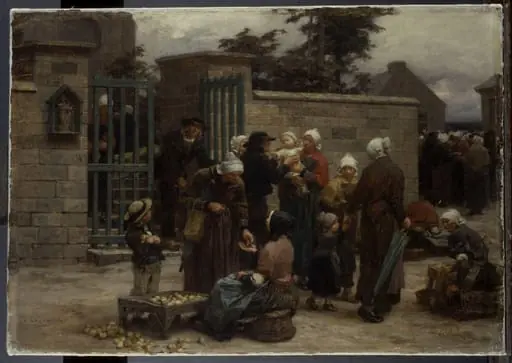
After Mass
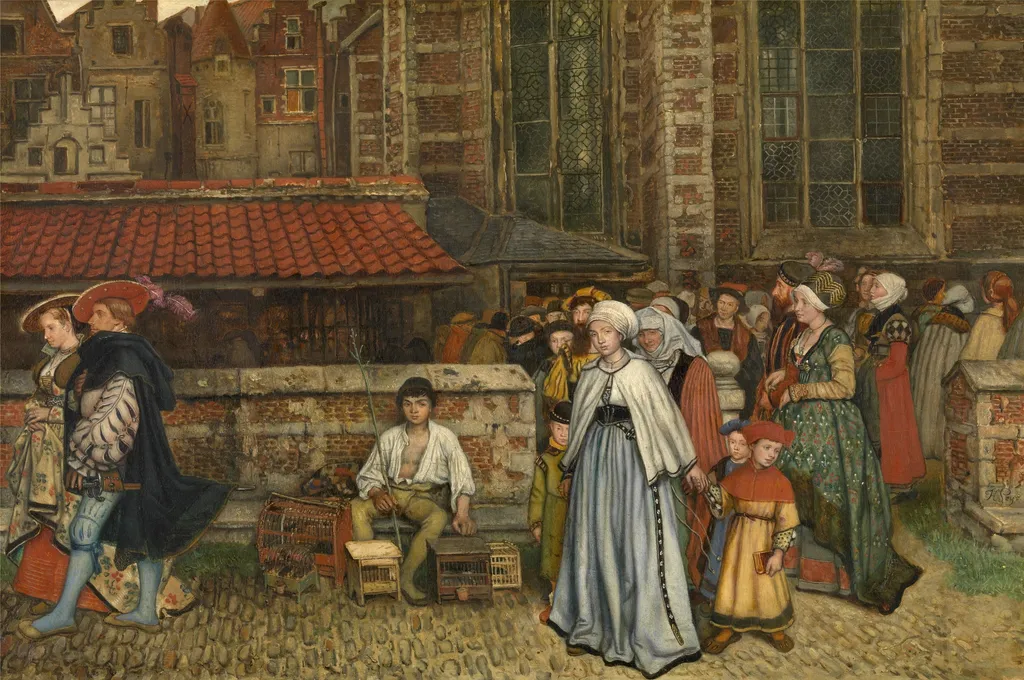
After Mass is an oil painting by the Realist artist Jan August Hendrik Leys. It dates from 1866 and is held in the collection of the Royal Museum of Fine Arts Antwerp.
About this work
If you're interested in learning more about this technique, you can explore the works of artists who have mastered it, such as Jan August Hendrik Leys.
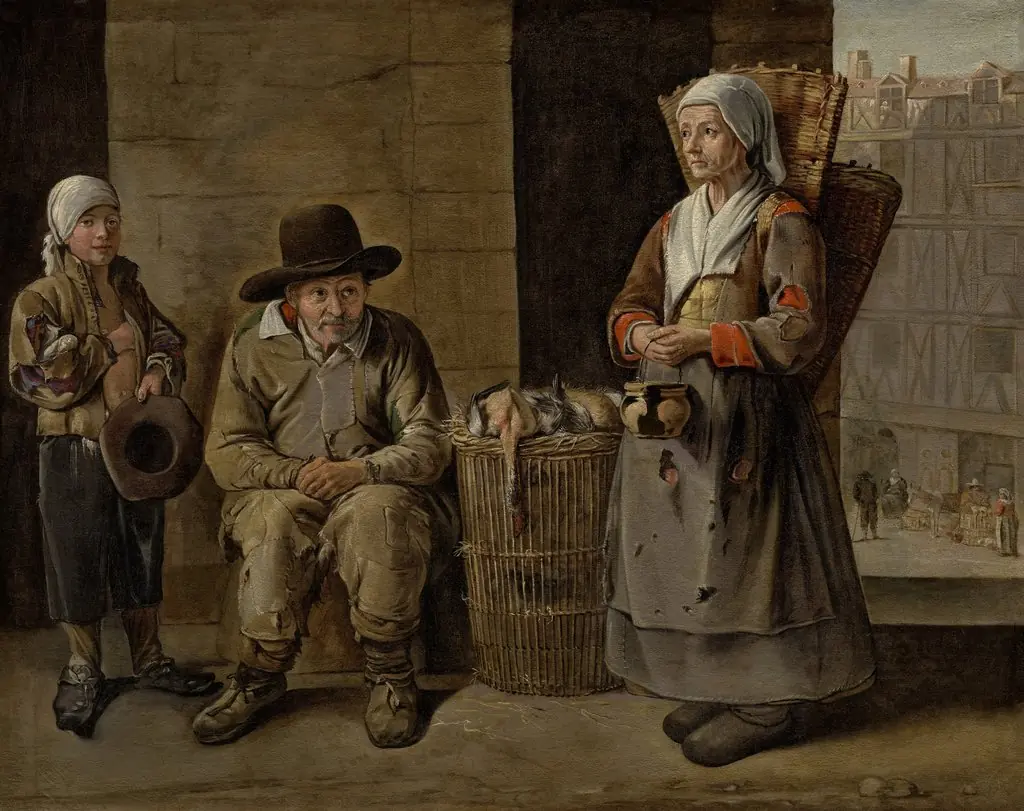
This painting shows a group of people walking down a cobblestone street. They are dressed in clothing from the 16th century, with men wearing hats and women wearing long dresses. The scene is set in front of a brick building with tall windows.
In the foreground, a man sits on the ground next to a small birdcage. He is surrounded by other people, including a woman in a white dress and a man in a black coat. The atmosphere of the painting is one of everyday life, with people going about their daily business.
The painting's use of chiaroscuro, a technique that uses strong contrasts between light and dark, adds depth and dimension to the scene. If you're interested in learning more about this technique, you can explore the works of artists who have mastered it, such as Jan August Hendrik Leys.
Overview
Jan August Hendrik Leys created the oil painting *After Mass* in 1866. Executed during his transition from Romantic historicism to a more realistic approach, the work depicts a 16th‑century street scene populated by ordinary figures. It is part of the collection of the Royal Museum of Fine Arts in Antwerp.
Subject & Meaning
The canvas presents a bustling cobblestone street in front of a brick façade with tall windows. A group of pedestrians—men in hats, women in long gowns—move past a seated figure beside a small birdcage. The composition captures a moment of quotidian activity following a religious service, emphasizing everyday social interaction rather than heroic narrative.
Technique & Style
Leys employs pronounced chiaroscuro, juxtaposing illuminated areas with deep shadows to model forms and give the scene spatial depth. The brushwork is restrained, favoring clear outlines and a muted palette that reinforce the realistic observation of light, texture, and 16th‑century costume.
History & Provenance
Originally painted at a time when Leys was pioneering Realism in Belgium, *After Mass* helped extend his reputation beyond his native country. The painting entered the Royal Museum of Fine Arts Antwerp’s holdings, where it remains on display as a representative example of his mid‑career output.
Context
The work reflects a broader mid‑19th‑century shift among European artists away from grand historical allegories toward scenes of ordinary life. Leys, a leading Belgian painter and printmaker, applied this new focus to a historically dressed setting, bridging his Romantic past with emerging realist sensibilities.
Own this work as a print
Artist & collection
Artist
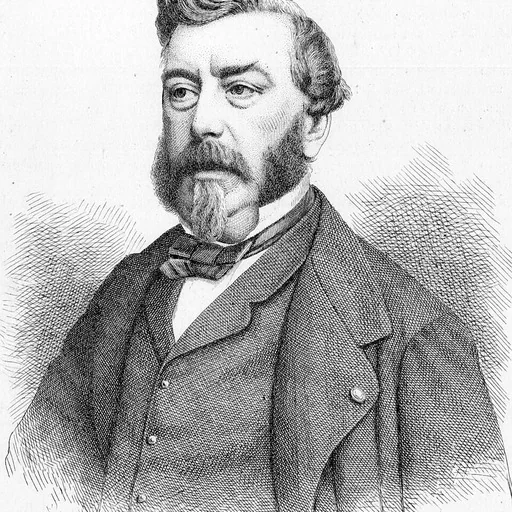
Henri Leys, Hendrik Leys or Jan August Hendrik, Baron Leys (18 February 1815 – 26 August 1869) was a Belgian painter and printmaker.

 The Guild of the Archers Welcomes Margaret of Austria
![The Edict[s] of Charles V, by Jan August Hendrik Leys](https://artifactworldgallery.com/img/jan-august-hendrik-leys--the-edict-s-of-charles-v--2a8256d5de786a24-w320.webp) The Edict[s] of Charles V
The Edict[s] of Charles V Within the Walls of Antwerp in 1550
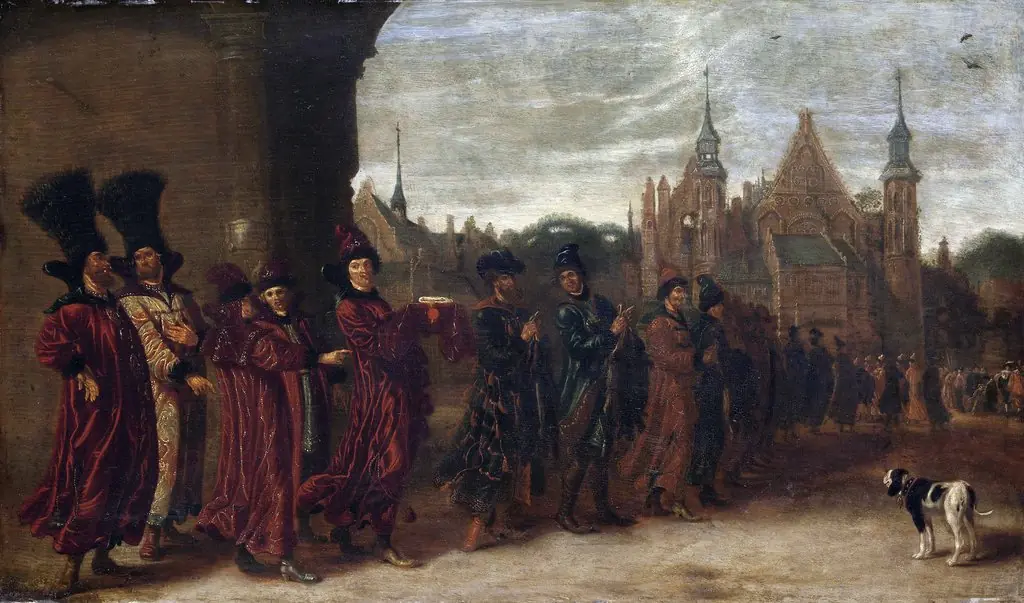 Russian ambassadors at the Binnenhof in The Hague
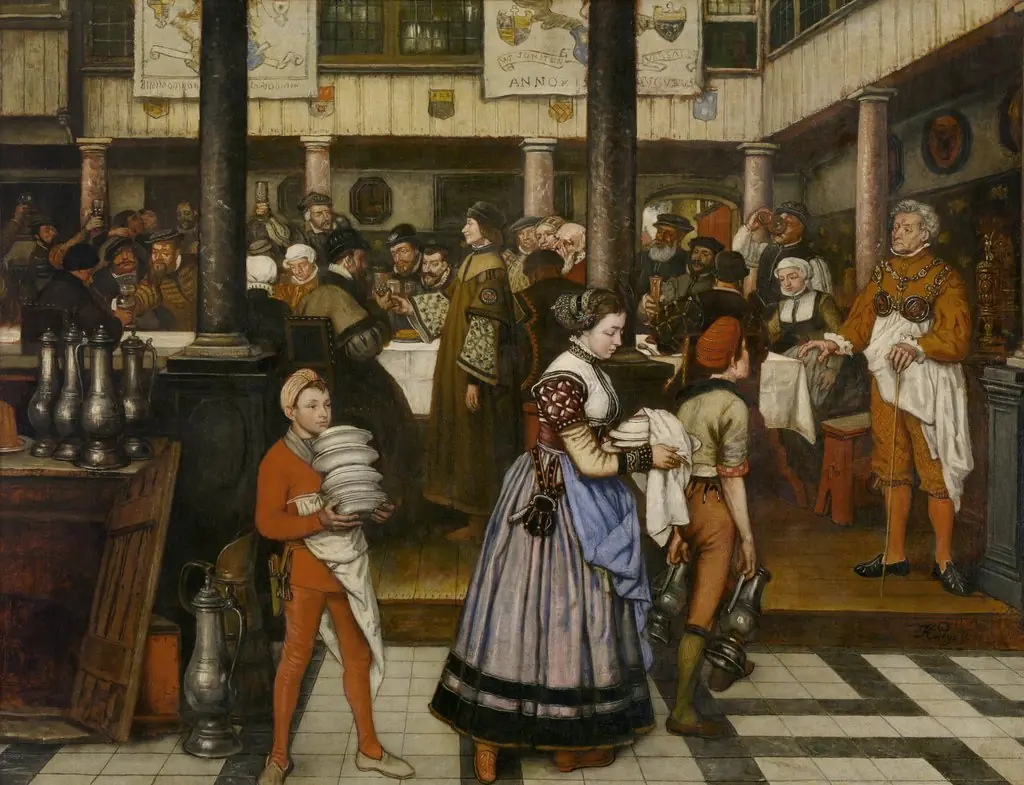 Frans Floris Attending a Banquet of the Guild of Saint Luke
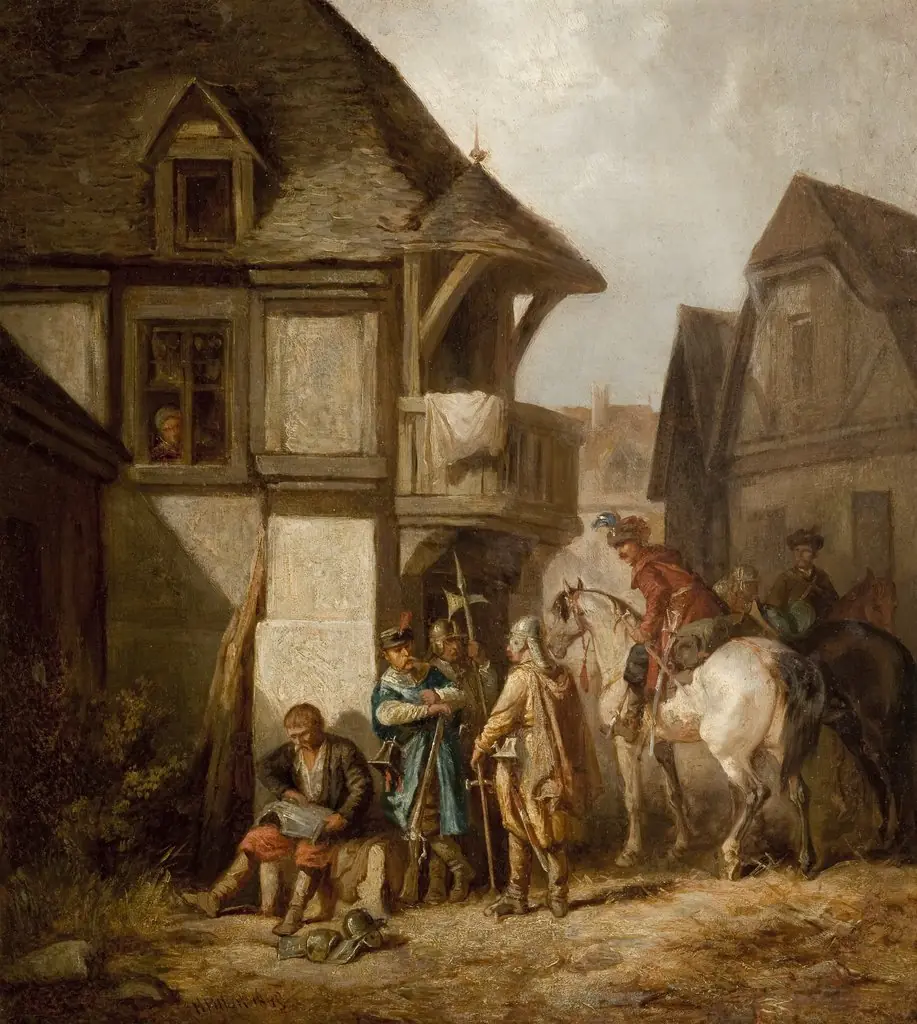 Return of the "Lisowczycy"
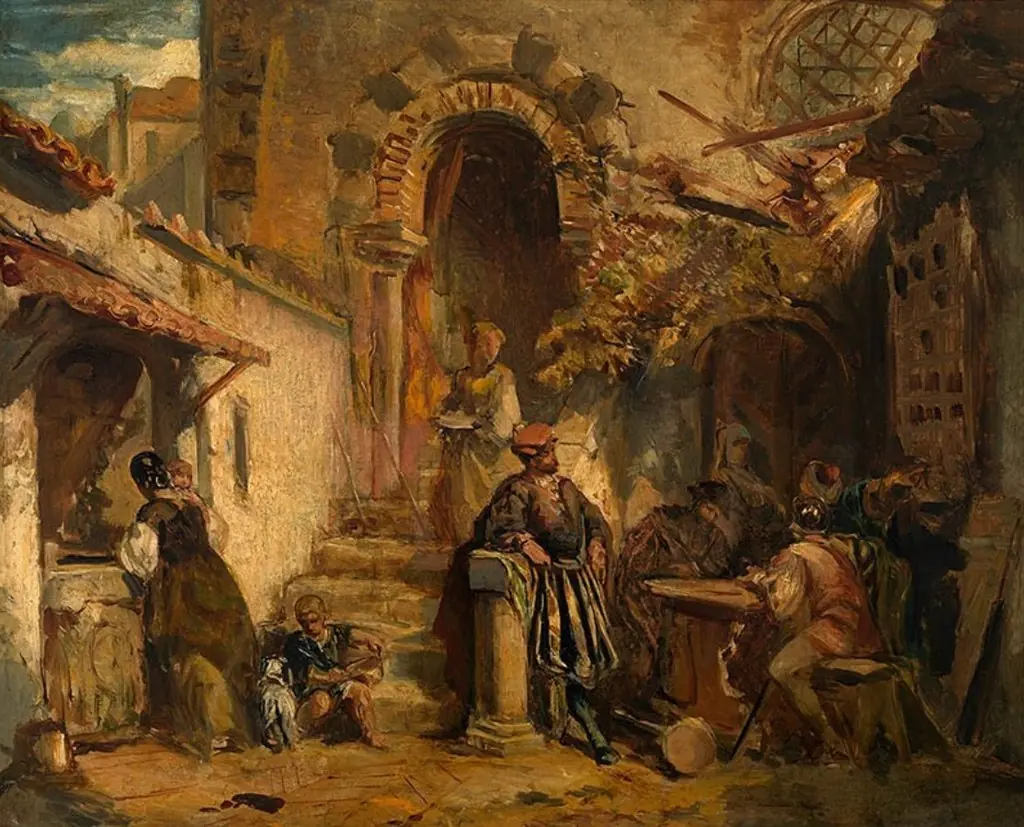 Gypsies
 Le Pardon de Plourin, Brittany
 Fish Market in Antwerp
 Juhlakulkue Roomassa
 In Front of a Church
 The Poultry Sellers