Artwork
John I, Duke of Brabant, 1290
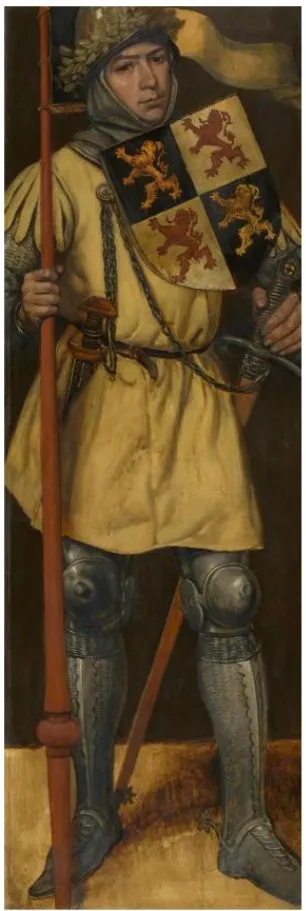
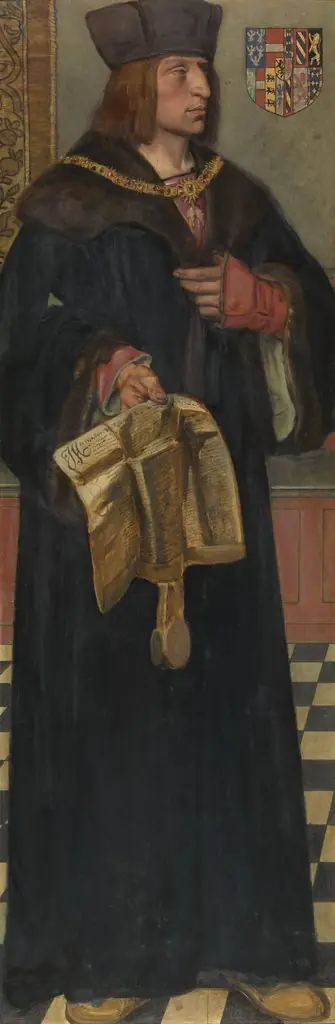
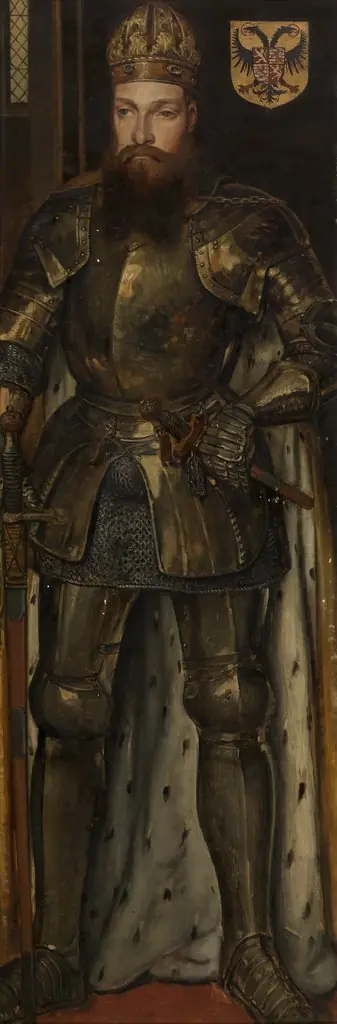
John I, Duke of Brabant, 1290 is an oil painting by Jan August Hendrik Leys. It dates from 1864 and is held in the collection of the Royal Museum of Fine Arts Antwerp.
About this work
Overview
Though created centuries after the duke’s lifetime, the painting reflects 19th-century interest in reconstructing medieval nobility through visual narrative.
Painted in 1864 by Belgian artist Jan August Hendrik Leys, this work portrays John I, Duke of Brabant, as a historical figure from the late 13th century. Though created centuries after the duke’s lifetime, the painting reflects 19th-century interest in reconstructing medieval nobility through visual narrative. Leys, known for blending historical detail with emotional gravity, rendered the subject with deliberate antiquarian precision, aligning with the period’s scholarly fascination with national heritage.
Subject & Meaning
The portrait presents John I, known as 'the Victorious,' in ceremonial armor and attire, emphasizing his role as a ruling noble. The banner he holds displays the heraldic symbols of Brabant: red and yellow lions on contrasting fields, arranged in opposition to signify territorial authority. His composed demeanor and upright stance convey leadership and resolve, not as a moment of action but as a static emblem of dynastic legitimacy, intended to evoke continuity and order.
Technique & Style
Leys employed oil paint with meticulous brushwork to render textures of armor, fabric, and heraldry with clarity. The dark background isolates the figure, directing focus to his form and insignia. Subtle tonal shifts in the gray head covering and silver leg armor suggest volume without overt lighting, reflecting Leys’s transition from Romantic dramatization toward a restrained, observational realism. The flag’s intricate design is rendered with precision, underscoring the artist’s commitment to historical accuracy.
History & Provenance
Completed in 1864, the painting entered the collection of the Royal Museum of Fine Arts Antwerp, where it remains today. Leys, a central figure in 19th-century Belgian art, produced this work during a period when historical portraiture was used to reinforce regional identity. The painting was part of a broader cultural movement in Belgium to visually reclaim its medieval past, aligning with national efforts to define a distinct artistic and political heritage.
Context
In mid-19th-century Belgium, historical painting served political and cultural ends, especially after independence from the Netherlands. Artists like Leys turned to medieval subjects to construct a sense of continuity and legitimacy for the new state. John I, as a symbol of Brabant’s autonomy and military success, was a fitting subject. Leys’s approach balanced romanticized dignity with emerging realist tendencies, reflecting the era’s evolving artistic priorities.
Legacy
Leys’s depiction of John I contributed to the canon of Belgian historical portraiture, influencing later artists interested in combining archaeological detail with psychological presence. While not widely reproduced, the painting remains a key example of how 19th-century painters reimagined medieval figures to serve contemporary identity projects. Its presence in Antwerp’s national collection affirms its role in shaping public memory of the region’s aristocratic past.
Artist & collection
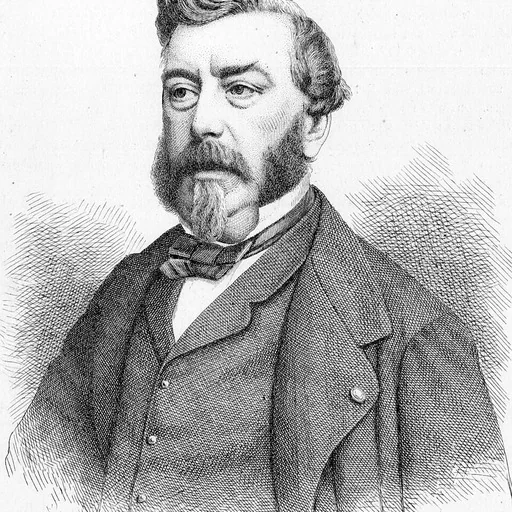
Artist
Henri Leys, Hendrik Leys or Jan August Hendrik, Baron Leys (18 February 1815 – 26 August 1869) was a Belgian painter and printmaker.