Artwork
The Knight's Funeral
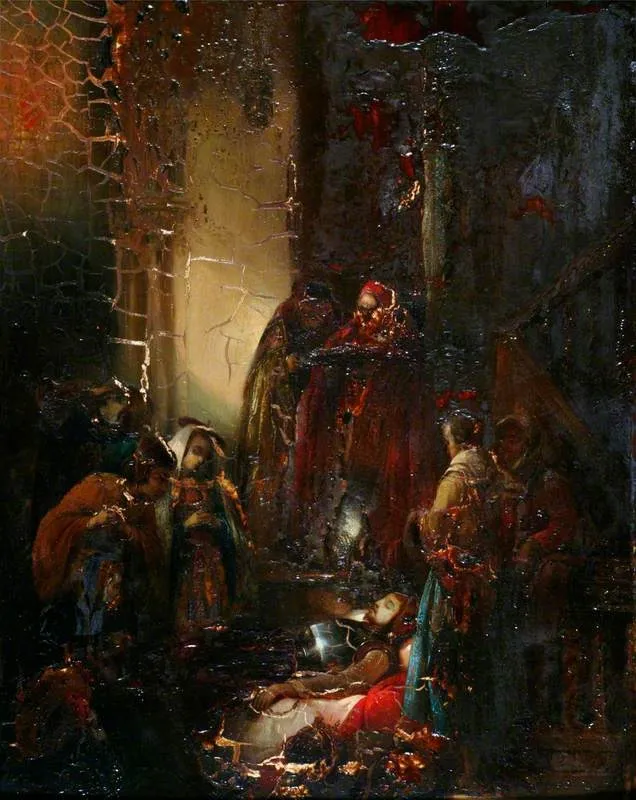
The Knight's Funeral is an unspecified painting by Jan August Hendrik Leys. It dates from 1852 and is held in the collection of the Victoria and Albert Museum.
About this work
Overview
Leys, known for blending historical narrative with emerging realist observation, rendered the scene with meticulous attention to detail and emotional restraint.
Painted around 1852 by Belgian artist Jan August Hendrik Leys, *The Knight's Funeral* is a large-scale composition depicting a ceremonial burial. Leys, known for blending historical narrative with emerging realist observation, rendered the scene with meticulous attention to detail and emotional restraint. The work belongs to the Victoria and Albert Museum’s collection and exemplifies his dual engagement with Romantic tradition and the emerging realist impulse in mid-nineteenth-century European art.
Subject & Meaning
The painting portrays a knight’s funeral procession in a dimly lit stone chamber. The central bier holds the armored body, surrounded by hooded mourners in somber garments, their postures conveying quiet grief. No overt drama or spectacle is present; instead, the focus lies in the dignity of ritual and the weight of loss. The absence of religious iconography shifts emphasis to communal mourning, suggesting a secular, chivalric ethos rooted in medieval memory.
Technique & Style
Leys employed chiaroscuro to model forms with subtle gradations of light and shadow, enhancing the three-dimensionality of armor and fabric. The palette is restrained—dominated by grays, browns, and deep blacks—with only faint highlights on metal and skin to guide the eye. Brushwork is precise yet unobtrusive, favoring clarity over expressive gesture. The architectural backdrop, with its arched window, provides spatial depth without distracting from the central ritual.
History & Provenance
Completed in 1852, the painting was exhibited in Brussels and Paris, contributing to Leys’s international reputation. It entered the Victoria and Albert Museum’s collection in the late nineteenth century, likely through acquisition or donation by a British patron familiar with continental art. Its preservation reflects its status as a significant example of Belgian historical painting during a period of national cultural assertion.
Context
In the 1850s, Belgium was cultivating a distinct artistic identity separate from Dutch and French traditions. Leys’s work responded to a growing interest in medieval themes, yet his approach avoided idealization. *The Knight’s Funeral* aligns with broader European trends toward historical realism, where past events were rendered with empirical detail rather than romanticized drama, reflecting a shift in how history was visually interpreted.
Legacy
Though less widely known today, Leys influenced later Belgian realists and historical painters through his disciplined technique and restrained emotional tone. *The Knight’s Funeral* remains a key reference for understanding how Romantic subject matter was gradually transformed by realist observation in mid-century Europe. Its presence in the V&A underscores its role in shaping British perceptions of continental historical painting during the Victorian era.
Artist & collection
Artist
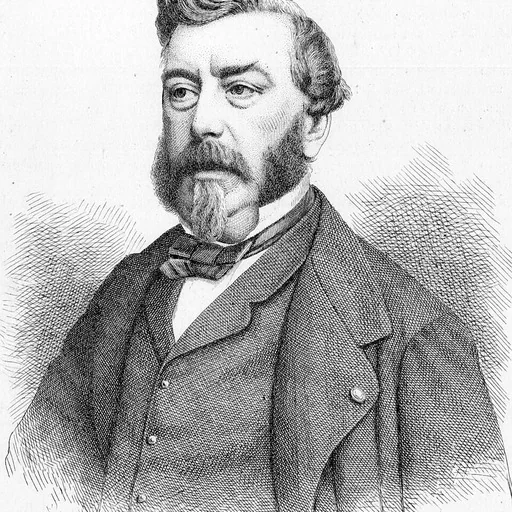
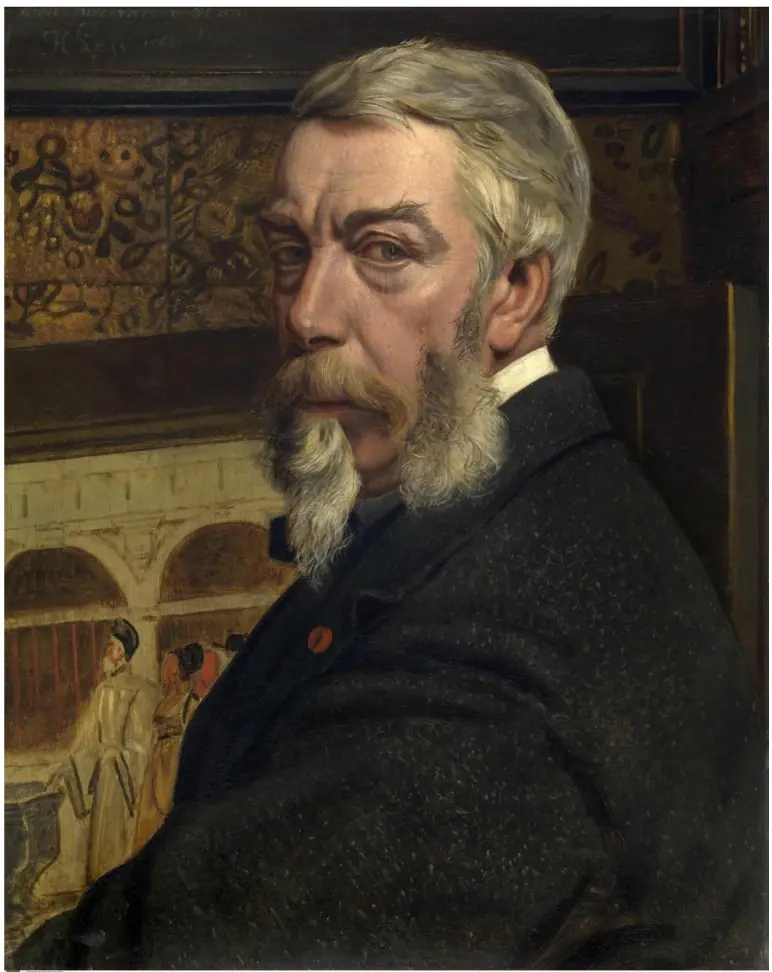
Henri Leys, Hendrik Leys or Jan August Hendrik, Baron Leys (18 February 1815 – 26 August 1869) was a Belgian painter and printmaker.

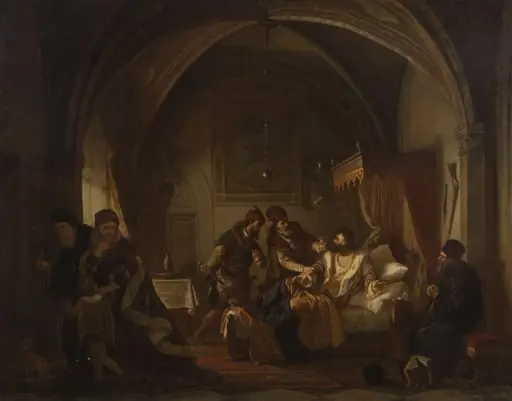 Moartea lui Alexandru Lăpușneanu
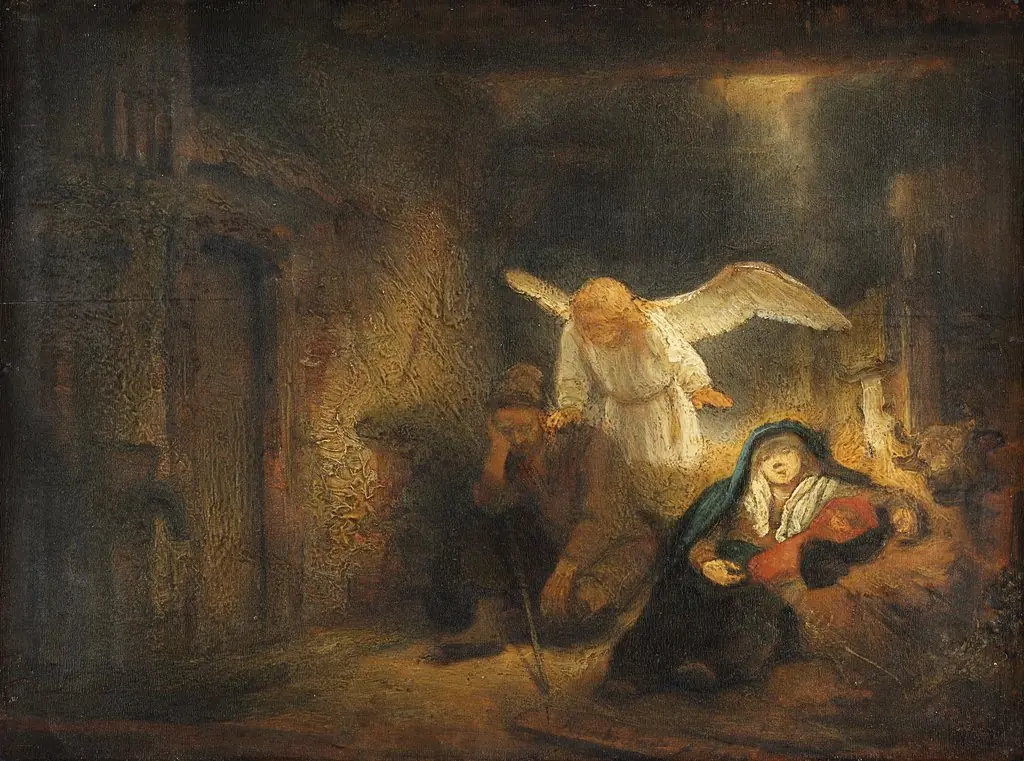 Joseph's dream
 The Adoration of the Magi
 The Vote (Sketch)
 Huérfanos
 Salome at the Prison
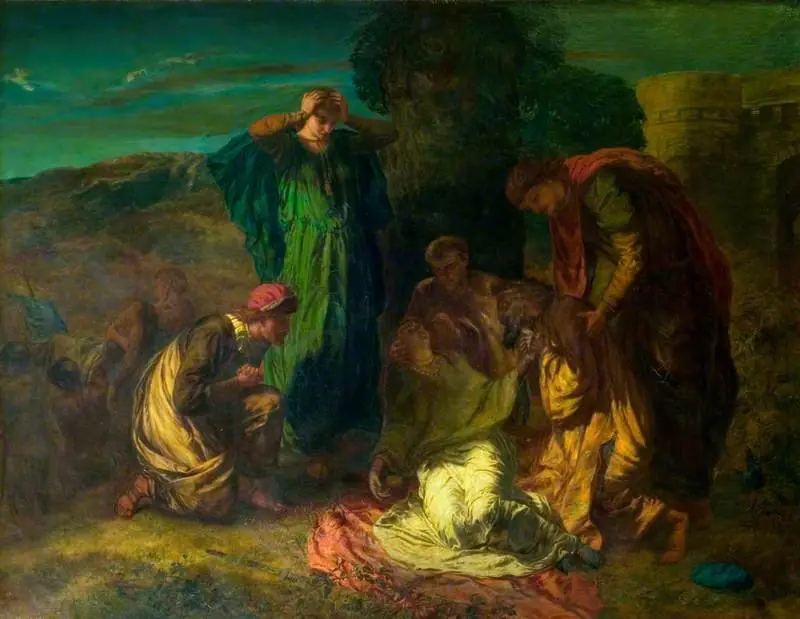 The Death of Cordelia (from William Shakespeare's 'King Lear')
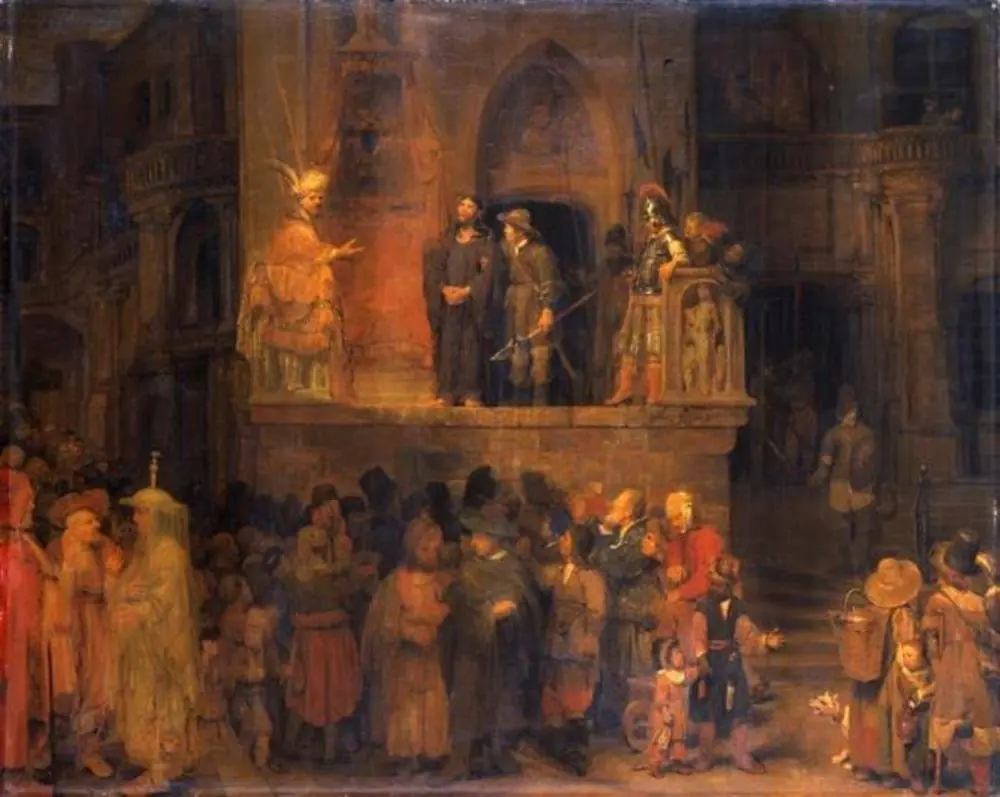 Ecce Homo (John 19:5)
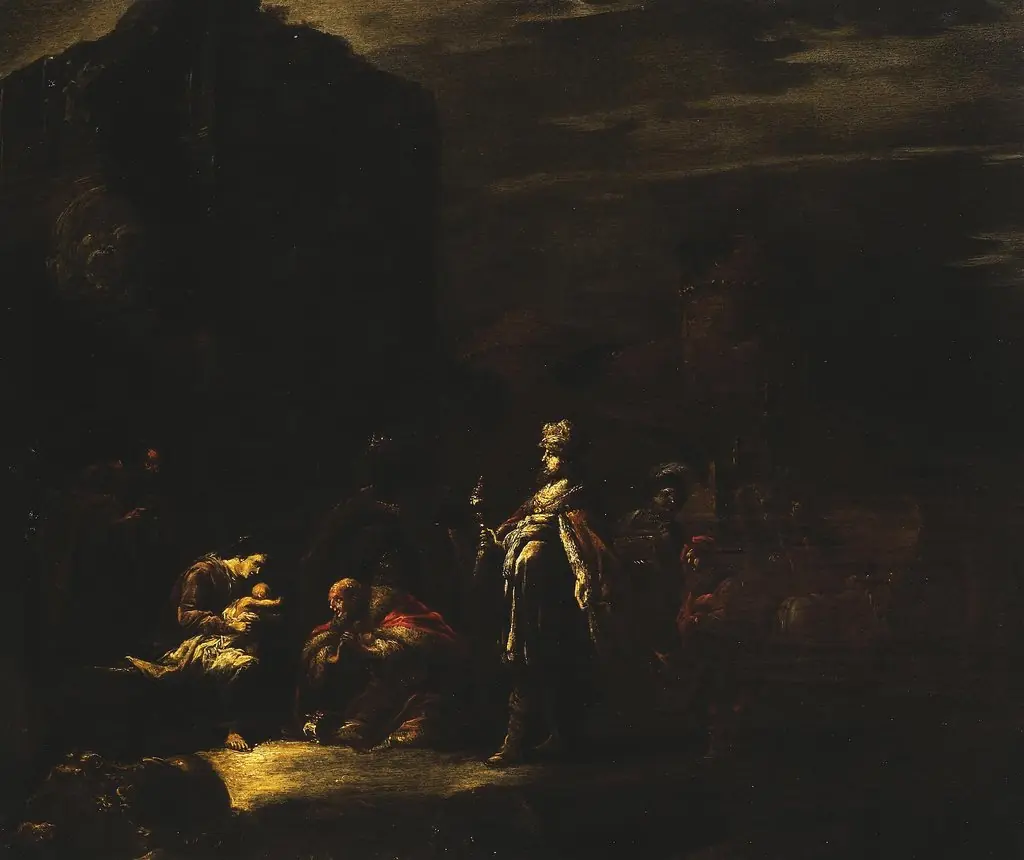 Adoration of the Magi
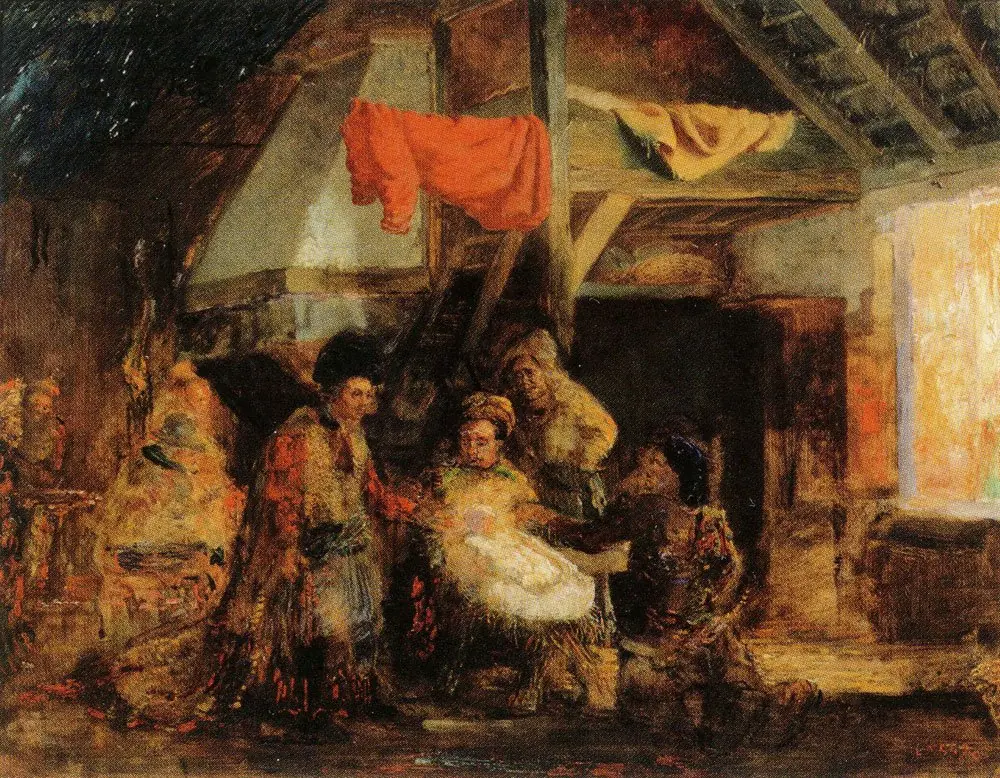 The Adoration of the Shepherds
 Assassination of the Bishop of Liège
 Leonora Christina being Examined in Prison