Artwork
Huérfanos
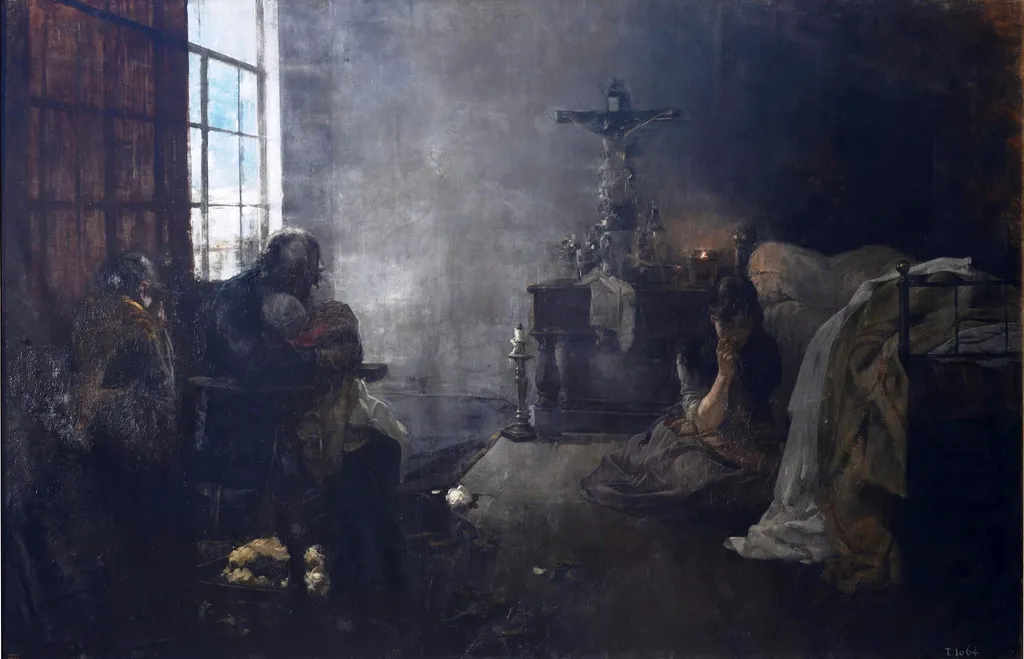
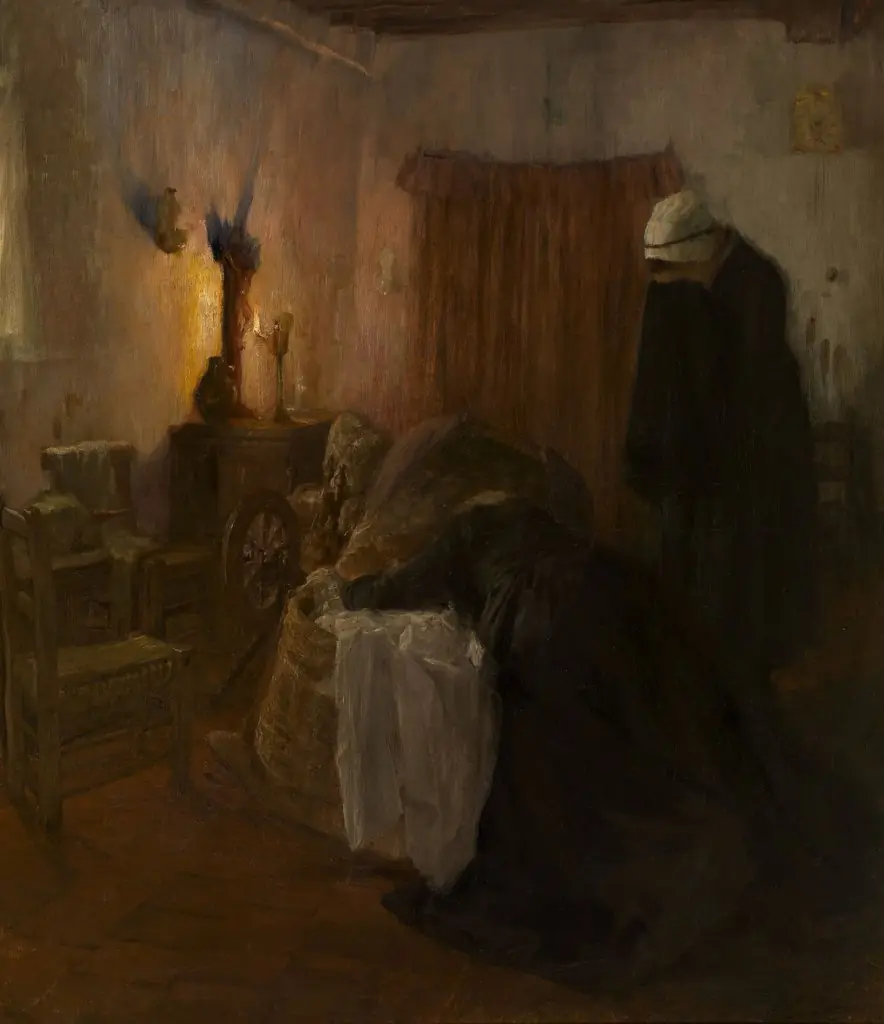
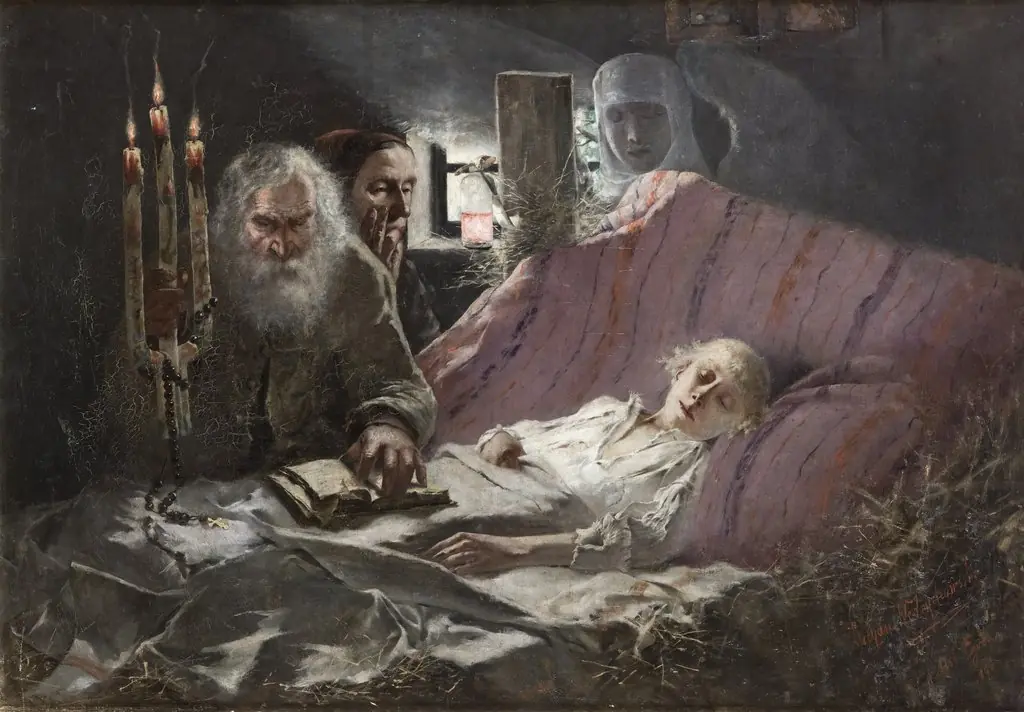
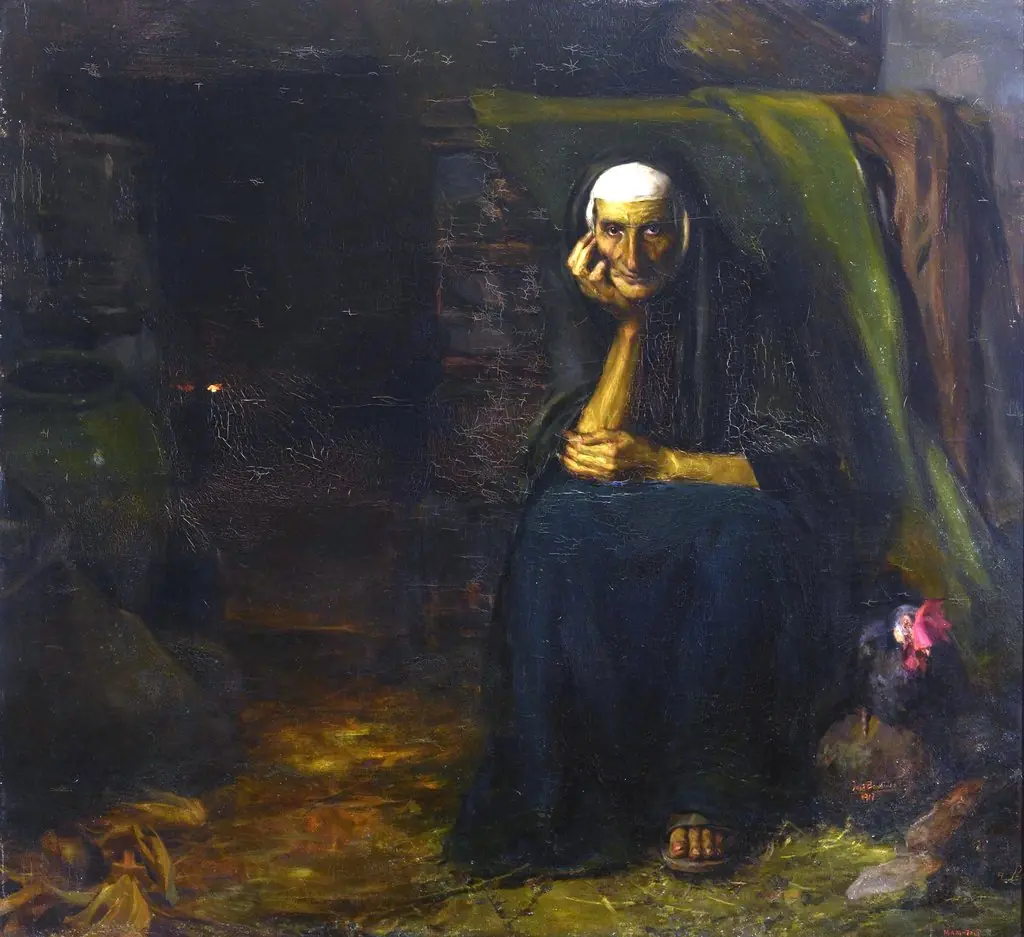
Huérfanos is an oil painting by the Post-Impressionist artist Ferran Cabrera i Cantó. It dates from 1896 and is held in the collection of the Museo del Prado.
About this work
Overview
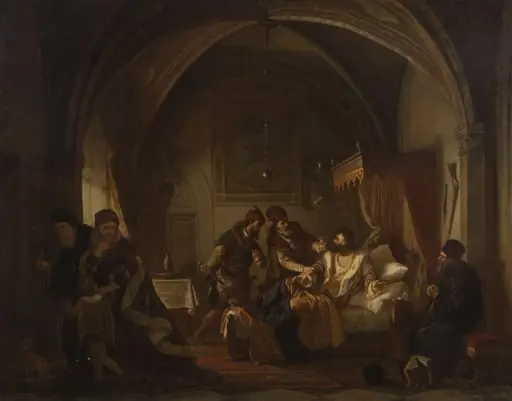
Ferran Cabrera i Cantó’s 1896 oil painting *Huérfanos* presents a muted interior where a bedridden figure is attended by two companions. A crucifix dominates the wall above a modest altar, while a bowl of fruit rests on a nearby table. The composition is rendered in a post‑impressionist manner and is part of the Museo del Prado’s collection.
Subject & Meaning
The scene captures a moment of quiet devotion: one figure kneels with clasped hands, another stands nearby, both attending to the sick occupant of the bed. The presence of the crucifix and candles suggests a religious or contemplative atmosphere, emphasizing themes of care, mortality, and spiritual solace.
Technique & Style
Cabrera i Cantó employs a restrained palette and loose brushwork characteristic of post‑impressionism, while the strong contrast between the dim interior and the window‑derived light creates a chiaroscuro effect. The illumination highlights facial expressions and the texture of fabrics, enhancing the painting’s somber tone.
History & Provenance
Created in 1896, *Huérfanos* entered the Museo del Prado’s holdings at an unspecified date and remains on display there. The work reflects a period in the artist’s career when he explored darker, more introspective subjects alongside his broader oeuvre of satirical scenes and landscapes.
Context
Cabrera i Cantó (1866–1937) was a Spanish painter and sculptor known for a diverse range of subjects. While many of his works display humor or bright scenery, *Huérfanos* belongs to a subset of his output that delves into morbidity and religious sentiment, aligning with late‑19th‑century European interests in psychological depth and spiritual reflection.
Own this work as a print
Artist & collection
Artist
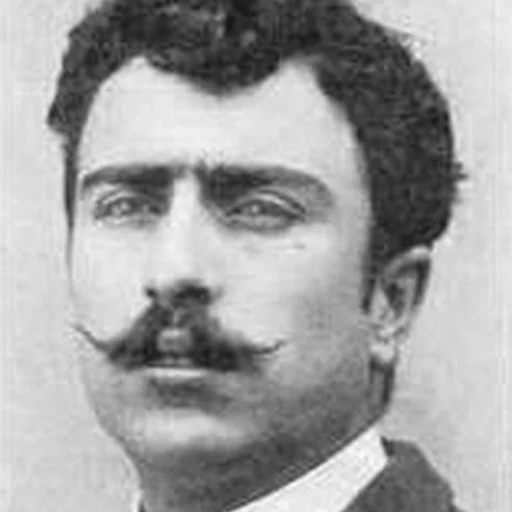
Fernando Cabrera Cantó (1866–1937) was a Spanish painter and sculptor; whose themes ranged from the cheerful and satiric to the darkly morbid. He also did landscapes.