Artwork
Wedding in Flanders in the Seventeenth Century
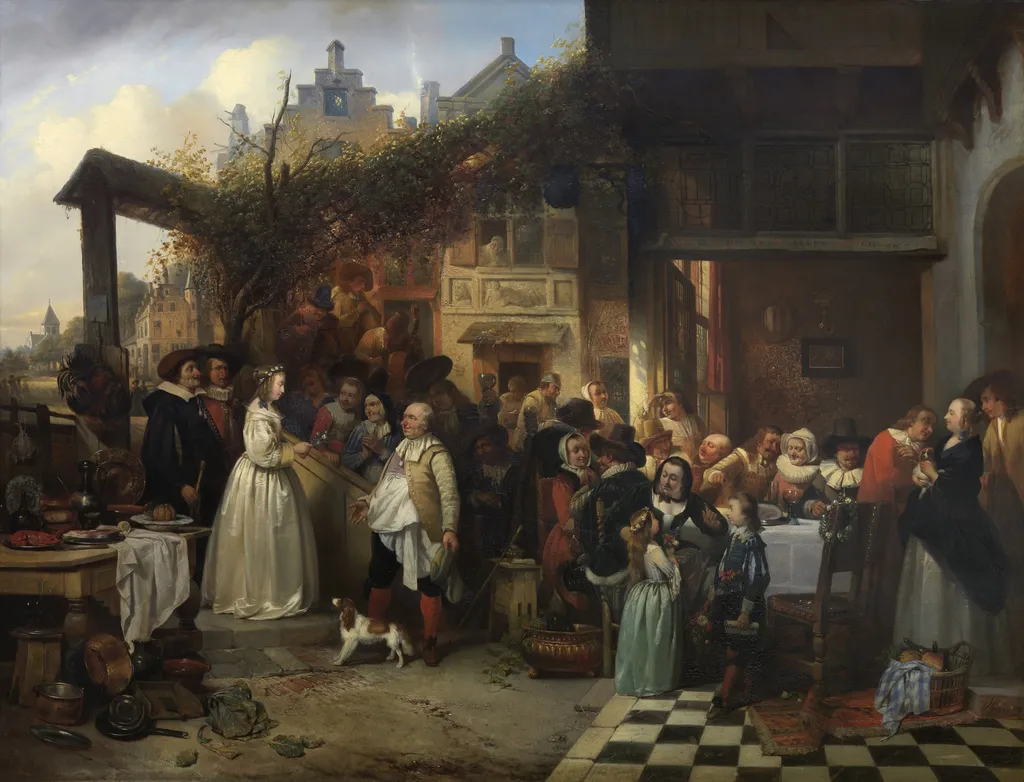
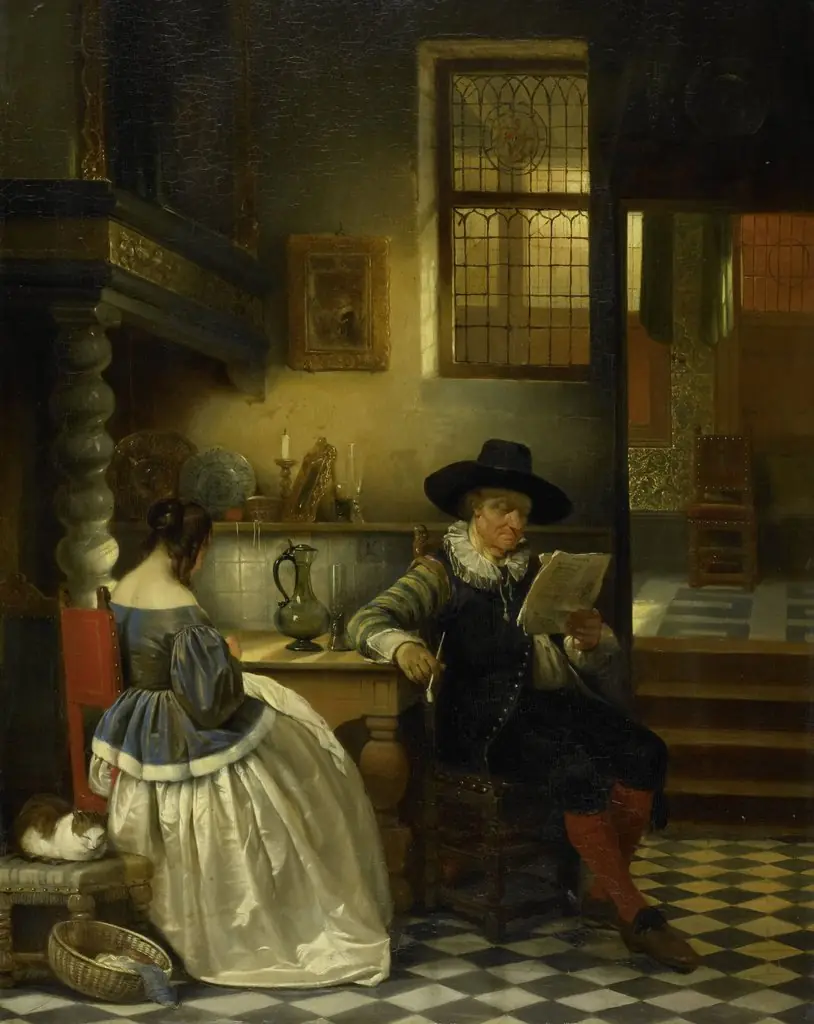
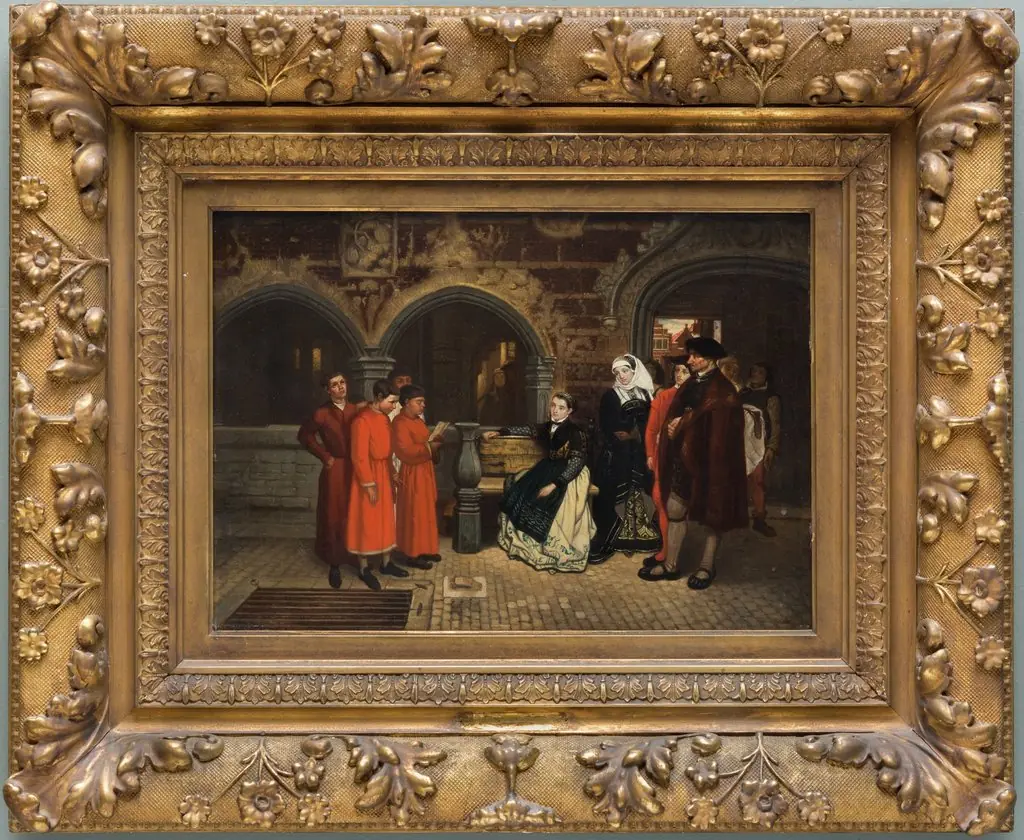
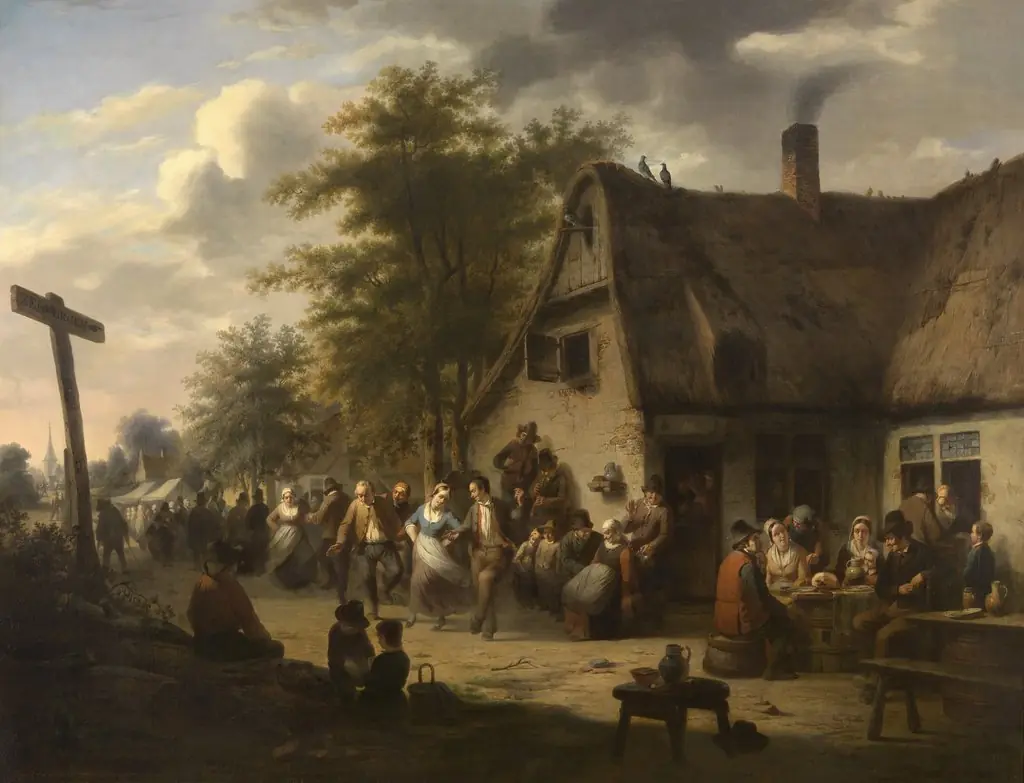
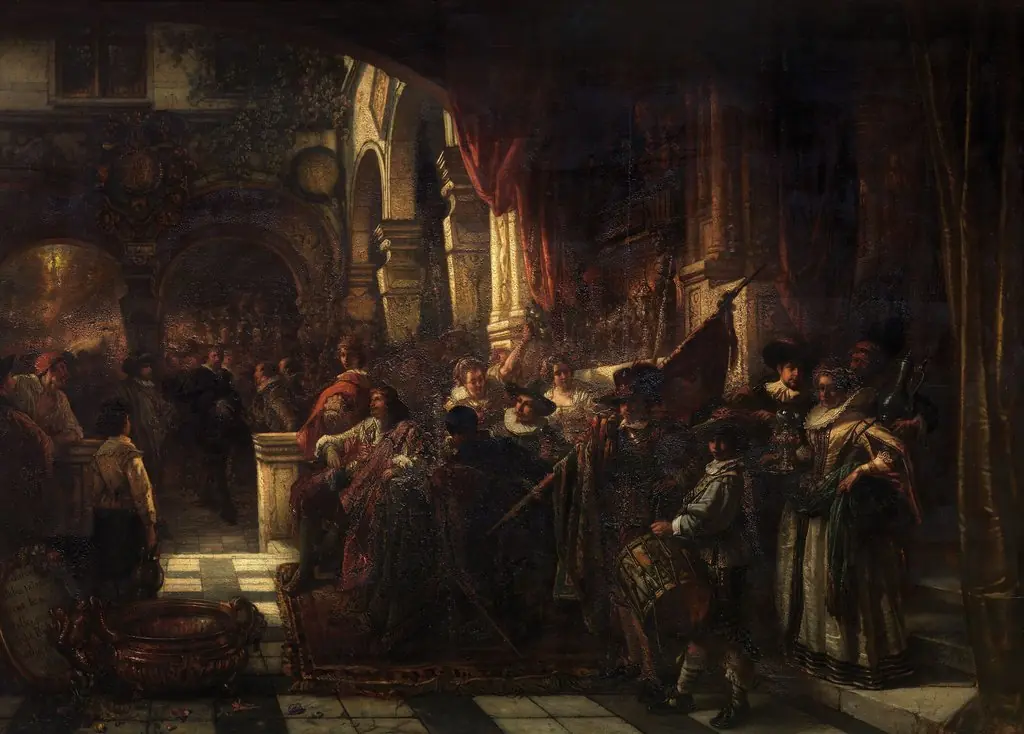
Wedding in Flanders in the Seventeenth Century is an oil painting by Jan August Hendrik Leys. It dates from 1839 and is held in the collection of the Royal Museum of Fine Arts Antwerp.
About this work
Overview
Painted in 1839 by Belgian artist Jan August Hendrik Leys, this oil-on-canvas work portrays a wedding celebration in seventeenth-century Flanders.
Painted in 1839 by Belgian artist Jan August Hendrik Leys, this oil-on-canvas work portrays a wedding celebration in seventeenth-century Flanders. Though created in the nineteenth century, the scene aims to reconstruct historical customs with careful attention to period detail. Leys, known for bridging Romantic historicism and emerging Realism, used this subject to explore everyday life in the past, avoiding idealization in favor of observed authenticity.
Subject & Meaning
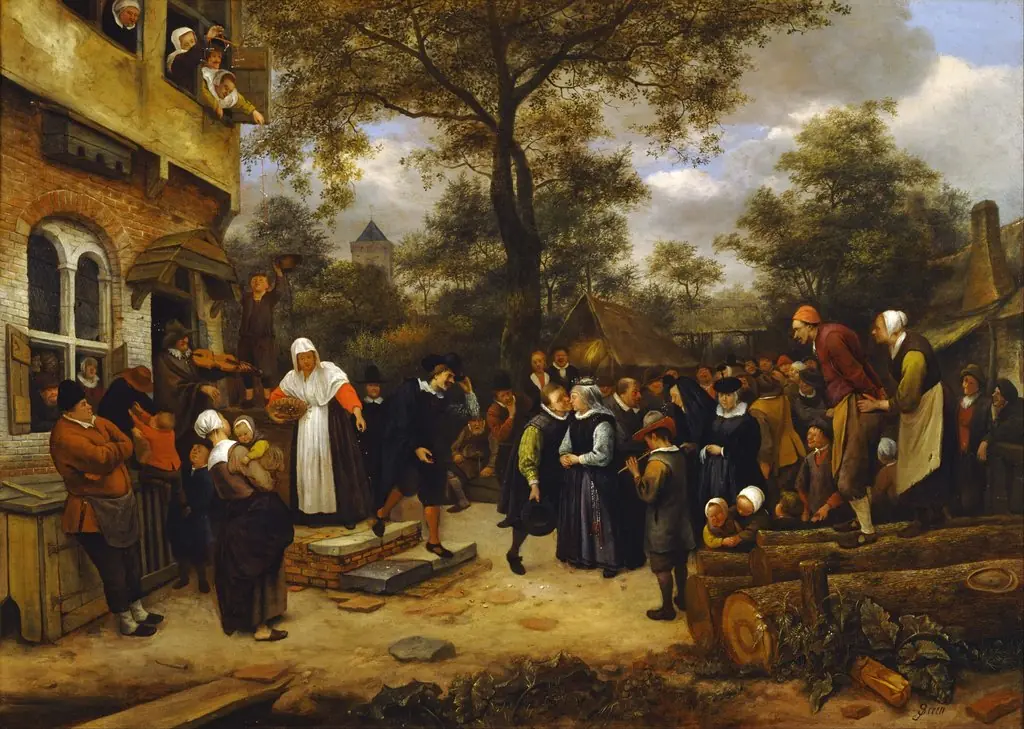
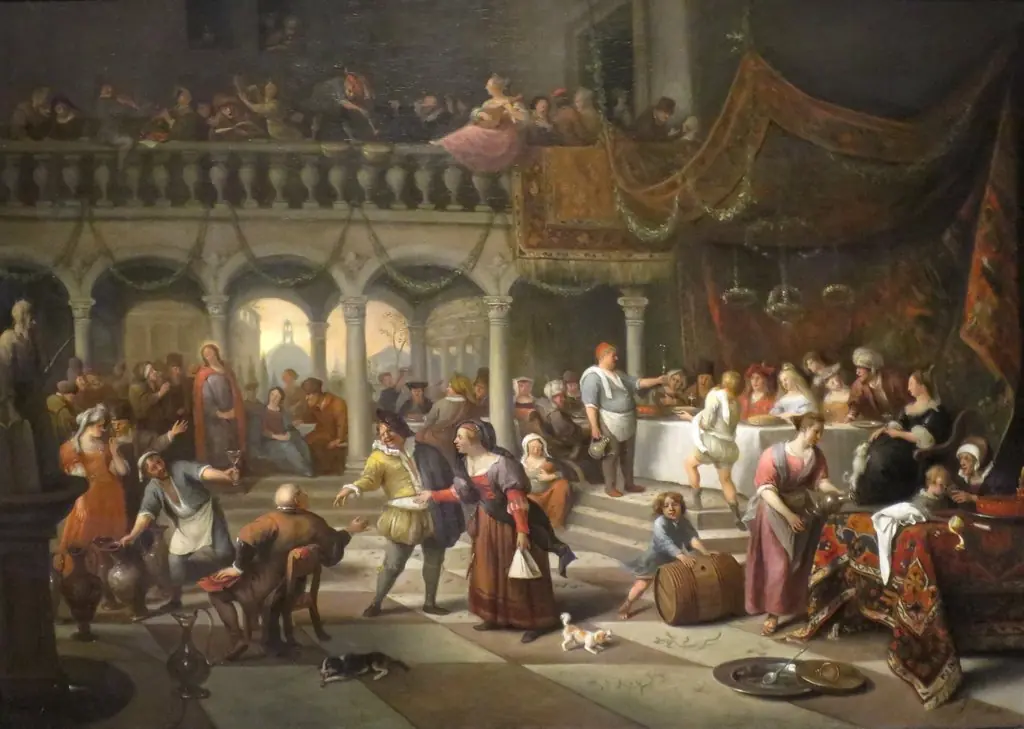
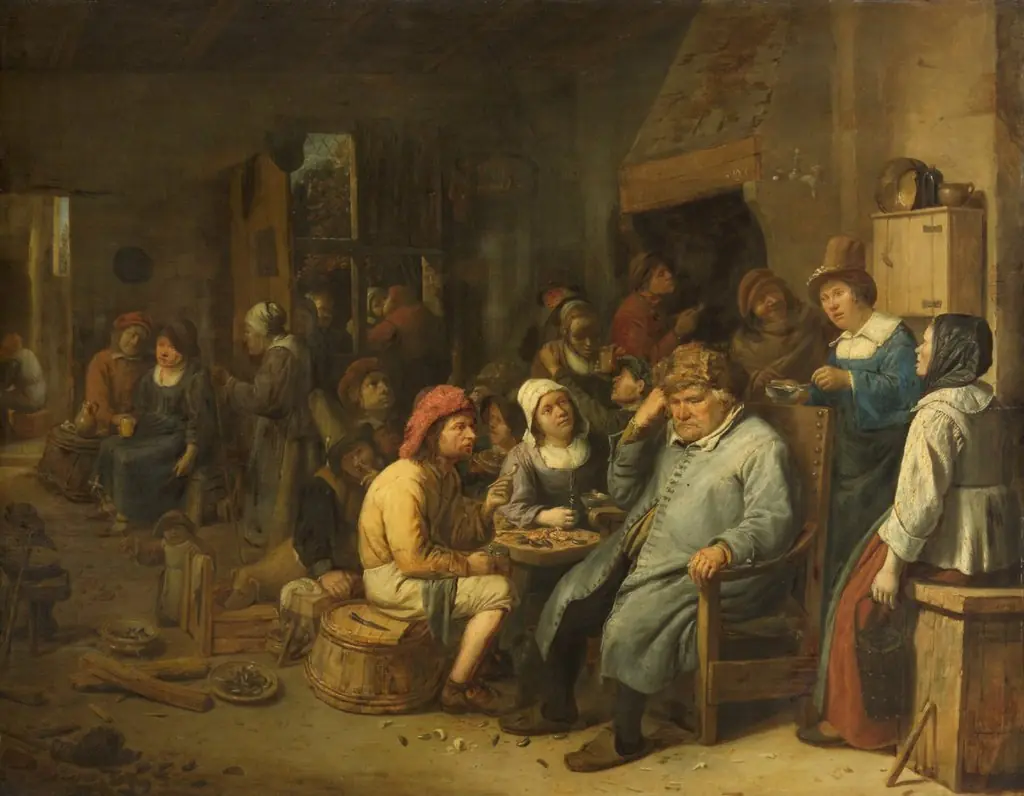
The painting captures a wedding gathering in a stone courtyard, centered on a bride in white, standing beside a man likely her groom. Guests surround them, engaged in conversation, eating, and drinking, suggesting communal celebration. The scene reflects Leys’s interest in documenting social rituals of earlier centuries, emphasizing continuity in human behavior rather than dramatizing the event. No religious or aristocratic symbols dominate; the focus remains on ordinary people in a moment of shared joy.
Technique & Style
Leys employed precise brushwork and a restrained palette to render textures of fabric, stone, and food with quiet realism. Light falls naturally across the courtyard, modeling figures and architecture without theatrical contrast. While not dominated by chiaroscuro, the painting uses subtle tonal shifts to define space and volume. The composition is densely populated but carefully ordered, guiding the viewer’s eye through layered activity without clutter.
History & Provenance
Completed in 1839, the painting entered the collection of the Royal Museum of Fine Arts Antwerp, where it remains today. It was among Leys’s early works that established his reputation for historical reconstruction. Unlike contemporaries who favored grand narratives, Leys turned to intimate domestic scenes, aligning with a growing interest in national heritage and vernacular culture in post-Napoleonic Belgium.
Context
In the 1830s, Belgium’s newly independent state fostered a cultural movement to define a distinct identity through its past. Artists like Leys responded by researching and depicting regional customs, architecture, and dress from the early modern period. This painting reflects that scholarly impulse—combining archival study with artistic observation to revive a sense of local history, distinct from French or Dutch traditions.
Legacy
Leys’s attention to everyday detail in this work influenced later Belgian Realists who sought to elevate ordinary life as worthy of artistic attention. While not widely exhibited outside Belgium, the painting exemplifies a shift from Romantic spectacle to grounded historical inquiry. It remains a key reference for understanding how nineteenth-century artists engaged with regional memory, laying groundwork for modern approaches to genre painting in Northern Europe.
Own this work as a print
Artist & collection
Artist
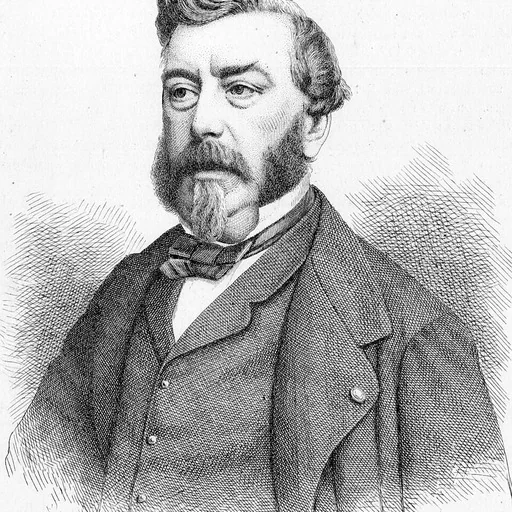
Henri Leys, Hendrik Leys or Jan August Hendrik, Baron Leys (18 February 1815 – 26 August 1869) was a Belgian painter and printmaker.