Artwork
Distribution of Charity in the Alms-House
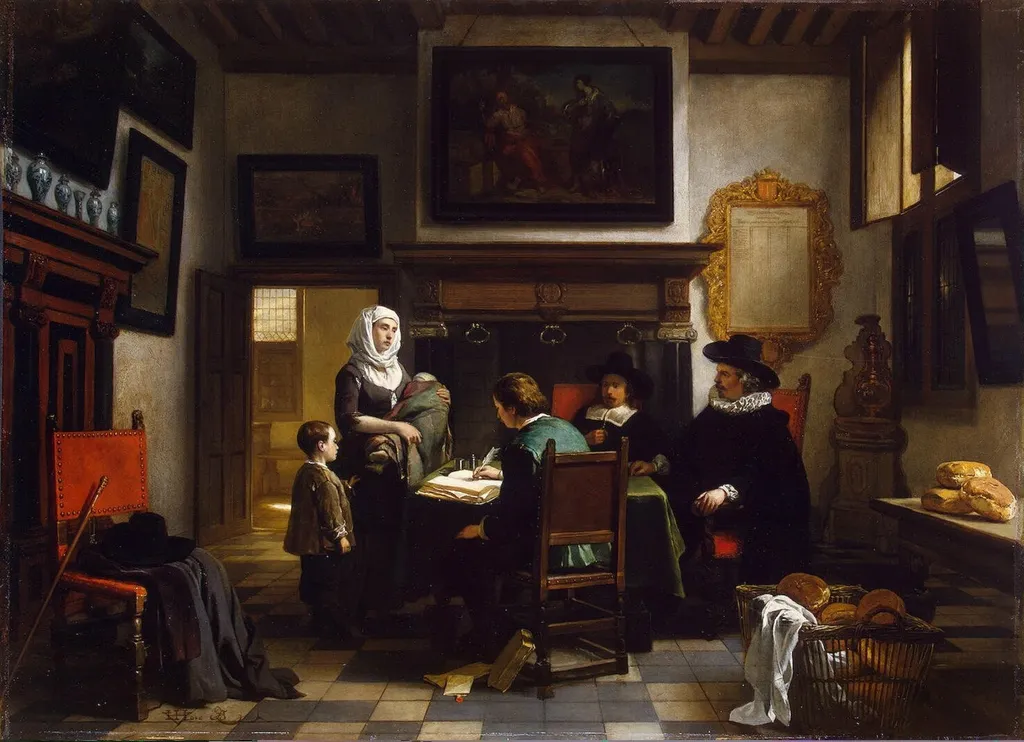
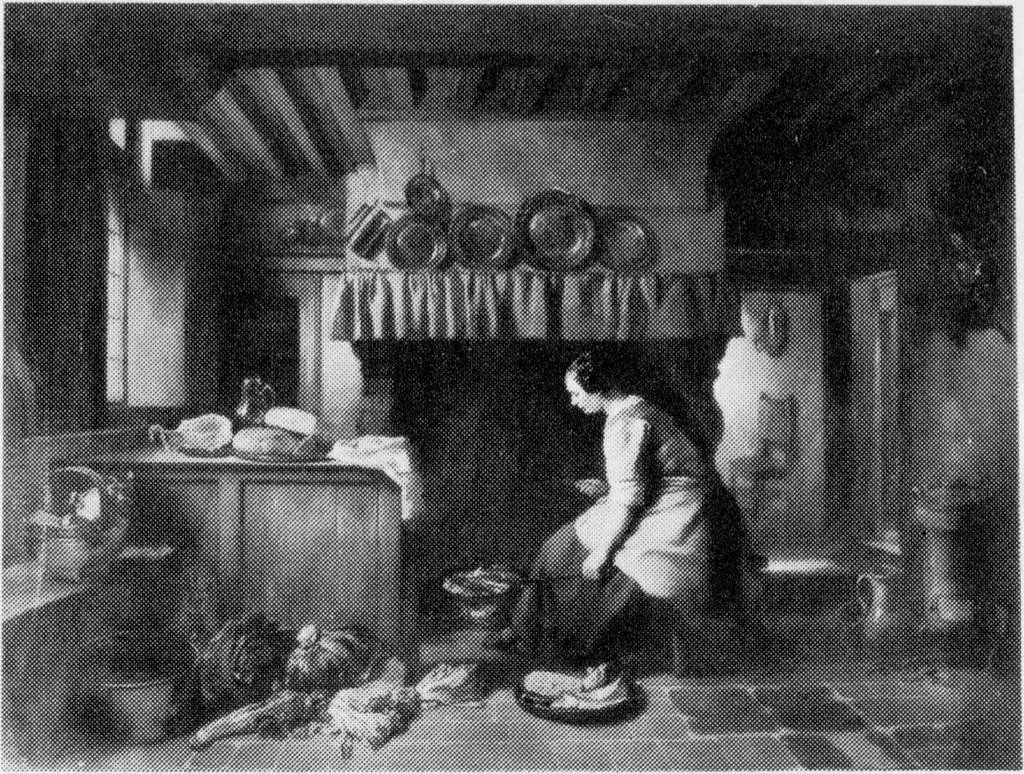
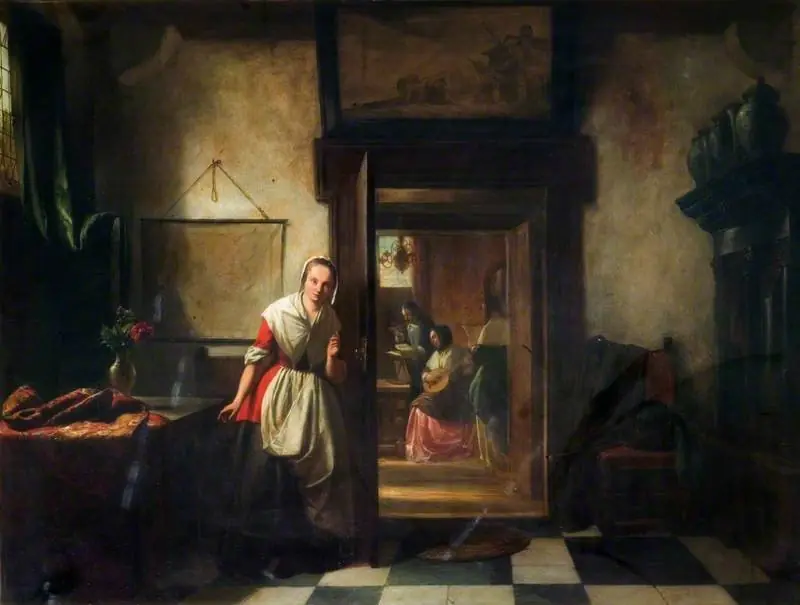
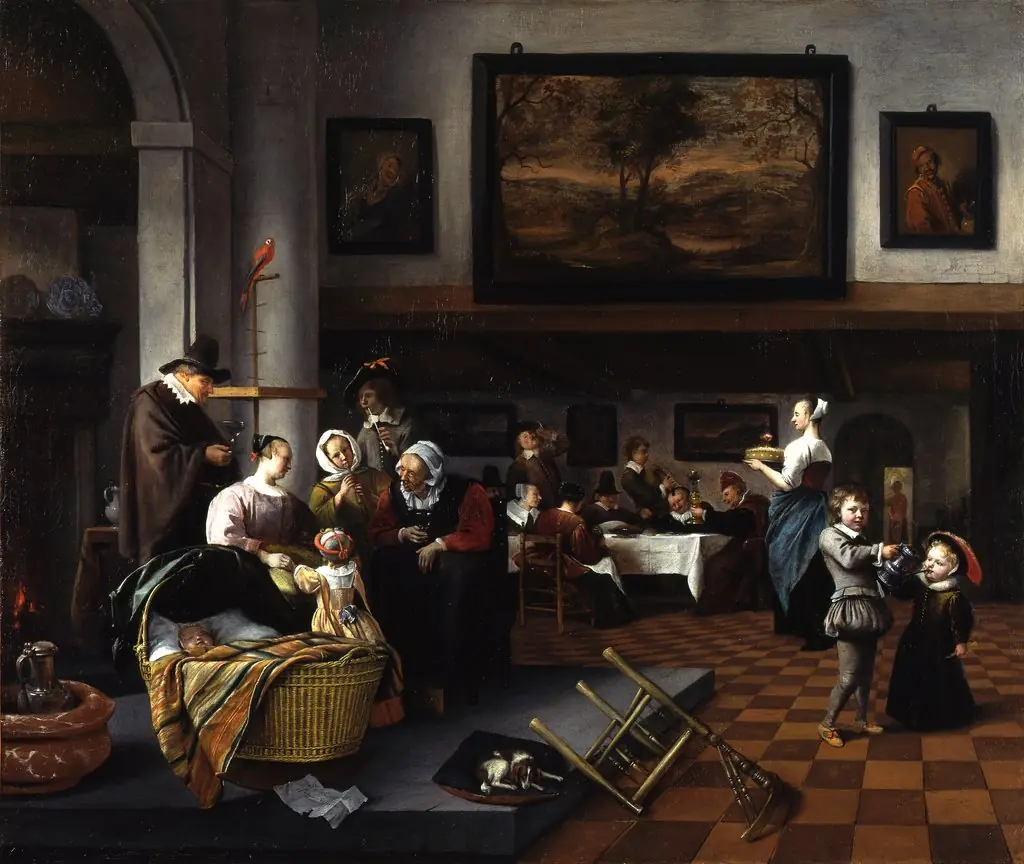
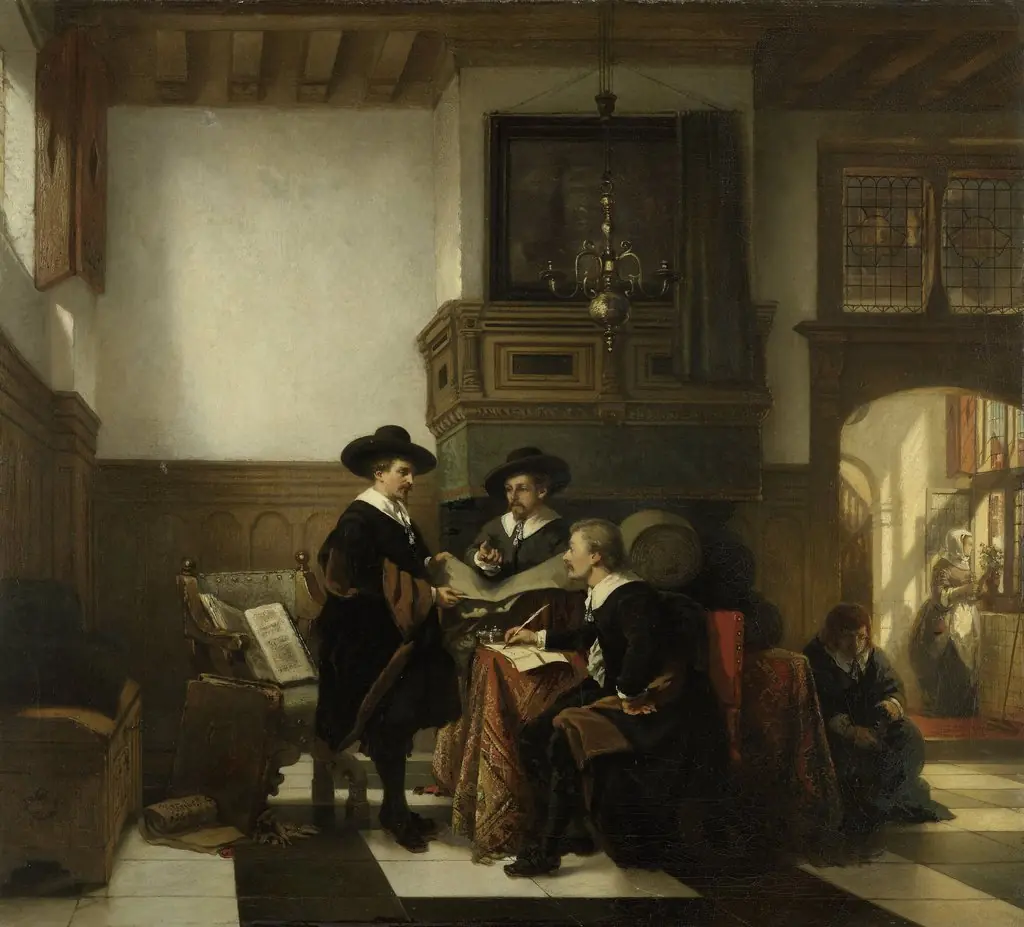
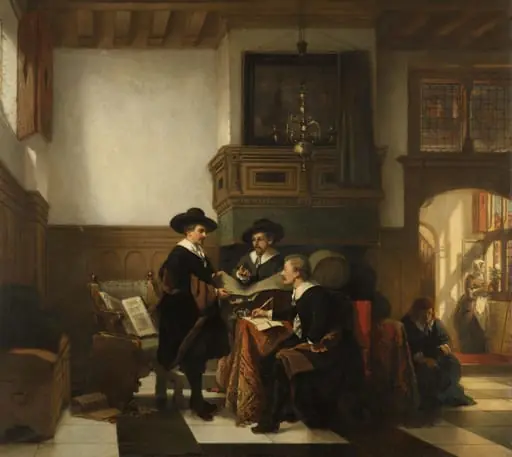
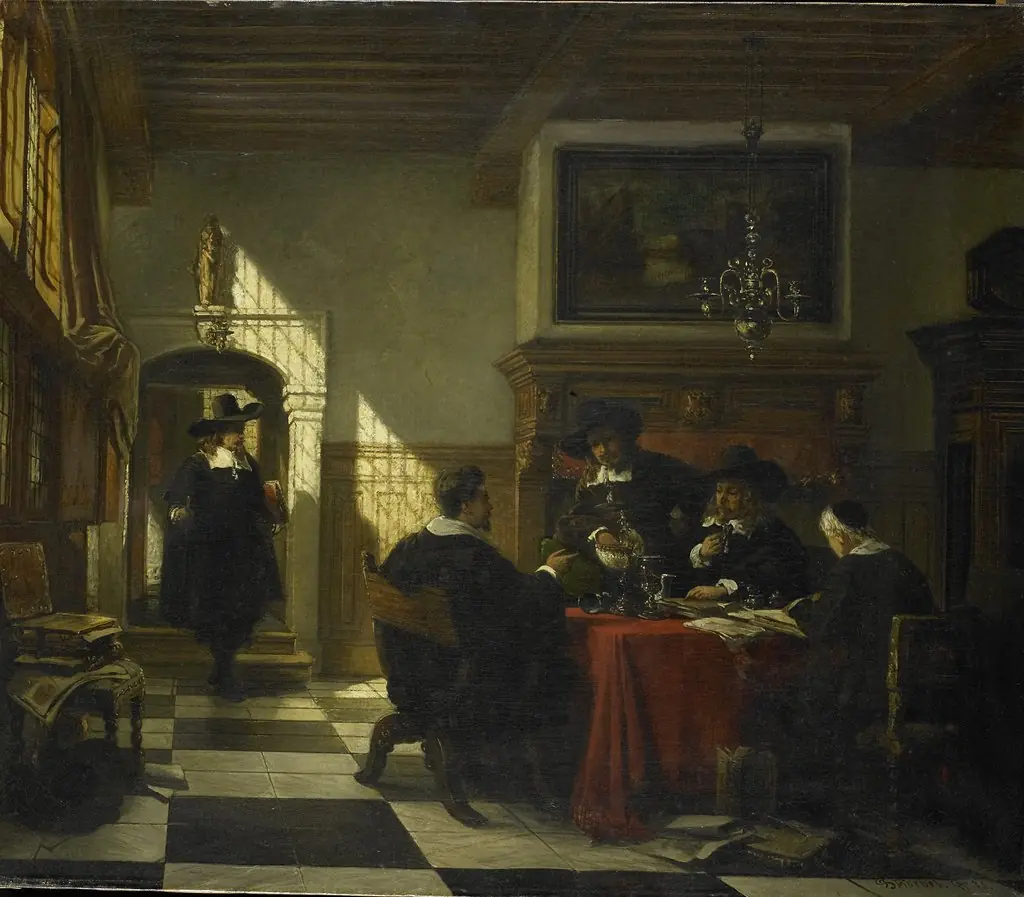
Distribution of Charity in the Alms-House is an oil painting by the Realist artist Hubertus van Hove. It dates from 1857 and is held in the collection of the Hermitage Museum.
About this work
Overview
The composition is bathed in subdued light that filters through a few high windows, casting gentle shadows across worn clothing and simple furnishings.
Hubertus van Hove’s 1857 oil canvas, *Distribution of Charity in the Alms‑House*, depicts a modest interior scene in which a group of adults and children receive provisions. The composition is bathed in subdued light that filters through a few high windows, casting gentle shadows across worn clothing and simple furnishings. The work is part of the State Hermitage Museum’s collection and exemplifies van Hove’s shift from landscape to genre subjects.
Subject & Meaning
The painting portrays a charitable distribution within a poorhouse, emphasizing the quiet dignity of its recipients. Figures are arranged around a central table, receiving food or small goods, while a larger portrait hangs above the fireplace, suggesting an institutional setting. The somber atmosphere conveys both the hardship of the lower classes and the compassionate act of aid, inviting contemplation of social responsibility in mid‑19th‑century Netherlands.
Technique & Style
Executed in a Realist manner, van Hove employs a restrained palette and careful modeling of forms to convey material texture. The limited illumination creates a chiaroscuro effect, highlighting the faces and hands of the beneficiaries while deepening the surrounding shadows. Brushwork remains smooth, allowing fine detail in clothing and objects, reinforcing the painting’s observational fidelity to everyday life.
History & Provenance
Trained by his father Bartholomeus van Hove and the landscape painter Hendrik van de Sande Bakhuyzen, Hubertus van Hove turned to genre scenes in the 1850s. *Distribution of Charity in the Alms‑House* entered the State Hermitage Museum’s holdings in the early 20th century, where it remains on display as part of the museum’s Dutch collection, reflecting the institution’s interest in 19th‑century European realism.
Context
The work reflects broader Dutch concerns about poverty and institutional relief during a period of rapid industrialization. By focusing on an alms‑house, van Hove aligns with contemporary social‑documentary trends, offering a visual record of charitable practices. The painting’s interior setting and modest figures contrast with the grand historical narratives popular earlier in Dutch art, signaling a shift toward everyday subjects.
Artist & collection
Artist
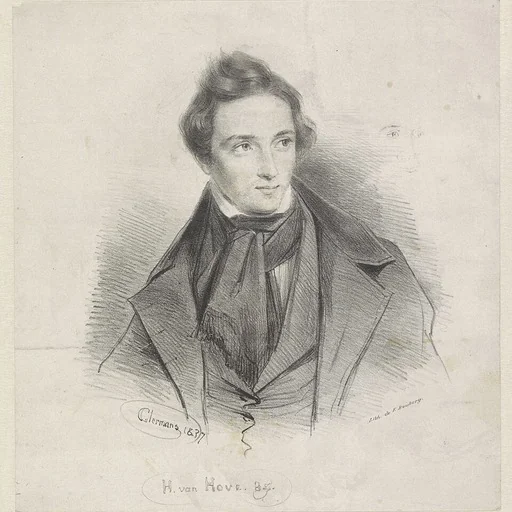
Hubertus (Huib) van Hove (13 May 1814, in The Hague – 14 November 1865? Antwerp) was a Dutch painter, the son of Bartholomeus van Hove (1790–1880) and a teacher of some artists who became members of the Hague…