Artwork
After the Hunt
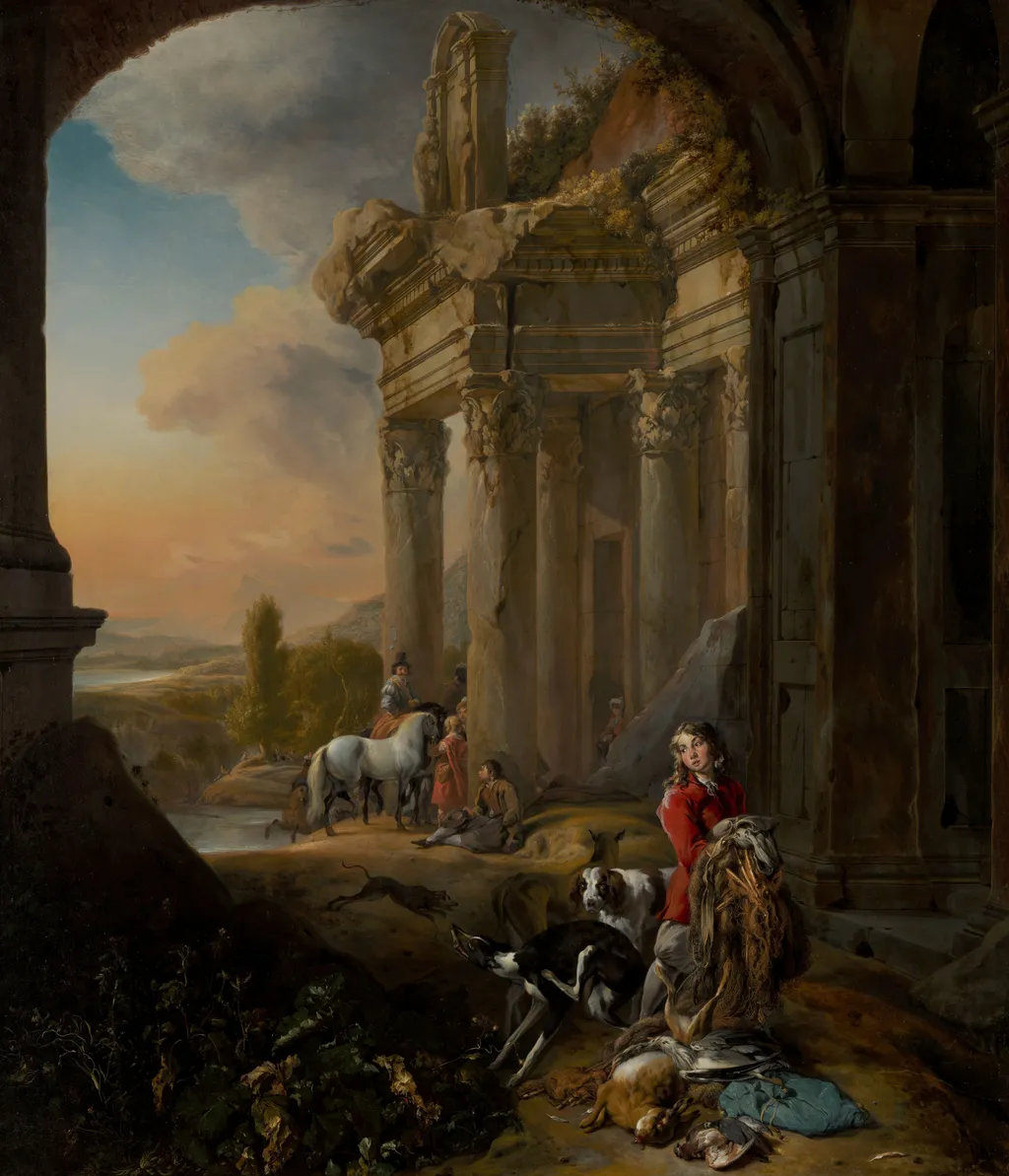
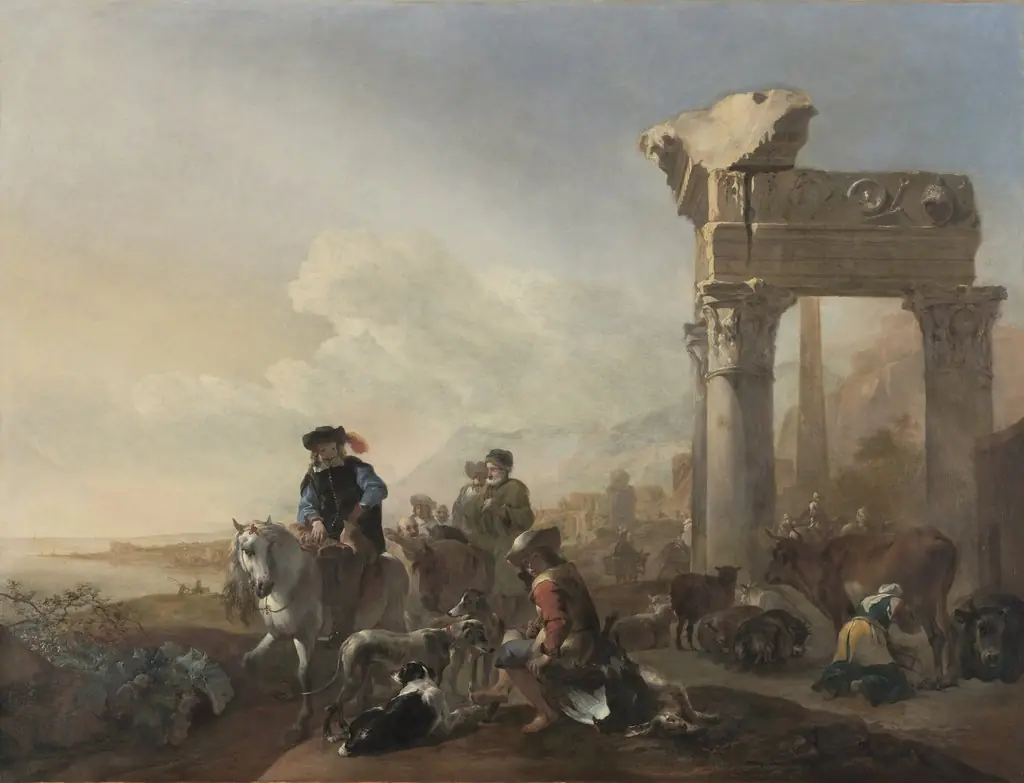
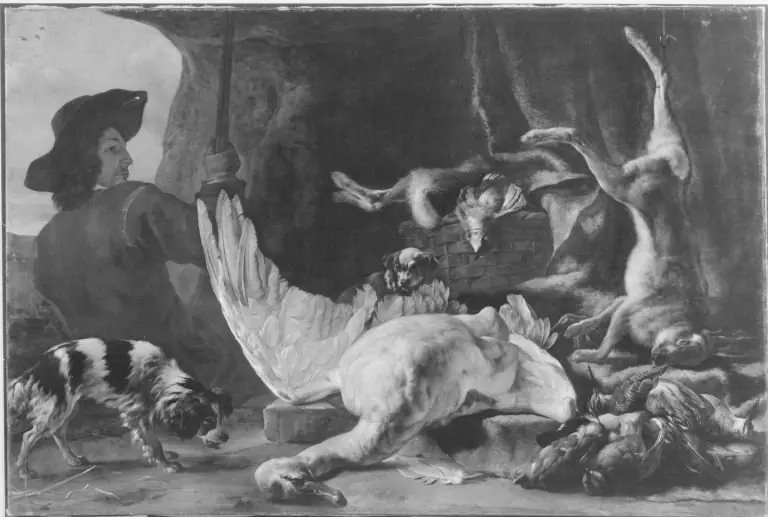
After the Hunt is an oil painting by the Dutch Golden Age artist Jan Baptist Weenix. It dates from 1656 and is held in the collection of the Rijksmuseum.
About this work
Overview
After the Hunt, a 1656 oil painting by Jan Baptist Weenix, exemplifies the Dutch Golden Age movement. The scene depicts a group gathered before a large stone structure, likely a ruin, set against a river and distant landscape backdrop.
Subject & Meaning
The painting shows a post-hunt gathering, with figures in 17th-century attire, accompanied by dogs, a horse, and a slain deer. The subject reflects Weenix's later focus on still lifes with dead game and dogs.
Technique & Style
Weenix employed chiaroscuro to create depth and volume, demonstrating high craftsmanship. The palette features muted, earthy tones, while detailed textures of stone, fur, and clothing add realism.
History & Provenance
Created in 1656, the work is part of the Rijksmuseum's collection, highlighting Weenix's versatility within the Dutch Golden Age.
Context
While Weenix was known for Italian landscapes and harbor scenes, *After the Hunt* aligns with his later thematic shift towards depicting hunting scenes and still lifes.
Artist & collection
Artist
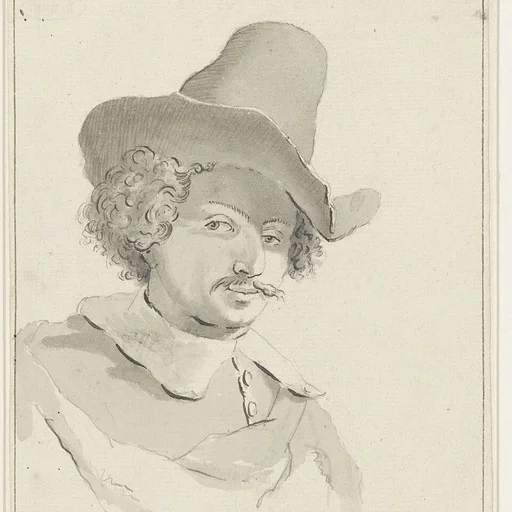
Jan Baptist Weenix, also spelled Jan Baptiste Weeninx (1621–1659), was a painter of the Dutch Golden Age.

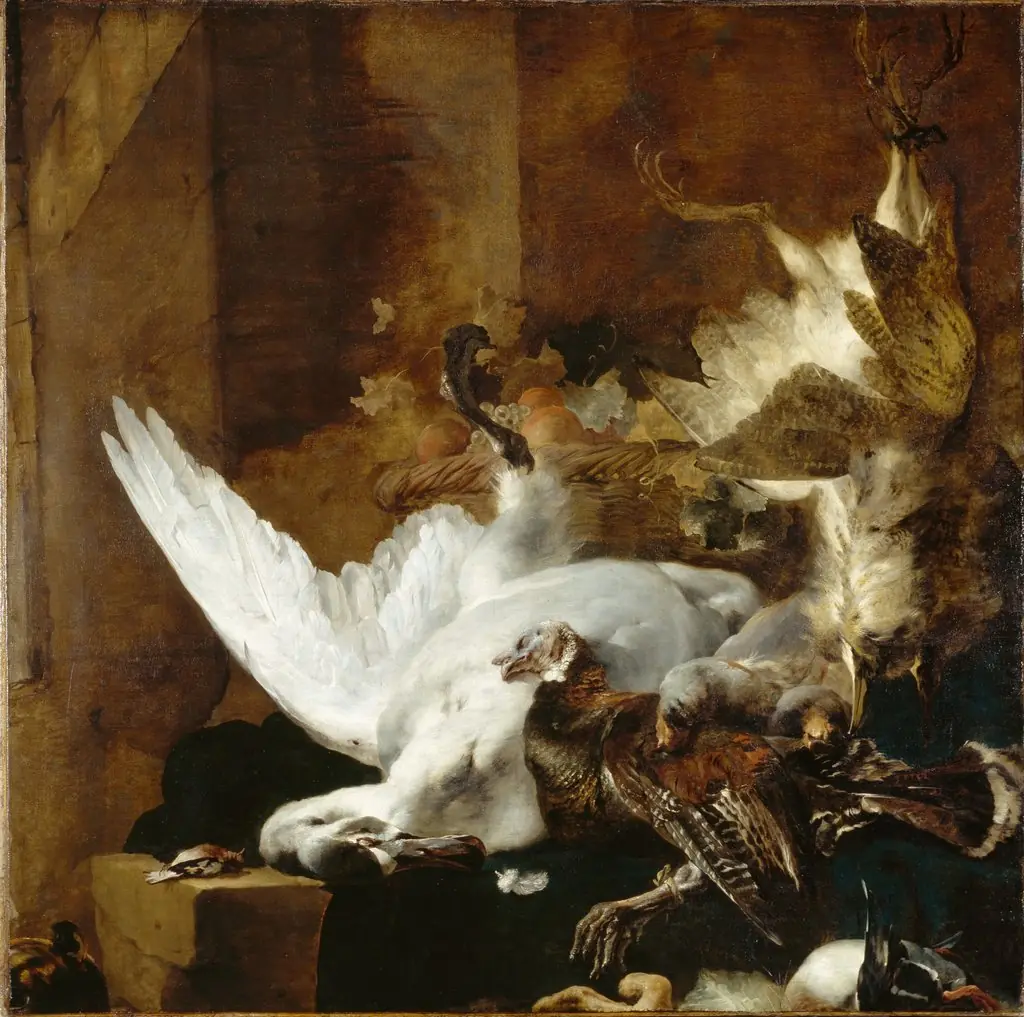
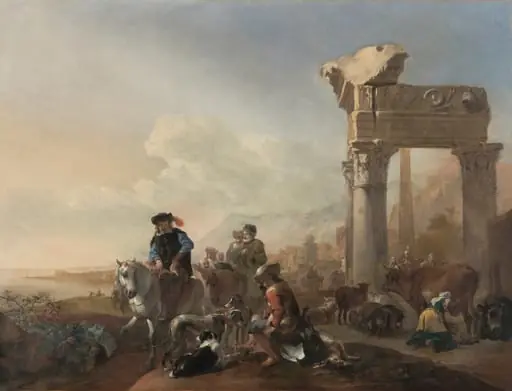 Hunters Near Ruins
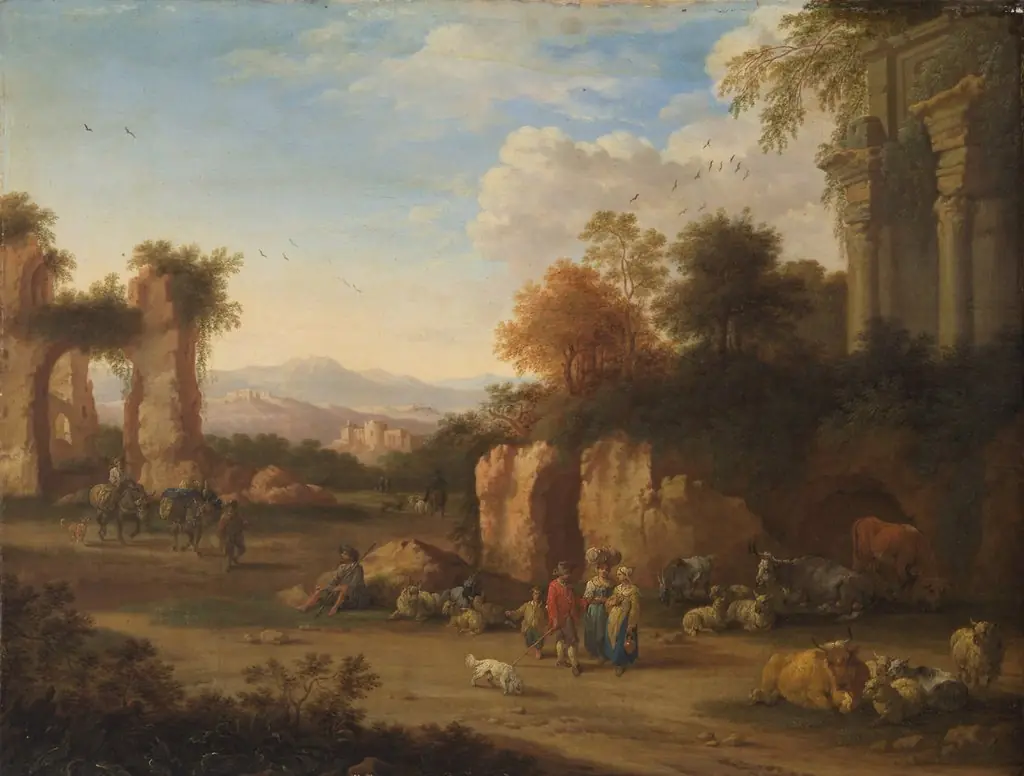 Italian landscape with ancient ruins and peasants
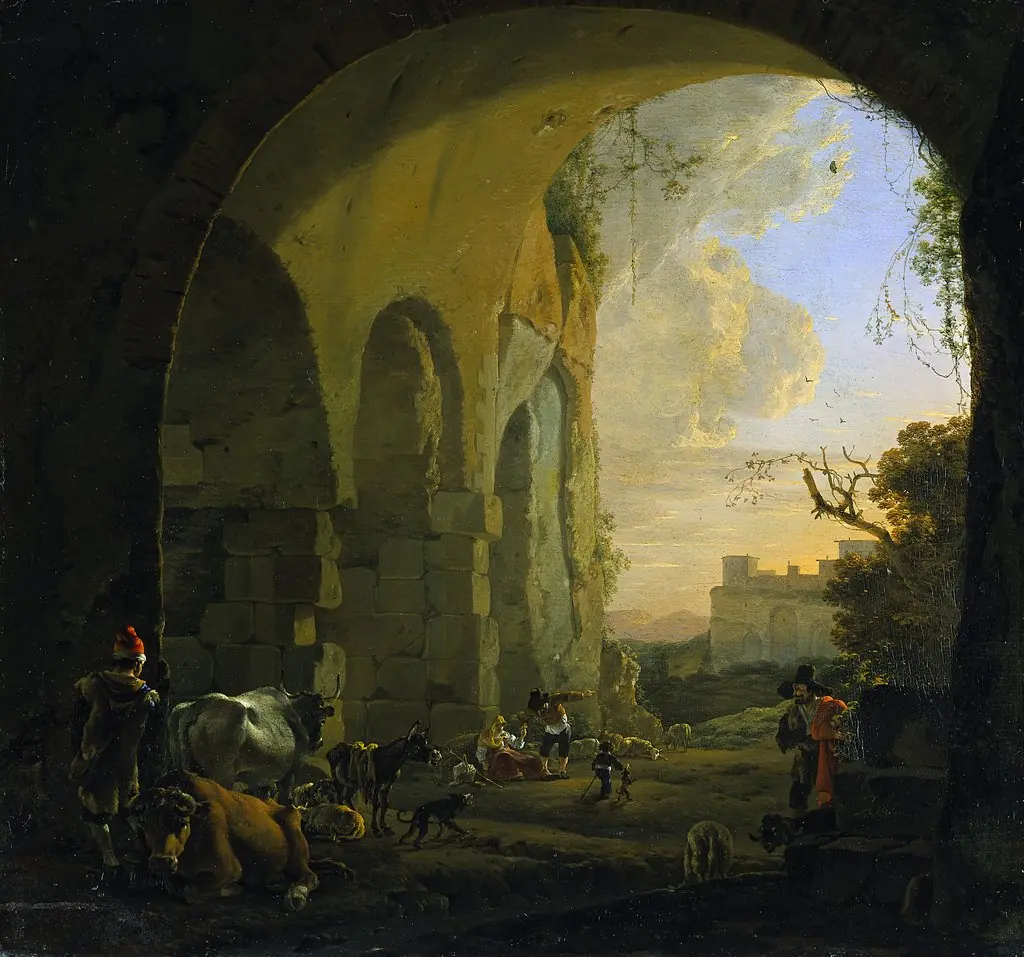 Drovers with cattle under an arch of the Colosseum in Rome
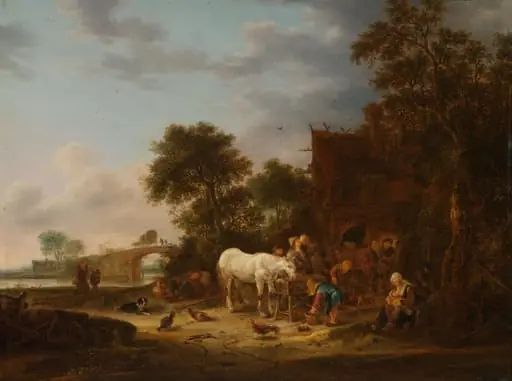 Country inn with a horse at the trough
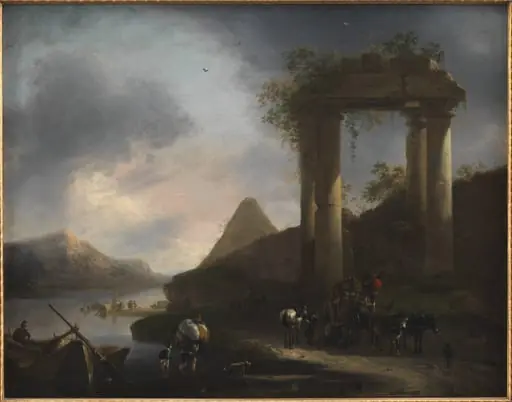 Italian Landscape with Classical Ruins
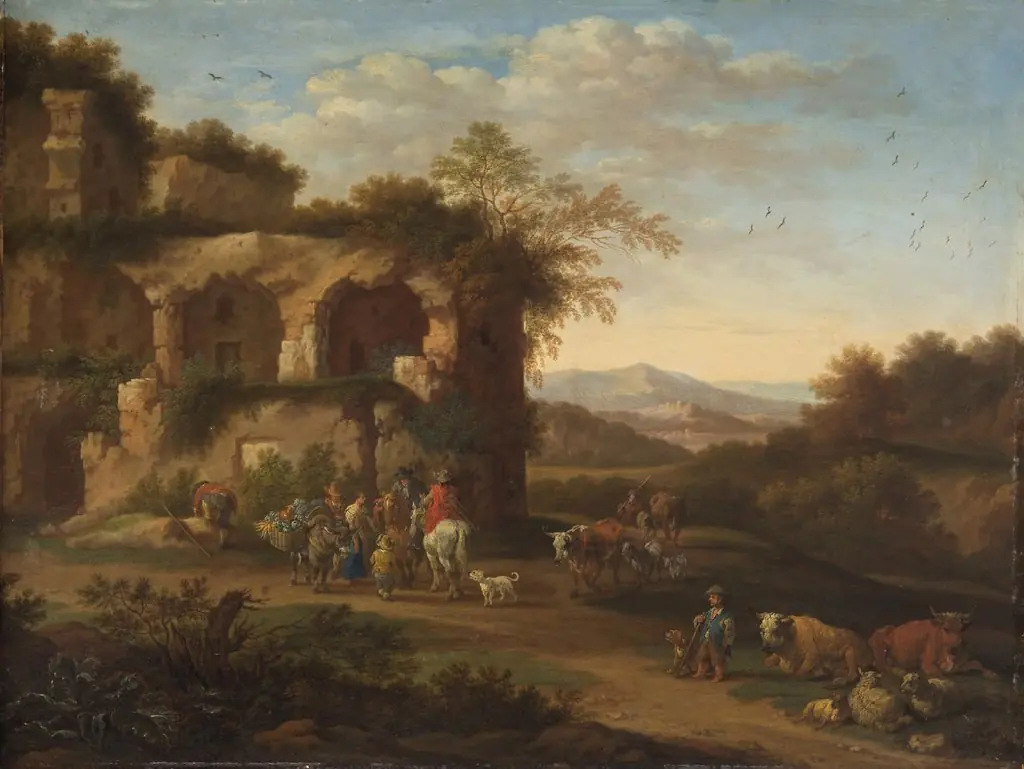 Italian landscape with antique ruins and herders
 Crossing the Ford
 Arcadian Landscape with Fishermen
 Landscape with Journey to Emmaus
 The Cattle Ferry
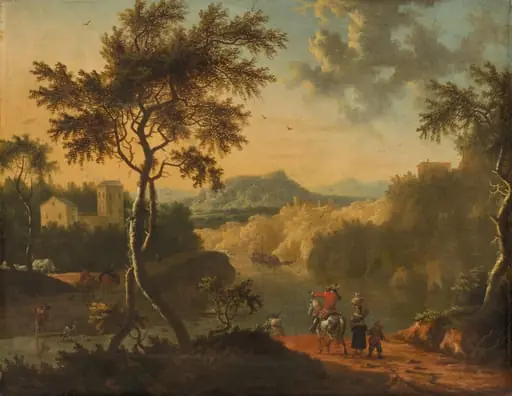 Italian Landscape