Artwork
Game-piece
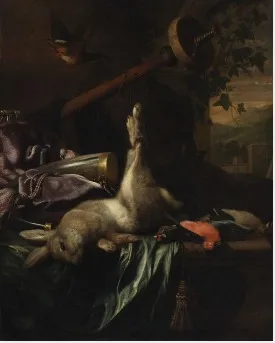
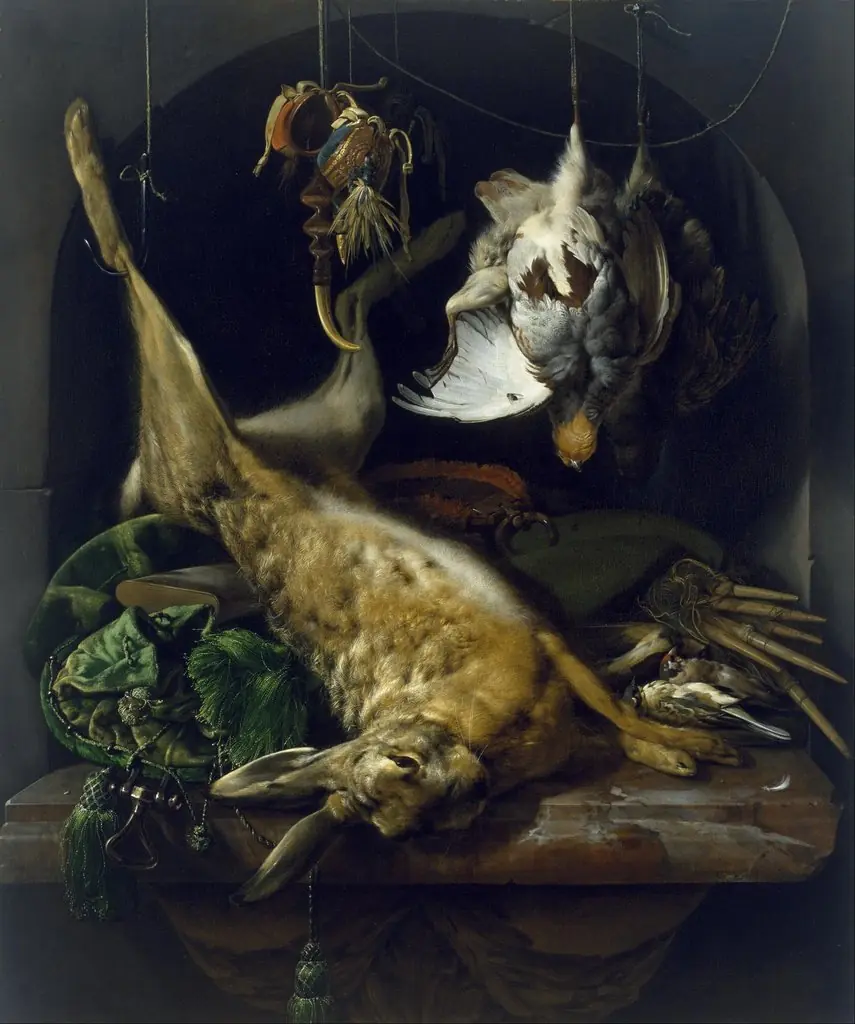
Game-piece is an oil painting by Jan Baptist Weenix. It dates from 1650 and is held in the collection of the National Gallery of Ireland. Created circa 1650, this oil on canvas depicts a solitary rabbit sprawled on a green drapery, its limbs lifted and head cocked.
About this work
Overview
Created circa 1650, this oil on canvas depicts a solitary rabbit sprawled on a green drapery, its limbs lifted and head cocked. Scattered nearby are a silver trumpet and a fragment of meat, forming a modest still‑life composition. The painting belongs to the collection of the National Gallery of Ireland and exemplifies the artist’s later concentration on game subjects.
Subject & Meaning
The central figure—a dead rabbit—serves as a conventional emblem of abundance and the fleeting nature of life in 17th‑century Dutch still life. The inclusion of a musical instrument and meat adds layers of symbolism, suggesting the pleasures of the table and the transitory enjoyment of material goods.
Technique & Style
The work employs a restrained palette of earthy browns and muted greens, while dramatic chiaroscuro models the rabbit’s form against deep shadows. Subtle highlights on the silver trumpet convey a tactile realism, and the careful rendering of texture—fur, cloth, metal—demonstrates the artist’s skill in rendering materiality.
History & Provenance
Painted by Jan Baptist Weenix, a Dutch artist known for Italianate landscapes before turning to still lifes, the piece reflects his mid‑career shift toward game imagery. It entered the National Gallery of Ireland’s holdings in the 20th century, where it remains on display as part of the museum’s Dutch Golden Age collection.
Artist & collection
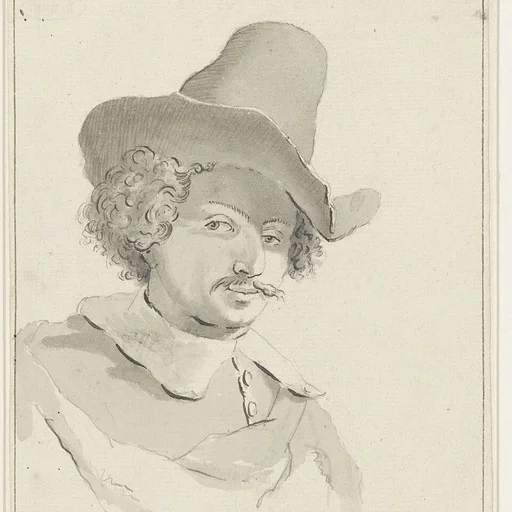
Artist
Jan Baptist Weenix, also spelled Jan Baptiste Weeninx (1621–1659), was a painter of the Dutch Golden Age.

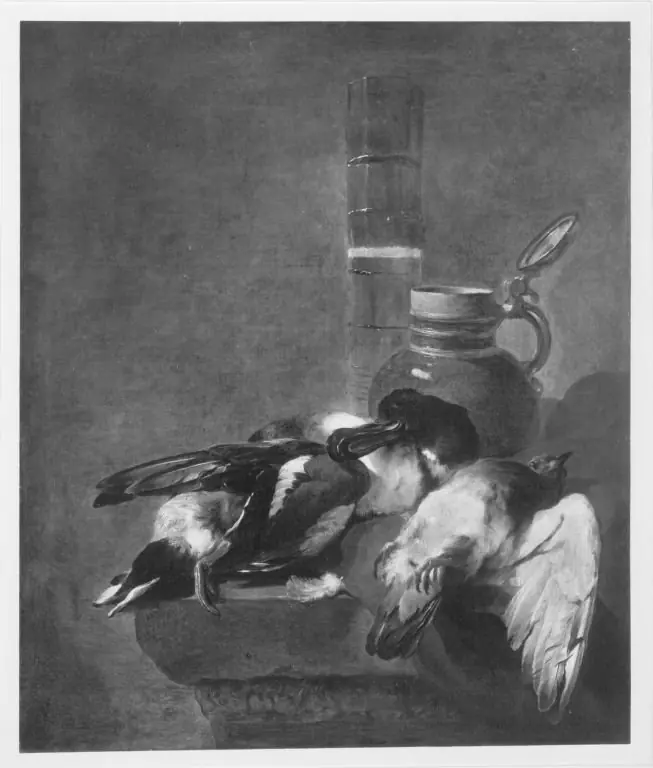
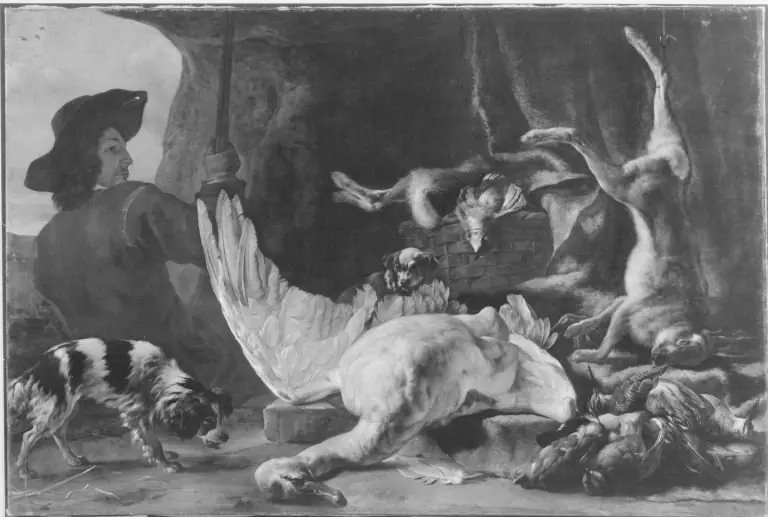
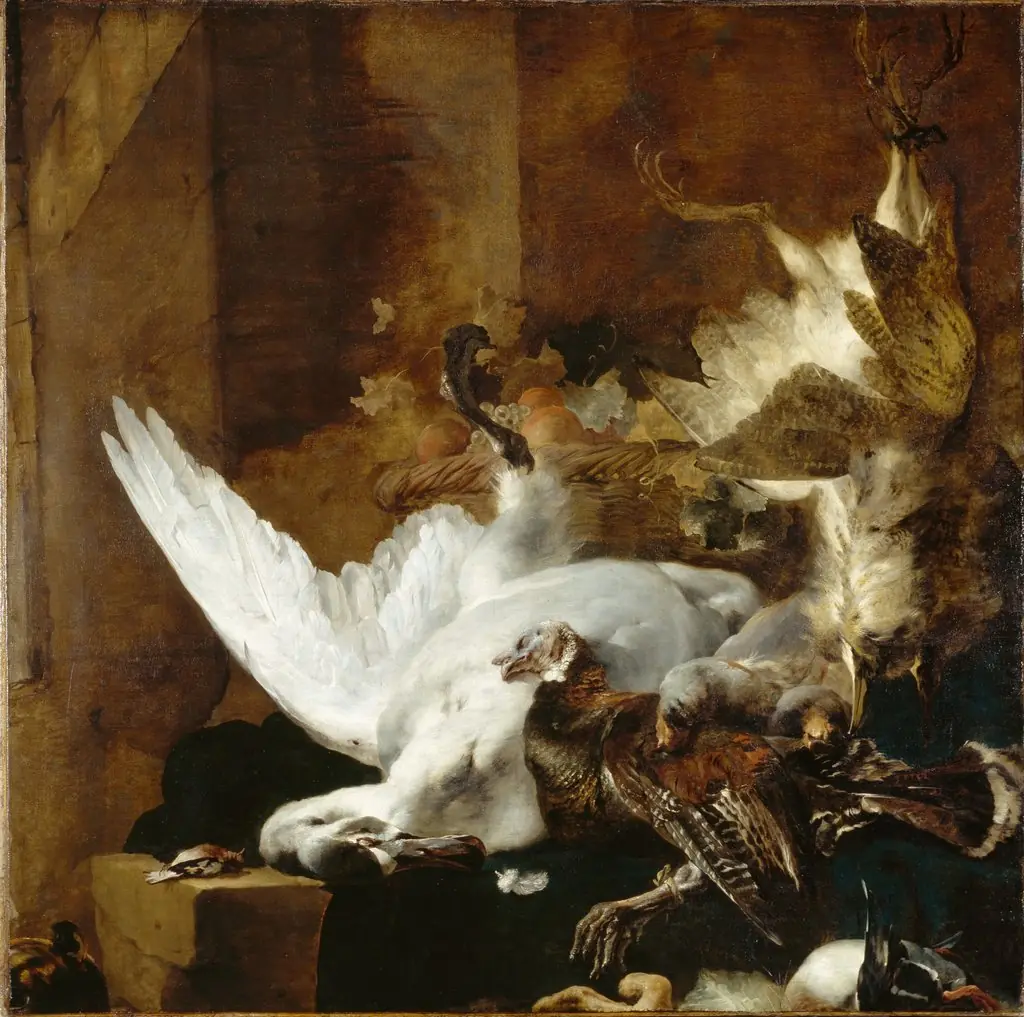
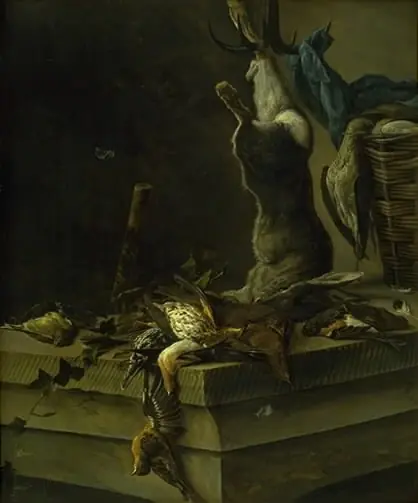 Still Life of Dead Game
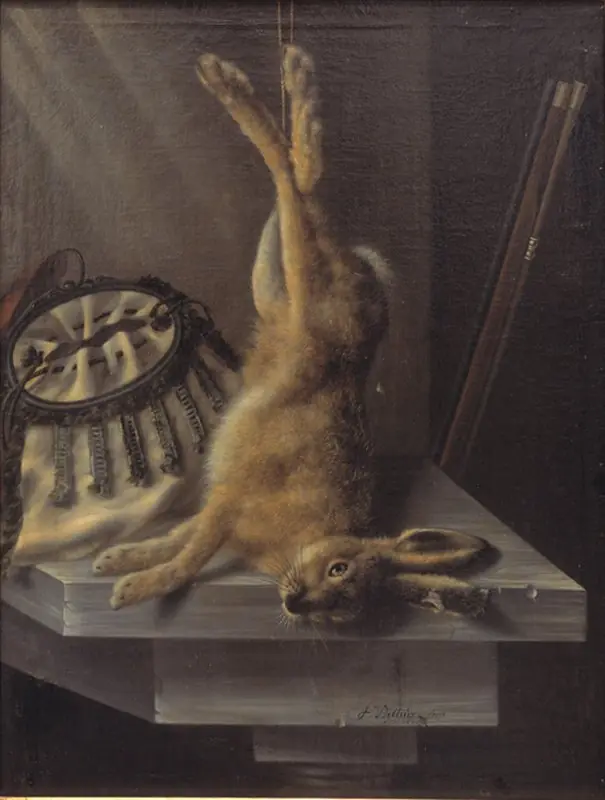 A Dead Hare
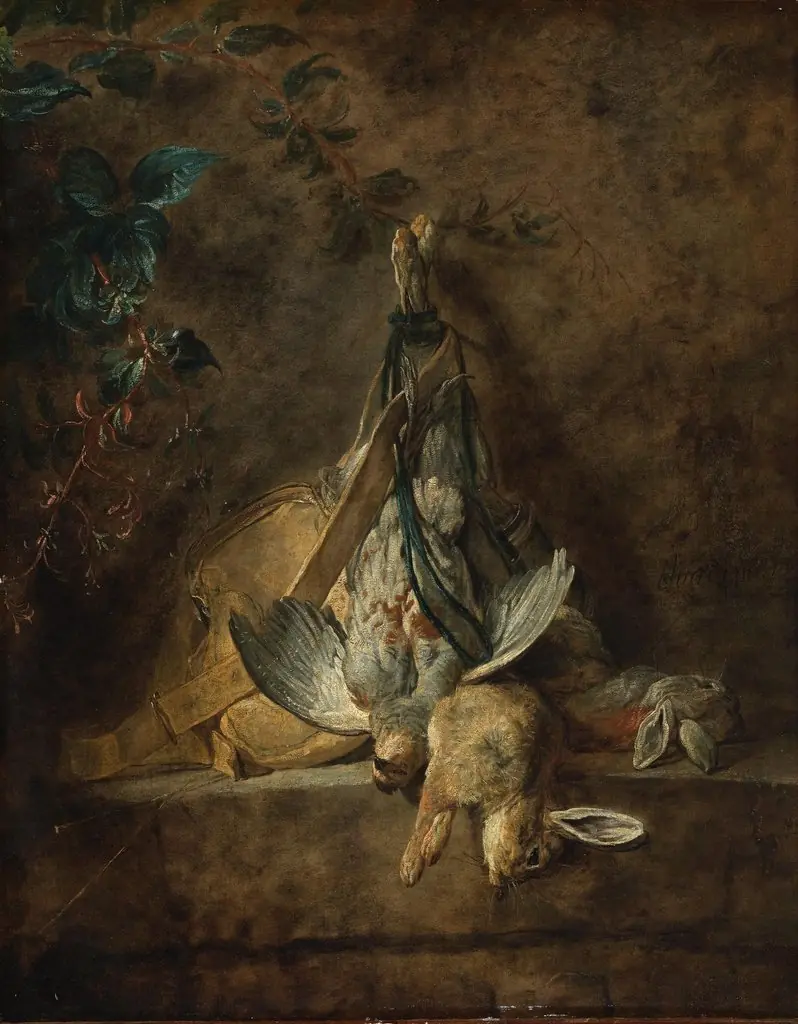 A Still Life Two Rabbits, a Grey Partridge, Game Bag and a Powder Flask
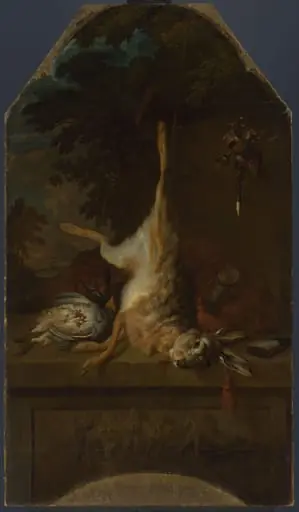 Still Life with Dead Hare and Partridges
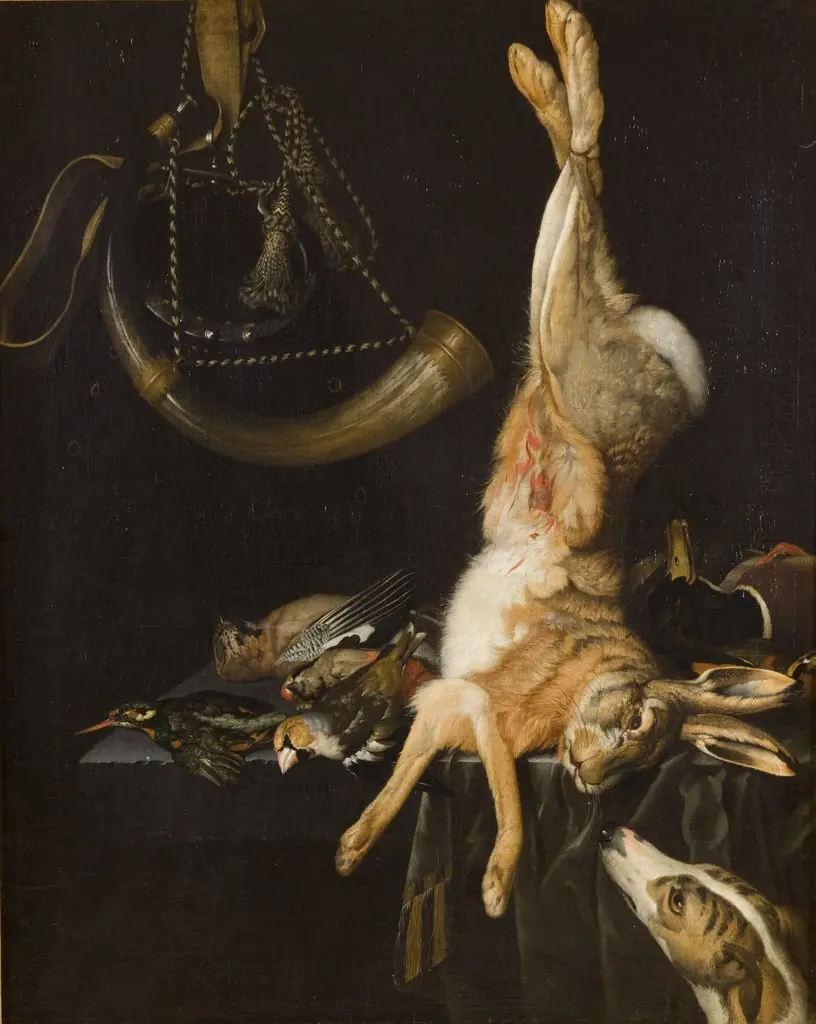 Still Life with a Hare
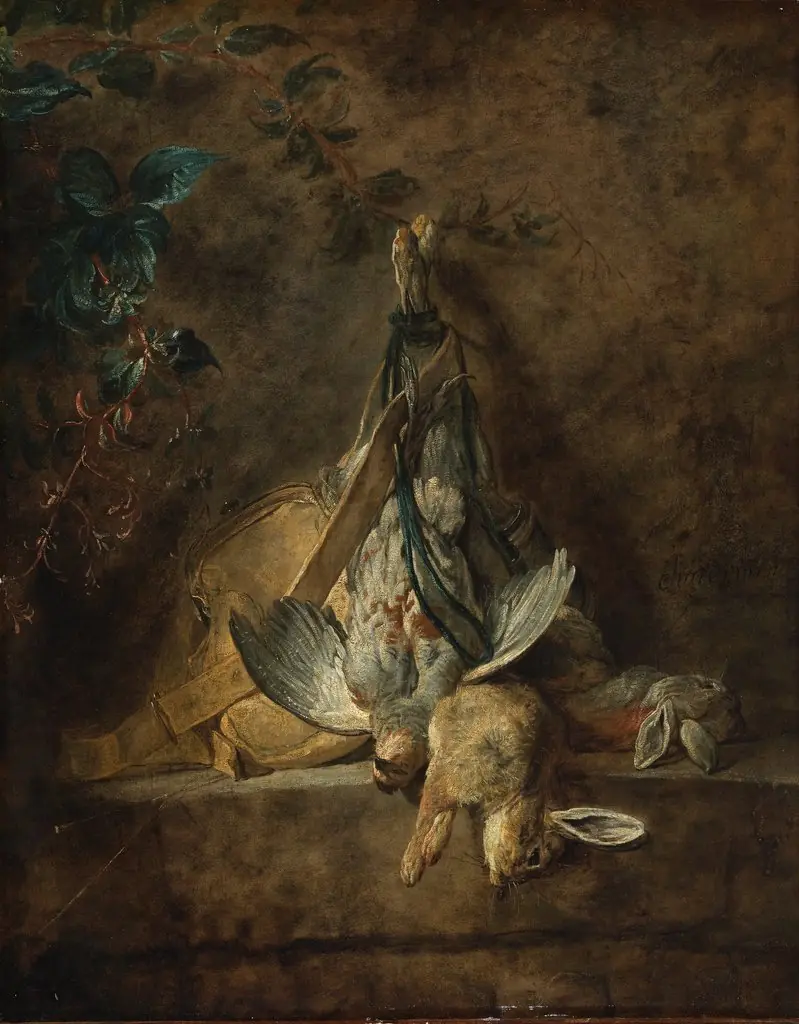 A Still Life: Two Rabbits, a Grey Partridge, Game Bag and a Powder Flask
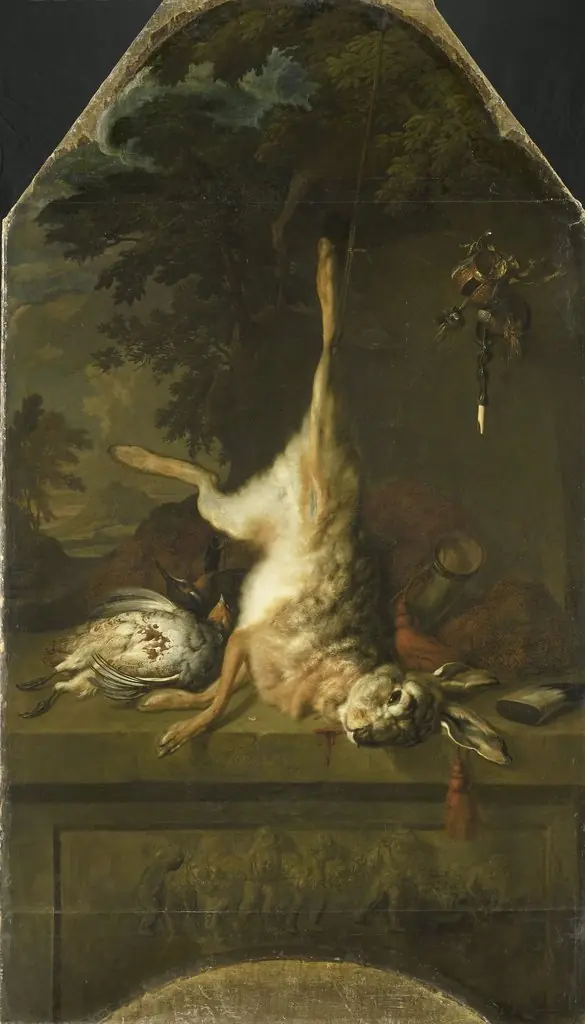 Still Life with Dead Hare and Partridges
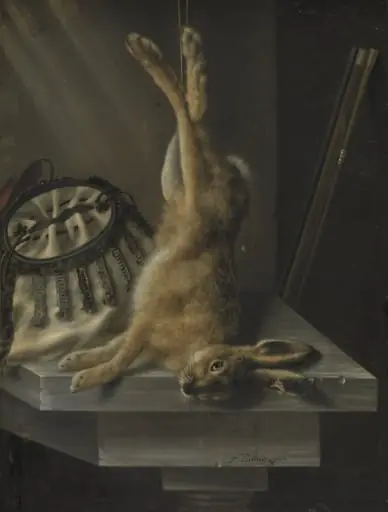 A Dead Hare
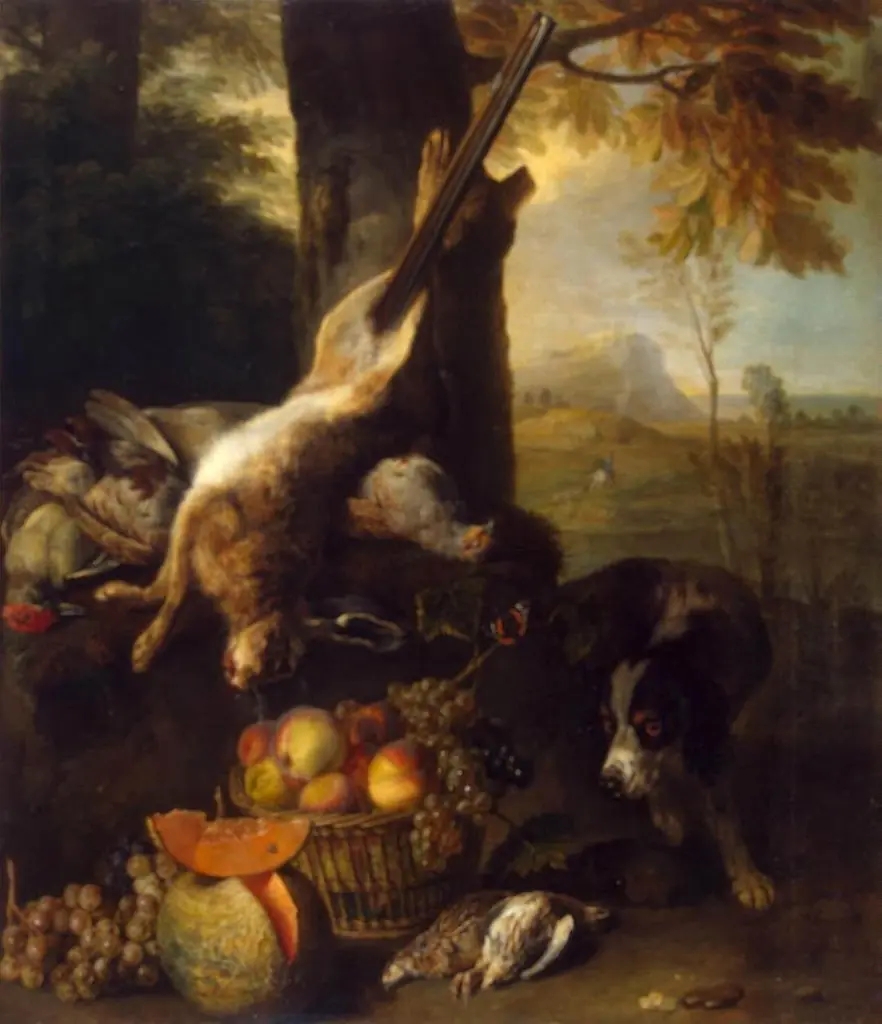 Still Life with a Dead Hare and Fruit
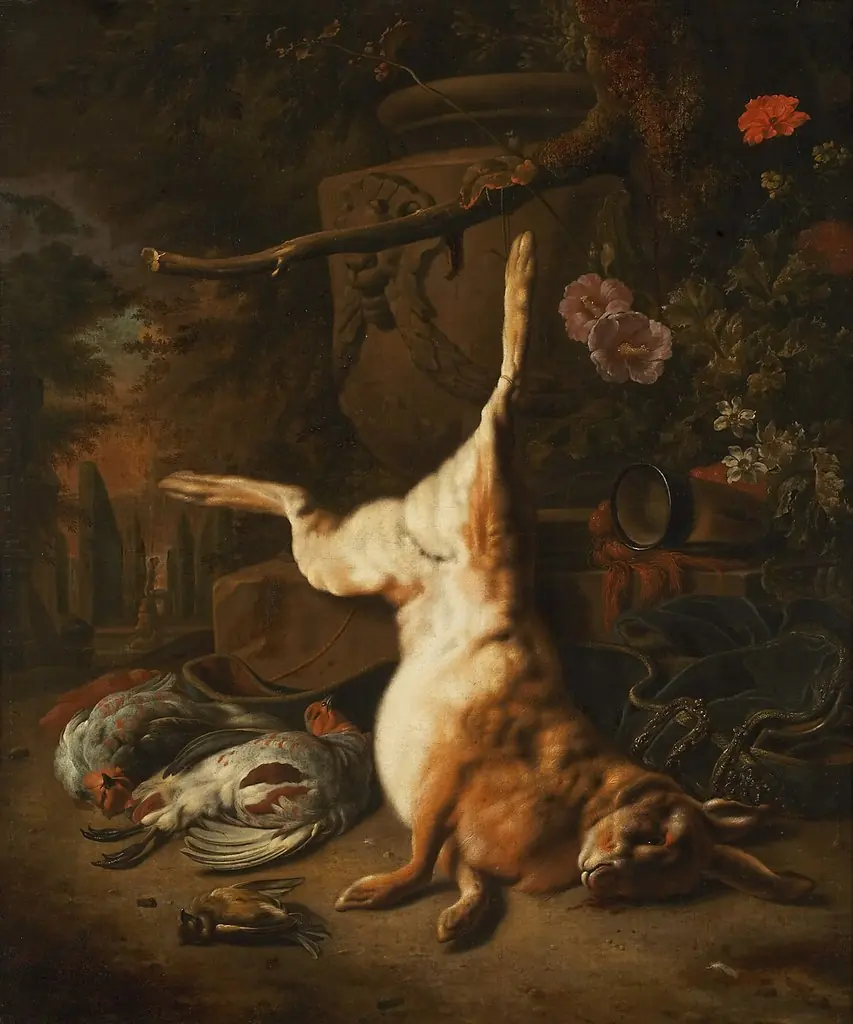 Still-life with dead hare in a park
 Still Life of a Dead Hare, Partridges, and Other Birds in a Niche
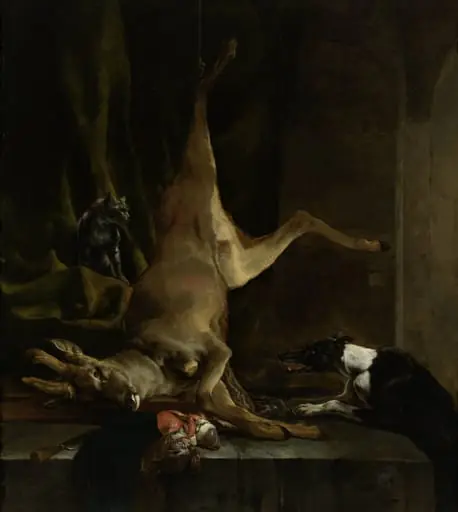
 Still Life with Game on a Table