Artwork
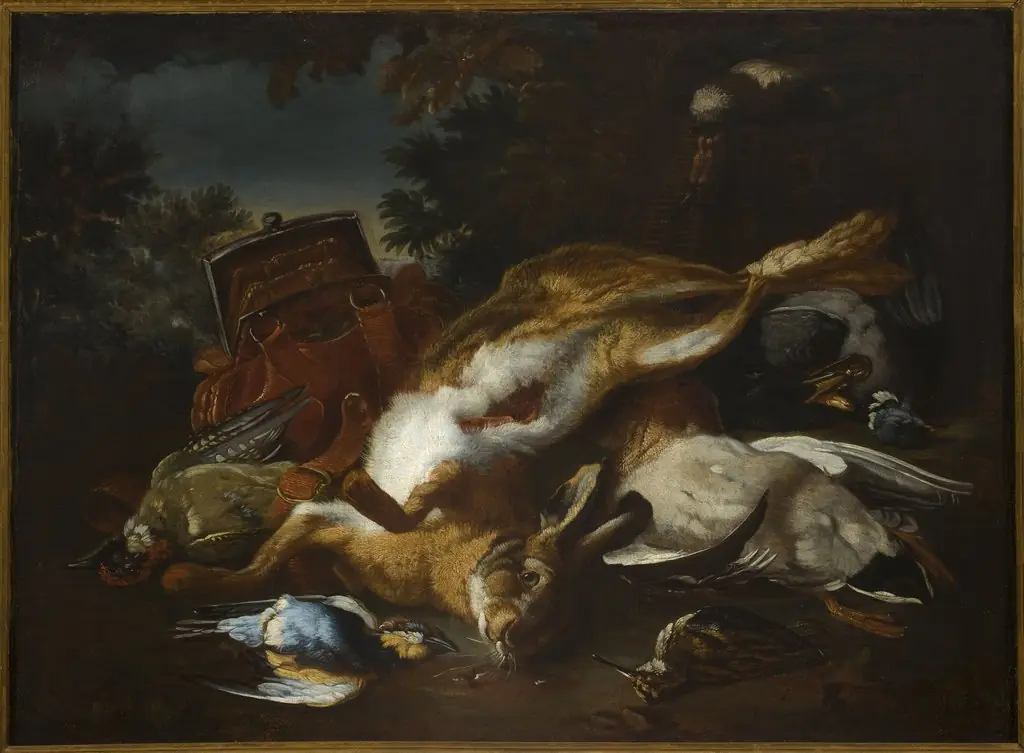
Still-life with dead hare in a park
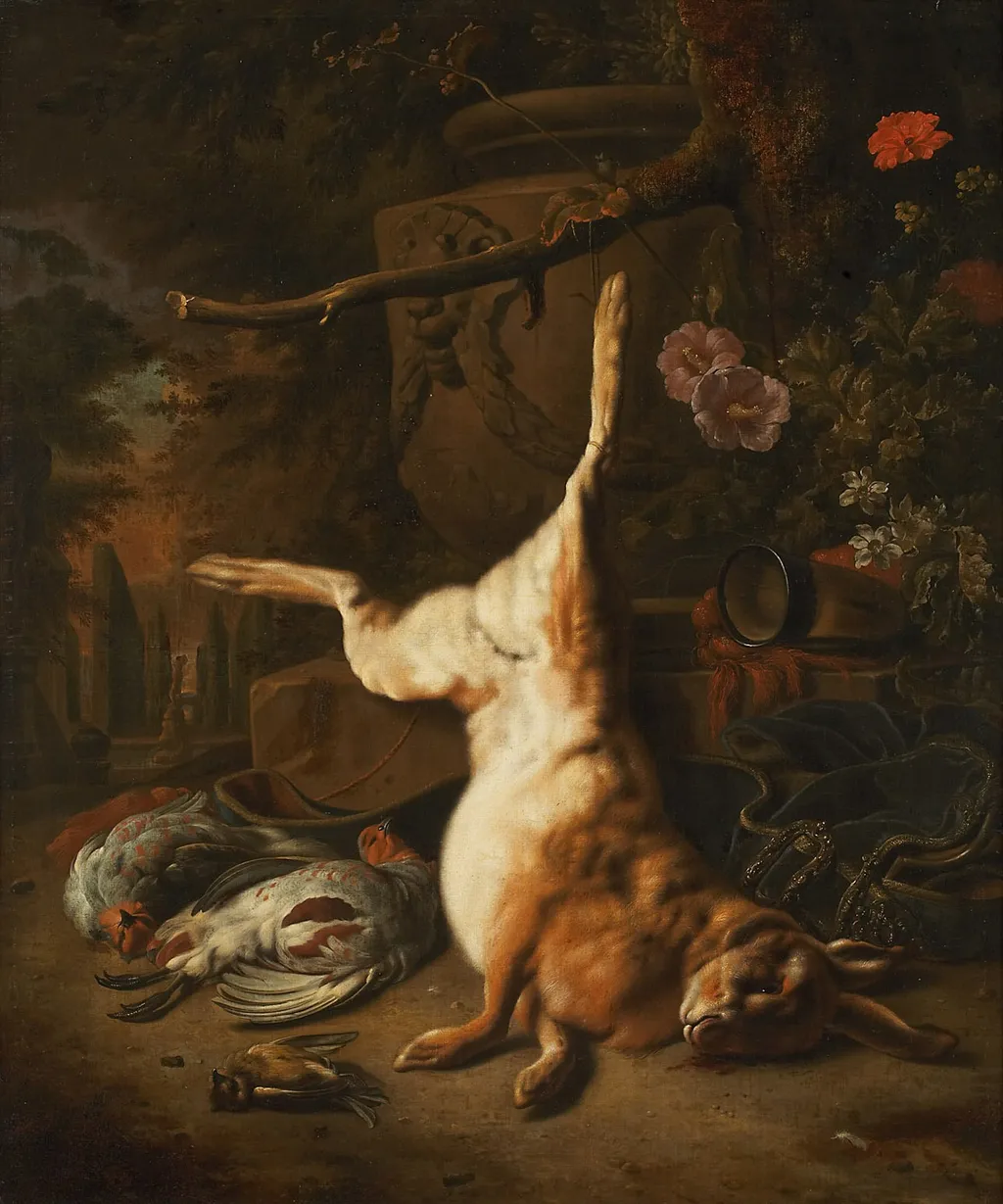
Still-life with dead hare in a park is an oil painting by the Dutch Golden Age artist Jan Weenix. It dates from 1696 and is held in the collection of the Kunsthistorisches Museum.
About this work
Overview
It presents a hunting trophy arranged in a naturalistic outdoor setting, blending elements of game, flora, and domestic objects.
Painted in 1696 by Jan Weenix, this oil on canvas work exemplifies Dutch Golden Age still-life traditions. It presents a hunting trophy arranged in a naturalistic outdoor setting, blending elements of game, flora, and domestic objects. Weenix, trained by his father, specialized in rendering dead animals with precision, and this piece reflects his mastery of texture and spatial composition within a controlled yet seemingly spontaneous scene.
Subject & Meaning
The painting centers on a dead hare held by a dog standing on its hind legs, a gesture suggesting display rather than predation. A second bird lies nearby, wings extended, while a mirror and flowers appear in the background. These elements may reference transience and the human appropriation of nature. The dog’s posture introduces a performative quality, hinting at aristocratic hunting rituals and the curated presentation of wealth and control over the wild.
Technique & Style
Weenix employs chiaroscuro to model forms with dramatic light and shadow, enhancing tactile realism. The dog’s fur is rendered in soft, warm highlights, contrasting with the cooler, muted tones of the hare and bird. The mirror reflects ambient light, subtly expanding the spatial depth. Delicate brushwork captures the texture of feathers, fur, and petals, while the background foliage remains loosely painted, directing focus to the central still life.
History & Provenance
Created during Weenix’s mature period, the painting aligns with his documented output of game still lifes commissioned by Dutch elites. While its early ownership is unrecorded, it entered public collections in the 19th century, likely through European private acquisitions. Its survival reflects continued interest in Dutch still-life traditions, though it was never widely exhibited until modern institutional cataloging efforts.
Context
In late 17th-century Netherlands, still lifes featuring hunted game were popular among affluent patrons, symbolizing both natural abundance and social status. Weenix’s work responded to this demand while incorporating theatrical elements absent in earlier, more austere compositions. The inclusion of a mirror and flowers suggests influences from Flemish still life and allegorical traditions, blending observation with symbolic suggestion.
Legacy
Weenix’s approach influenced later Dutch and Flemish painters who expanded the narrative potential of still life. His integration of animals in dynamic poses, combined with environmental detail, helped shift the genre toward more theatrical storytelling. Though less celebrated than contemporaries like Rembrandt, his technical precision and compositional ingenuity remain notable within the broader canon of Dutch naturalism.
Own this work as a print
Artist & collection
Artist
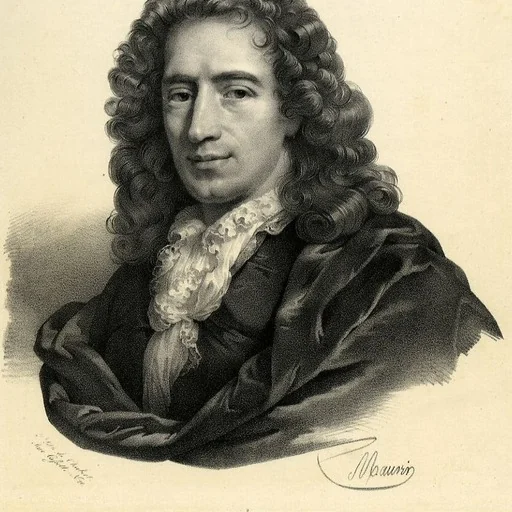
Jan Weenix or Joannis Wenix (between 1641/1649 – 19 September 1719 (buried)) was a Dutch painter.

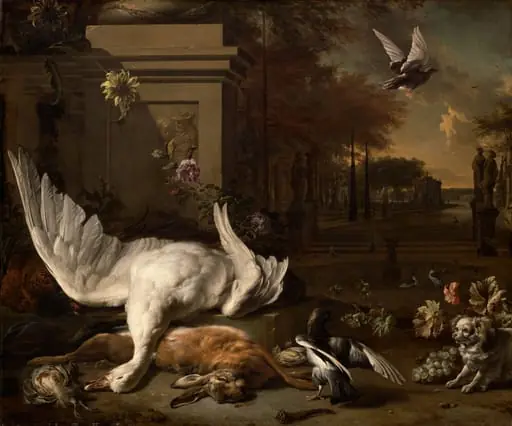 Still Life with Goose and Game before a Country Estate
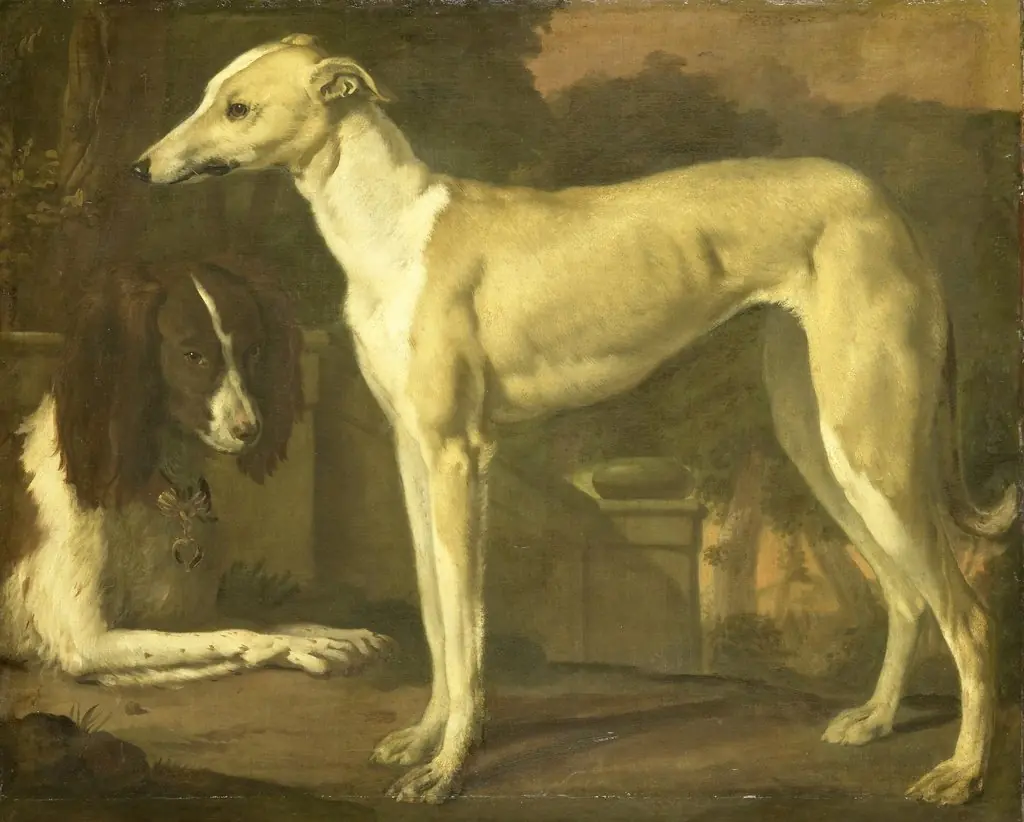 Portrait of a greyhound and a spaniel
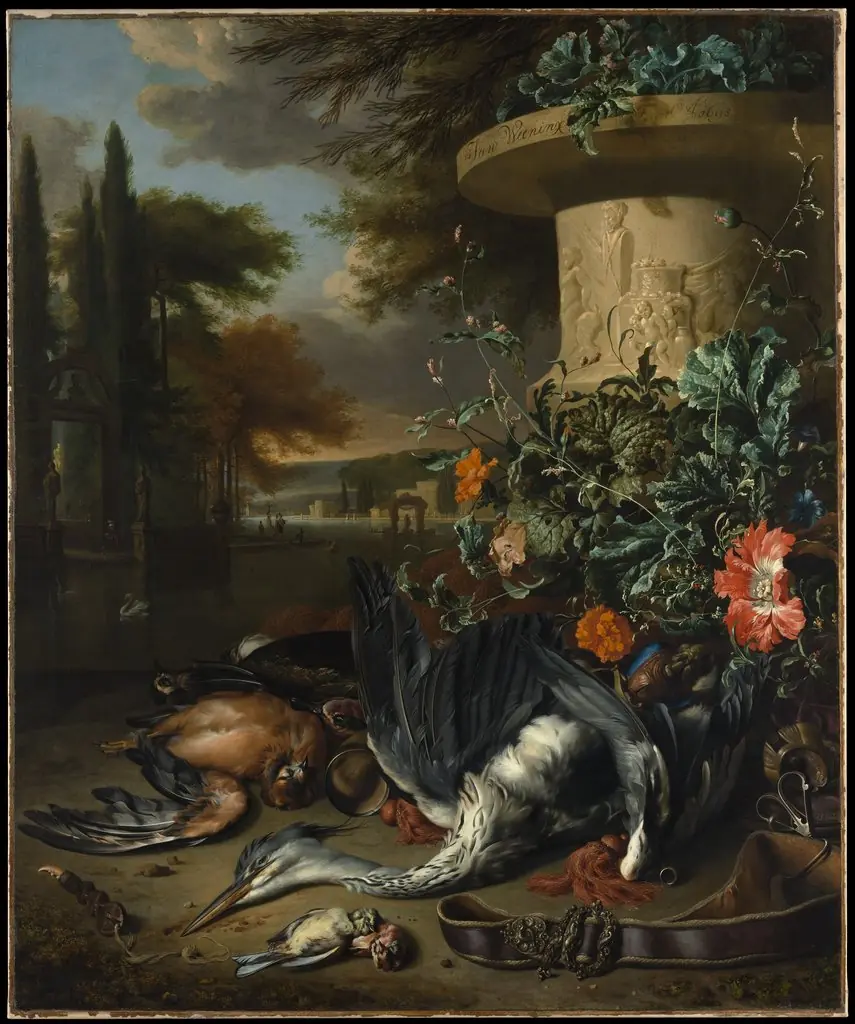 Gamepiece with a Dead Heron ("Falconer's Bag")
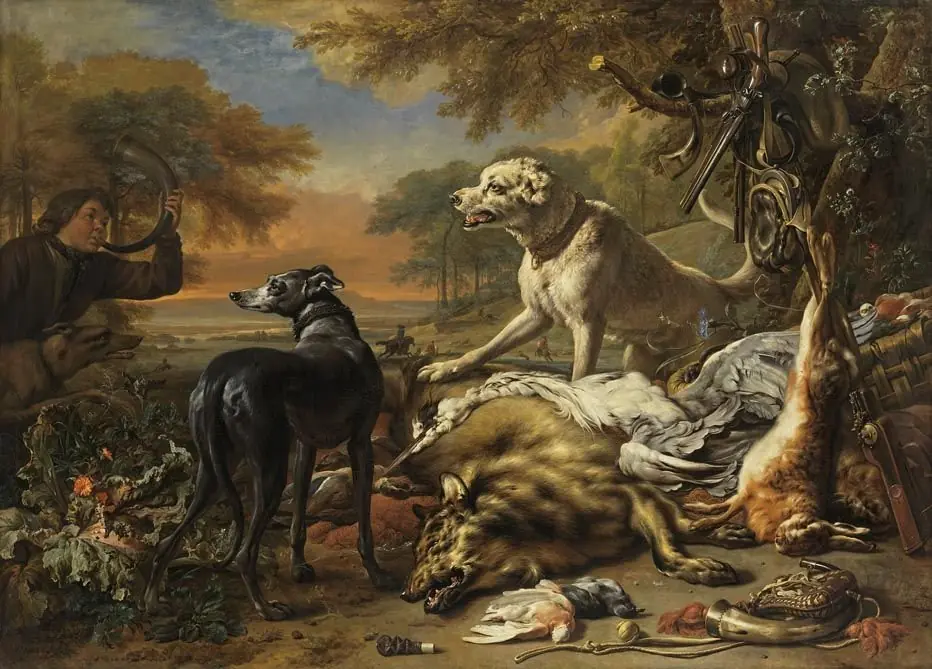 Hunting still life with wolf
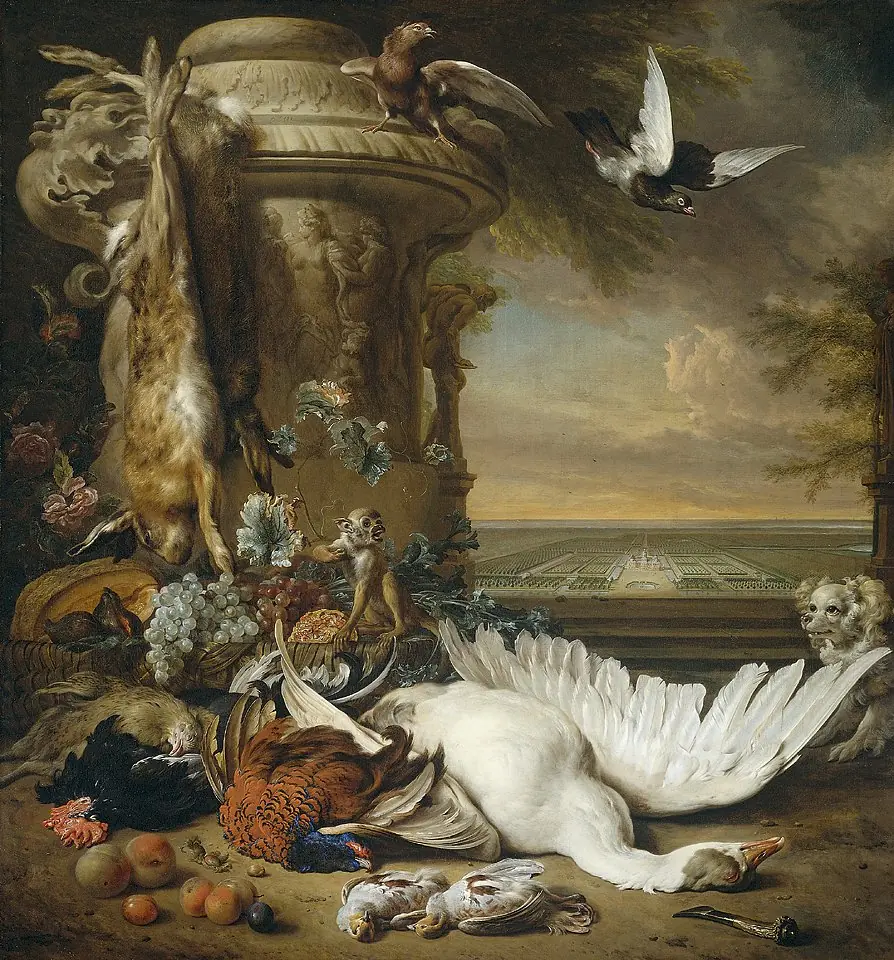 Still Life with Dead Game and Fruit beside a Garden Vase, with a Monkey, a Dog and Two Pigeons; in the Background Rijksdorp near Wassenaar, the Estate of Jonkheer Jacob Emmery, Baron of Wassenaar
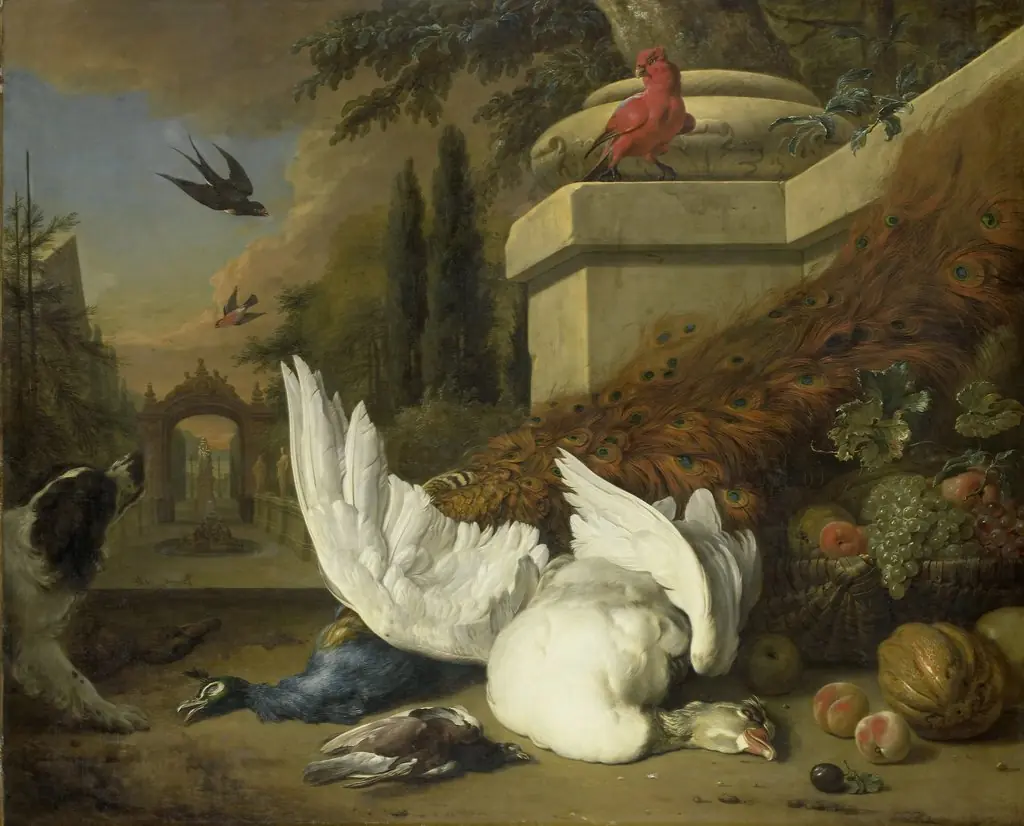 A monkey and a dog beside dead game and fruits, with the estate of Rijxdorp near Wassenaar in the background
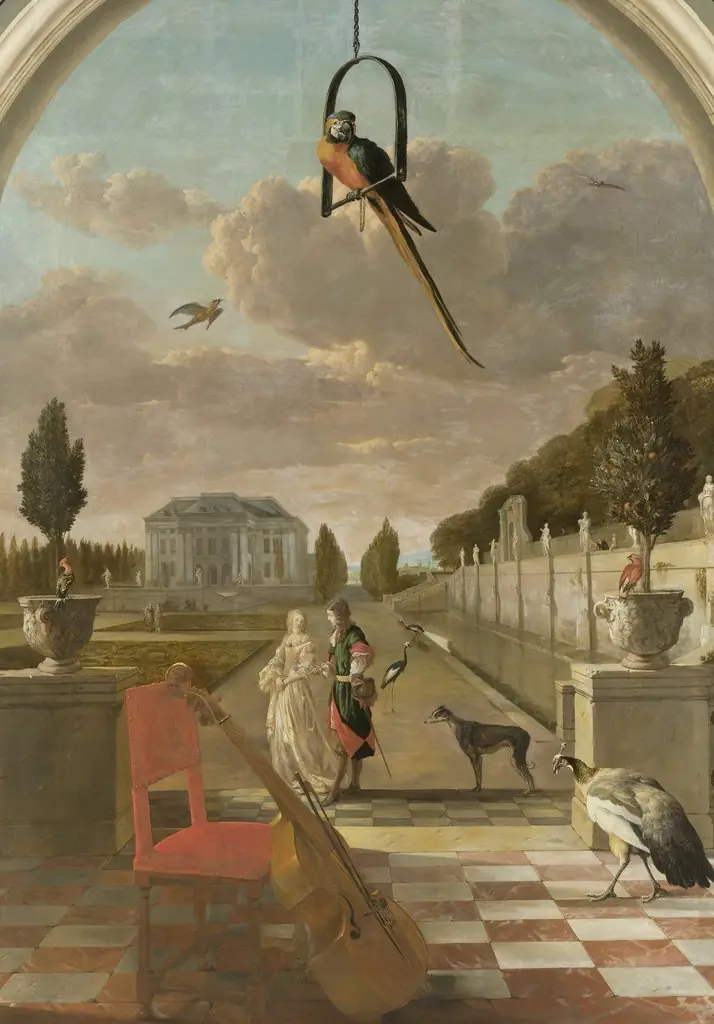 Park with country home
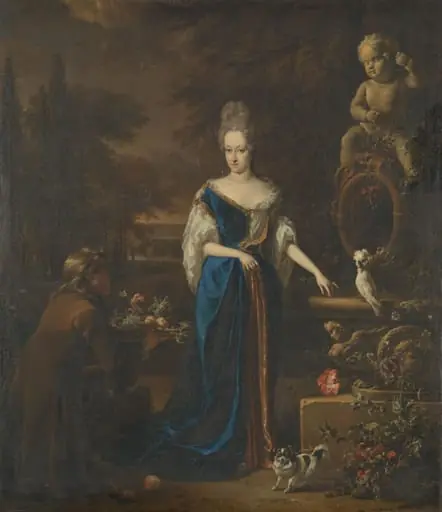 Portrait of Maria Cornelisz, Wife of Silvester van Tongeren
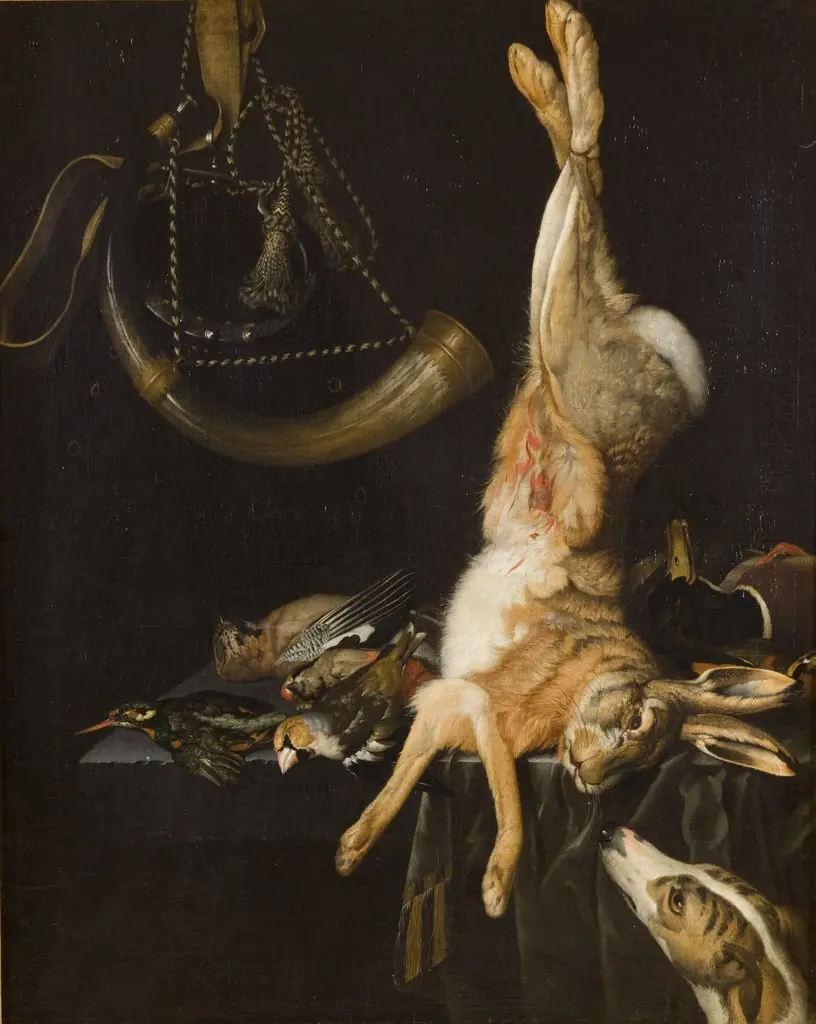 Still Life with a Hare
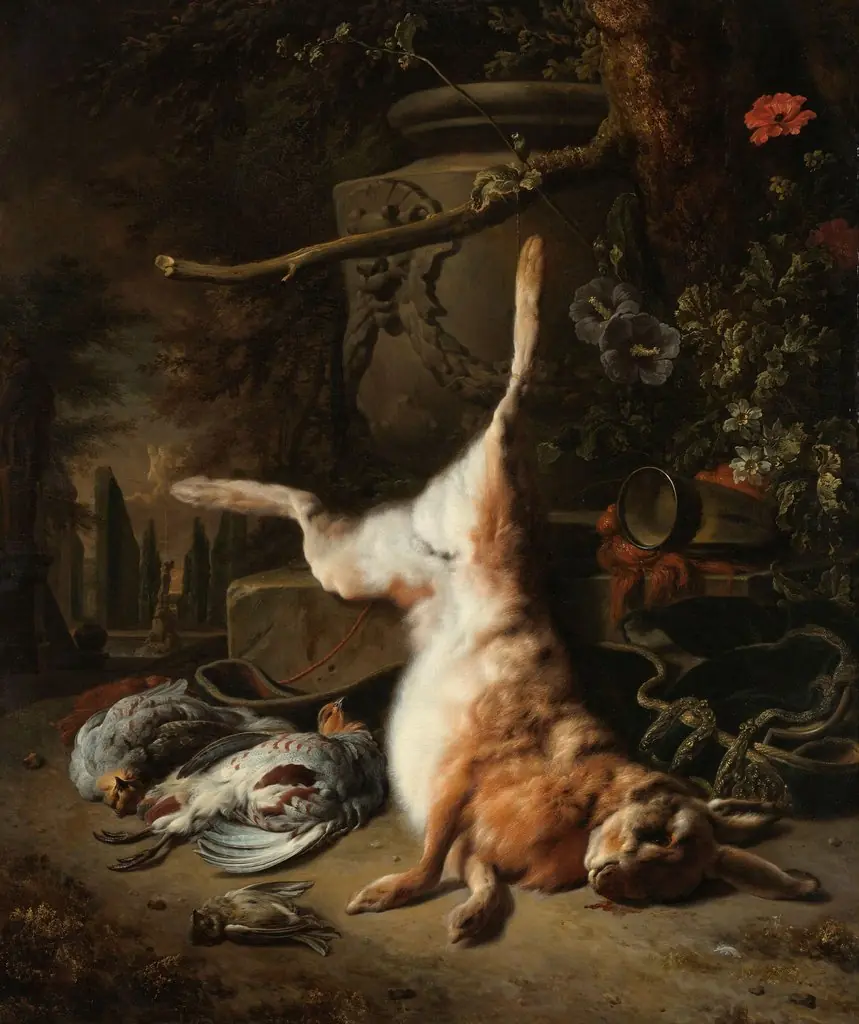 Still life with a Hare and Other Game
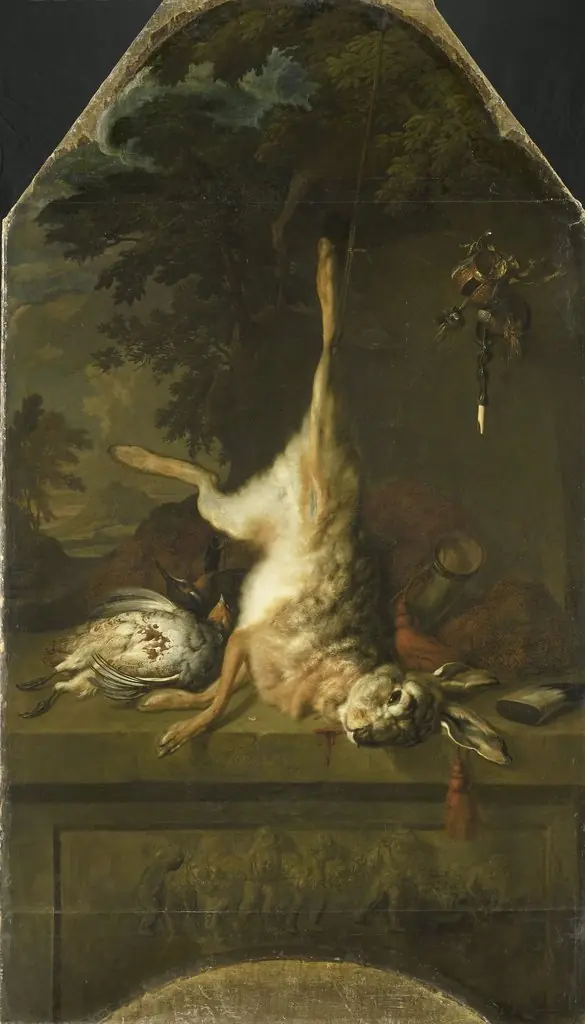 Still Life with Dead Hare and Partridges
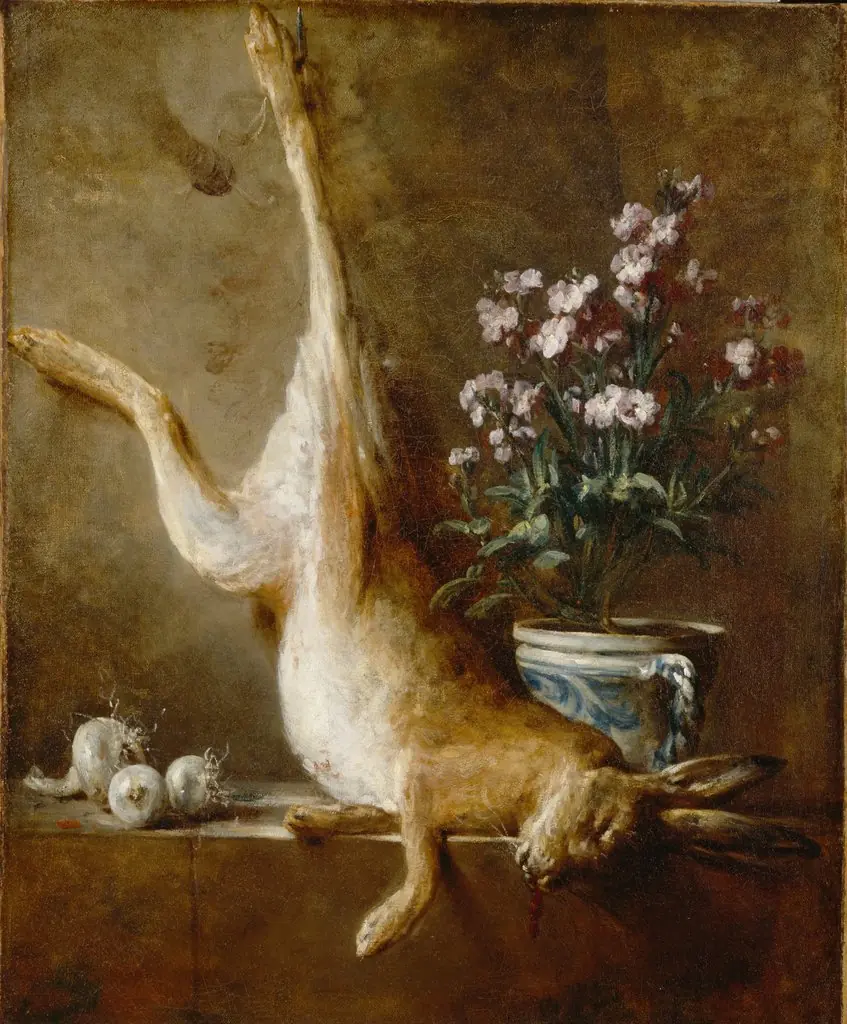 Still Life with Dead Hare
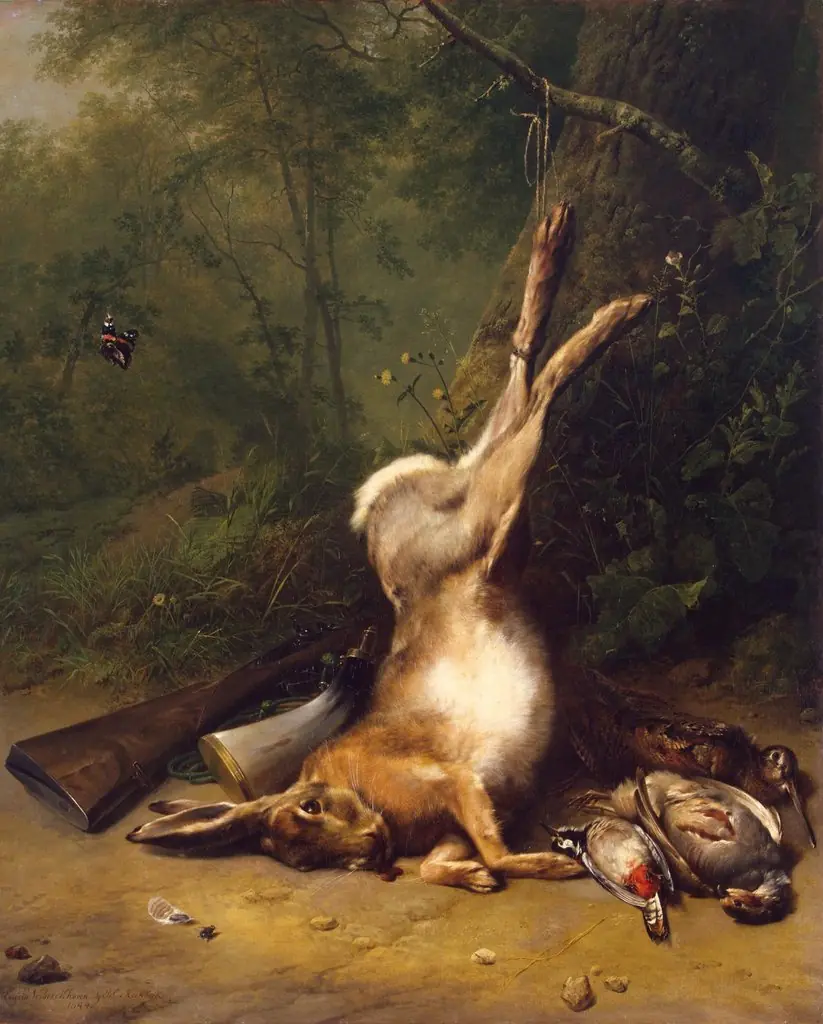 Still Life with a Hare
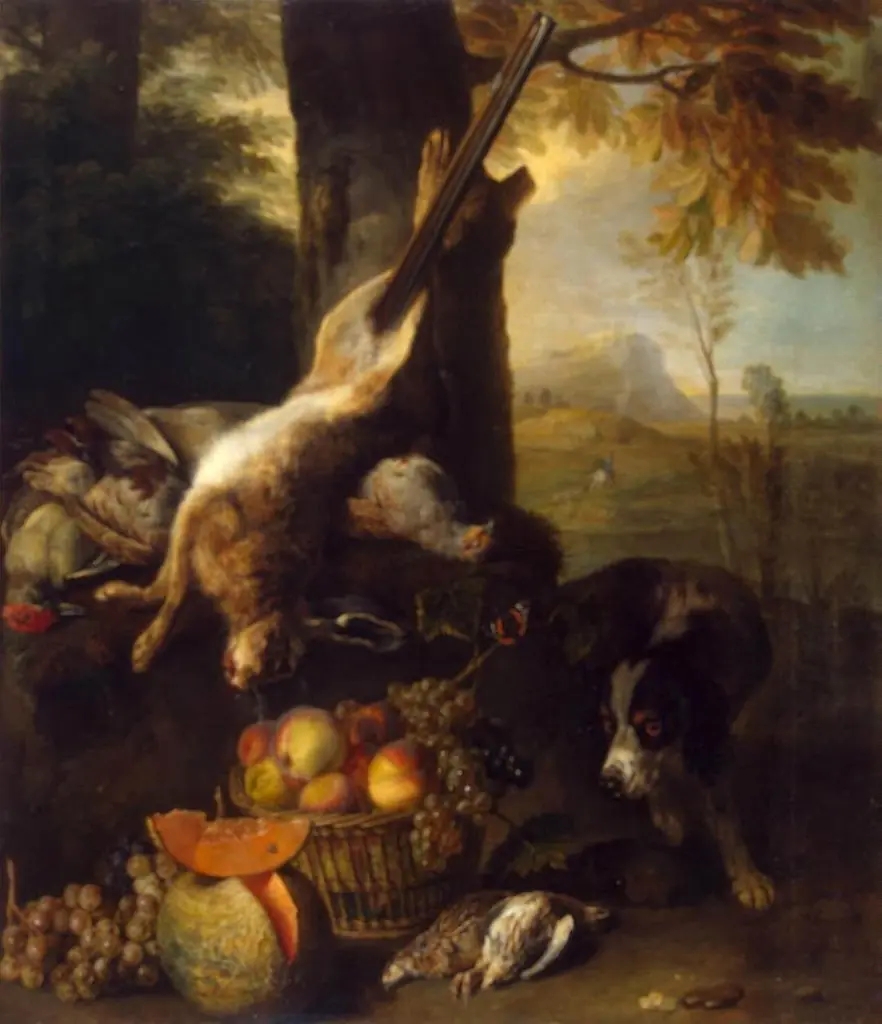 Still Life with a Dead Hare and Fruit
 Still life with a hare, dead birds and fish
 Still Life of a Dead Hare, Partridges, and Other Birds in a Niche
 A Dead Hare
 Still life with hare and black rooster
 A Hare and Birds
 Still Life with a Hare, Wild Fowl and a Hunter's Bag