Artwork
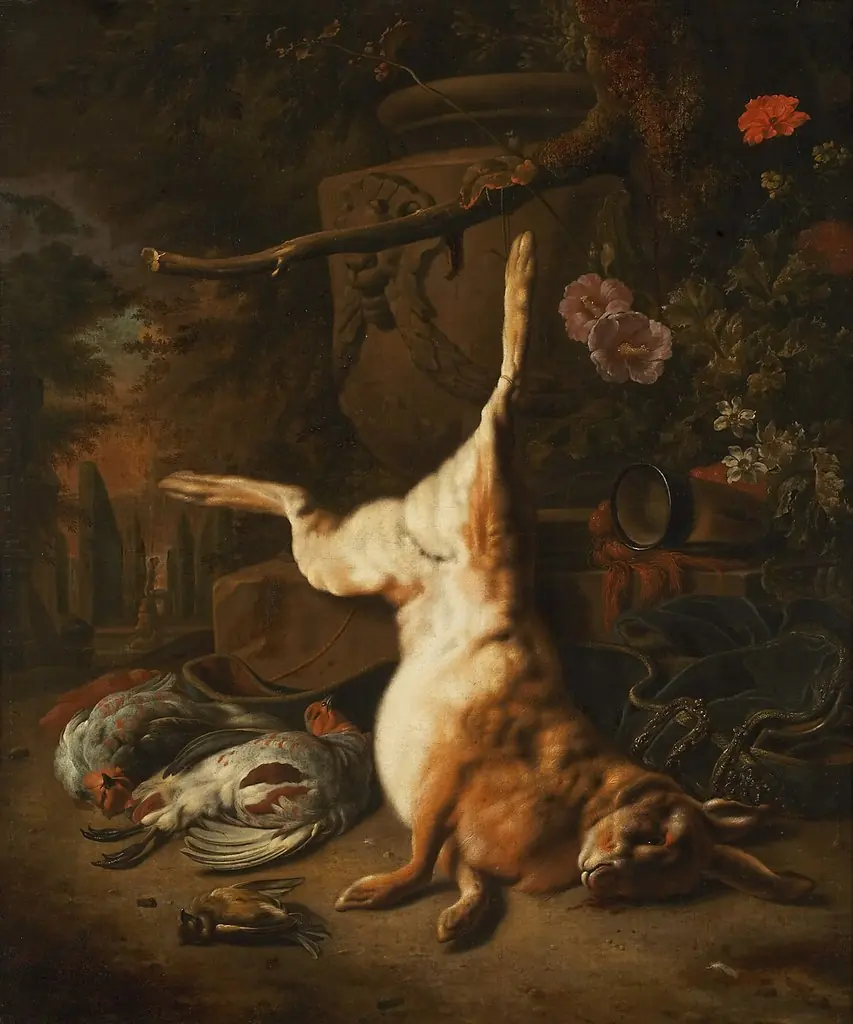
Still Life with a Hare
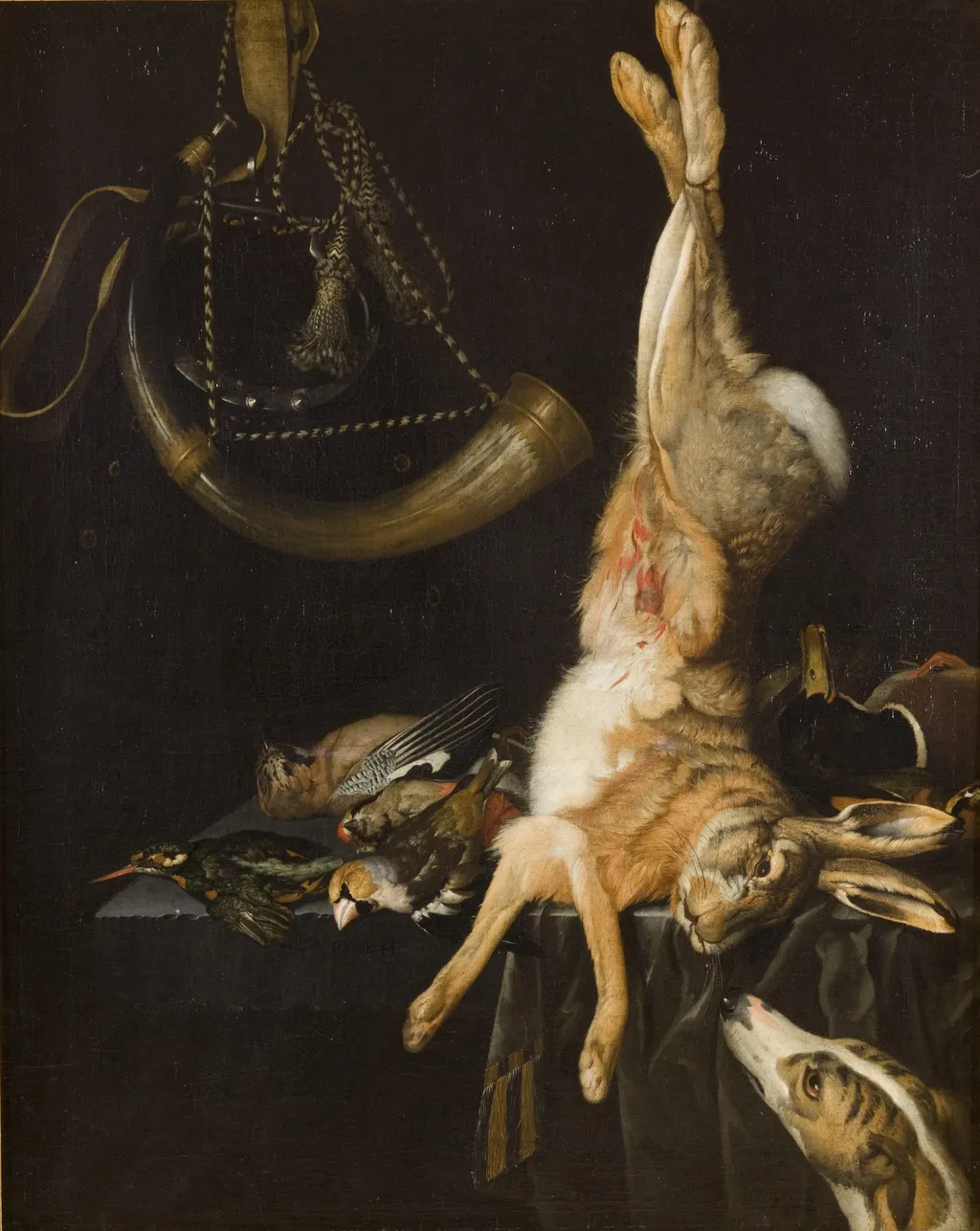
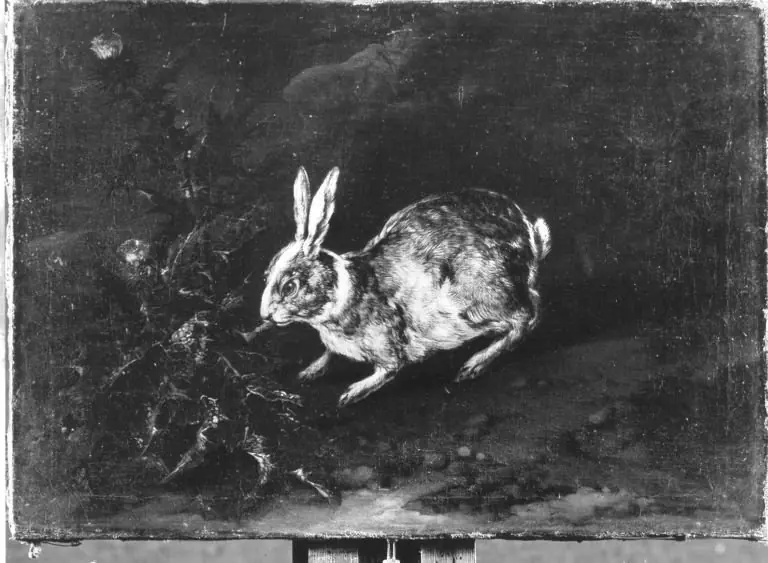
Still Life with a Hare is an oil painting by Philipp Ferdinand de Hamilton. It dates from 1701 and is held in the collection of the National Museum in Kraków.
About this work
Overview
Philipp Ferdinand de Hamilton’s *Still Life with a Hare* (1701) is an oil painting that exemplifies the still‑life tradition of the early eighteenth century. Executed in a dark interior setting, the composition centers on a suspended hare, rendered with meticulous attention to texture, while a small dog observes from the lower right. The work is part of the National Museum in Kraków’s collection.
Subject & Meaning
The painting presents a freshly killed hare hung by its hind legs, its fur mottled in shades of white, brown and tan. A dog, positioned at the edge of the scene, looks upward toward the animal, suggesting a narrative of the hunt’s aftermath and the relationship between predator and prey. The inclusion of a horn and rope in the dim background reinforces the hunting motif.
Technique & Style
Hamilton employs a chiaroscuro scheme, contrasting a subdued, shadowy backdrop with the illuminated surface of the hare and the dog’s glossy coat. Fine brushwork captures the softness of the fur and the subtle expression of the canine, while the rendering of metallic objects such as the hook and horn demonstrates his skill in depicting varied textures within a single composition.
History & Provenance
Created in 1701 while Hamilton was active in Austria, the painting reflects the artist’s Southern Netherlandish origins and his adaptation to Central European tastes. It entered the National Museum in Kraków’s holdings in the twentieth century, where it remains on display as a representative example of Hamilton’s still‑life oeuvre.
Own this work as a print
Artist & collection
Artist
Philipp Ferdinand de Hamilton (c. 1664 – 1750), was an 18th-century painter from the Southern Netherlands active in Austria.

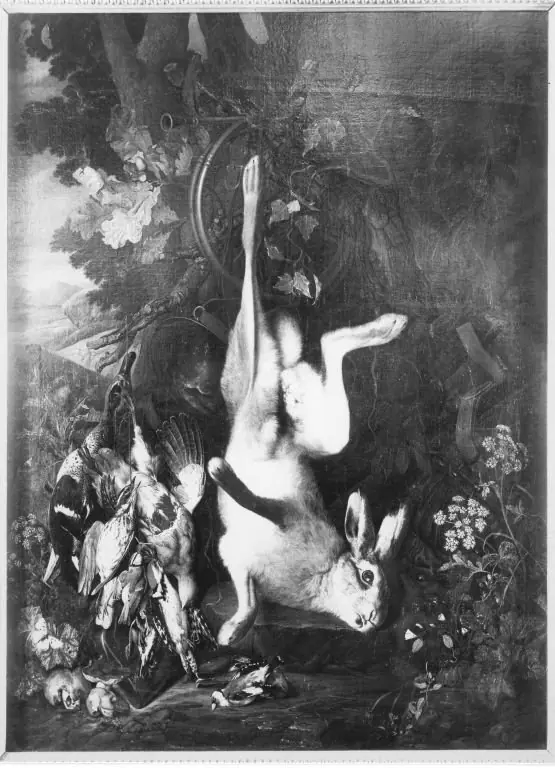
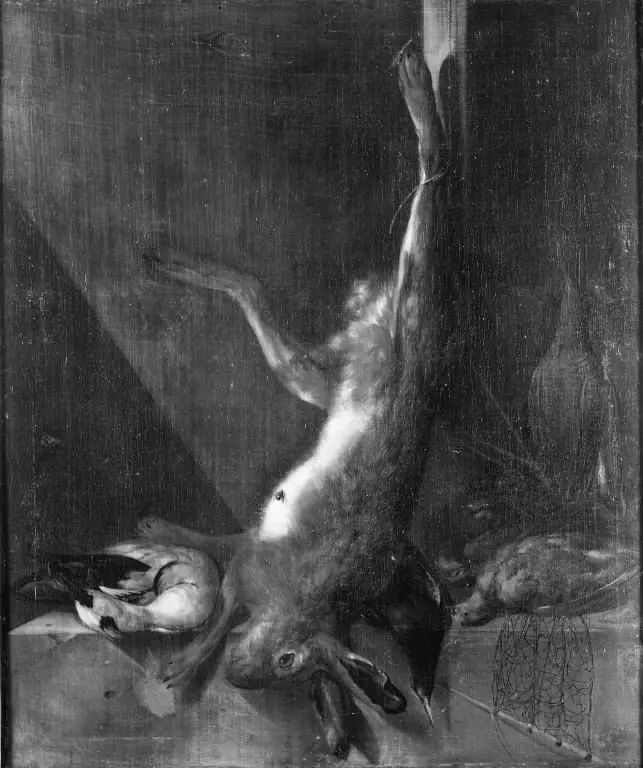
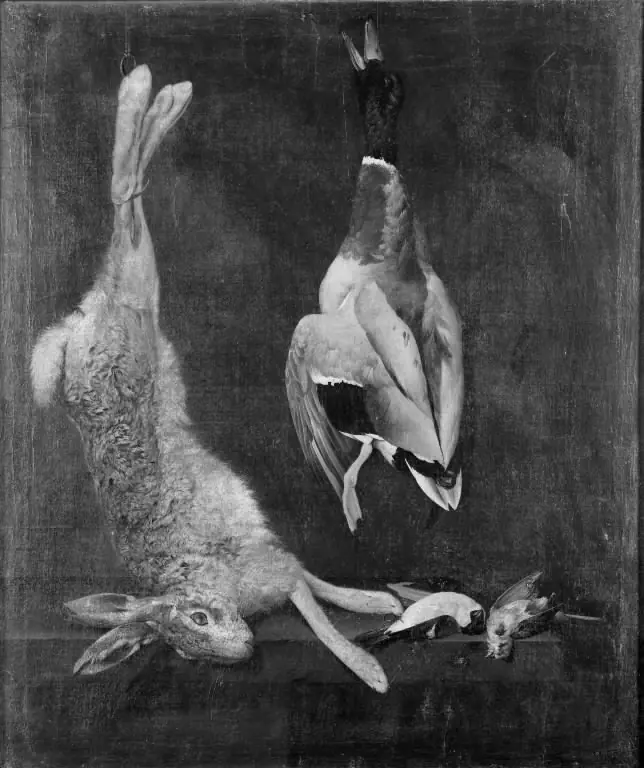
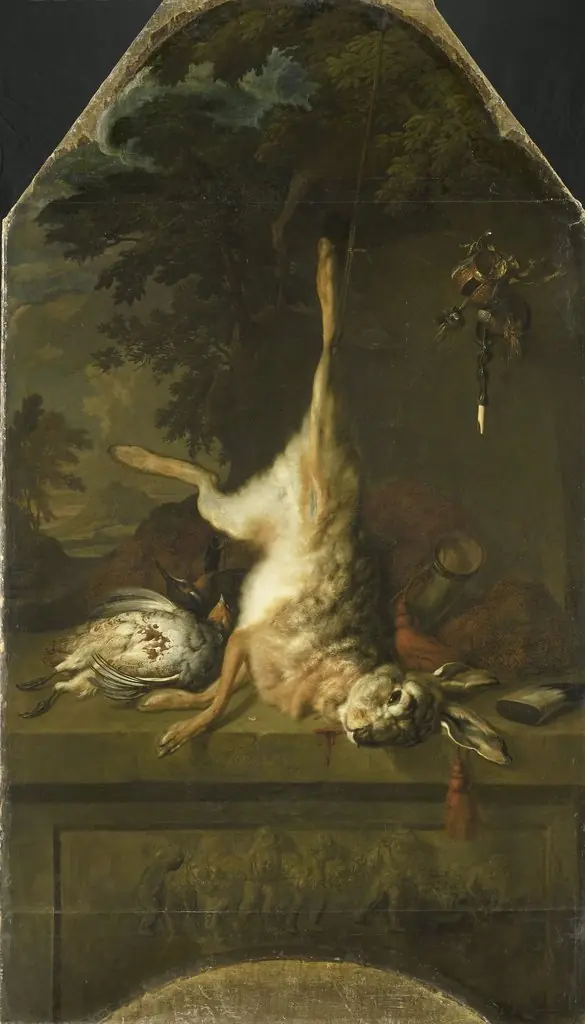 Still Life with Dead Hare and Partridges
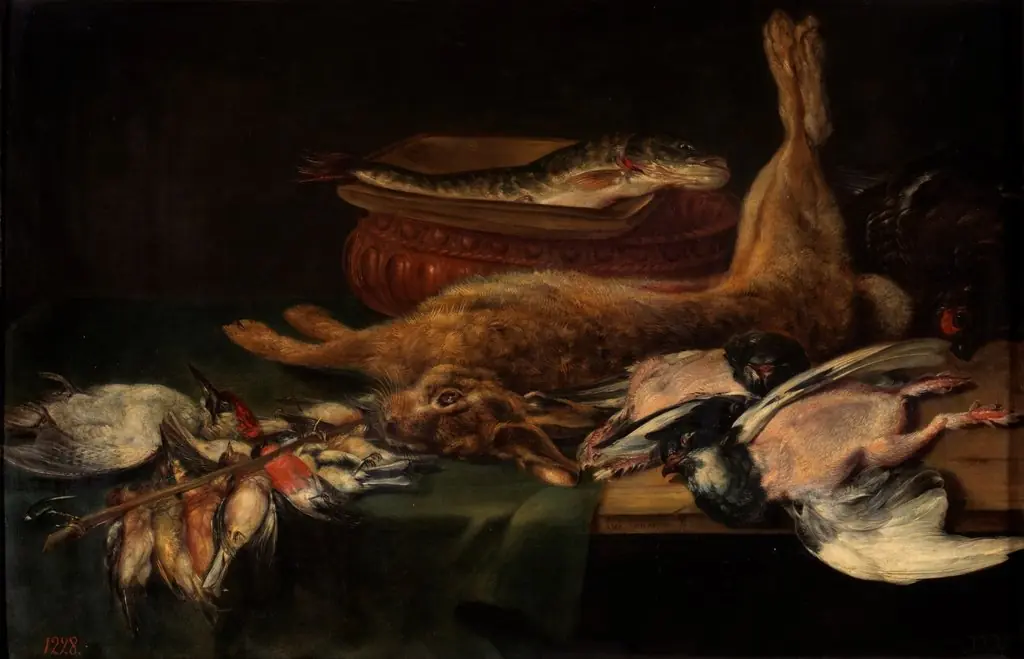 Still life with a hare, dead birds and fish
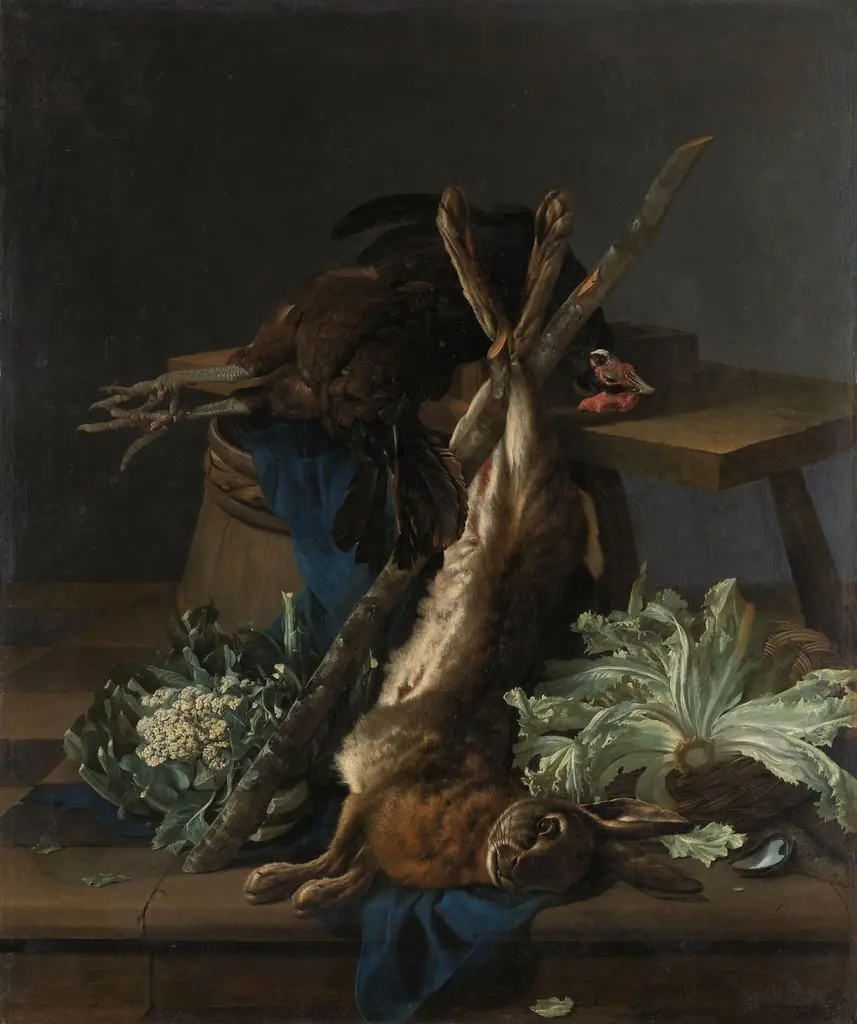 Still life with hare and black rooster
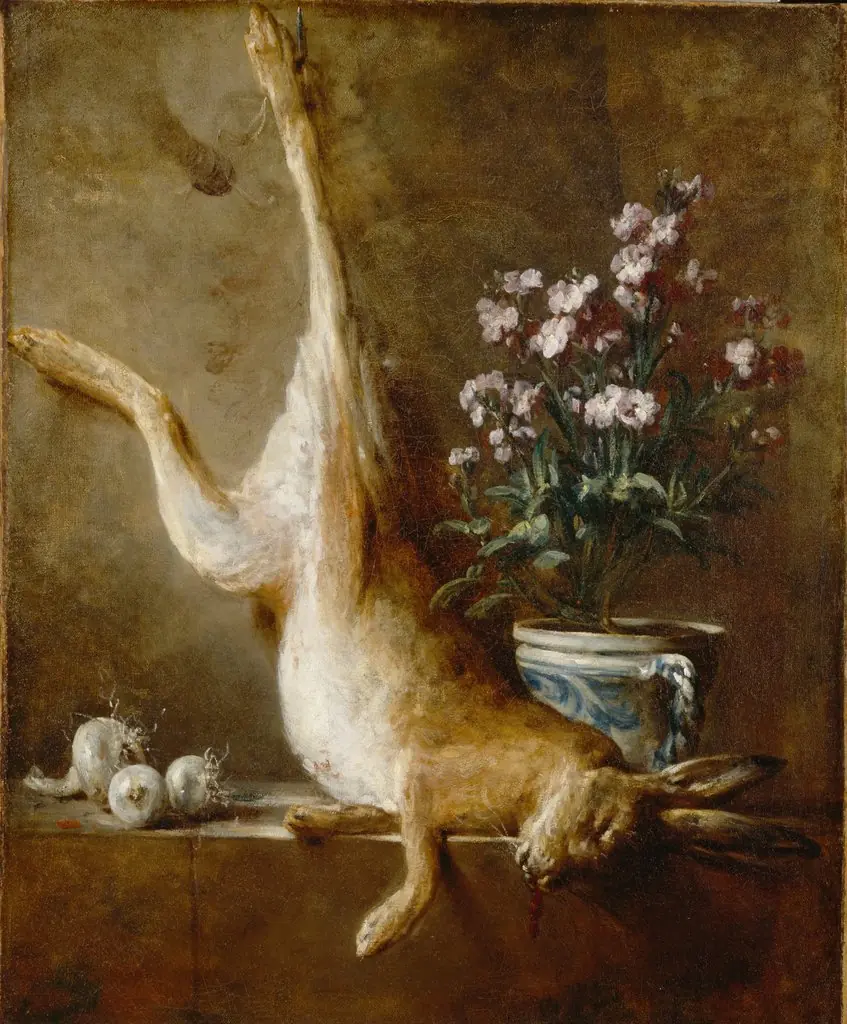 Still Life with Dead Hare
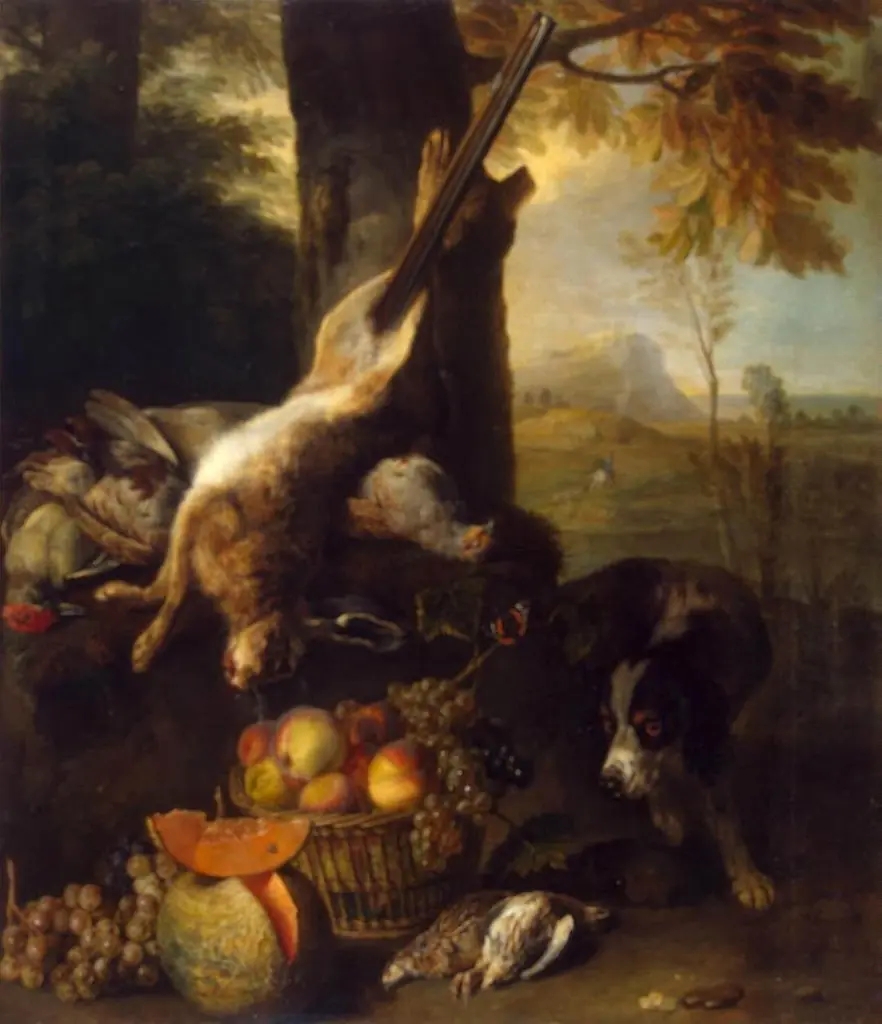 Still Life with a Dead Hare and Fruit
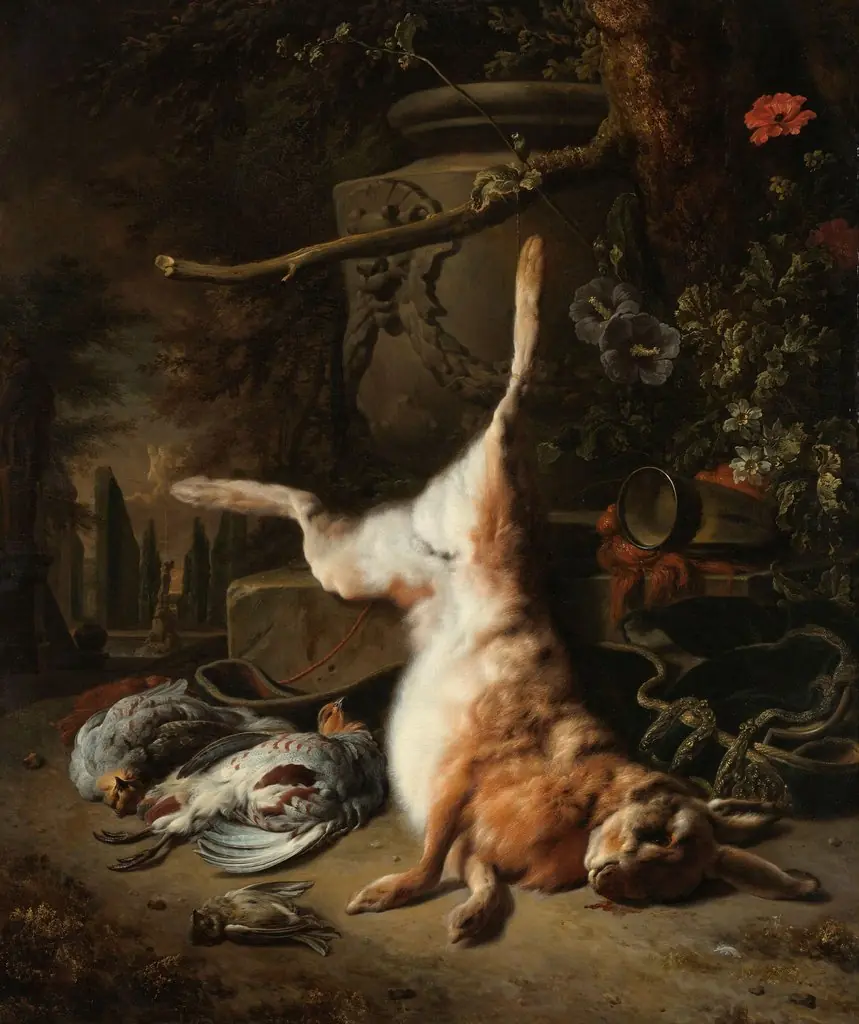 Still life with a Hare and Other Game
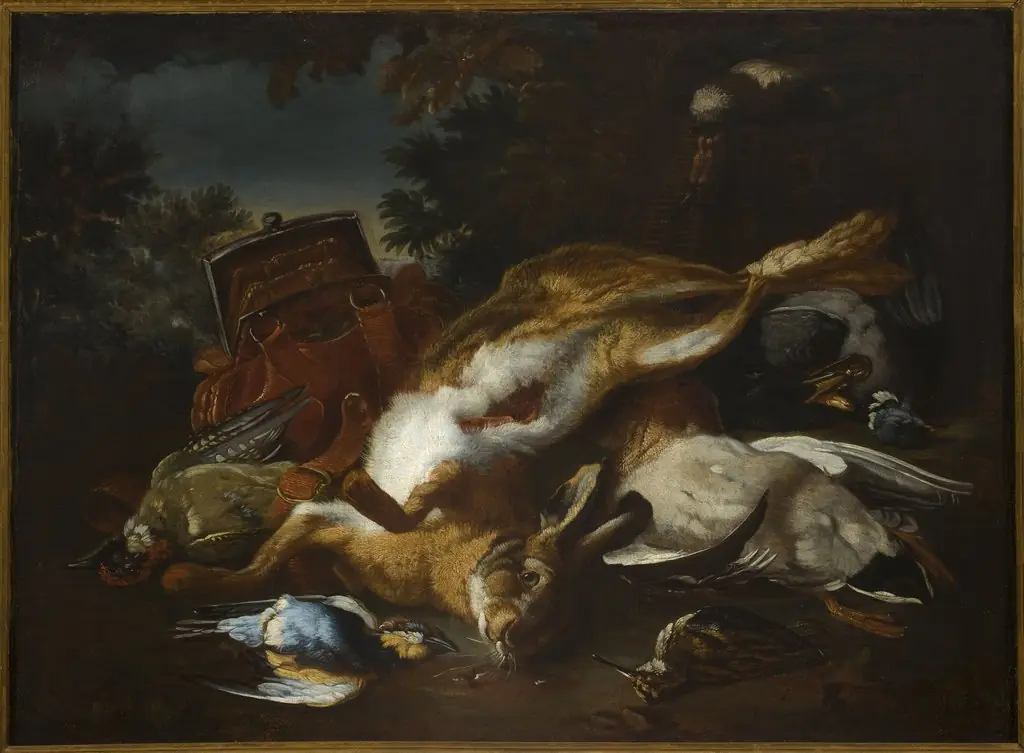 Still Life with a Hare, Wild Fowl and a Hunter's Bag
 Still-life with dead hare in a park
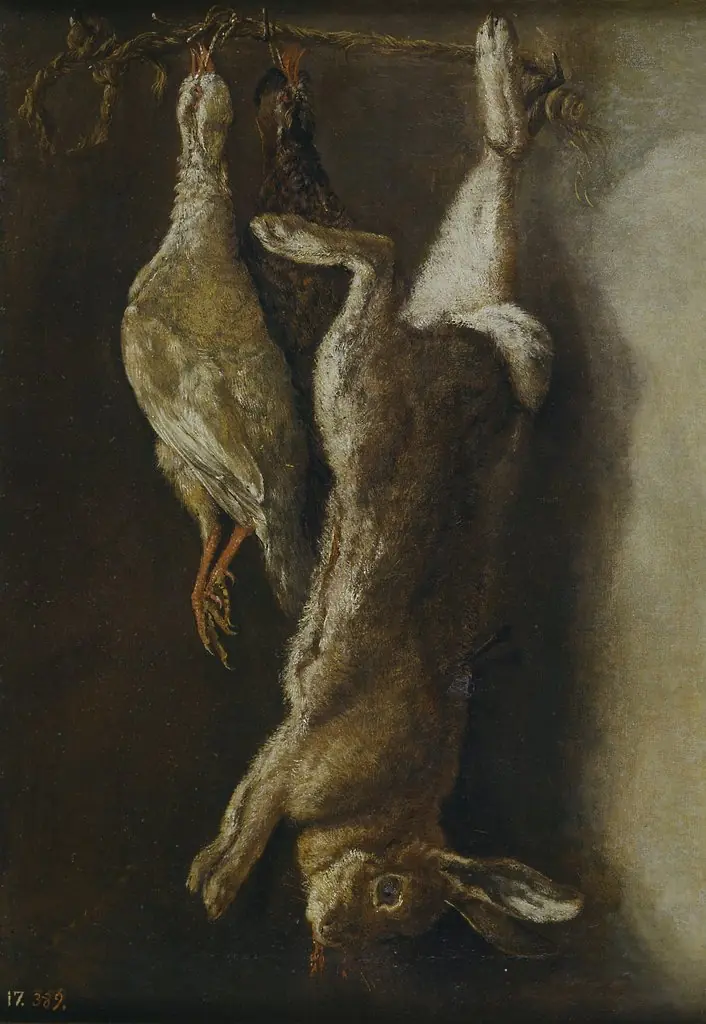 Kitchen still life with a hare and two partridges
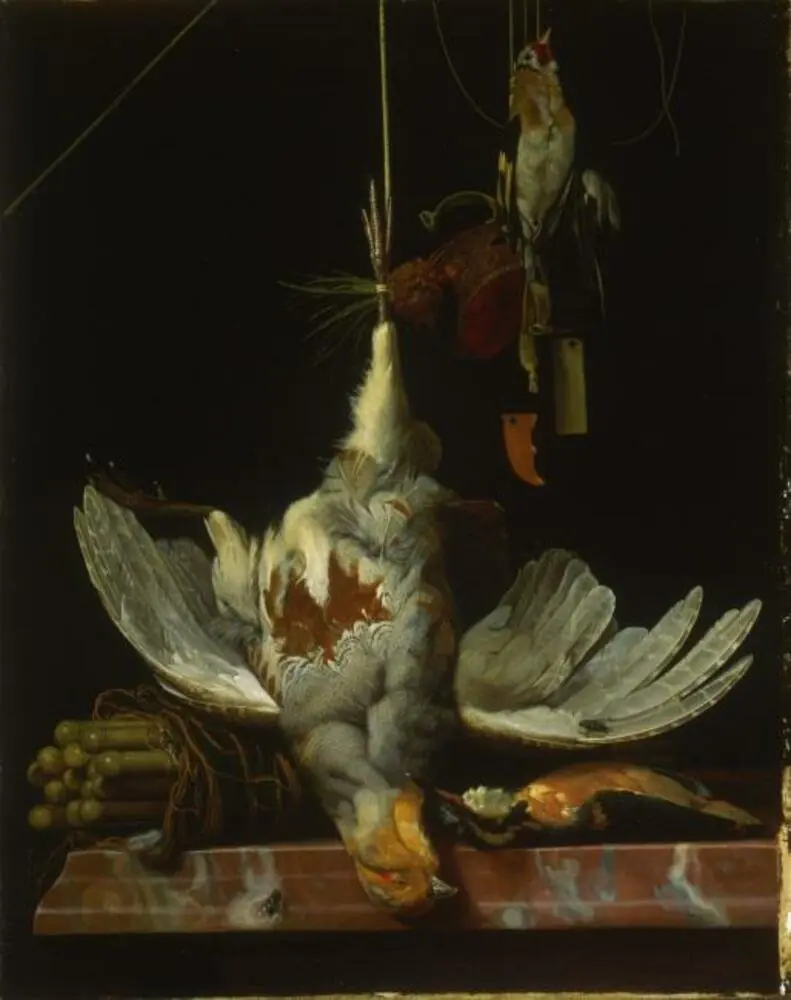 Still Life with Birds