Artwork
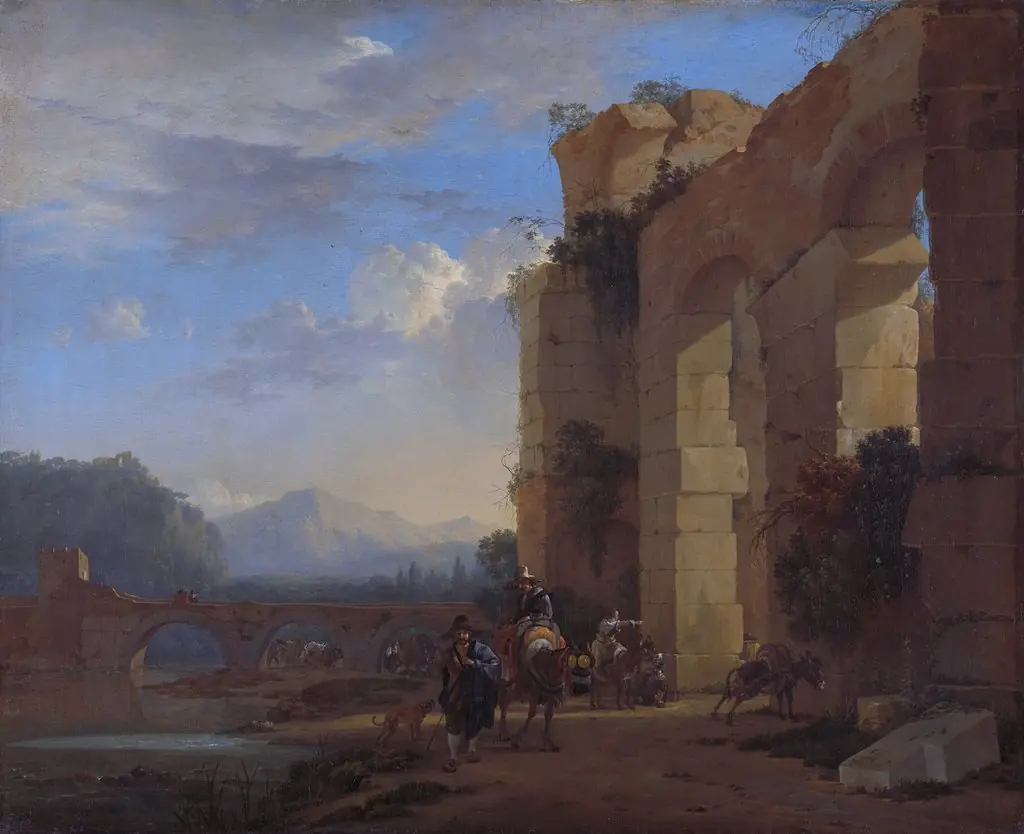
Street scene placed among Roman ruins
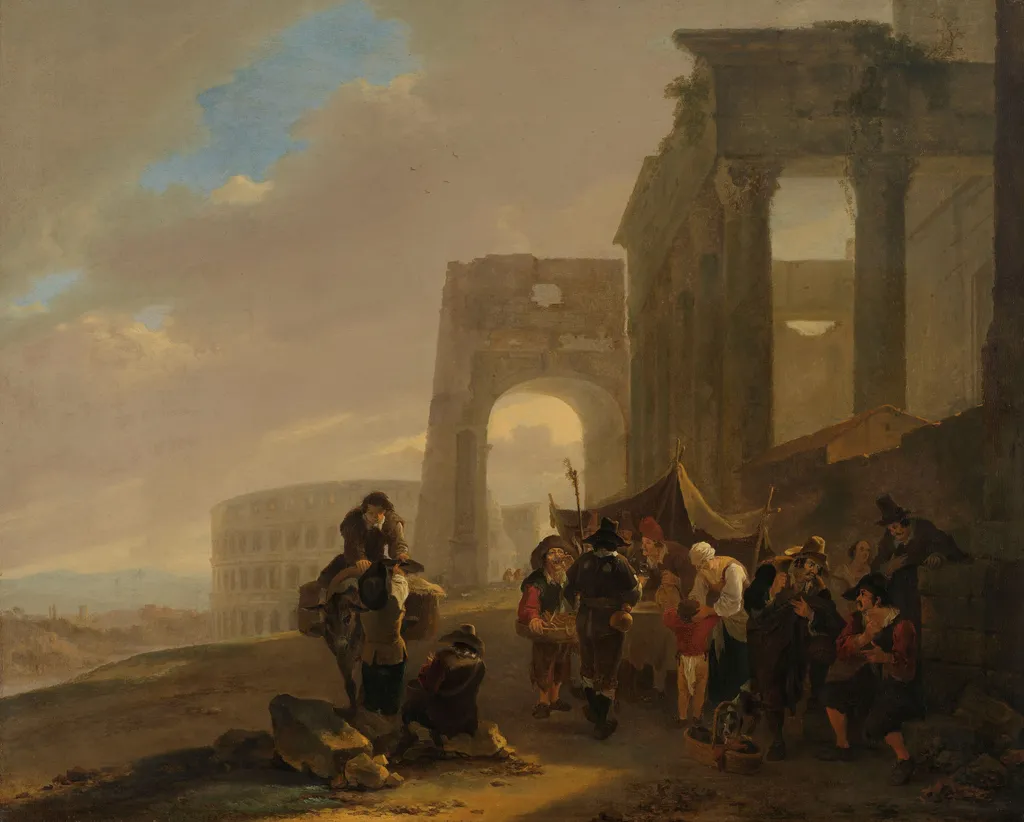
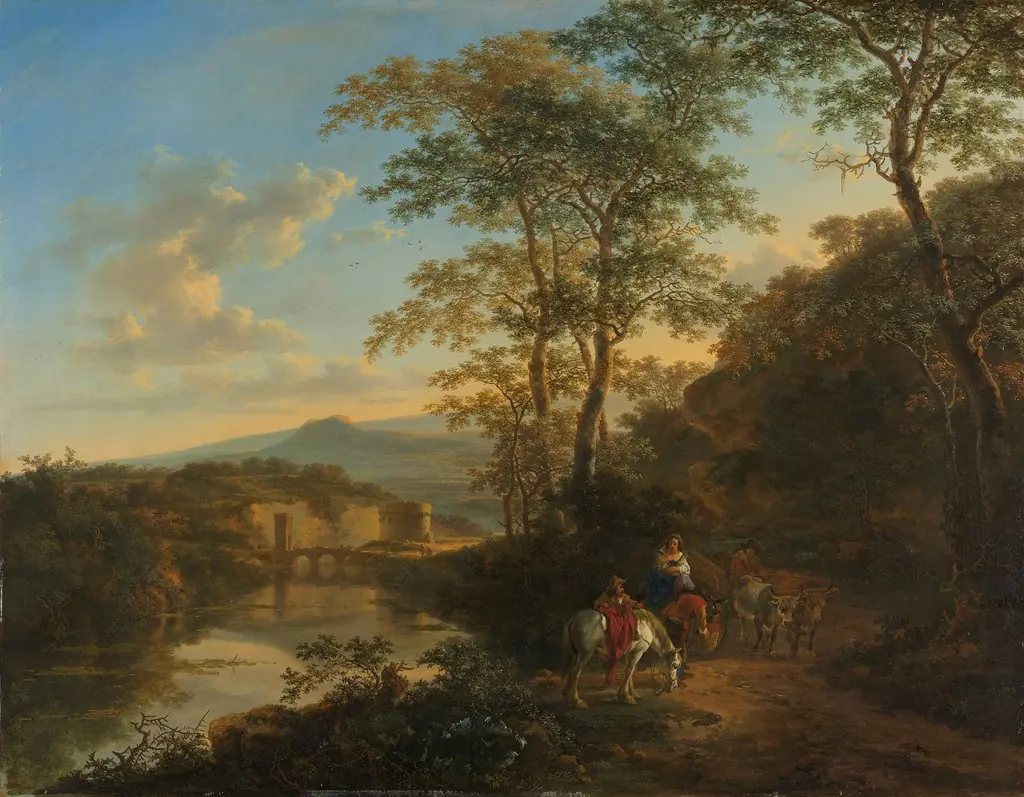
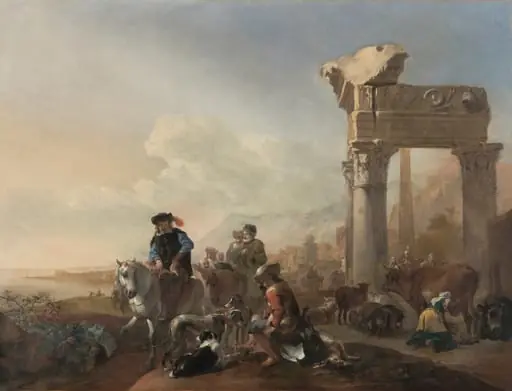
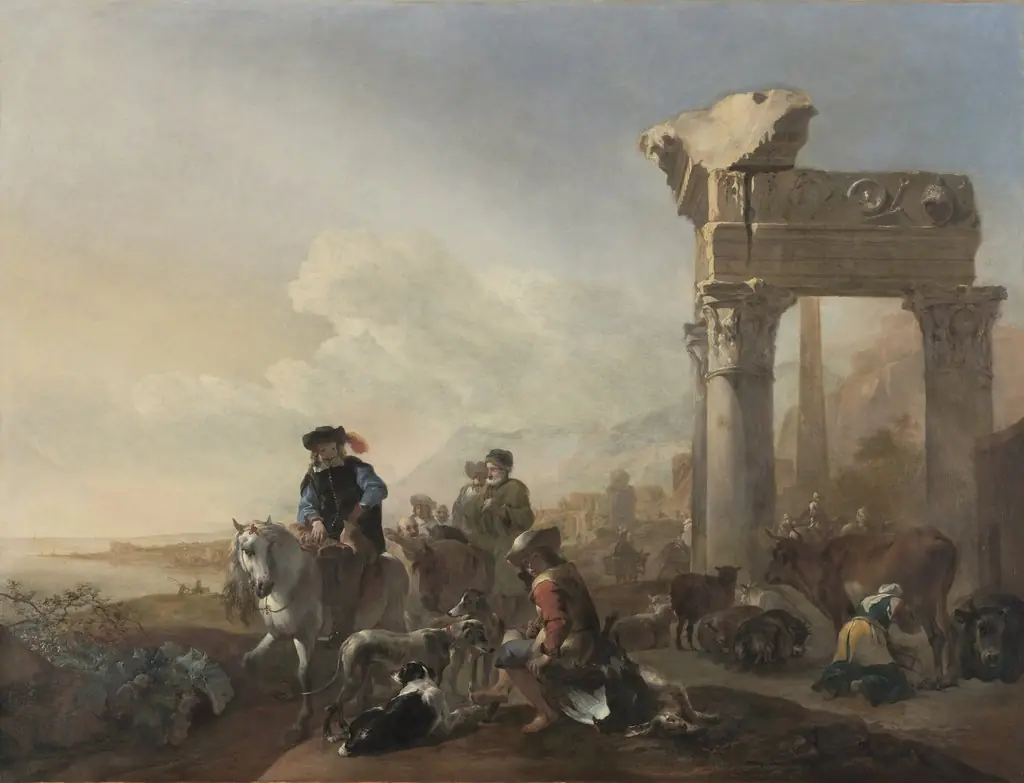
Street scene placed among Roman ruins is an oil painting by the Dutch Golden Age artist Jan Both. It dates from 1650 and is held in the collection of the Rijksmuseum.
About this work
Overview
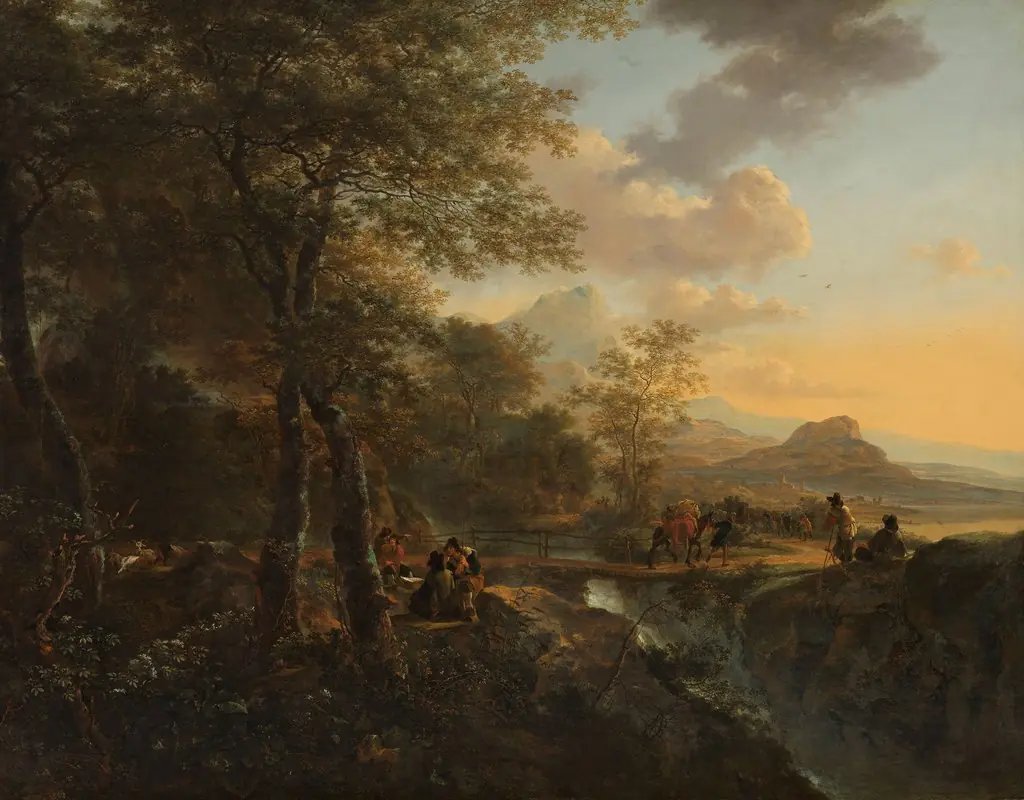
Jan Both's 'Street scene placed among Roman ruins' is an oil painting, circa 1650, depicting a juxtaposition of everyday life with ancient Roman architectural remnants, now part of the Rijksmuseum's collection.
Subject & Meaning
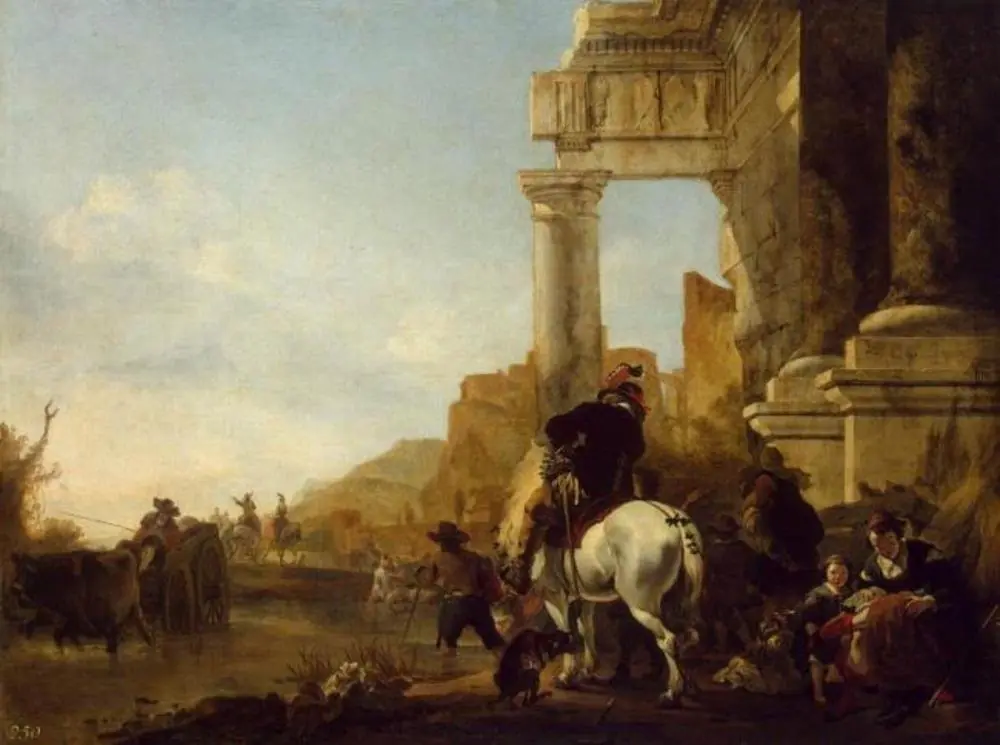
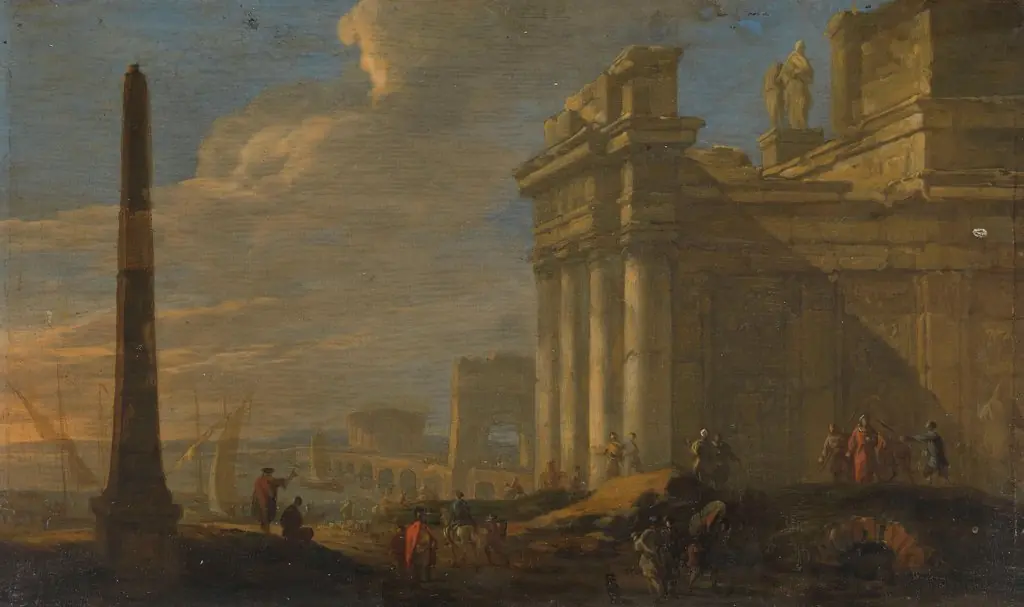
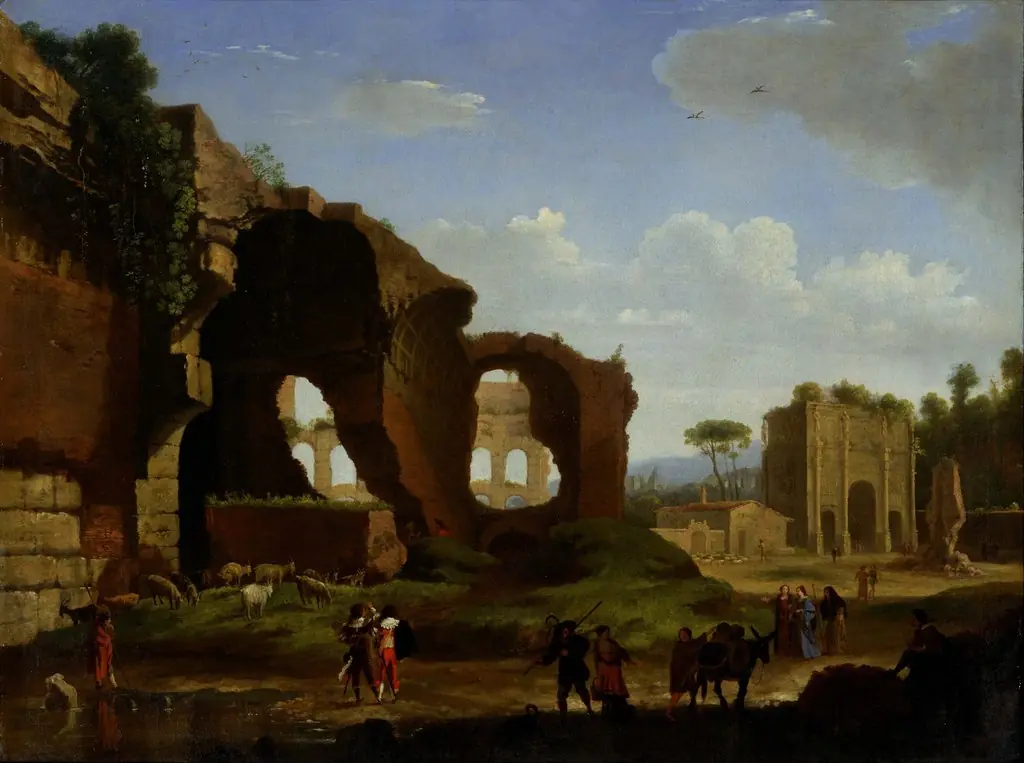
The painting contrasts a vibrant, populated street scene in the foreground with the imposing, yet deteriorating, Roman ruins in the background, highlighting the coexistence of transience and permanence.
Technique & Style
Both employs chiaroscuro to delineate figures against the ancient backdrop, while a soft, hazy sky with warm, filtering light through the arch creates a serene, dreamy atmosphere, achieved through the gradual fading of colors into the distance.
History & Provenance
Created around 1650, the work is attributed to Jan Both and is currently housed at the Rijksmuseum, with no detailed provenance provided in the available information.
Context
Reflecting 17th-century Dutch interest in Italian landscapes and antiquity, the painting blends observational street life with a nostalgic portrayal of Roman heritage.
Legacy
While specific influence or notable exhibitions are not highlighted in the provided details, the piece exemplifies the enduring appeal of combining quotidian life with historical settings in art, potentially influencing later depictions of contrasted temporalities.
Own this work as a print
Artist & collection

Artist
Jan Dirksz Both was a Dutch painter, draughtsman, and etcher, who made an important contribution to the development of Dutch Italianate landscape painting.