Artwork
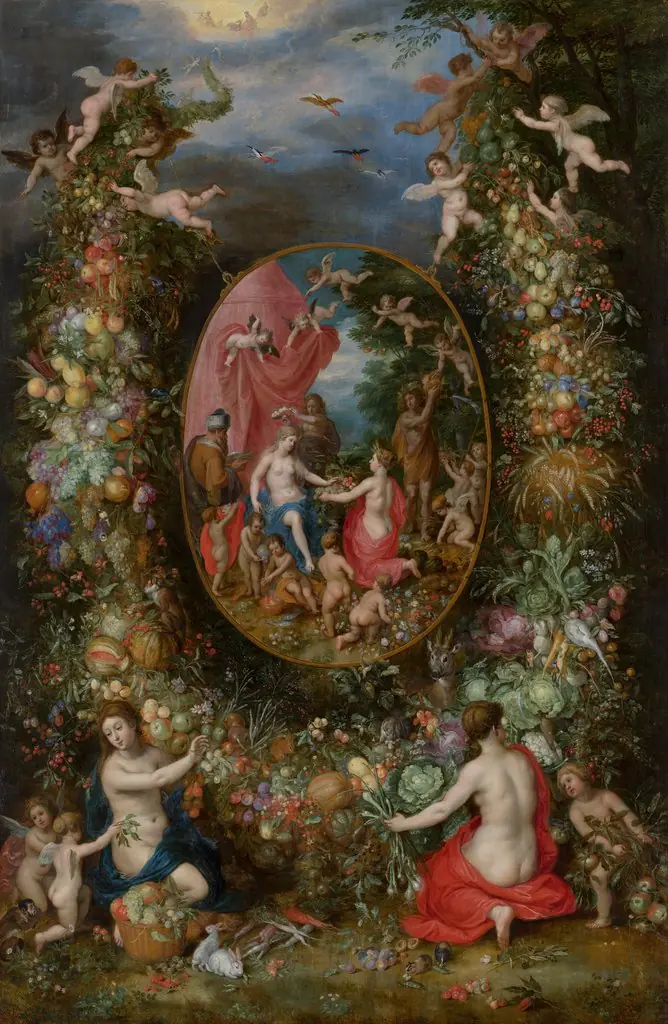
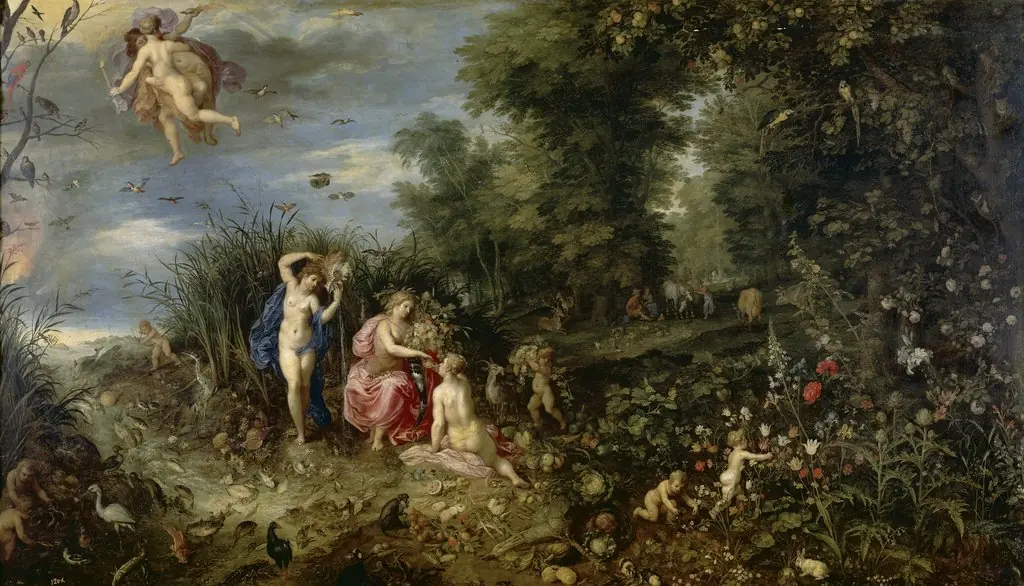
Allegory of Abundance and the Four Elements
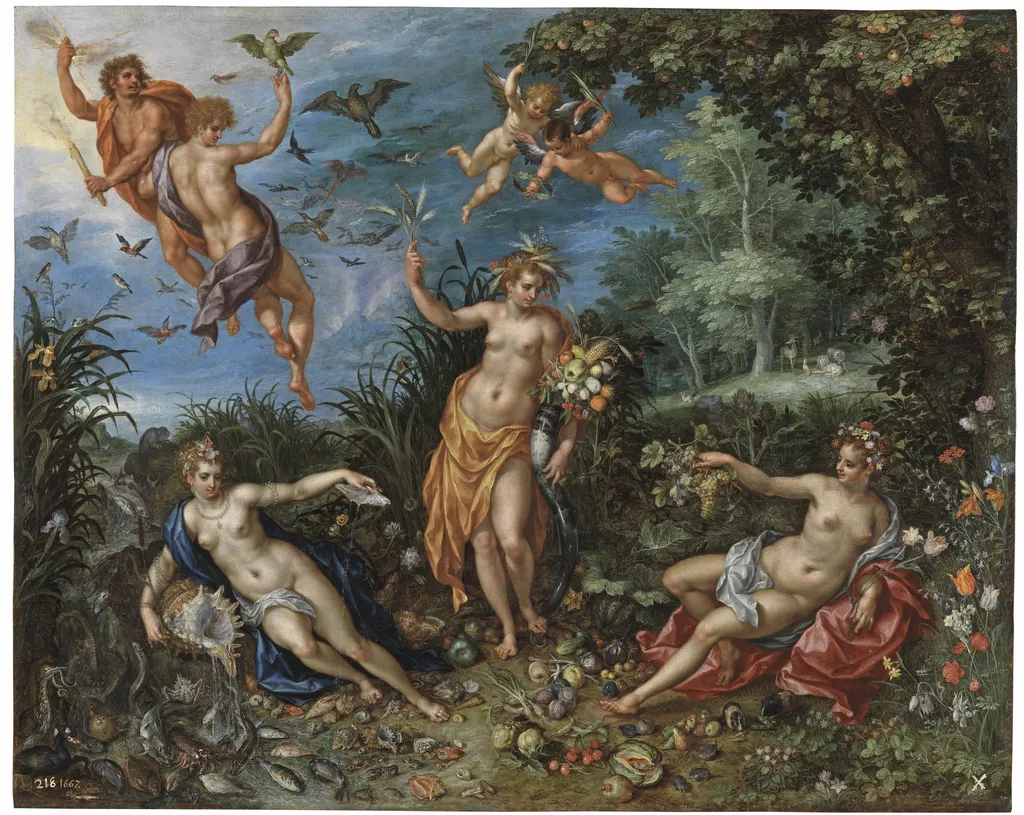
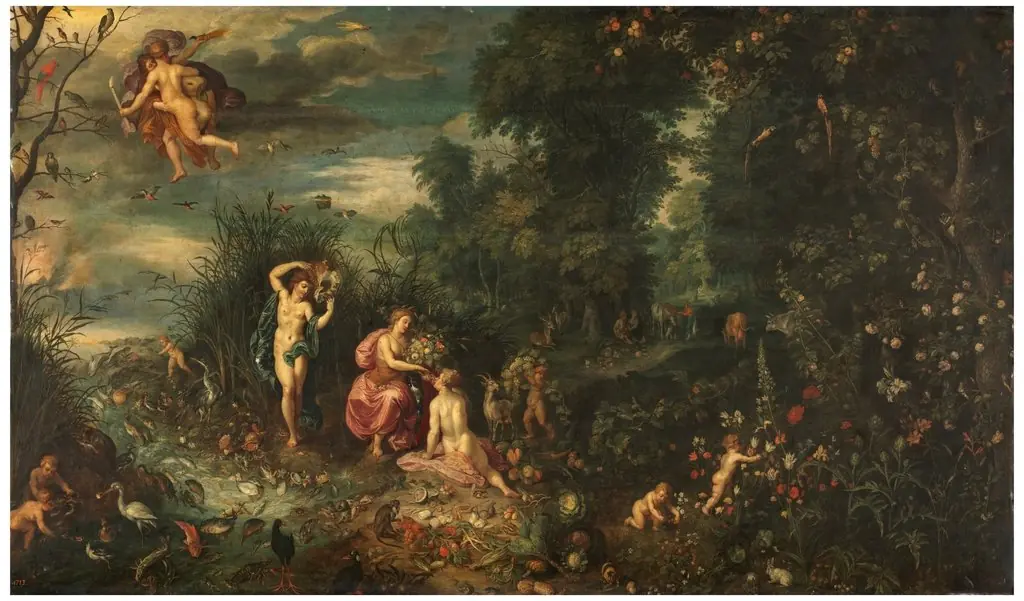
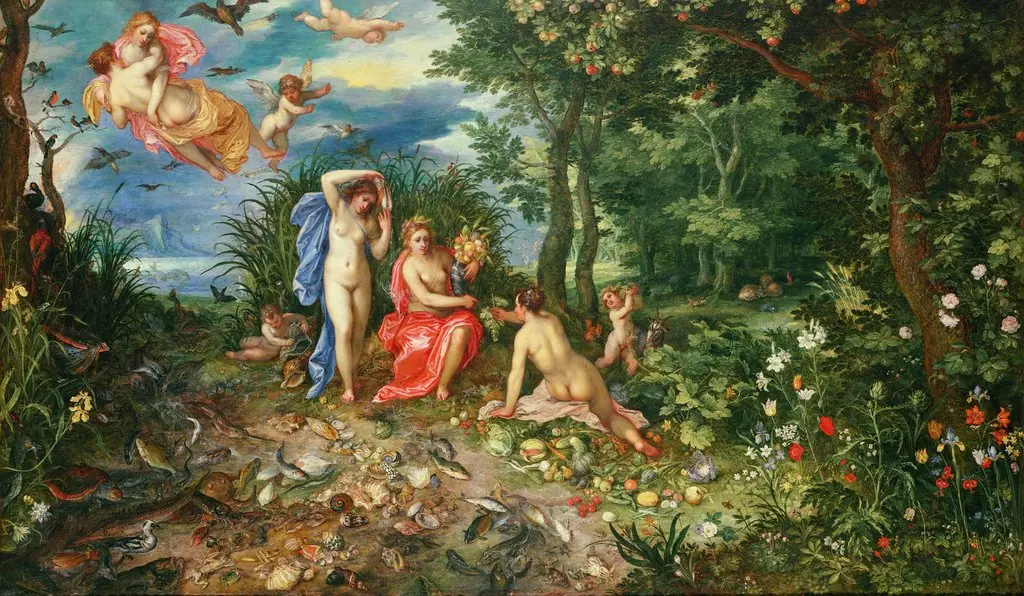
Allegory of Abundance and the Four Elements is an oil painting by the Flemish Baroque painting artist Jan Brueghel, the elder. It dates from 1606 and is held in the collection of the Museo del Prado. Painted in 1606 on a copper panel, this work by Jan Brueghel the Elder combines allegory with natural detail.
About this work
Overview
The painting belongs to the Flemish Baroque tradition, known for its intricate compositions and vivid palette.
Painted in 1606 on a copper panel, this work by Jan Brueghel the Elder combines allegory with natural detail. Copper was favored for its smooth texture, allowing precise rendering of textures and colors. The painting belongs to the Flemish Baroque tradition, known for its intricate compositions and vivid palette. It presents a symbolic vision of earthly plenty, organized around the classical elements, reflecting intellectual and aesthetic interests of early 17th-century Northern Europe.
Subject & Meaning
The scene personifies abundance through four figures linked to the elements: water, earth, air, and fire. Two seated women represent earth and water, surrounded by fruits and a fish; the standing woman with the cornucopia embodies fertility, while the flying male figure suggests air. Each element is tied to its natural symbol—grapes, fish, birds, and flora—creating a harmonious visual code. The composition conveys a Renaissance ideal of nature’s bounty as ordered and divinely sustained.
Technique & Style
Brueghel employed fine brushwork to render textures with exceptional clarity: the sheen of fruit skin, the scale of fish, the softness of petals. The copper support enabled luminous pigments to retain their intensity, enhancing the golds, blues, and greens. Figures are delicately integrated into a dense, layered landscape, avoiding flatness. His style merges meticulous observation with symbolic intent, characteristic of Flemish artists who blended scientific curiosity with allegorical tradition.
History & Provenance
Created during Brueghel’s mature period, the painting reflects his association with the Habsburg court and intellectual circles in Brussels and Antwerp. It was likely commissioned by a collector interested in natural philosophy and allegorical art. The work remained within European private collections through the 17th and 18th centuries, later entering public institutional holdings. Its survival in good condition attests to its early recognition and careful preservation.
Context
In early 17th-century Flanders, allegorical paintings like this one responded to growing interest in natural history and classical symbolism. The four elements were a foundational concept in science and philosophy, and their visual representation aligned with humanist ideals. Brueghel’s work intersected with contemporary scientific illustration and courtly collecting, serving both aesthetic and intellectual purposes in elite circles.
Legacy
Brueghel’s approach influenced later still-life and allegorical painters in the Netherlands and beyond. His integration of natural detail with symbolic structure became a model for artists exploring the relationship between nature and human understanding. Though not widely exhibited today, the painting remains a key example of how Flemish Baroque art synthesized observation, myth, and order in a single visual language.
Own this work as a print
Artist & collection
Artist
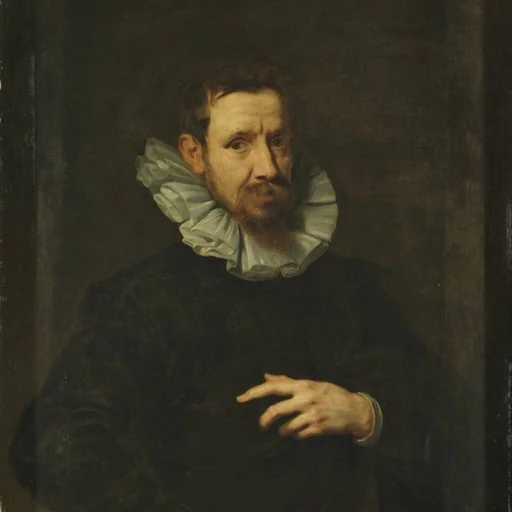
Jan Brueghel the Elder ( BROY-gəl, US also BROO-gəl; Dutch: ; 1568 – 13 January 1625) was a Flemish painter and draughtsman.