Artwork
Abundance and the Four Elements
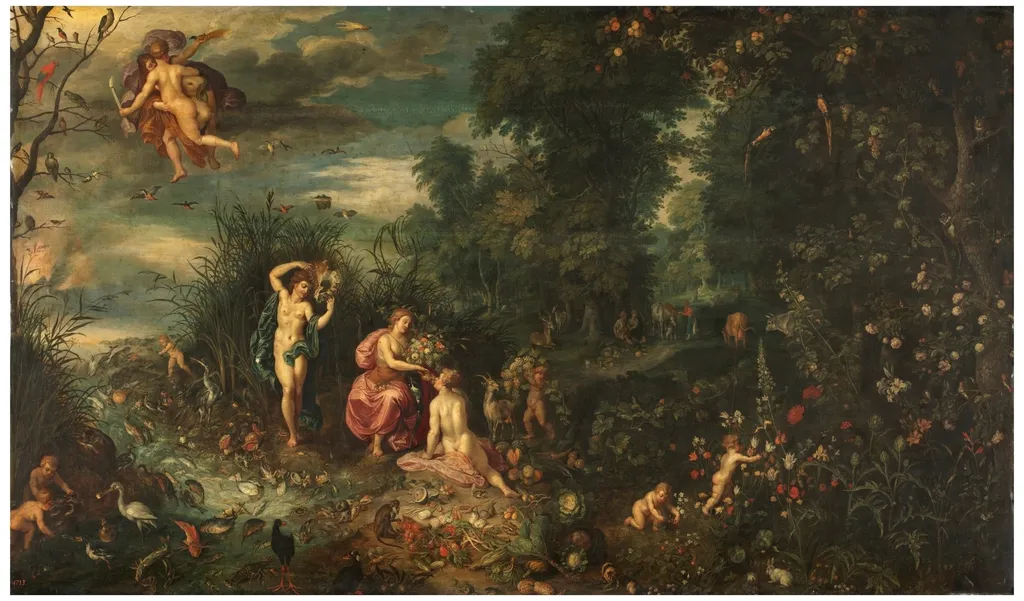
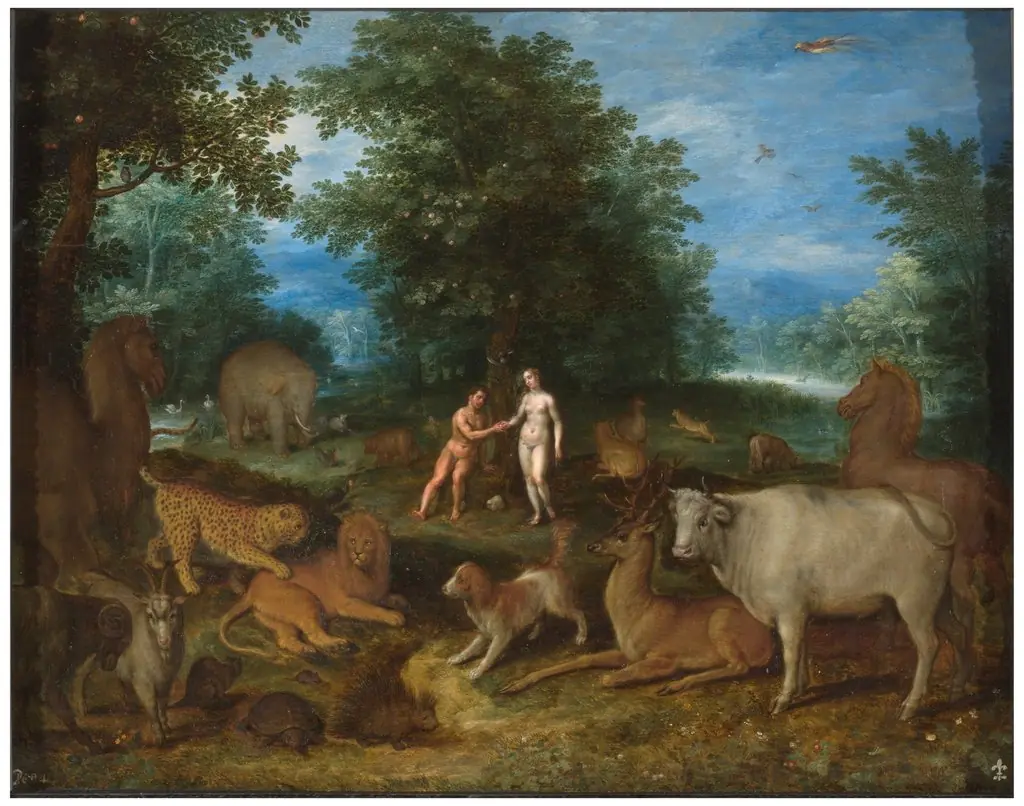
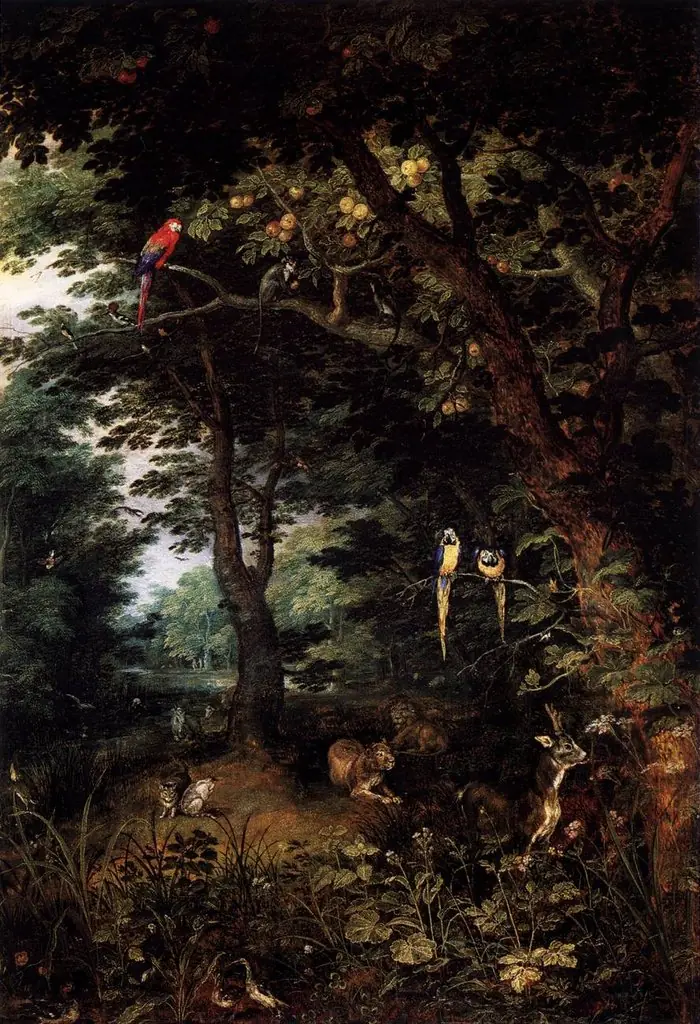
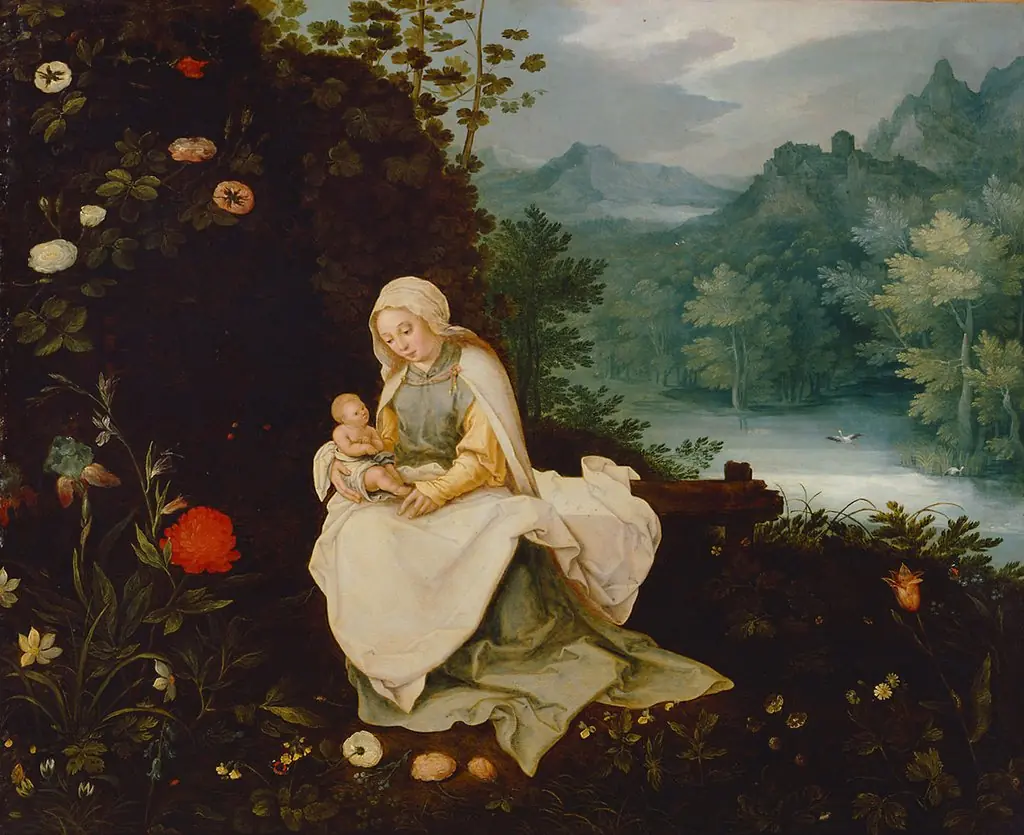
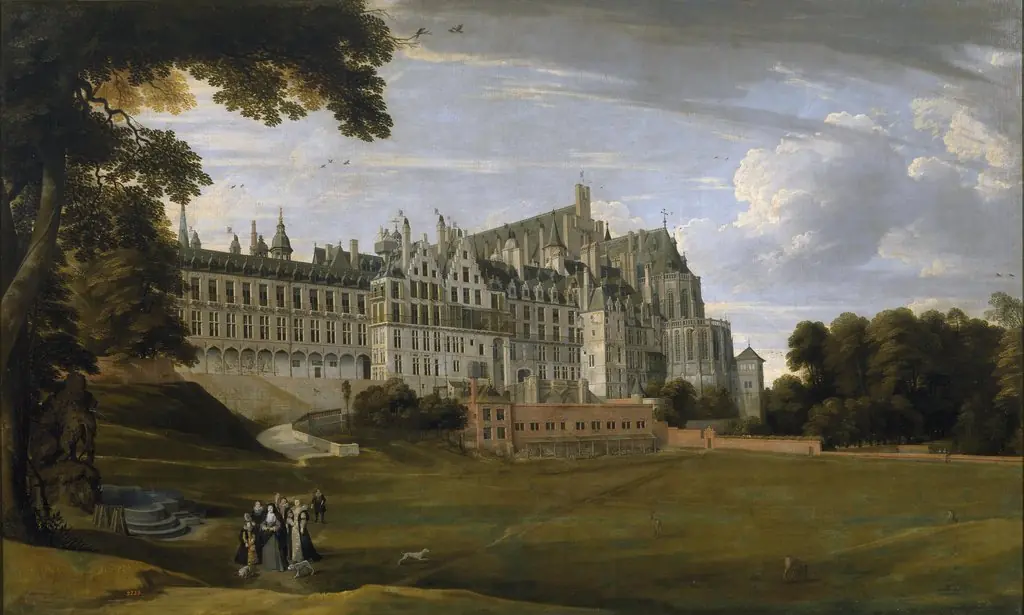
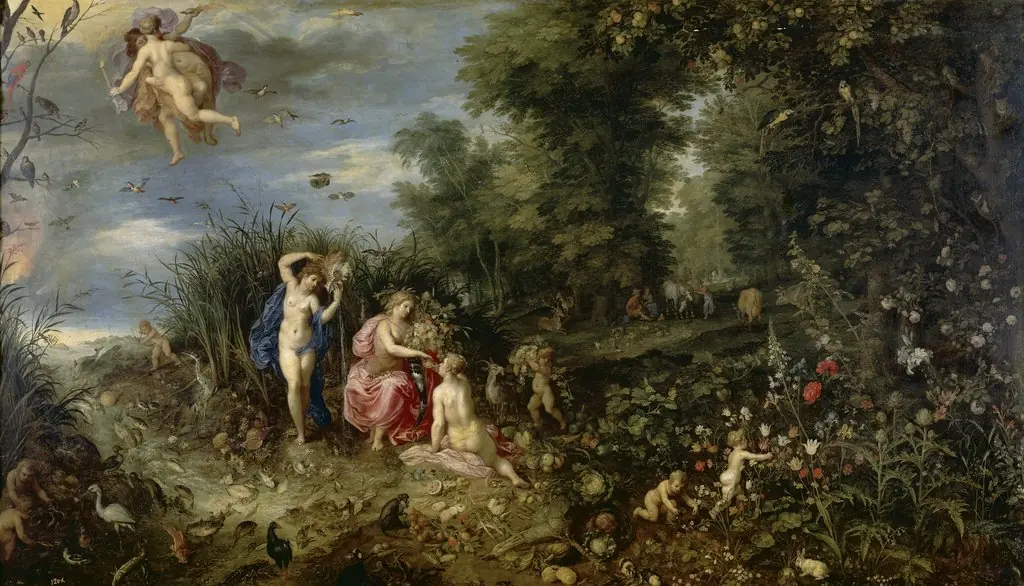
Abundance and the Four Elements is an oil painting by the Flemish Baroque painting artist Jan Brueghel the Younger. It dates from 1650 and is held in the collection of the Museo del Prado.
About this work
Overview
The painting resides in the Museo del Prado, where it exemplifies the Brueghel family’s enduring influence on Northern European genre and allegorical painting.
Painted around 1650 by Jan Brueghel the Younger, this oil-on-panel work is a Flemish Baroque allegory that unites the concept of earthly plenty with the classical four elements. As the son and artistic heir of Jan Brueghel the Elder, the artist continued his father’s tradition of detailed, symbolic landscapes. The painting resides in the Museo del Prado, where it exemplifies the Brueghel family’s enduring influence on Northern European genre and allegorical painting.
Subject & Meaning
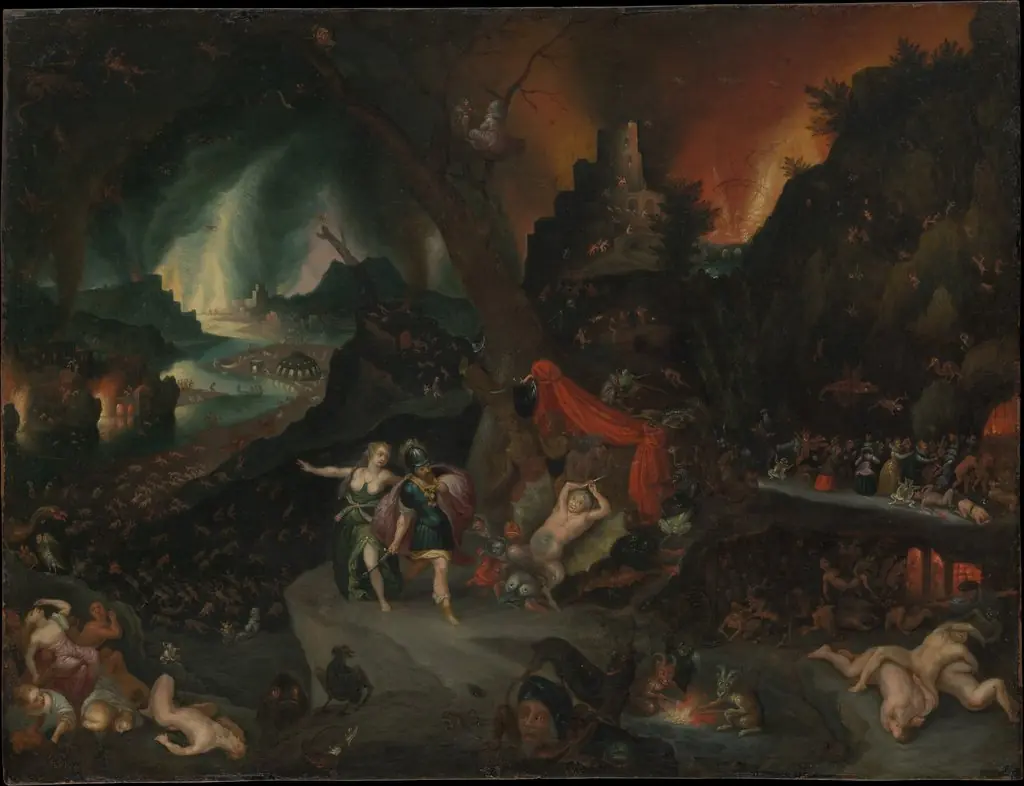
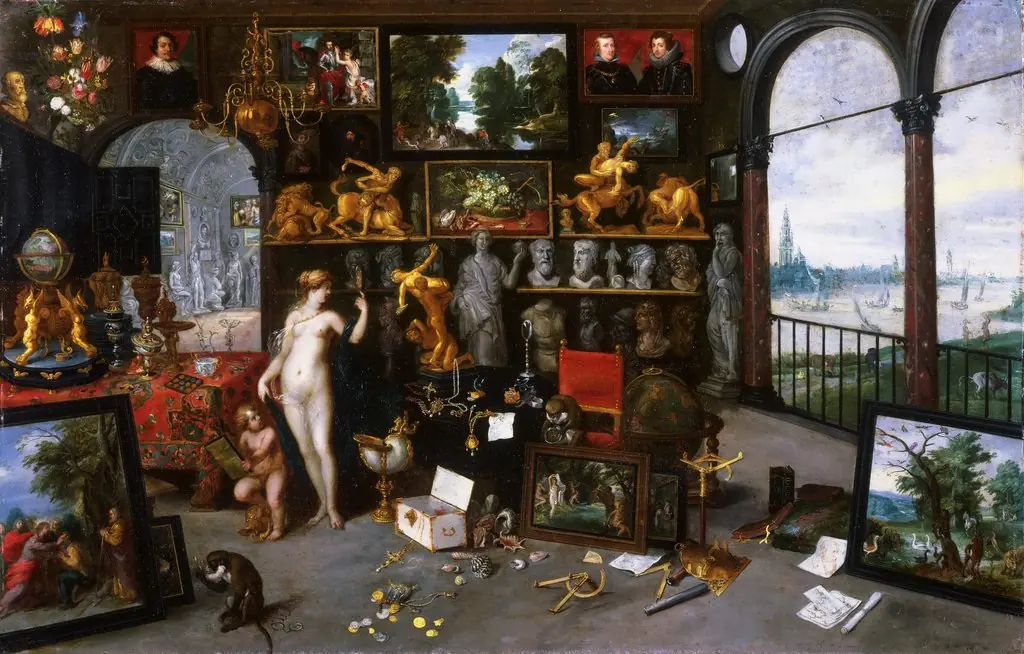
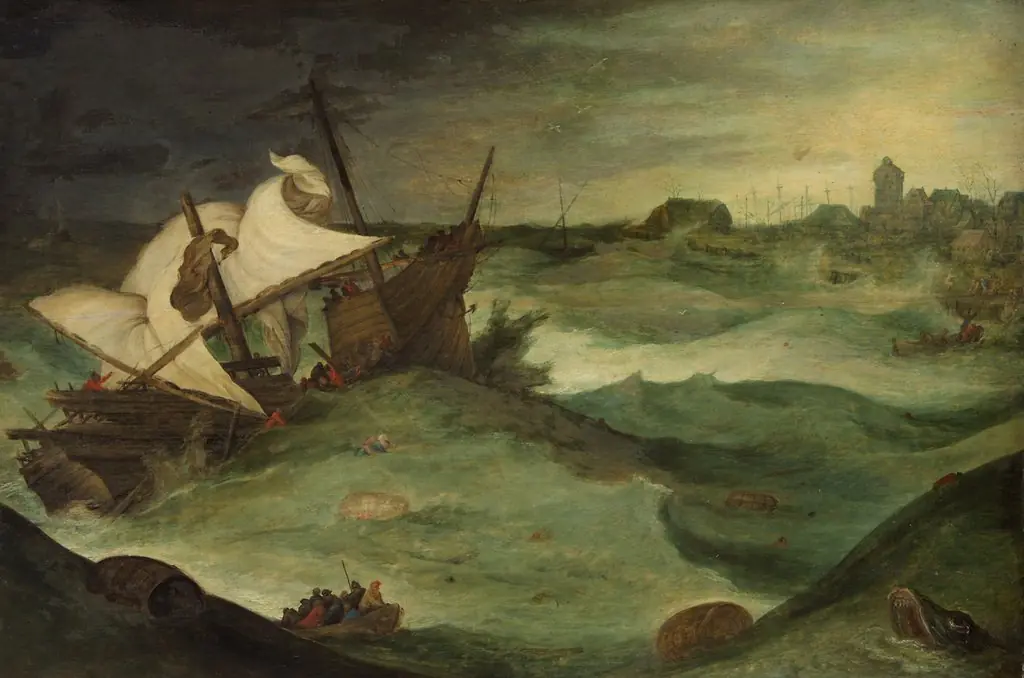
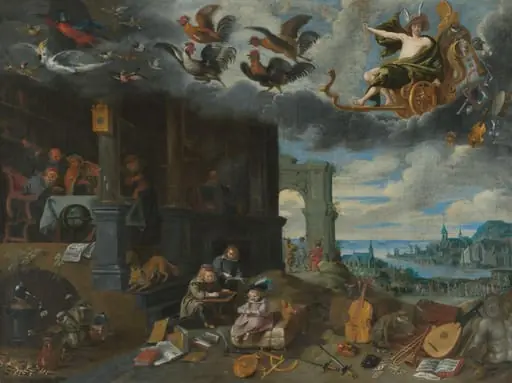
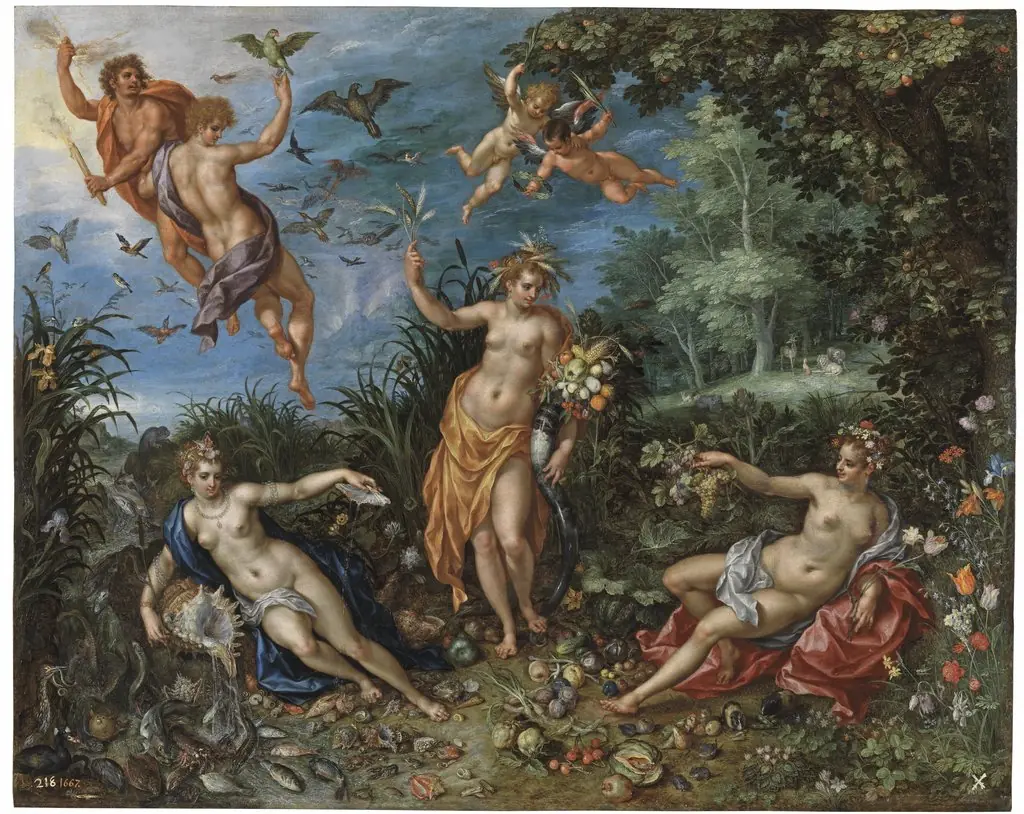
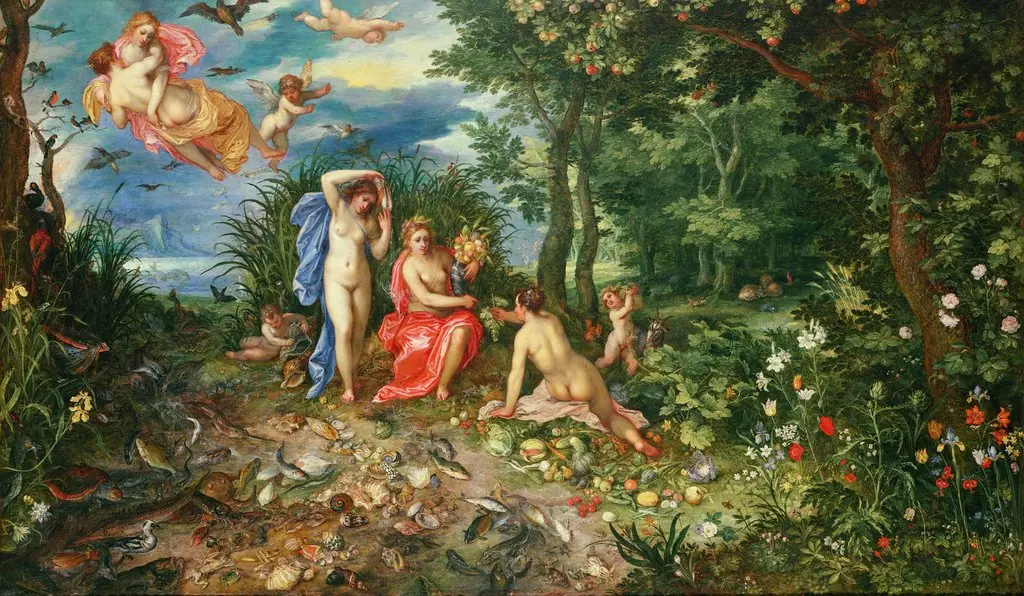
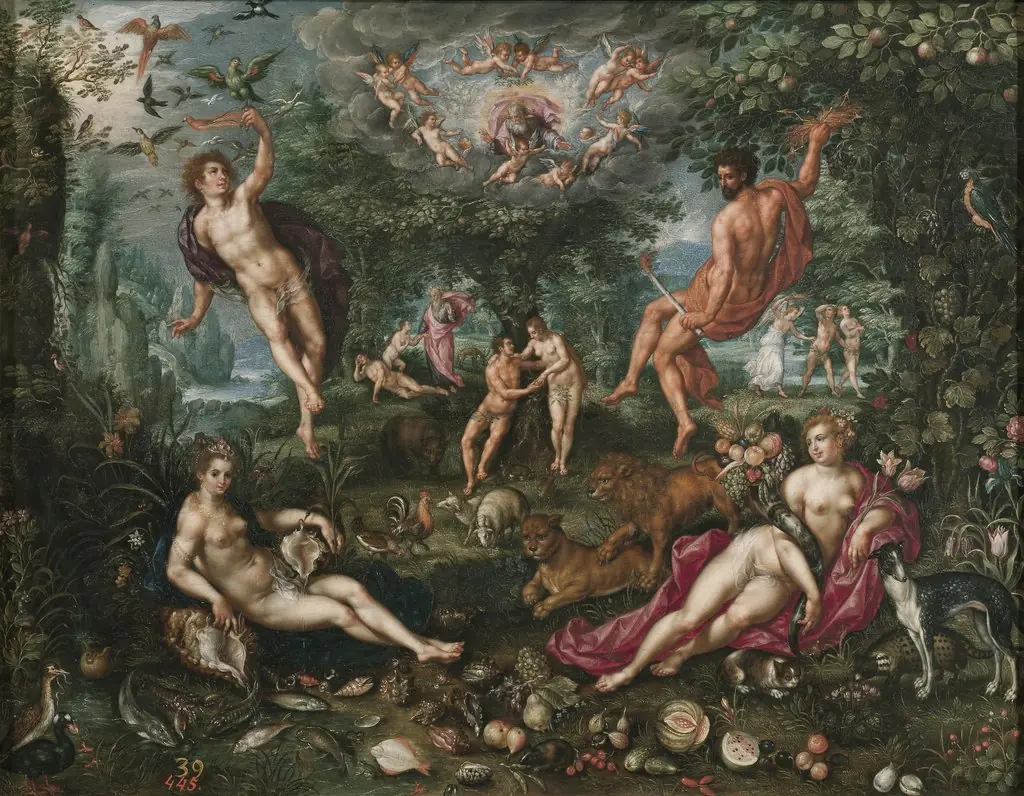
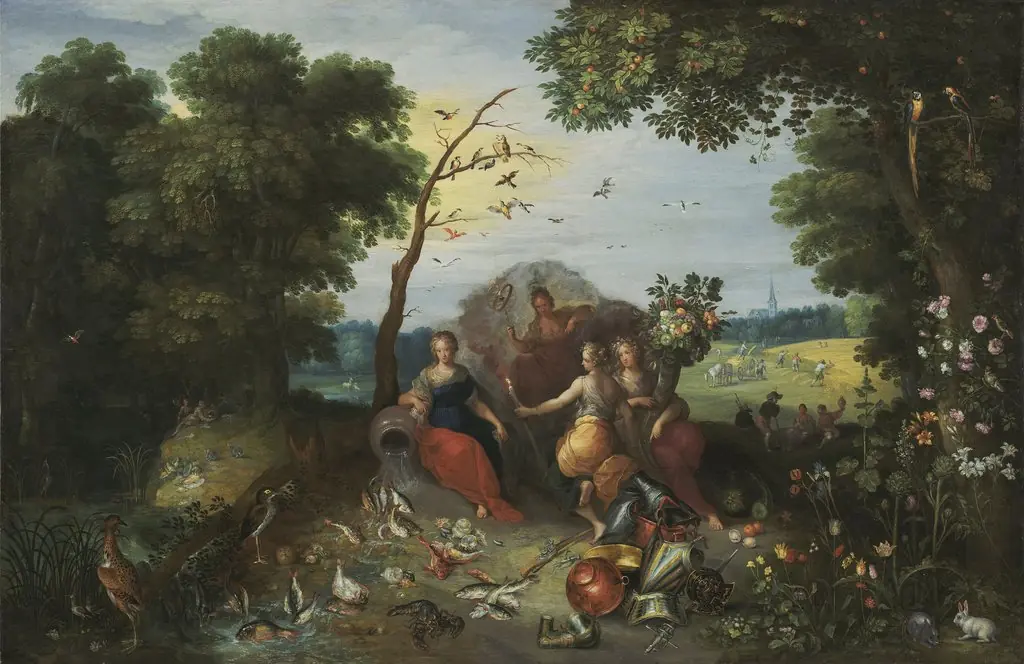
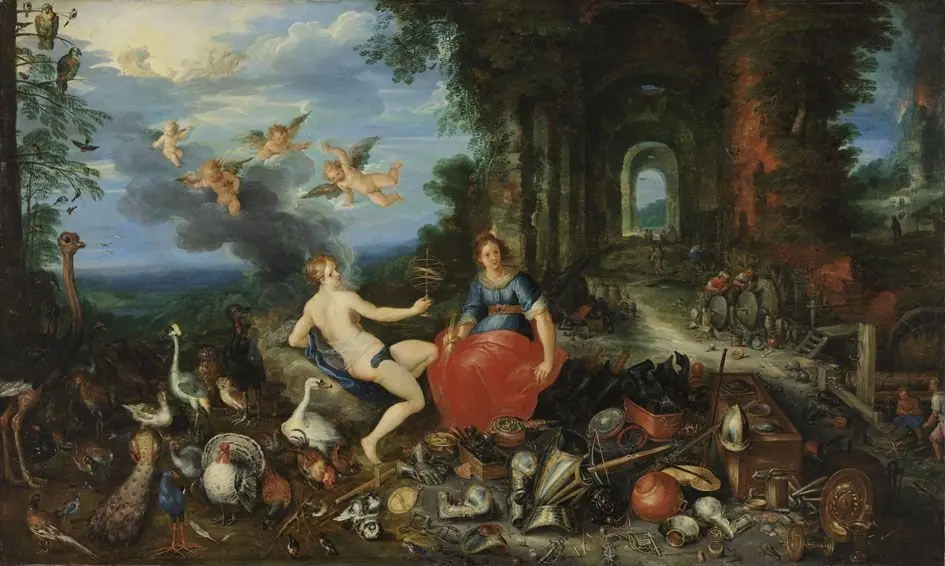
The central figure, a woman in pink, embodies abundance, surrounded by overflowing harvests of fruit and vegetables. Nearby, a nude woman holding a seashell alludes to water and the auditory mystery of nature. The surrounding imagery—birds in flight, aquatic life, fire in distant hearths, and fertile soil—collectively represents earth, air, fire, and water as interdependent forces sustaining life. The scene is not a literal landscape but a symbolic harmony of nature’s elements and human prosperity.
Technique & Style
Brueghel employed fine brushwork to render textures with precision: the gloss of fruit, the sheen of water, the softness of feathers. Layers of translucent glazes create luminous depth, while a receding landscape guides the viewer’s eye from foreground abundance to distant horizons. The composition balances dense detail with open space, avoiding clutter through careful spatial rhythm. His palette, rich in greens, blues, and warm earth tones, enhances the naturalism of the scene without sacrificing symbolic clarity.
History & Provenance
The painting entered the Spanish royal collection in the 17th century, likely acquired during the Habsburgs’ patronage of Flemish artists. It remained in royal hands until the Prado’s founding in the early 19th century, where it has been held since. Its survival through centuries of political change reflects its status as a valued example of Flemish courtly art. No significant alterations or restorations are documented, preserving its original condition.
Context
Created during the height of the Flemish Baroque, the work responds to a cultural fascination with nature’s order and divine harmony. Such allegories were popular among aristocratic patrons who saw abundance as a sign of moral and economic stability. Brueghel’s imagery aligns with broader European trends in emblematic painting, where natural elements were coded with philosophical and moral meaning, often tied to humanist ideals of balance and proportion.
Legacy
Though less celebrated than his father’s work, Jan Brueghel the Younger’s output helped sustain the family’s artistic legacy into the late 17th century. This painting exemplifies how allegorical themes persisted in Flemish art beyond the early Baroque, adapting to changing tastes while retaining symbolic rigor. Its presence in the Prado ensures continued scholarly attention, offering insight into how nature was visually encoded as a reflection of cosmic and societal order.
Artist & collection
Artist
Jan Brueghel (also Bruegel or Breughel) the Younger ( BROY-gəl, US also BROO-gəl; Dutch: ; 13 September 1601 – 1 September 1678) was a Flemish Baroque painter.