Artwork
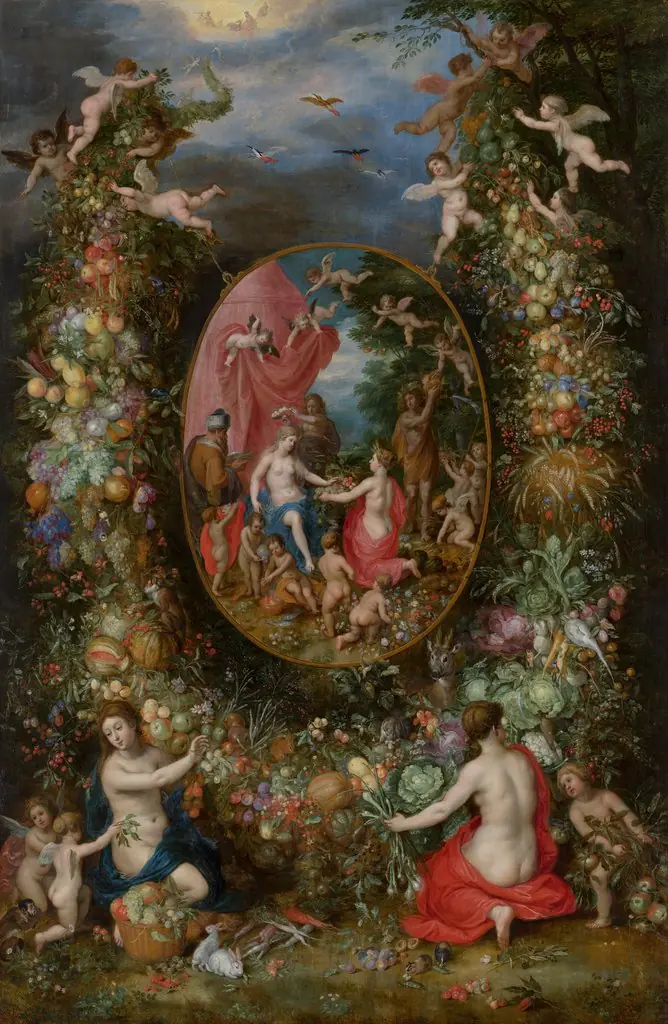
Abundance and the Four Elements
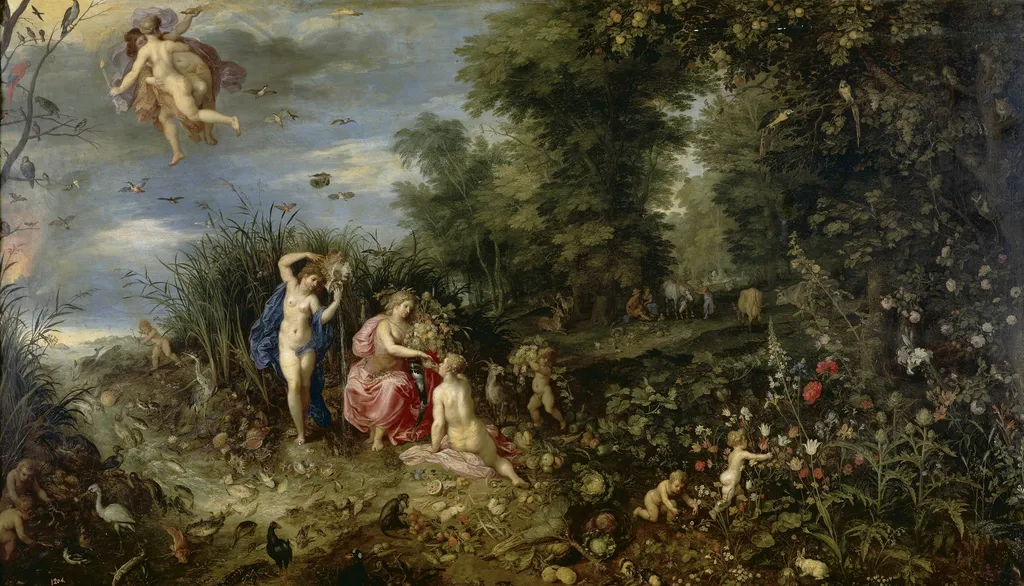
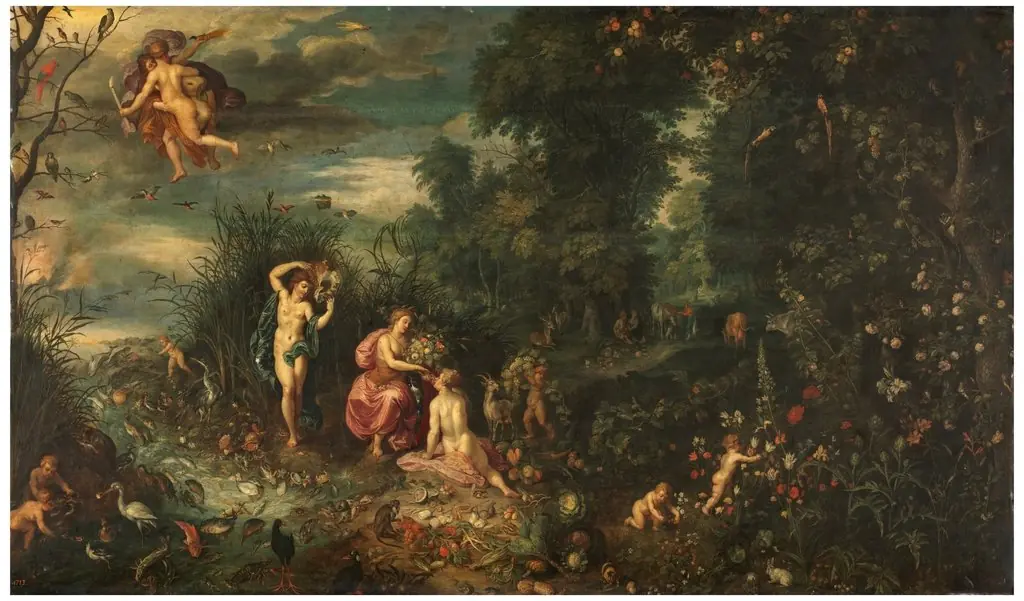
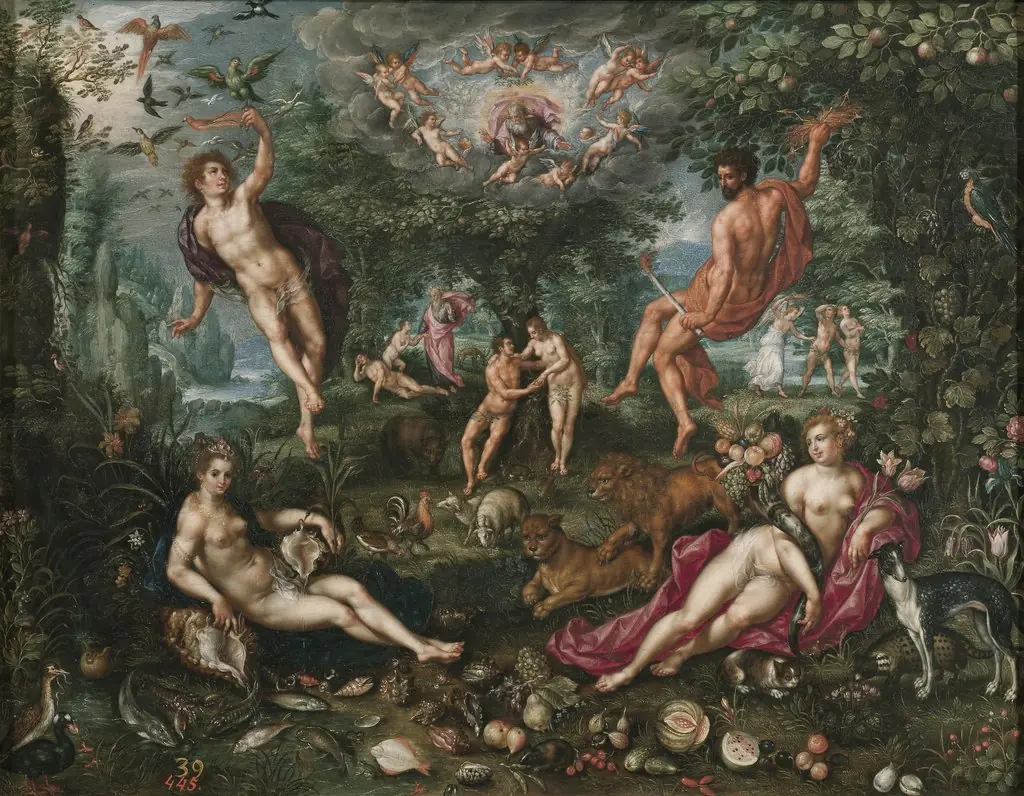
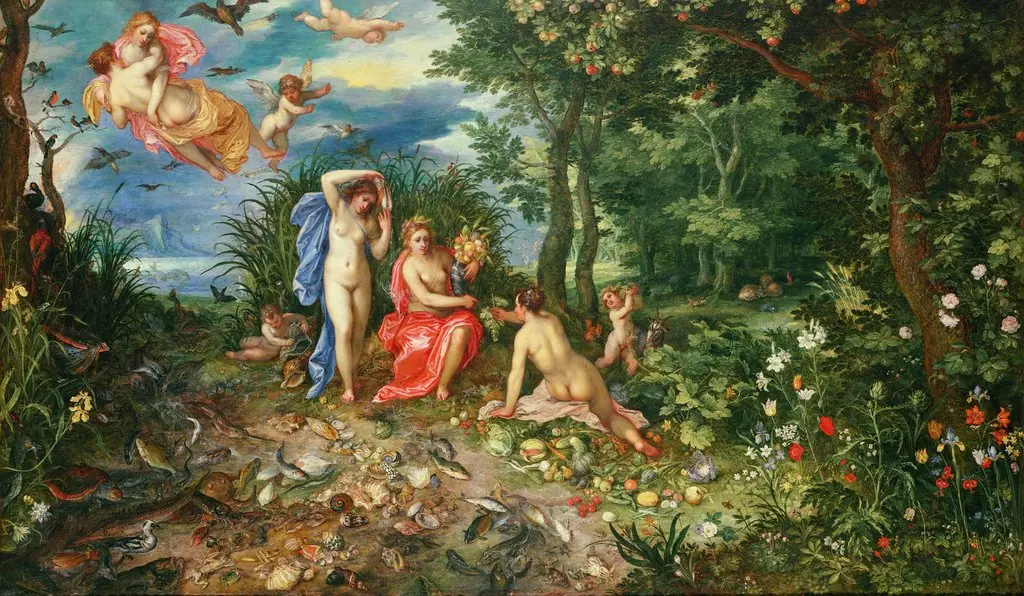
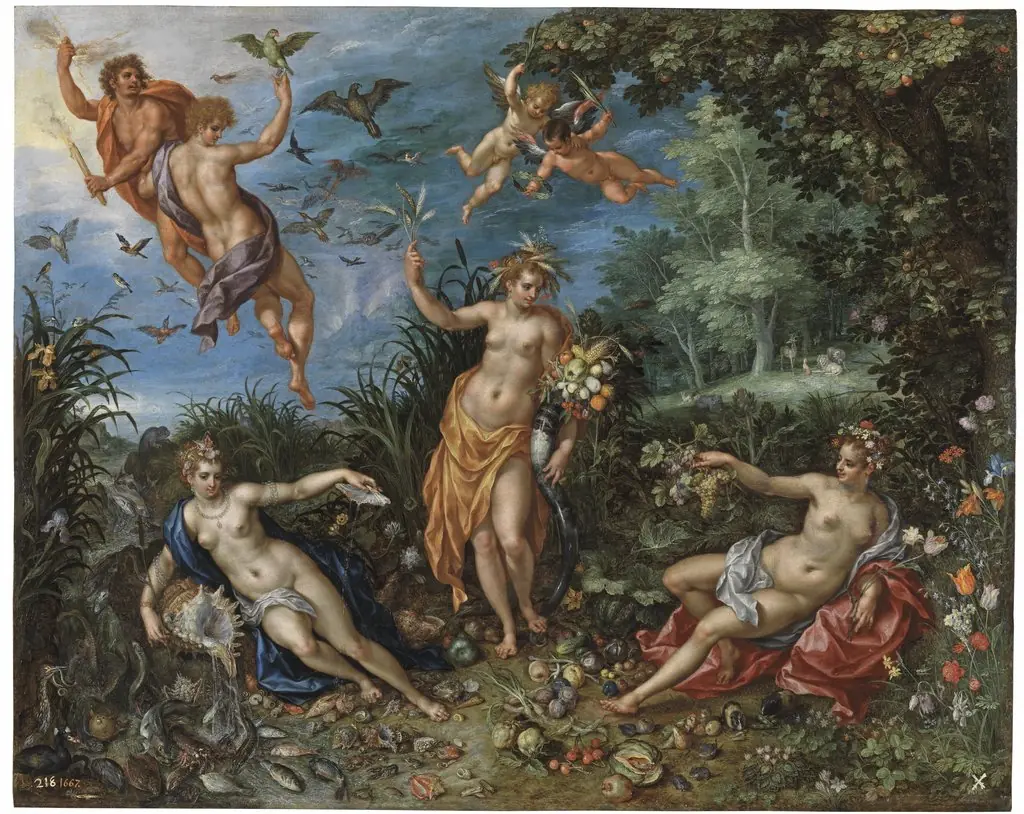
Abundance and the Four Elements is an oil painting by the Flemish Baroque painting artist Jan Brueghel, the elder. It dates from 1615 and is held in the collection of the Museo del Prado.
About this work
Overview
Painted in 1615 by Jan Brueghel the Elder, this oil-on-panel work is an allegorical landscape that unites natural abundance with classical elemental symbolism.
Painted in 1615 by Jan Brueghel the Elder, this oil-on-panel work is an allegorical landscape that unites natural abundance with classical elemental symbolism. Executed during the height of Flemish Baroque painting, it reflects Brueghel’s mastery in blending detailed observation with symbolic narrative. The piece resides in the Museo del Prado, Madrid, as part of its permanent collection of Northern European art.
Subject & Meaning
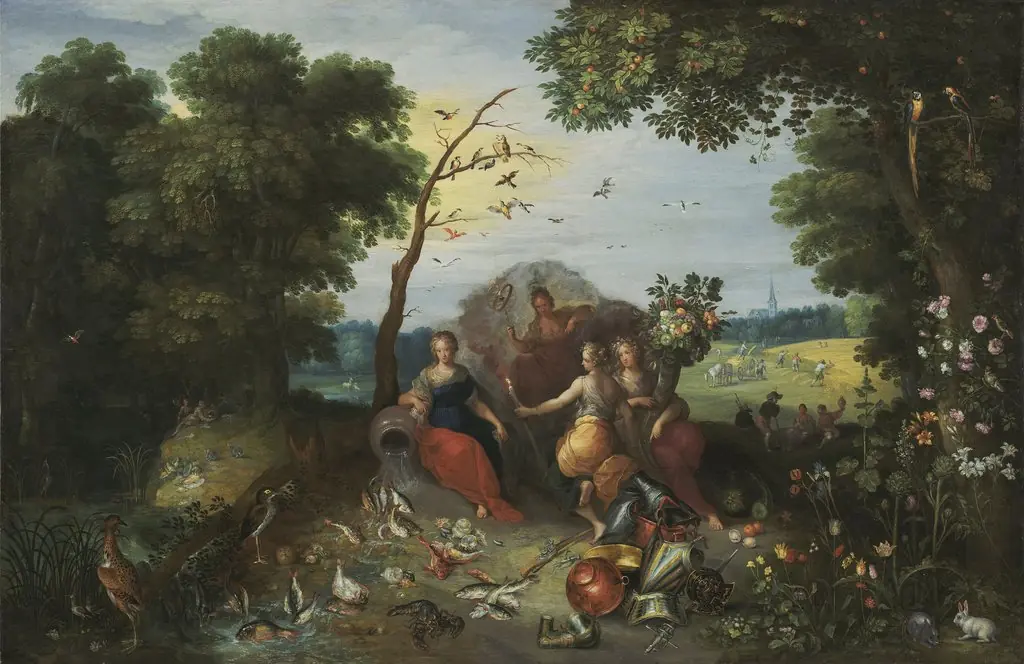
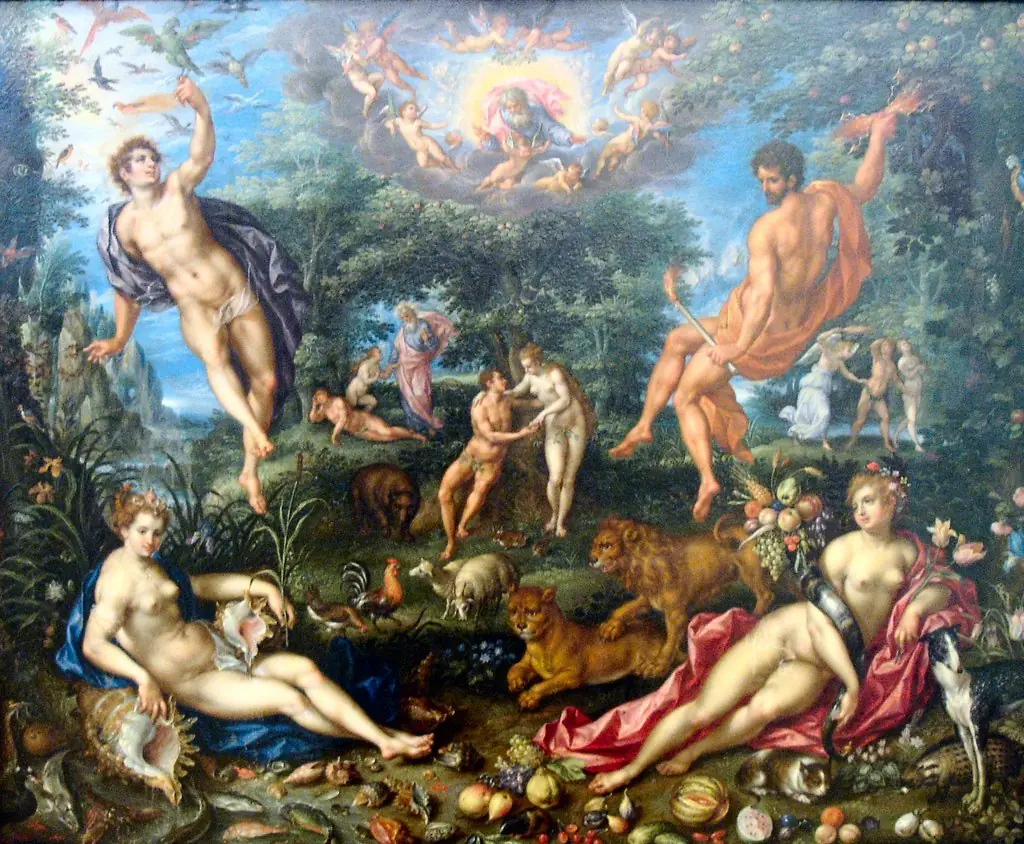
The central figure, draped in pink, personifies Abundance, surrounded by figures representing the four elements: earth, water, air, and fire. Animals, flora, and human activity are arranged to suggest harmony between nature and human labor. The composition conveys a Renaissance ideal of cosmic order, where fertility and balance are maintained through the interplay of natural forces and human stewardship.
Technique & Style
Brueghel employed fine brushwork to render intricate textures—petals, fur, foliage, and fabric—with precision. His layered application of oil paint creates luminous depth, while atmospheric perspective guides the eye from foreground details to distant hills and water. The palette is rich yet restrained, emphasizing naturalism over theatricality, characteristic of his collaborative approach with painters like Rubens.
History & Provenance
Commissioned during Brueghel’s mature period, the painting entered Spanish royal collections in the 17th century, likely through diplomatic or aristocratic channels. It was recorded in the Prado’s inventories by the 19th century and has remained there since. Its survival through centuries of political change underscores its status as a valued example of Flemish art in Spain.
Context
Created amid the cultural flourishing of the Spanish Netherlands, the painting reflects the era’s fascination with natural philosophy and allegory. Brueghel’s collaborations with Rubens, who often painted figures in his landscapes, were common among Antwerp artists. This work aligns with broader trends in Northern European art that sought to reconcile empirical observation with humanist ideals.
Legacy
Brueghel’s integration of meticulous still life with expansive allegory influenced later Dutch and Flemish painters. While not widely reproduced in his time, the painting’s structural clarity and symbolic coherence have secured its place in scholarly studies of early 17th-century allegory. It remains a reference point for understanding how nature was interpreted as both physical reality and moral metaphor.
Artist & collection
Artist
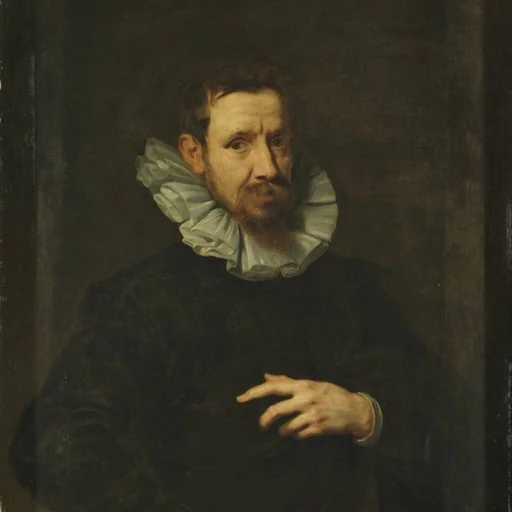
Jan Brueghel the Elder ( BROY-gəl, US also BROO-gəl; Dutch: ; 1568 – 13 January 1625) was a Flemish painter and draughtsman.