Artwork
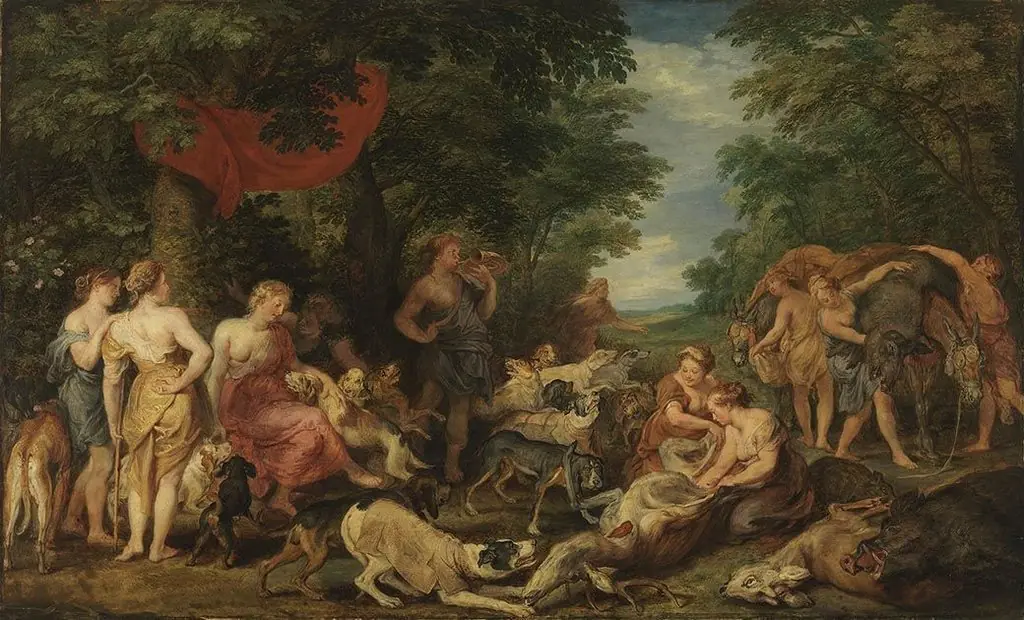
Diana and Her Nymphs after Their Hunt
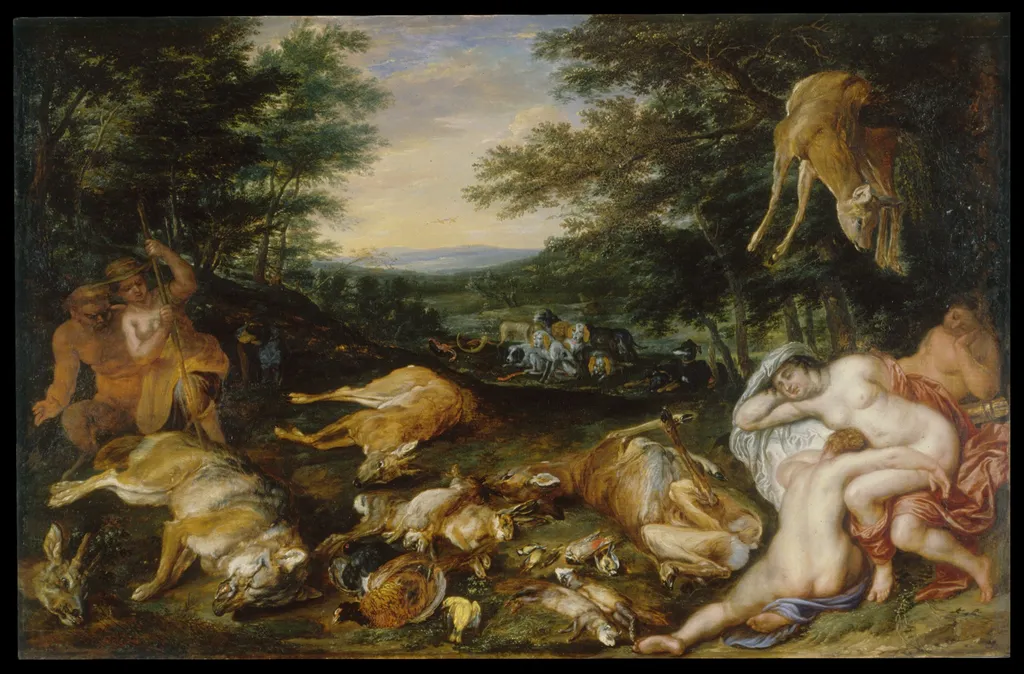
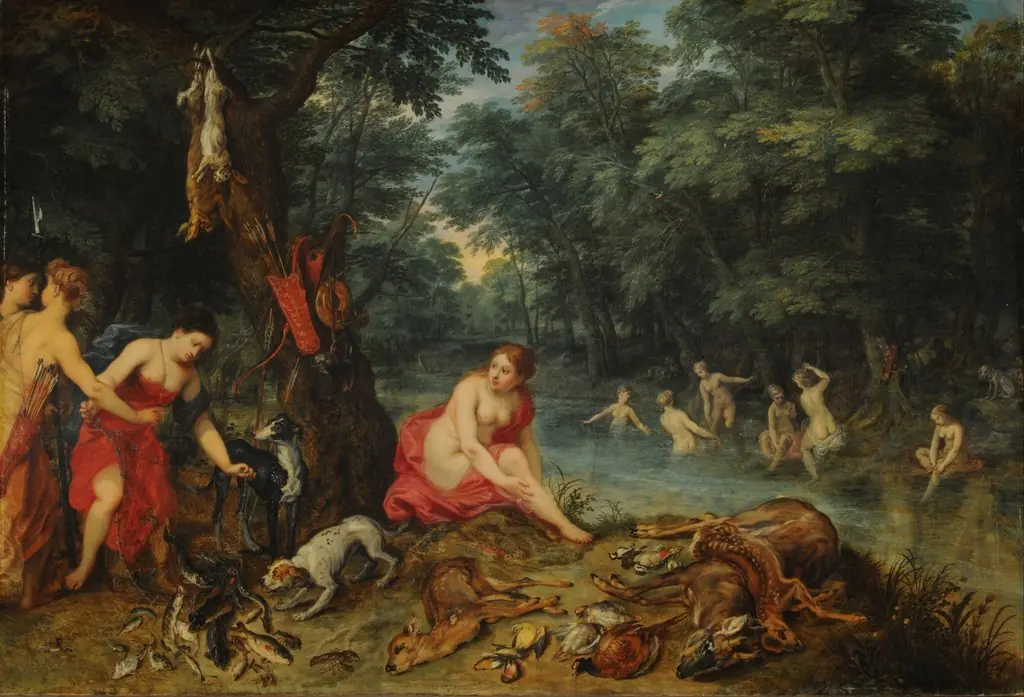
Diana and Her Nymphs after Their Hunt is an oil painting by the Flemish Baroque painting artist Jan Brueghel the Younger. It dates from 1630 and is held in the collection of the Walters Art Museum.
About this work
Overview
It reflects the artistic milieu of the Habsburg Netherlands, where Brueghel’s family had been influential in shaping Renaissance and Baroque visual culture.
Jan Brueghel the Younger, a Flemish painter active in the early 17th century, completed the oil painting *Diana and Her Nymphs after Their Hunt* in 1630. The work belongs to the mythological genre, portraying the Roman goddess Diana in a post‑hunt setting. It reflects the artistic milieu of the Habsburg Netherlands, where Brueghel’s family had been influential in shaping Renaissance and Baroque visual culture.
Subject & Meaning
The composition centers on a reclining nude female figure, identified as Diana, whose head rests on her left arm while her right arm lies across her torso. Around her are a variety of game—deer, rabbits and birds—either lifeless or at rest, suggesting the aftermath of a successful hunt. The tranquil arrangement conveys a moment of calm after the activity, emphasizing the goddess’s connection to nature and the cycle of life.
Technique & Style
Brueghel employs a subtle chiaroscuro that models the figures and creates a sense of three‑dimensional space. The landscape background, with gently rolling hills, scattered trees and a cloud‑filled sky, recedes through gradations of light and shadow. The painter’s handling of texture—soft flesh, fur and feather—demonstrates the detailed observation characteristic of the Brueghel workshop.
History & Provenance
The painting was produced in the workshop that Jan Brueghel the Younger inherited from his father, Jan Brueghel the Elder, who had established a prolific studio in Antwerp. After its creation, the work circulated among private collectors in the Spanish Netherlands, later entering a European collection in the 18th century before being acquired by its present museum.
Context
Mythological scenes were a staple of Flemish Baroque art, often commissioned for aristocratic interiors. Depicting Diana, the huntress goddess, allowed artists to explore themes of nature, virtue and the interplay between the human and animal worlds, aligning with contemporary tastes for allegorical and decorative subjects.
Legacy
While Jan Brueghel the Younger is frequently noted for continuing his father’s legacy, this painting illustrates his capacity to develop a personal visual language within the family tradition. The work contributes to the broader corpus of 17th‑century Flemish mythological painting, informing later interpretations of classical subjects in Northern European art.
Artist & collection
Artist
Jan Brueghel (also Bruegel or Breughel) the Younger ( BROY-gəl, US also BROO-gəl; Dutch: ; 13 September 1601 – 1 September 1678) was a Flemish Baroque painter.