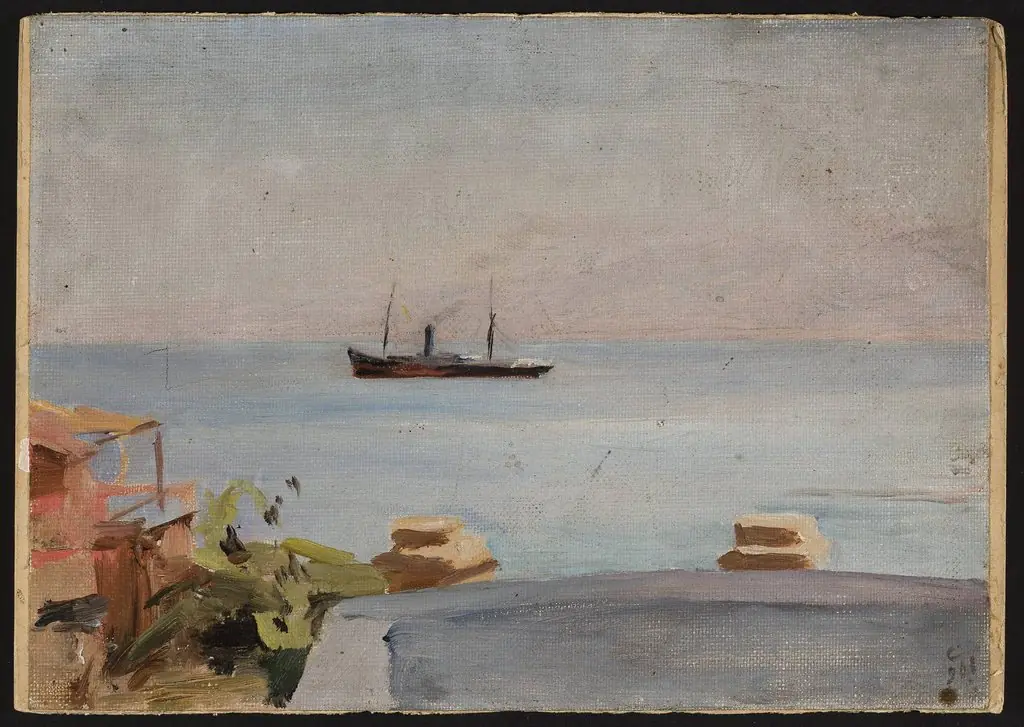
Artwork
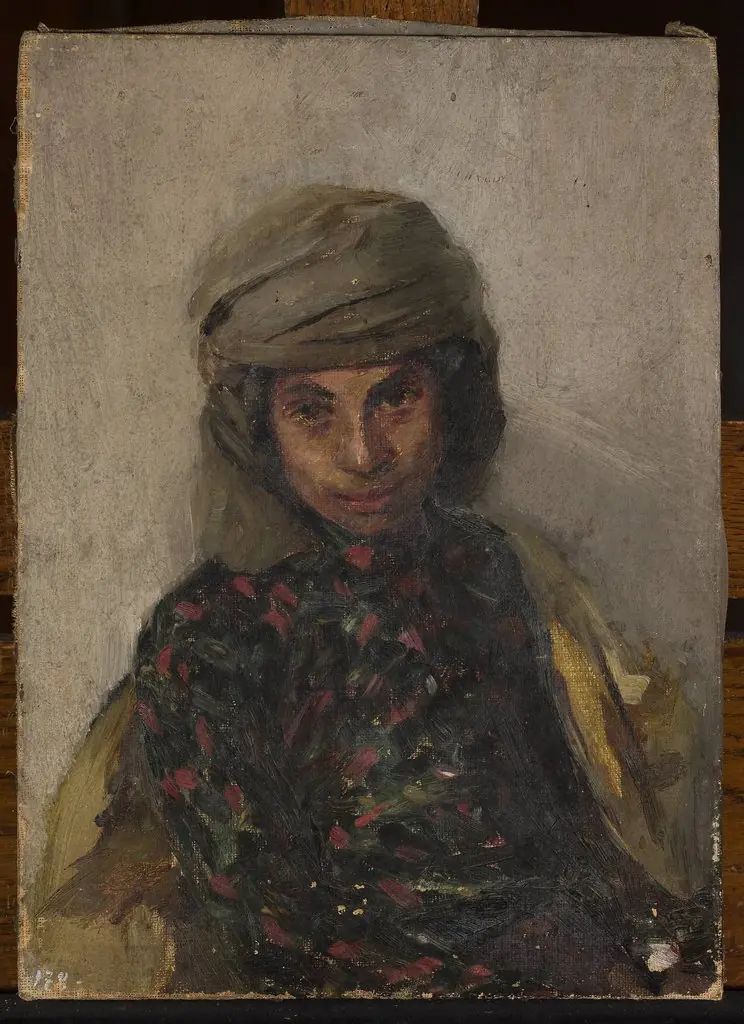
Jewess from Tiberias. From the journey to Palestine
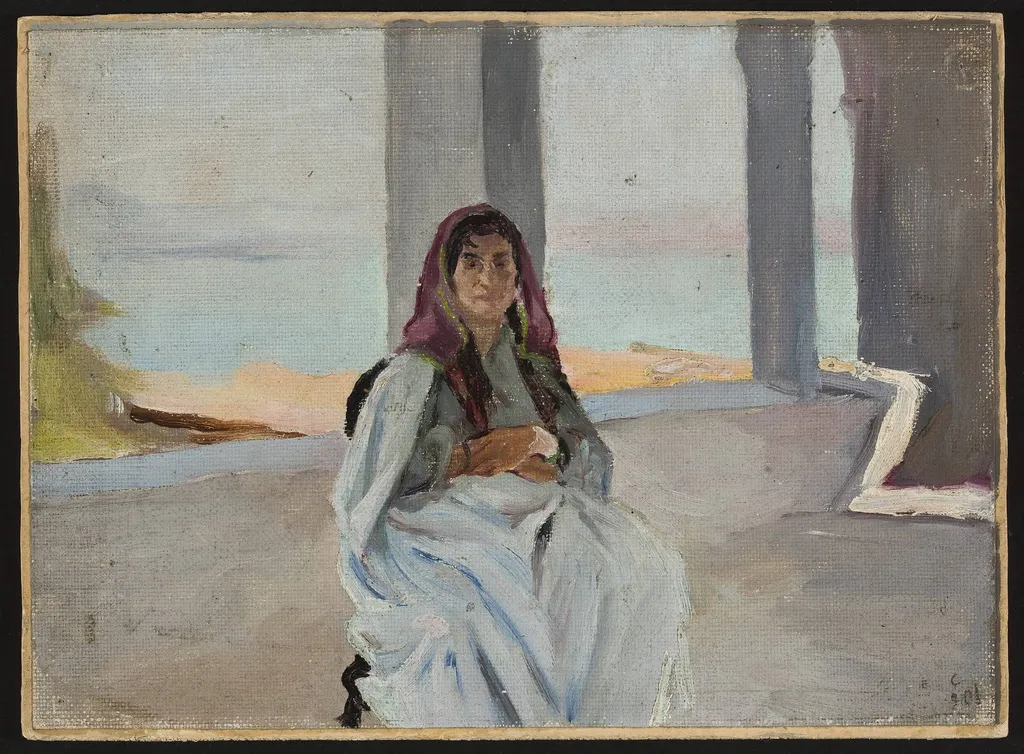
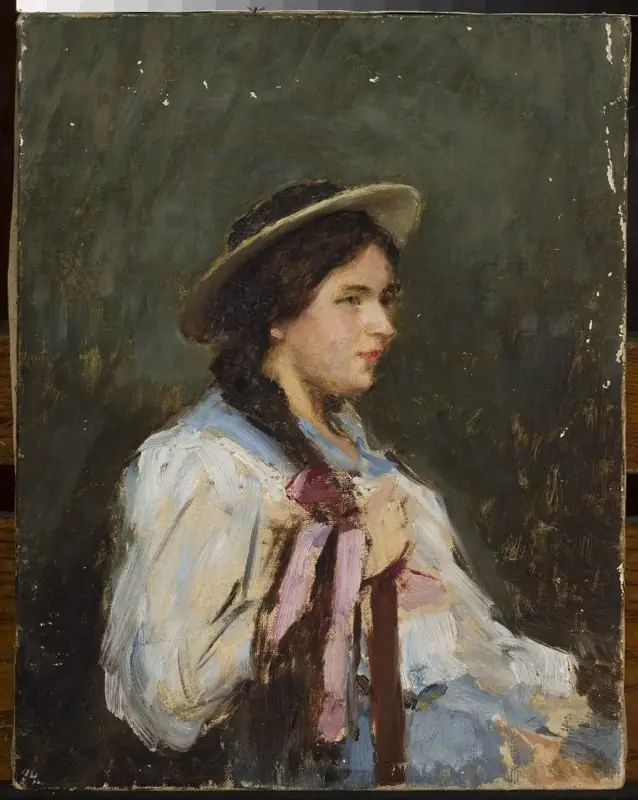
Jewess from Tiberias. From the journey to Palestine is an unspecified painting by the Impressionist artist Jan Ciągliński. It dates from 1901 and is held in the collection of the National Museum in Warsaw.
About this work
Overview
Petersburg during the late Russian Empire, produced *Jewess from Tiberias* in 1901 as part of a series inspired by his travels to Palestine.
Jan Ciągliński, a Polish artist working in St. Petersburg during the late Russian Empire, produced *Jewess from Tiberias* in 1901 as part of a series inspired by his travels to Palestine. The painting belongs to the early phase of Russian Impressionism, marked by an emphasis on natural light and quiet observation. It is now held in the National Museum in Warsaw, reflecting its significance within Polish artistic heritage despite its creation abroad.
Subject & Meaning
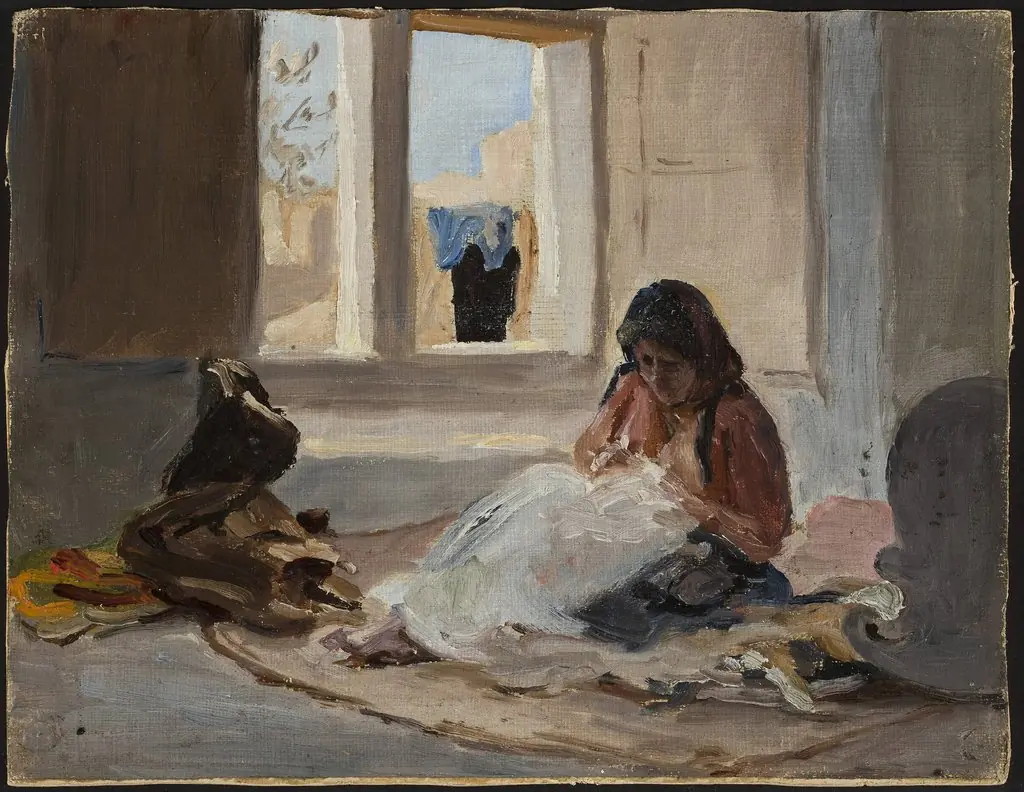
The painting portrays a woman seated alone in a sparse interior, her white robe and red headscarf contrasting subtly against the muted tones of the room. Her stillness and direct gaze suggest introspection, possibly evoking themes of solitude, cultural identity, or spiritual contemplation. The setting, linked to Tiberias, anchors the figure in a specific geographic and religious context, though the work avoids overt narrative, favoring atmospheric presence over storytelling.
Technique & Style
Ciągliński employed loose, fluid brushwork and a restrained palette to convey softness and quietude. Light filters through large windows, casting gentle gradients across the woman’s form and the surrounding walls, enhancing volume without sharp definition. The absence of detailed background elements focuses attention on her figure, while the delicate interplay of shadow and ambient color reflects Impressionist concerns with perception and transient effects of light.
History & Provenance
Created after Ciągliński’s journey to Palestine in the late 19th century, the painting emerged from a period of heightened European interest in Orientalist themes. It entered the collection of the National Museum in Warsaw in the early 20th century, where it has remained since. Its preservation reflects its status as a rare example of Polish artists engaging with Middle Eastern subjects through an Impressionist lens during a time of shifting cultural and political boundaries.
Context
During the early 1900s, Russian and Polish artists increasingly traveled beyond Europe, documenting regions like Palestine as part of broader Orientalist and ethnographic trends. Ciągliński’s work diverged from exoticized depictions common in the genre, opting instead for intimate, unadorned portrayals. His approach aligned with emerging Impressionist sensibilities in the Russian Empire, emphasizing mood over spectacle and individual presence over cultural stereotype.
Legacy
Though Ciągliński is not widely known outside specialized circles, *Jewess from Tiberias* stands as a quiet testament to the cross-cultural exchanges of late imperial art. It exemplifies how Impressionist techniques were adapted to non-European subjects, offering a restrained alternative to more theatrical Orientalist works. The painting continues to be studied for its nuanced representation and its place in the development of Polish and Russian modernism.
Artist & collection
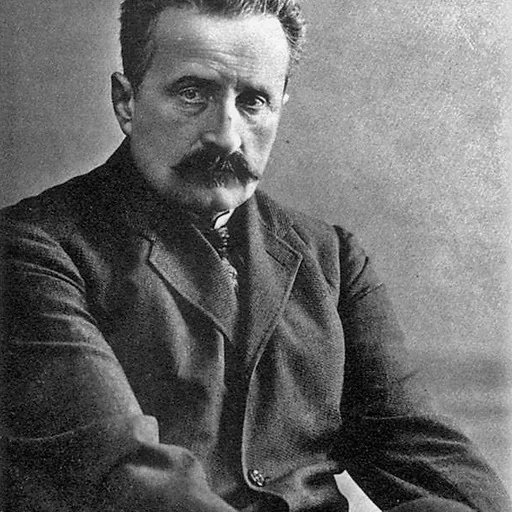
Artist
Jan Ciągliński (Polish: ; Russian: Ян/Иван Францевич Ционглинский, romanized: Yan/Ivan Frantsevich Tsionglinskiy; 20 February 1858 – 6 January 1913) was a Polish painter, active in St.