Artwork
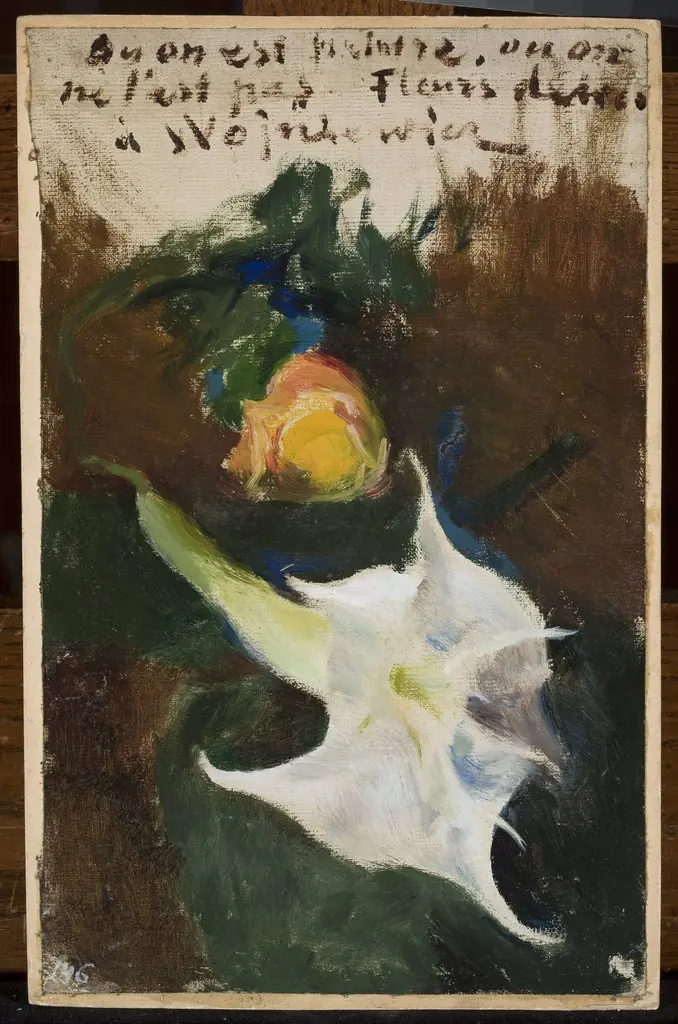
White flower, study
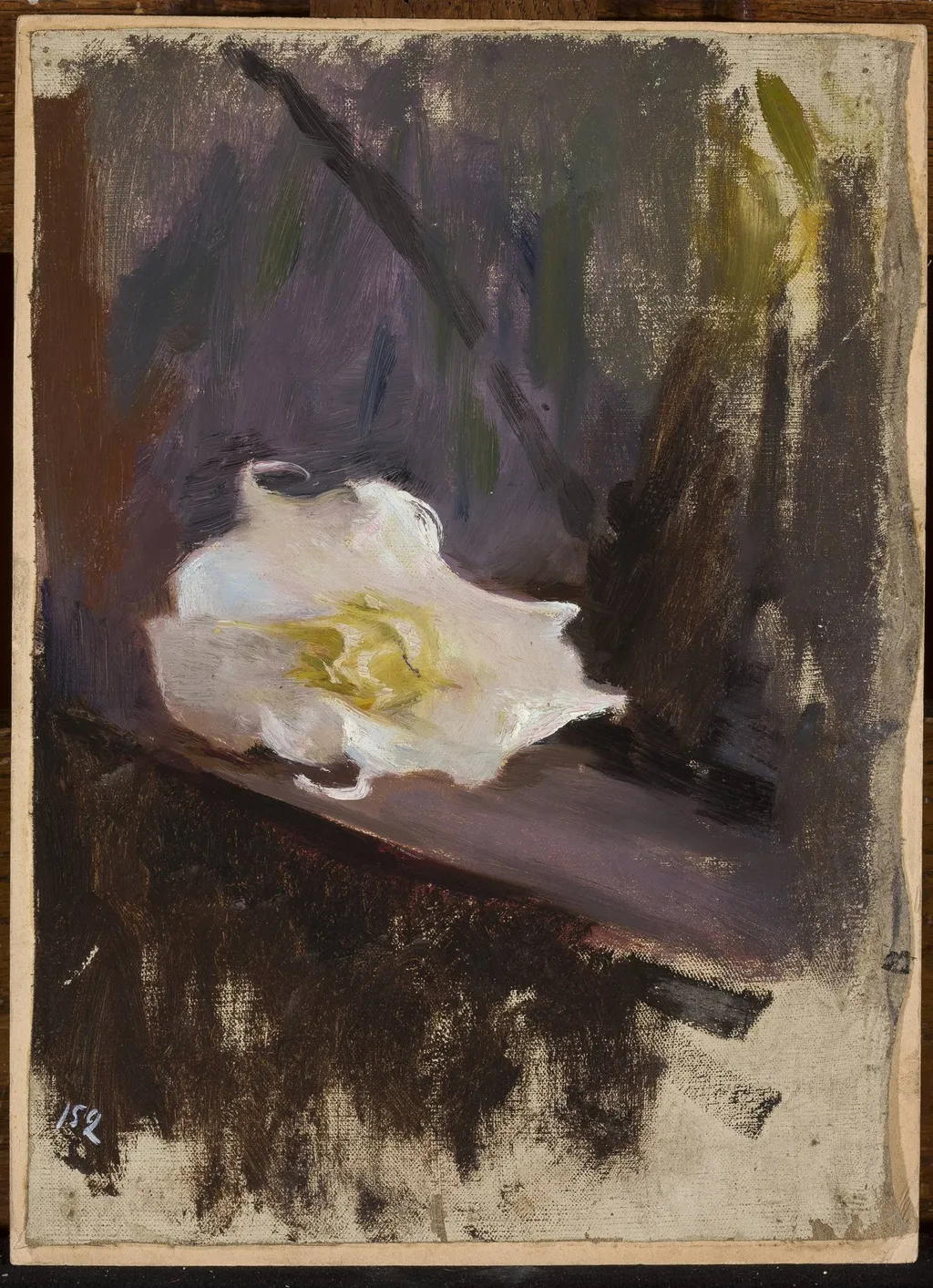
White flower, study is an unspecified painting by Jan Ciągliński. It dates from 1895 and is held in the collection of the National Museum in Warsaw.
About this work
Overview
The piece is part of the National Museum in Warsaw’s collection, where it stands as a quiet example of his focus on natural forms under subtle lighting.
Jan Ciągliński, a Polish artist working in St. Petersburg during the late 19th century, produced *White Flower, Study* around 1895 as a small-scale observational work. It reflects his engagement with the emerging Russian Impressionist movement, emphasizing direct visual experience over narrative or idealization. The piece is part of the National Museum in Warsaw’s collection, where it stands as a quiet example of his focus on natural forms under subtle lighting.
Subject & Meaning
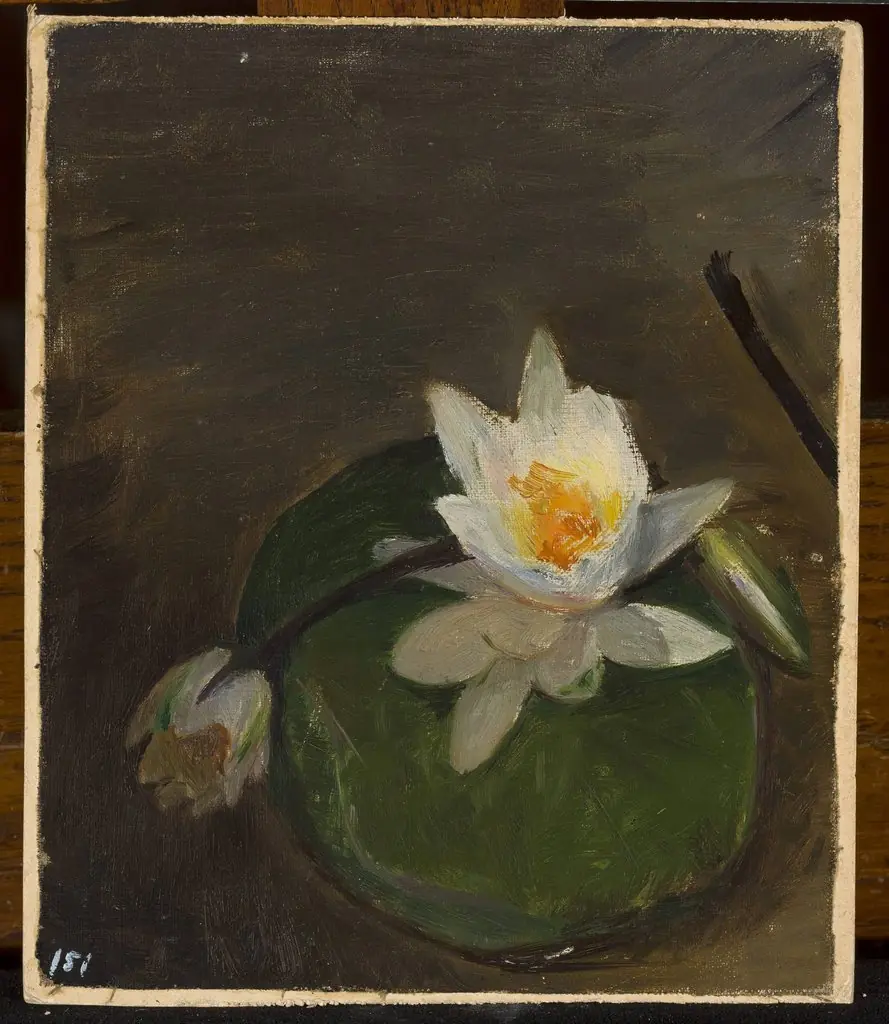
The painting centers on a single white flower, its petals rendered with soft, uneven edges and a faint yellow center. Isolated against a deep, unmodulated background, the bloom becomes an object of quiet contemplation. There is no symbolic narrative or contextual setting—only the flower’s presence, observed with sensitivity to its fragility and transient beauty, suggesting an interest in ephemeral natural forms.
Technique & Style
Ciągliński employed loose, visible brushstrokes to suggest texture and form without precise definition. The petals are built from thin layers of pigment, allowing the underlying surface to subtly show through, enhancing the sense of delicacy. The dark background and surface absorb light, making the flower appear to glow. This approach prioritizes optical effects over detail, aligning with Impressionist concerns for light and perception.
History & Provenance
Created during Ciągliński’s time in St. Petersburg, the work likely emerged from his personal studio practice rather than a commissioned project. It remained in private hands until entering the National Museum in Warsaw’s collection, where it has been preserved as part of Poland’s artistic heritage. Its survival and acquisition reflect growing institutional interest in Polish artists active within the Russian Empire.
Context
In the 1890s, Russian artists began moving away from academic realism toward more spontaneous, light-sensitive techniques influenced by French Impressionism. Ciągliński, though Polish by origin, operated within this milieu, absorbing its methods while maintaining a restrained, intimate scale. His still lifes like this one contributed to a quieter, less theatrical branch of Russian Impressionism focused on domestic and natural subjects.
Legacy
Though not widely exhibited, *White Flower, Study* represents a significant thread in the development of regional Impressionism beyond Paris. It illustrates how artists outside France adapted the movement’s principles to local sensibilities—emphasizing subtlety, restraint, and close observation. The painting remains a reference point for understanding the cross-cultural exchanges in late 19th-century Eastern European art.
Artist & collection
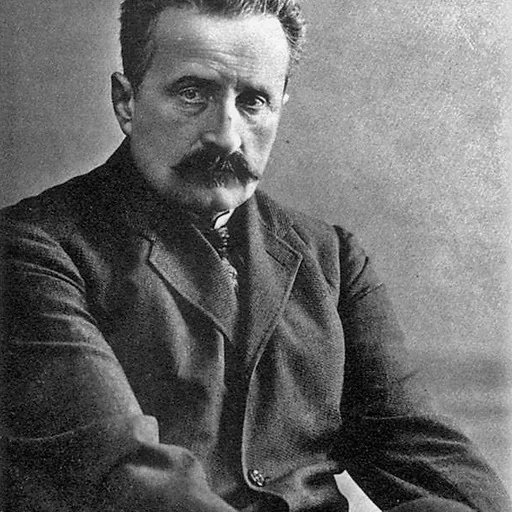
Artist
Jan Ciągliński (Polish: ; Russian: Ян/Иван Францевич Ционглинский, romanized: Yan/Ivan Frantsevich Tsionglinskiy; 20 February 1858 – 6 January 1913) was a Polish painter, active in St.