Artwork
Yalta – flowers
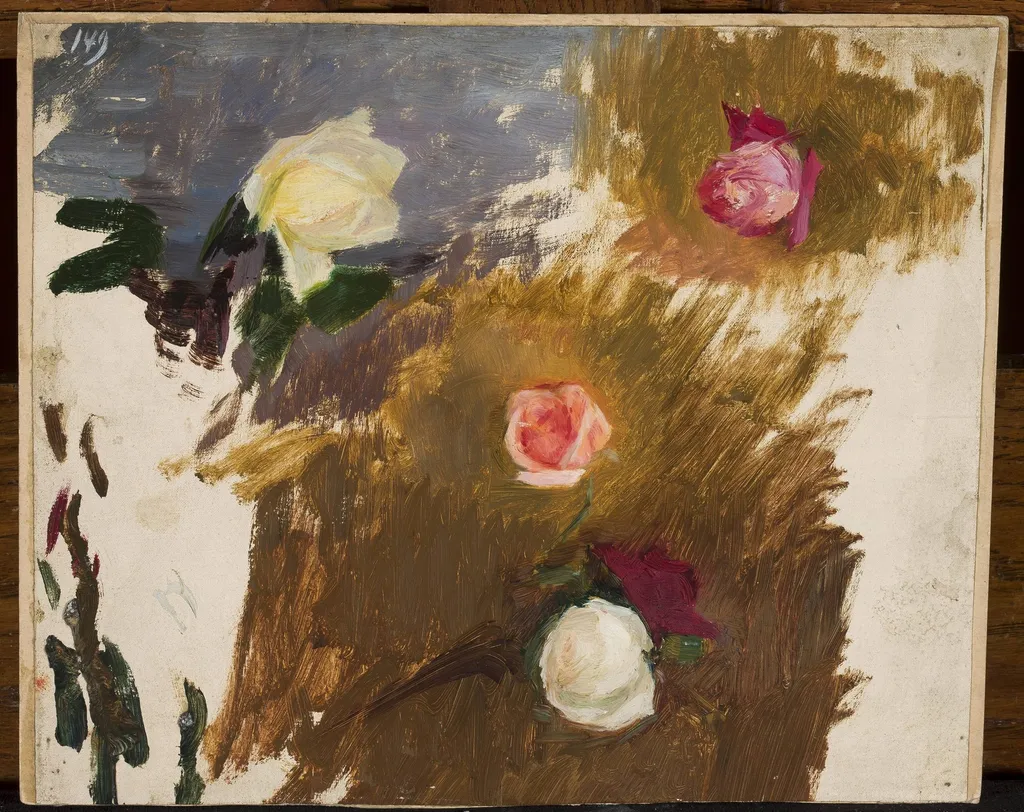
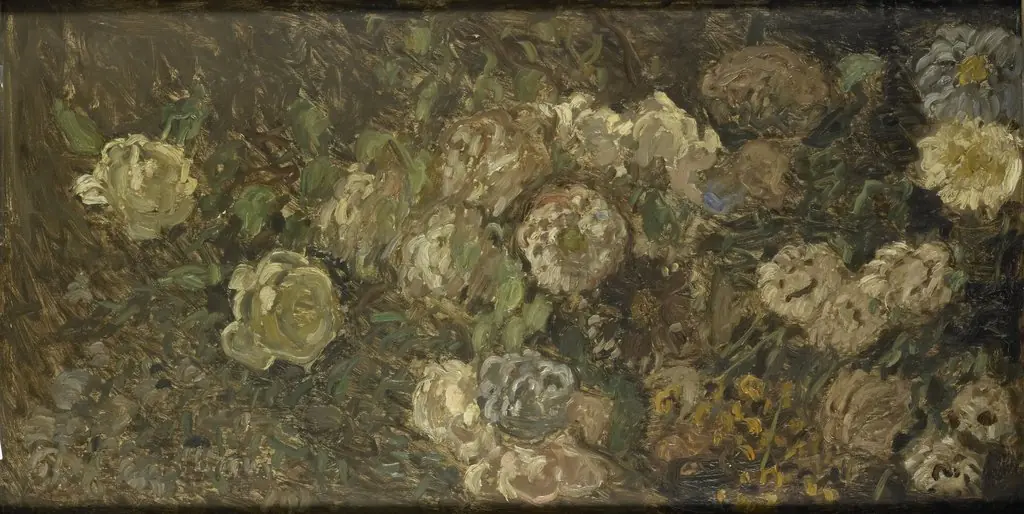
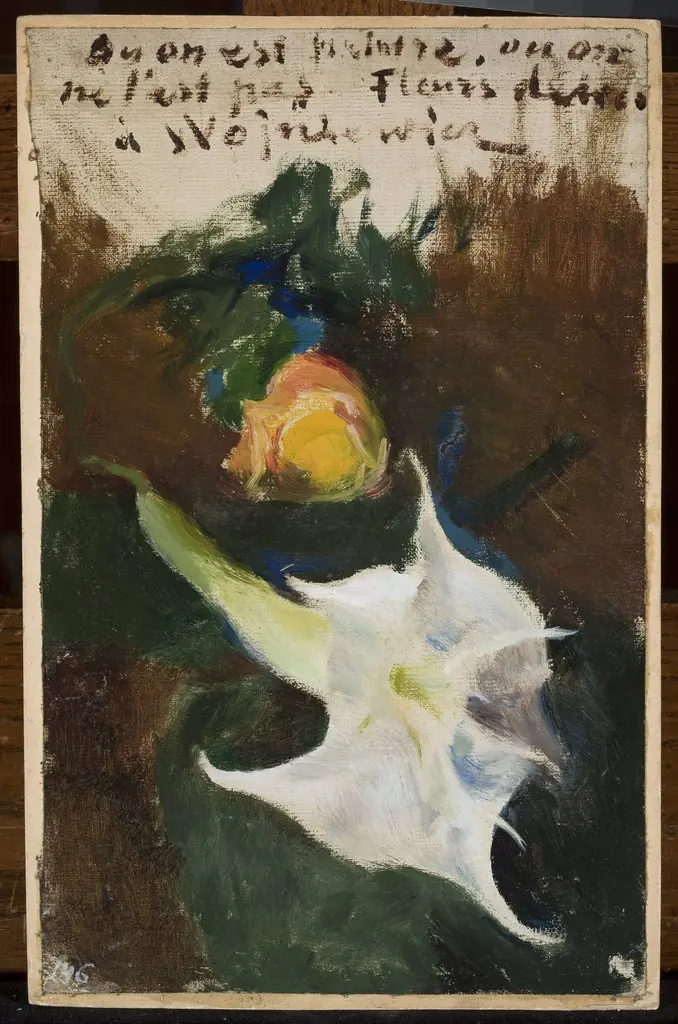
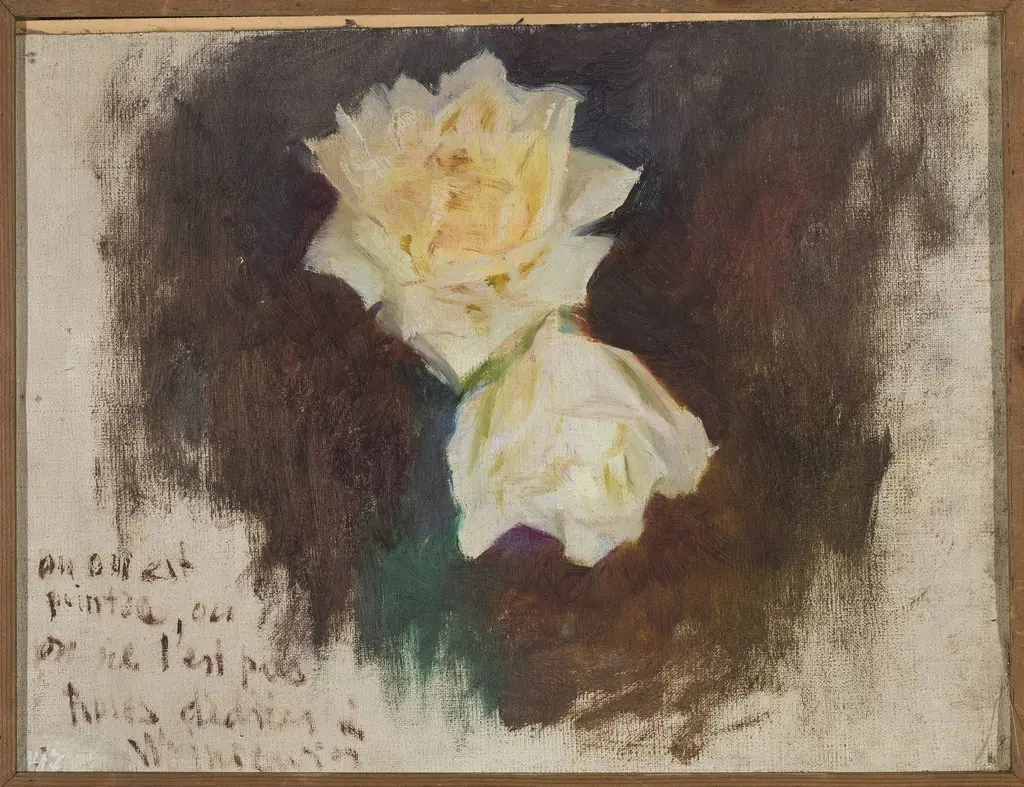
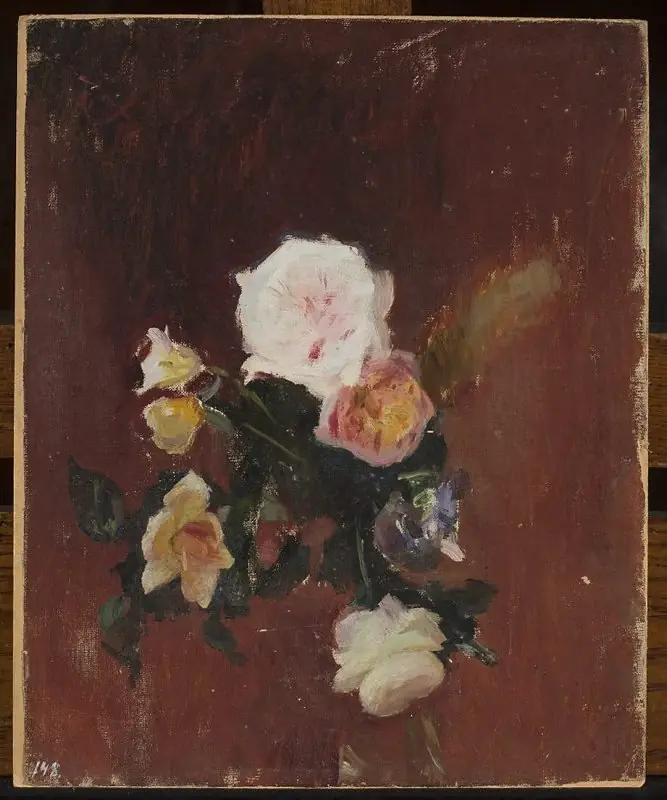
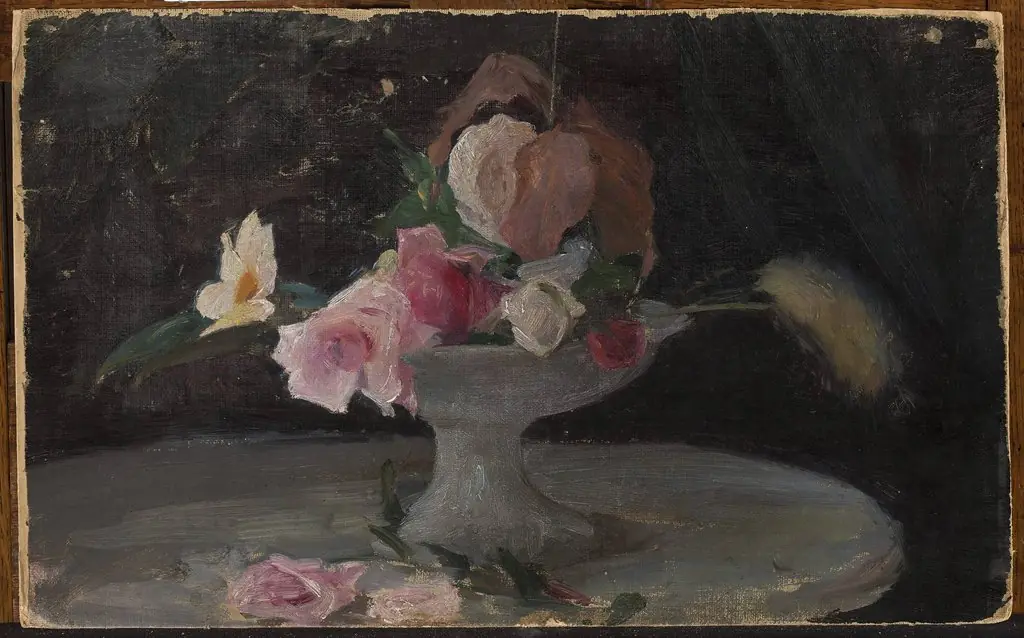
Yalta – flowers is an unspecified painting by the Impressionist artist Jan Ciągliński. It dates from 1900 and is held in the collection of the National Museum in Warsaw.
About this work
Overview
The painting is part of the National Museum in Warsaw’s collection and exemplifies his engagement with impressionist techniques.
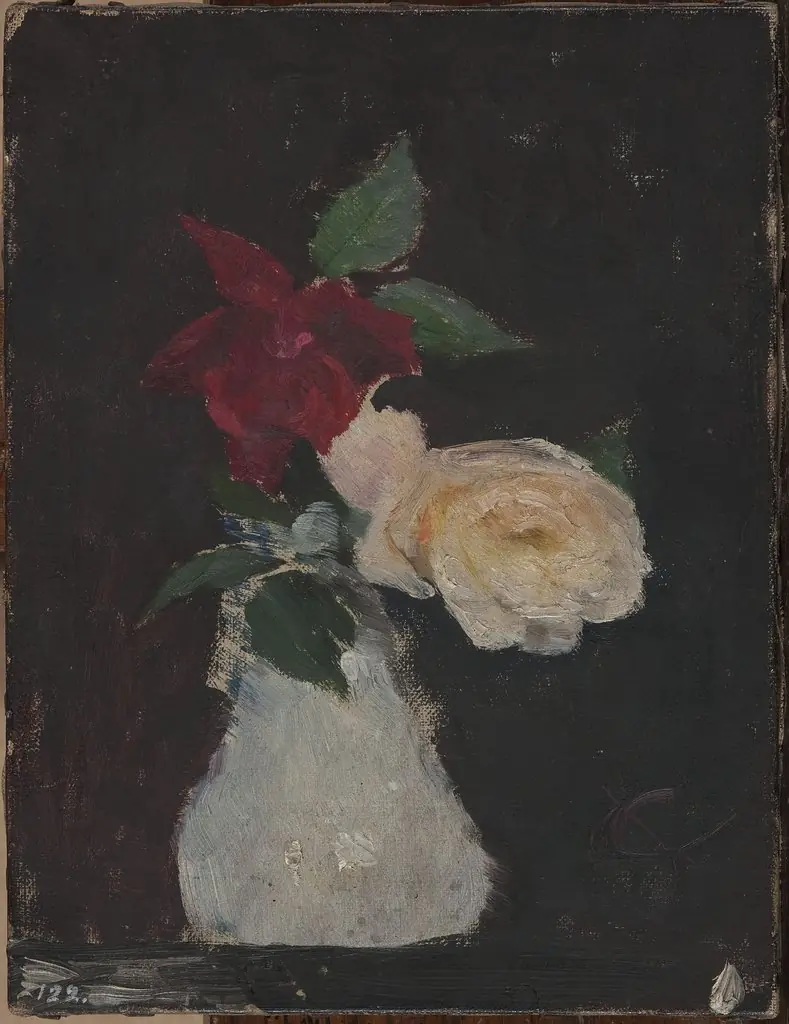
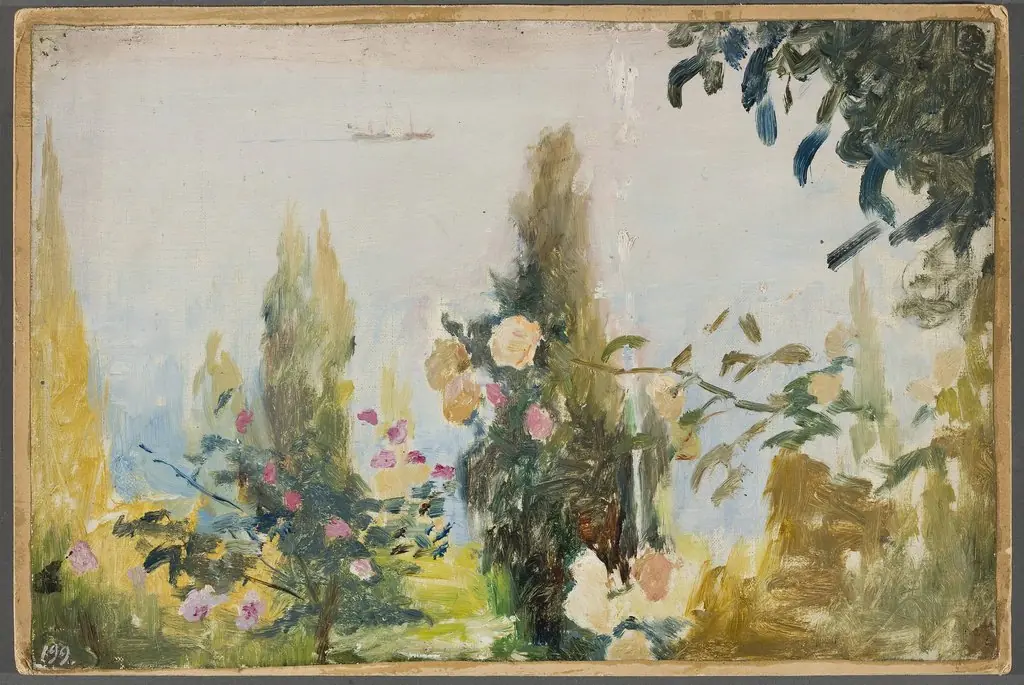
Jan Ciągliński, a Polish artist working in St. Petersburg around the turn of the 20th century, created *Yalta – flowers* in 1900. The painting is part of the National Museum in Warsaw’s collection and exemplifies his engagement with impressionist techniques. It captures a quiet still life of roses, rendered with attention to natural light and transient atmospheric effects, reflecting broader European artistic trends of the period.
Subject & Meaning
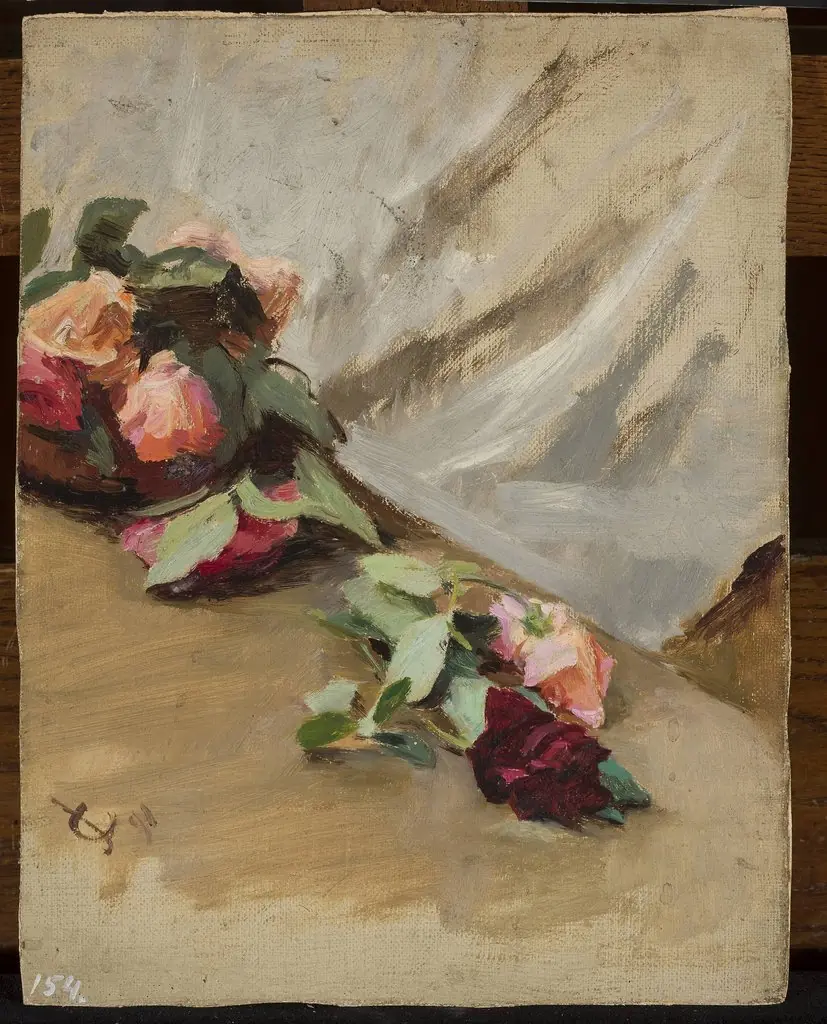
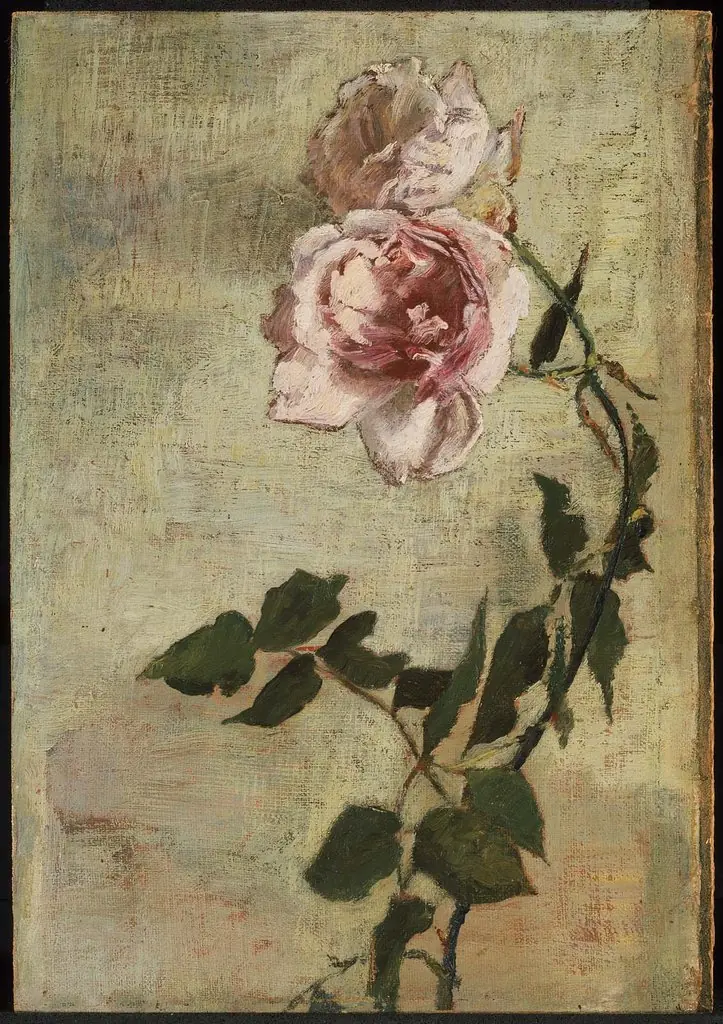
The painting depicts a modest arrangement of roses in varying stages of bloom, their petals in soft whites and pinks, set against a muted background of earthy browns, pale yellows, and cool blues. The focus on floral decay and renewal suggests a contemplative mood rather than decorative intent. There is no narrative or symbolic allegory; the subject is presented as a quiet observation of nature’s subtle rhythms.
Technique & Style
Ciągliński employed loose, visible brushwork to convey texture and light, characteristic of impressionist practice. Petals and leaves are built with layered strokes rather than precise outlines, allowing color and tone to suggest form. The background blends hues without sharp transitions, enhancing the sense of ambient glow. The paint surface retains a tactile quality, emphasizing the artist’s hand and the immediacy of the moment.
History & Provenance
Painted during Ciągliński’s time in St. Petersburg, the work was likely created during a visit to Yalta, a Black Sea resort favored by Russian elites. It entered the National Museum in Warsaw’s collection in the 20th century, possibly through Polish cultural preservation efforts after the country regained independence. Its journey reflects the movement of artworks across shifting political borders in Eastern Europe.
Context
In the late 19th and early 20th centuries, Polish artists like Ciągliński often trained or worked abroad due to the partition of Poland. Exposure to French and Russian impressionism influenced their approach to light and color. *Yalta – flowers* aligns with a broader trend among Eastern European painters who adapted impressionist methods to intimate, non-monumental subjects, avoiding overt political themes.
Legacy
Ciągliński’s work, including *Yalta – flowers*, remains a quiet example of how impressionism was absorbed beyond its French origins. While not widely known outside Poland, his paintings contribute to understanding the regional diversity of late 19th-century European art. The piece endures as a representative of a generation of artists who sought personal expression within established stylistic frameworks.
Artist & collection
Artist
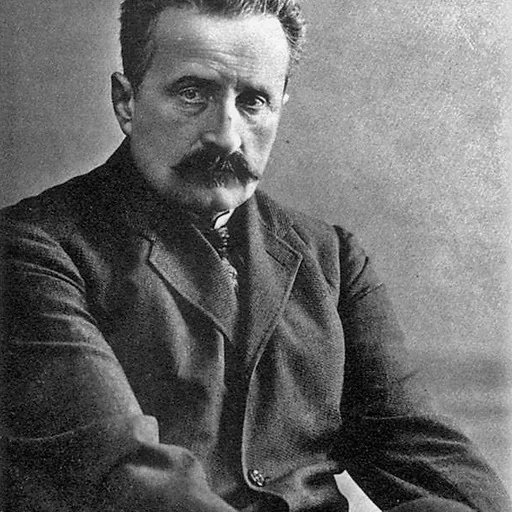
Jan Ciągliński (Polish: ; Russian: Ян/Иван Францевич Ционглинский, romanized: Yan/Ivan Frantsevich Tsionglinskiy; 20 February 1858 – 6 January 1913) was a Polish painter, active in St.