Artwork
Landschap
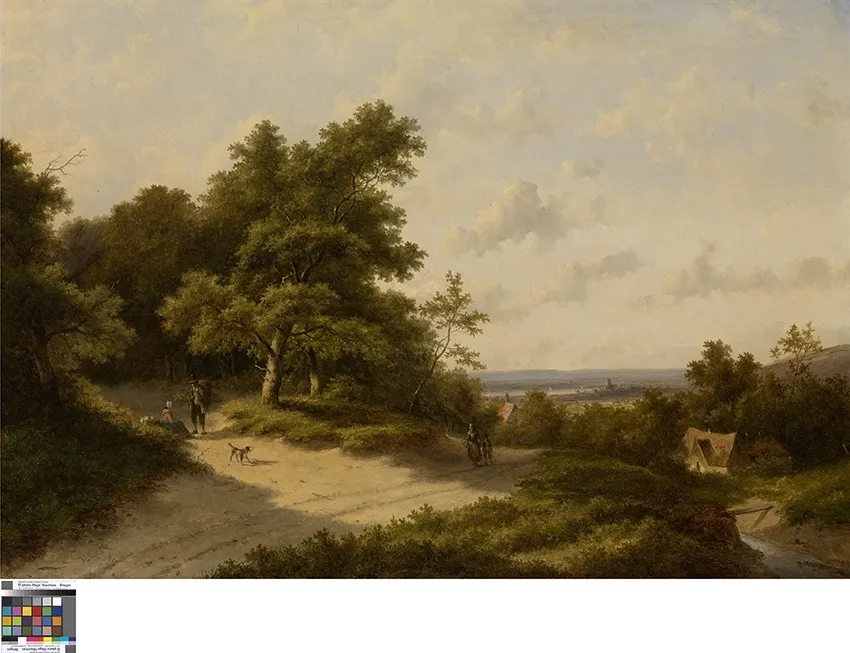
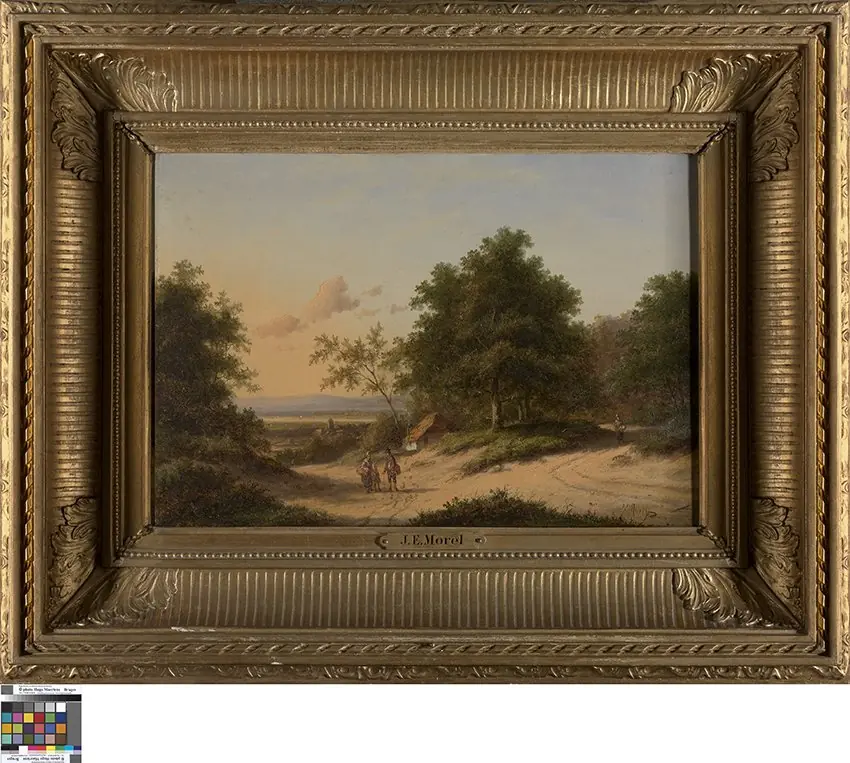
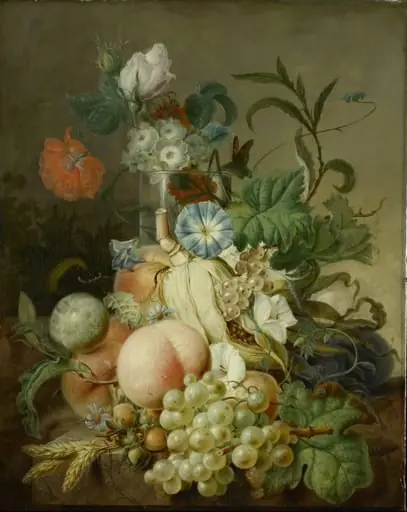
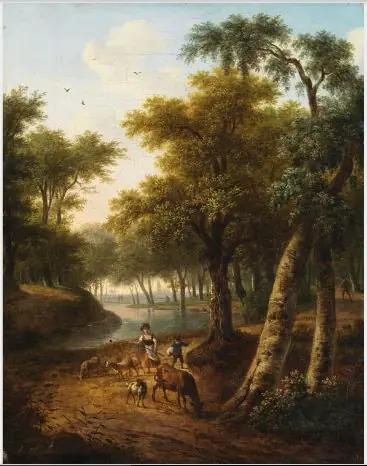
Landschap is an oil painting by the Rococo painting artist Jan Evert Morel. It dates from 1769 and is held in the collection of the Groeningemuseum.
About this work
Overview
This 1769 oil painting by Jan Evert Morel presents a tranquil rural scene. A winding dirt road serves as the central motif, flanked by dense foliage on one side and an expansive vista on the other. The composition balances intimate foreground details with a distant, hazy horizon, evoking a sense of depth and openness within a confined landscape format.
Subject & Meaning
The work depicts a moment of everyday rural life, where travelers and a dog move along a forest path. The presence of figures engaged in mundane activities—one carrying an indistinct object, another accompanied by an animal—suggests themes of journey, labor, or domestic routine. The small tent near the path may imply temporary shelter or rest, reinforcing the transient nature of the scene.
Technique & Style
Subtle gradations of light and shadow create a soft, diffused illumination, while meticulous brushwork captures the textures of leaves, bark, and fabric.
Morel employs a refined glazing technique to achieve luminous, layered colors, particularly in the rendering of foliage and atmospheric effects. Subtle gradations of light and shadow create a soft, diffused illumination, while meticulous brushwork captures the textures of leaves, bark, and fabric. The palette relies on earthy greens, browns, and muted blues, lending the scene a harmonious, understated naturalism.
History & Provenance
Painted in 1769, the work has been part of the Groeningemuseum’s collection. Little is documented about its early ownership, though its preservation suggests it was valued enough to survive intact. The painting’s condition reflects its age, with minor craquelure and slight darkening of varnish layers, typical of works from this period.
Context
Morel’s landscape reflects the 18th-century European interest in pastoral scenes, where nature was often idealized as a serene retreat from urban life. Such works appealed to collectors seeking depictions of orderly, picturesque environments. The inclusion of human figures and modest structures aligns with the period’s preference for narratives that blended natural beauty with quiet human presence.
Legacy
While not among the most widely recognized works of its era, Morel’s painting exemplifies the technical and aesthetic concerns of late Baroque landscape painting. Its attention to light and atmosphere prefigures later developments in plein-air techniques. Housed in a public collection, it contributes to the broader understanding of 18th-century Dutch and Flemish landscape traditions.
Artist & collection

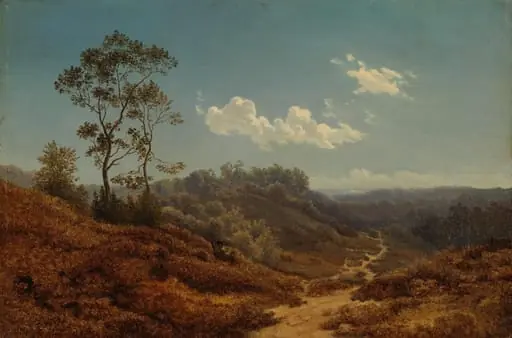 Maisematutkielma, kopio Albert Flammin mukaan
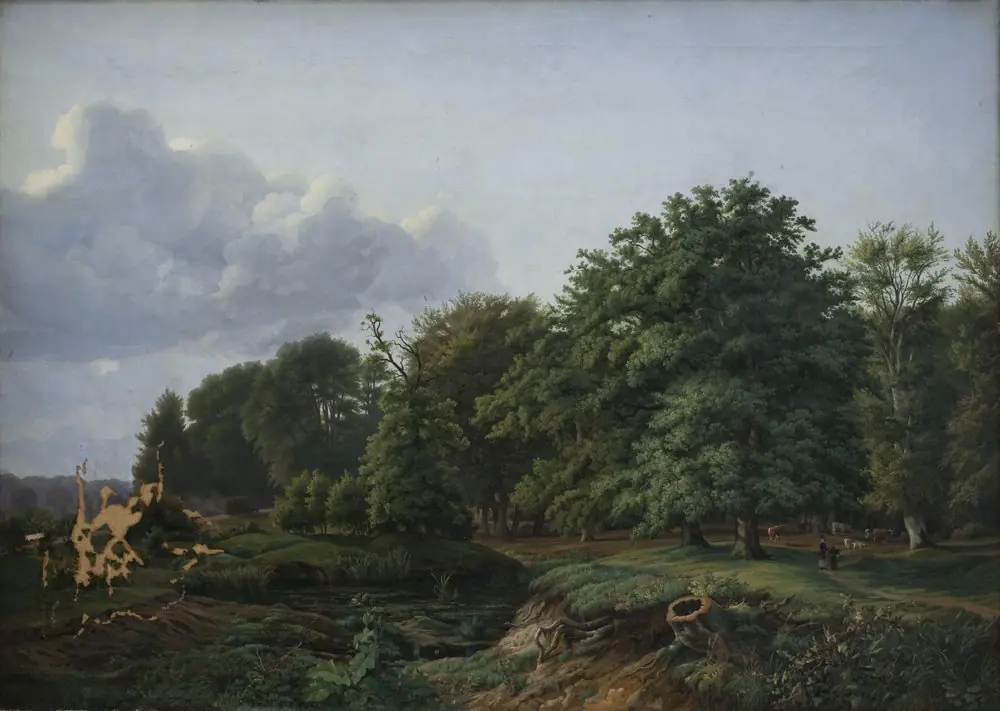 A Forrest near Hellebæk in the North of Zealand. Afternoon.
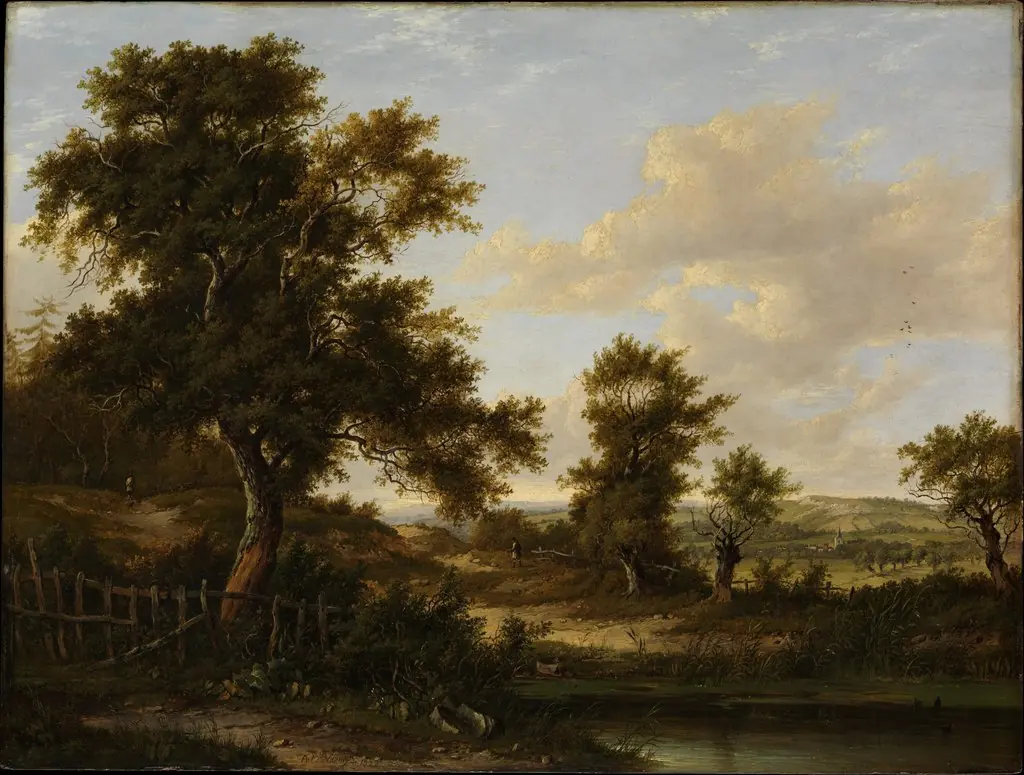 Near Penshurst, Kent
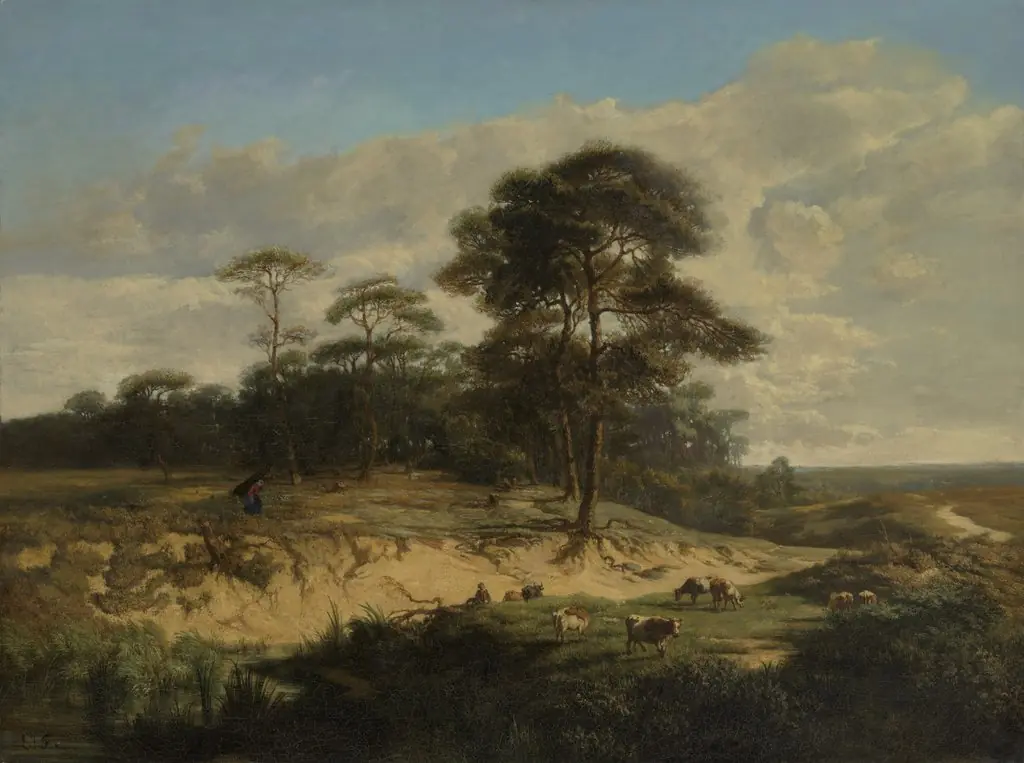 Landscape near Kalmthout
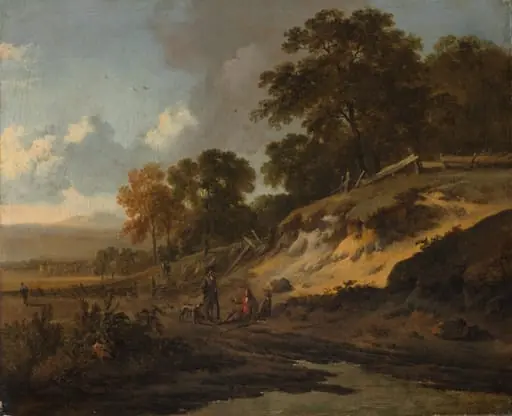 Landscape with Hunters
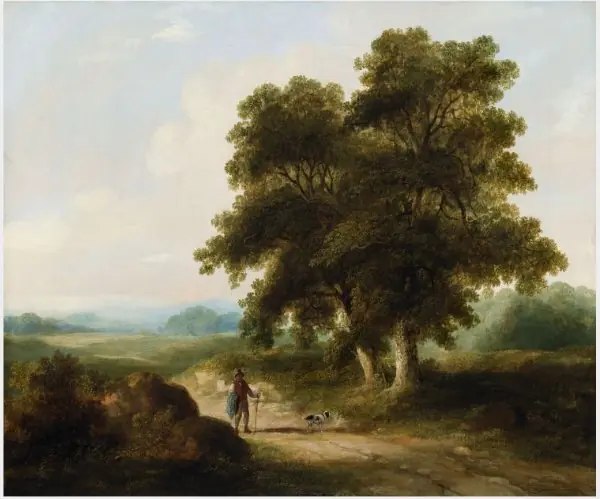 A Landscape, Homeward Bound
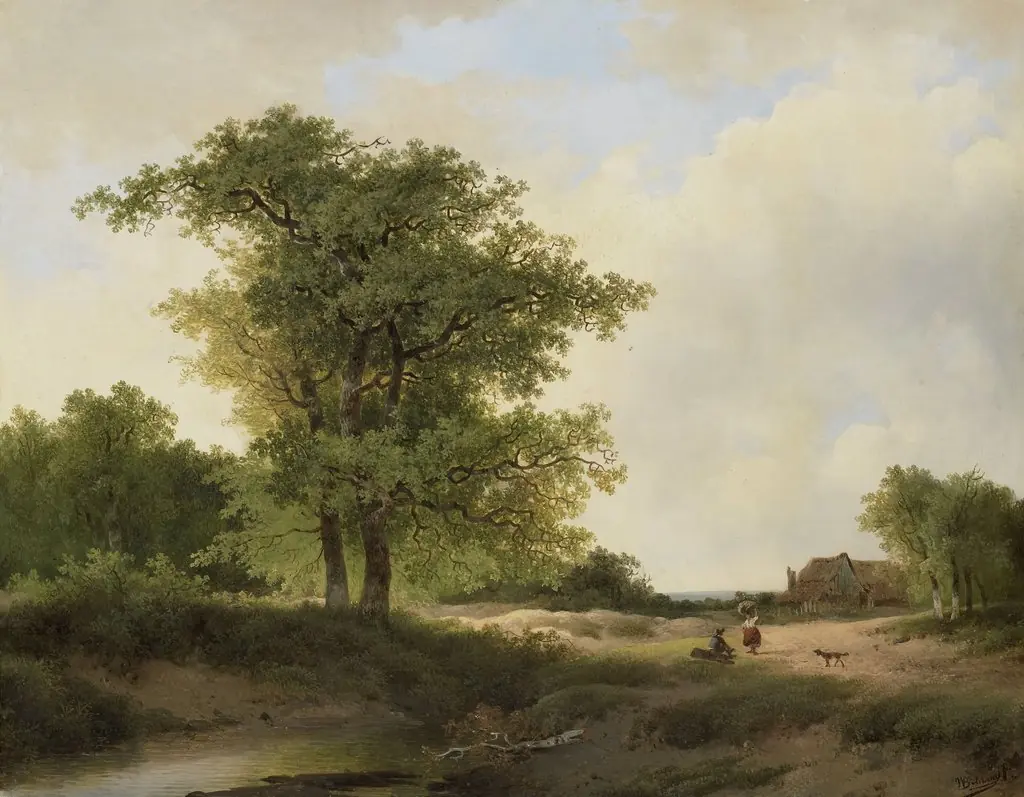 Landscape with Farmstead
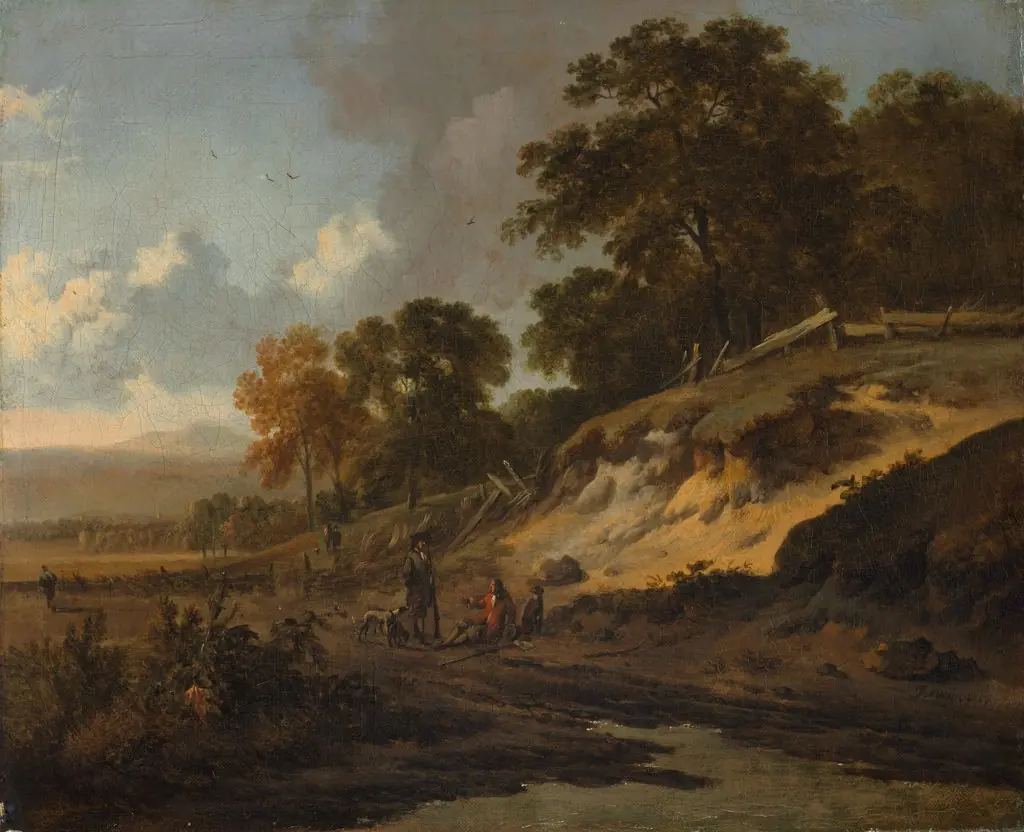 Landscape with Hunters
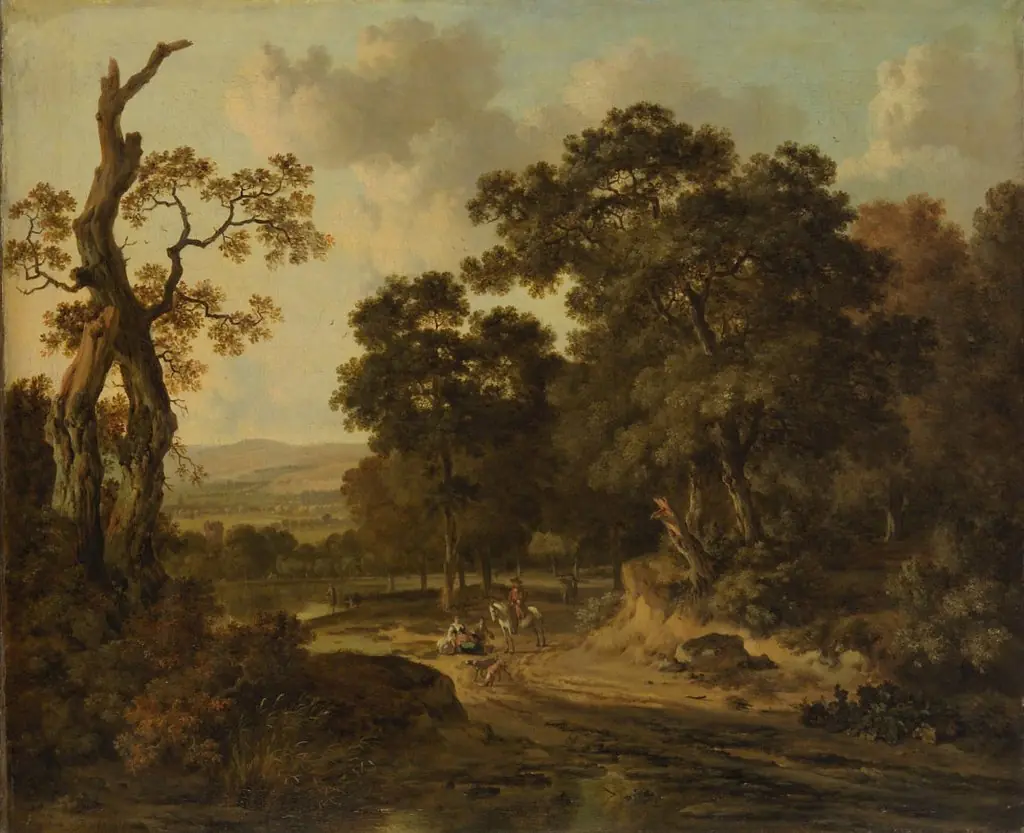 Waldeingang
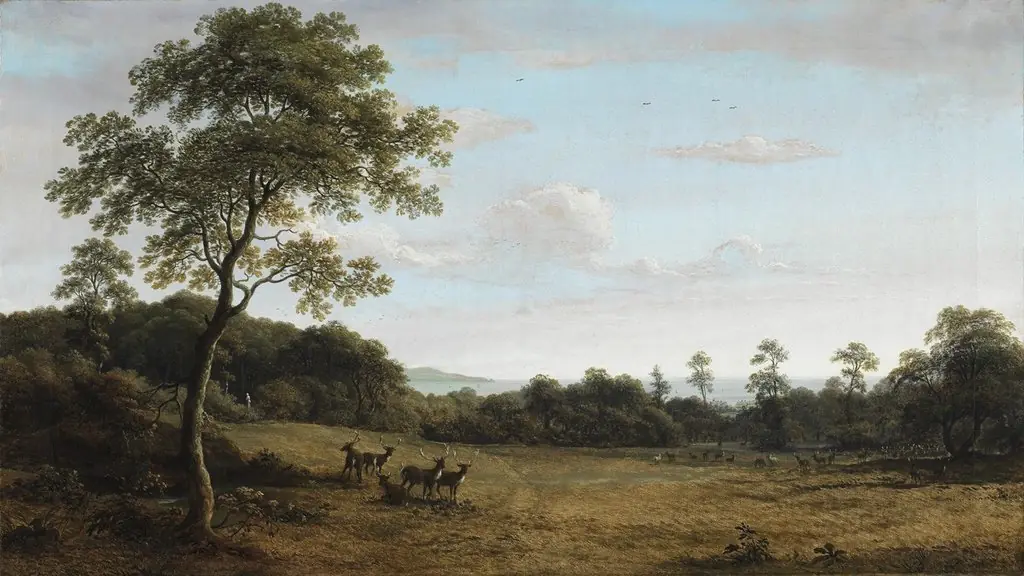 View in Mount Merrion Park
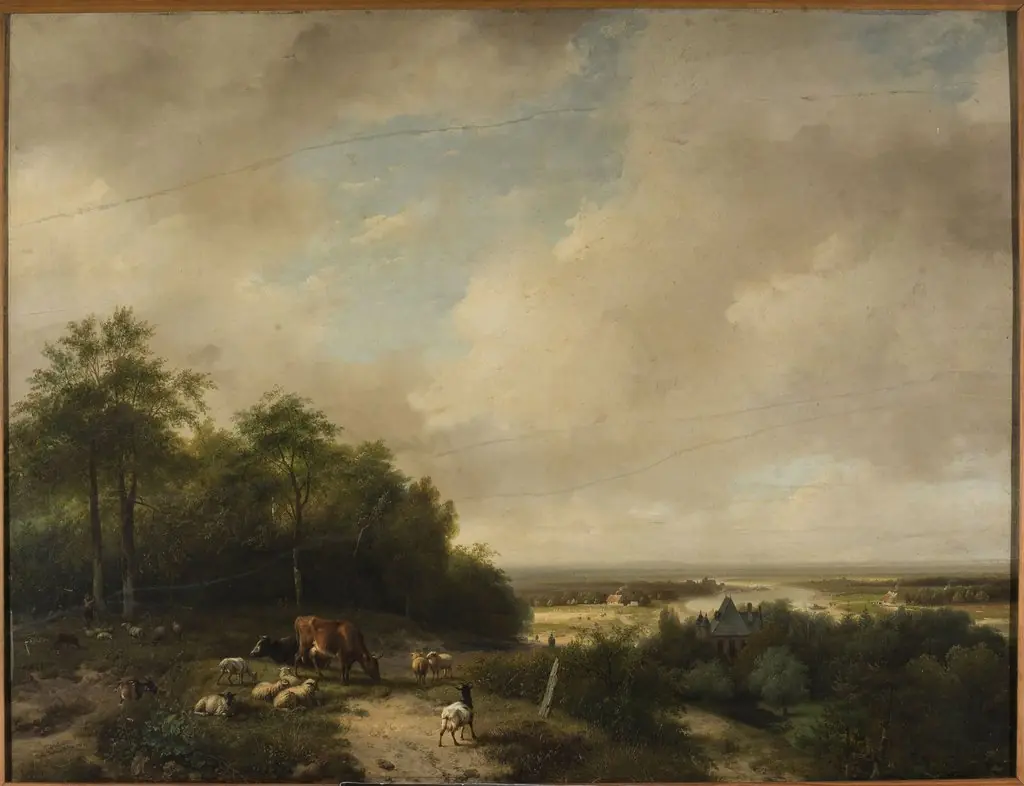 Landscape with a herd at the forest edge
 A Landscape