Artwork
Maisematutkielma, kopio Albert Flammin mukaan
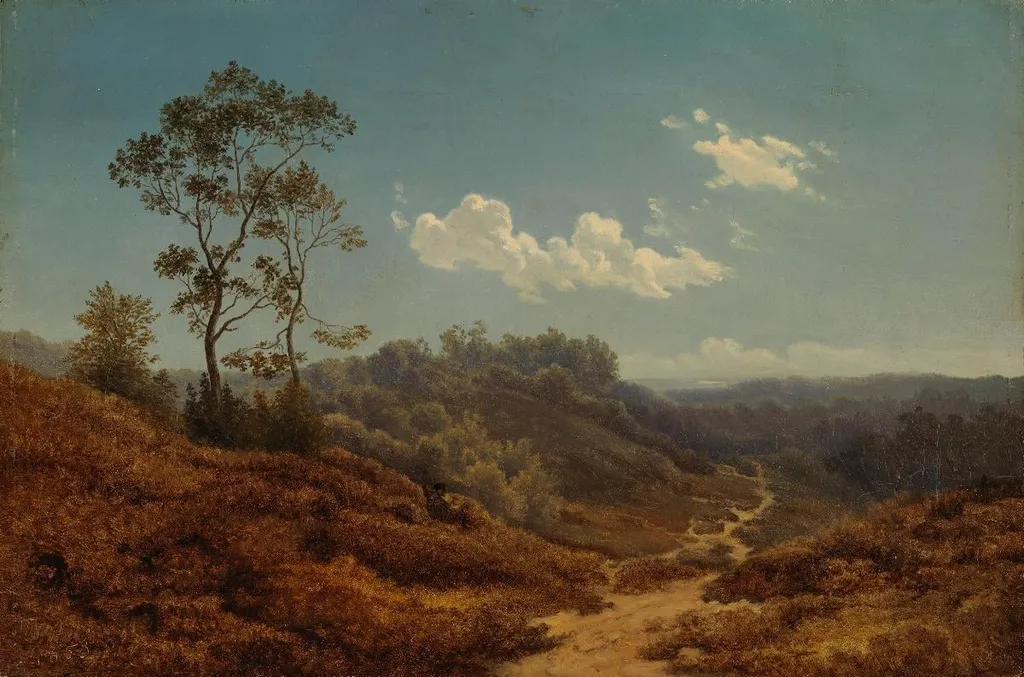
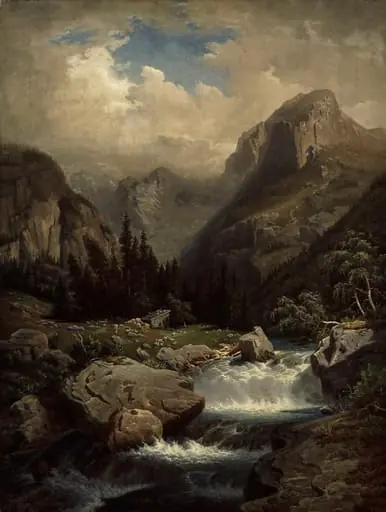
Maisematutkielma, kopio Albert Flammin mukaan is an unspecified painting by Augusta Soldan. It is held in the collection of the Finnish National Gallery. This work is a copy after Albert Flamm, depicting a tranquil rural landscape.
About this work
Overview
This work is a copy after Albert Flamm, depicting a tranquil rural landscape. A narrow dirt path ascends a gentle hill, dividing the composition into balanced halves. The scene is devoid of human figures, emphasizing stillness and solitude. The palette favors warm golds and browns for the terrain, contrasted by a clear blue sky and distant green foliage, creating a calm, atmospheric tone.
Subject & Meaning
The painting conveys quietude through absence: no people, animals, or signs of activity interrupt the landscape. The worn path suggests habitual use, yet the emptiness evokes contemplation. The lone bare tree on the left may symbolize resilience or transience, while the undisturbed hills and sky reinforce a sense of enduring natural order.
Technique & Style
The artist carefully modulates light to distinguish warm sunlit areas from cooler shadows, enhancing the illusion of depth. Brushwork is restrained, favoring smooth transitions over texture. The horizon line is low, allowing the sky to dominate, while the path’s subtle recession guides the viewer’s eye upward through the hillside.
History & Provenance
This image is a reproduction following the style of Albert Flamm, a 19th-century Finnish landscape painter known for his serene rural views. The copy likely dates from the late 1800s or early 1900s, made by an artist studying Flamm’s approach. Its origin as a copy suggests it was used for educational or personal study rather than public display.
Context
During the late 19th century, Finnish artists increasingly turned to domestic landscapes as expressions of national identity. Flamm’s quiet scenes, like this one, resonated with a cultural shift toward valuing the ordinary and unadorned. Copies of such works were common among students and amateur painters seeking to refine observational skills.
Legacy
Though not an original work by Flamm, this copy preserves his compositional sensitivity to light and space. It reflects the broader practice of artistic emulation in 19th-century Nordic art education. The painting’s quiet aesthetic continues to align with later Finnish landscape traditions, notably those of Augusta Soldan, who similarly favored understated naturalism.
Artist & collection
Artist
Augusta Soldan spent her life staring at other artists’ landscapes until she could paint them from memory.

 Vue aux environs de Lyon
 Landschap
 Near Penshurst, Kent
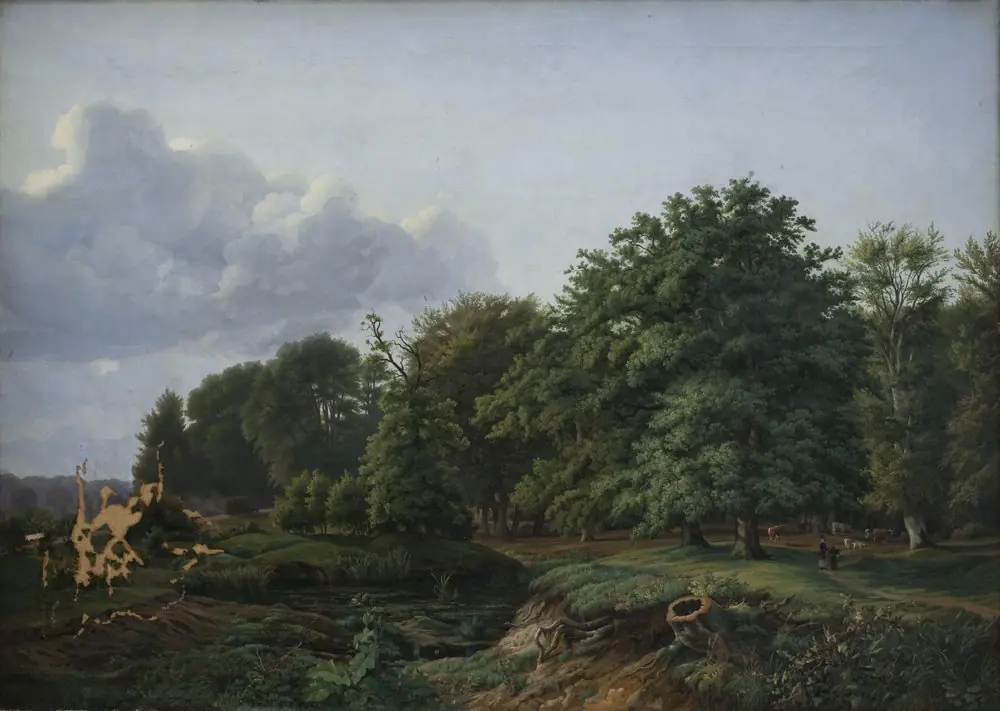 A Forrest near Hellebæk in the North of Zealand. Afternoon.
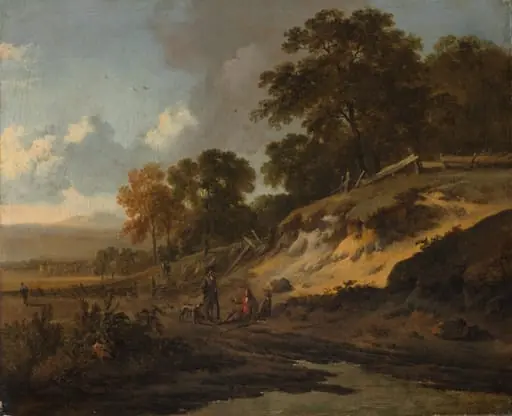 Landscape with Hunters
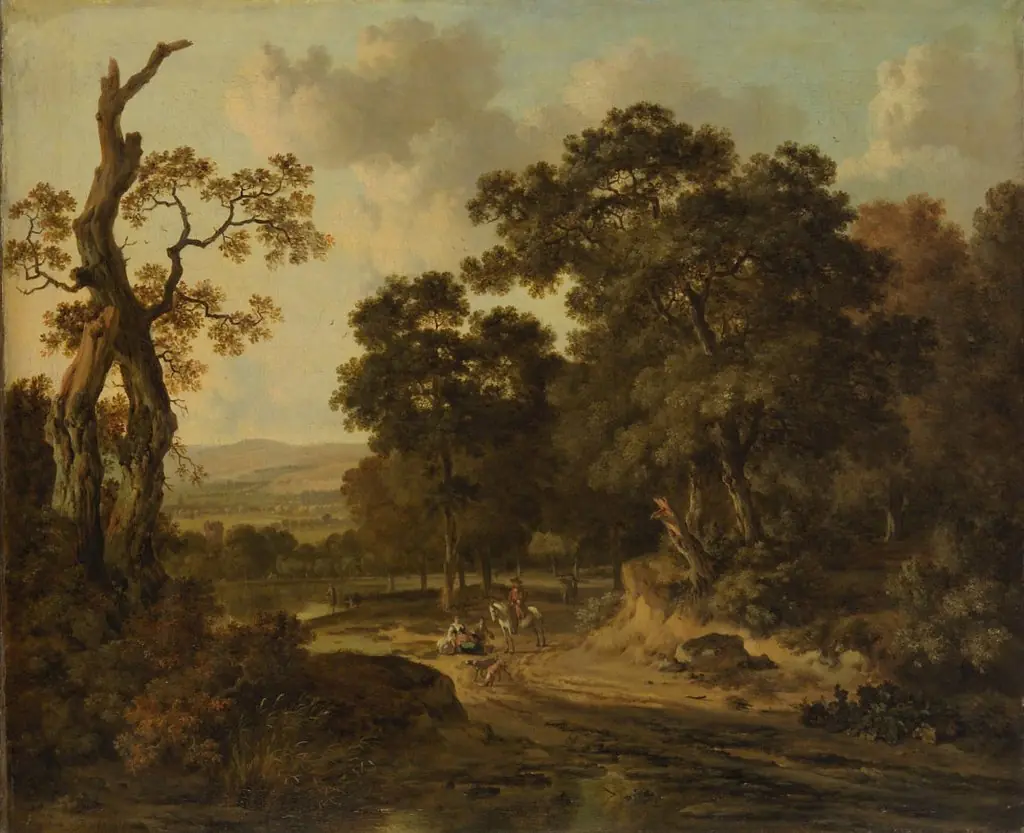 Waldeingang
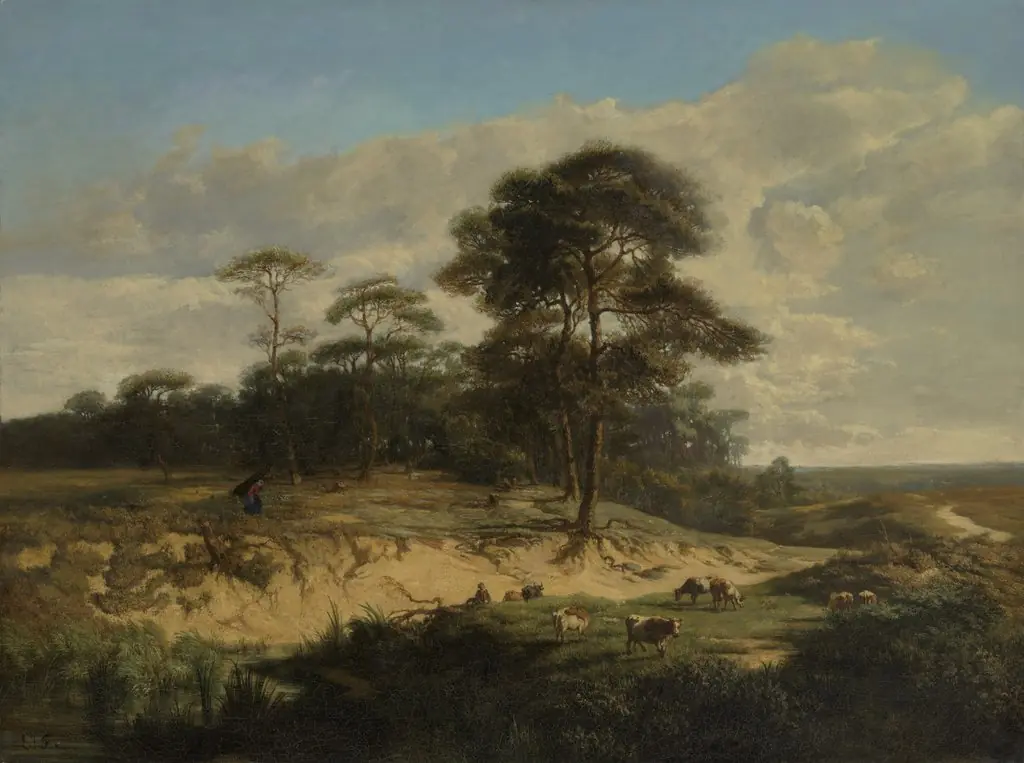 Landscape near Kalmthout
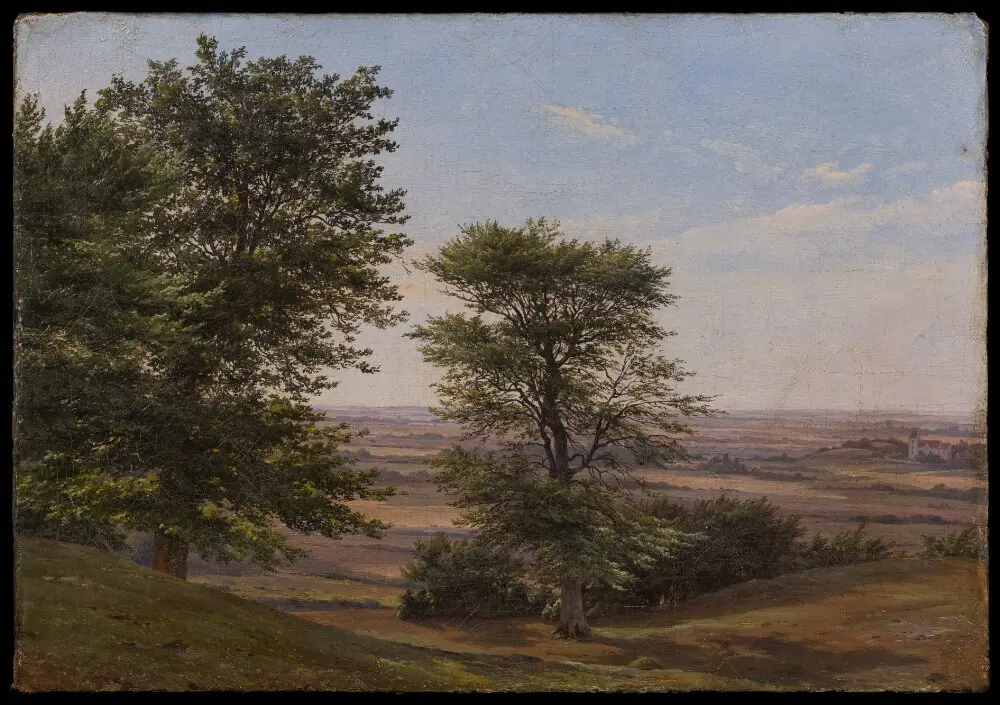 Landscape with Oaks
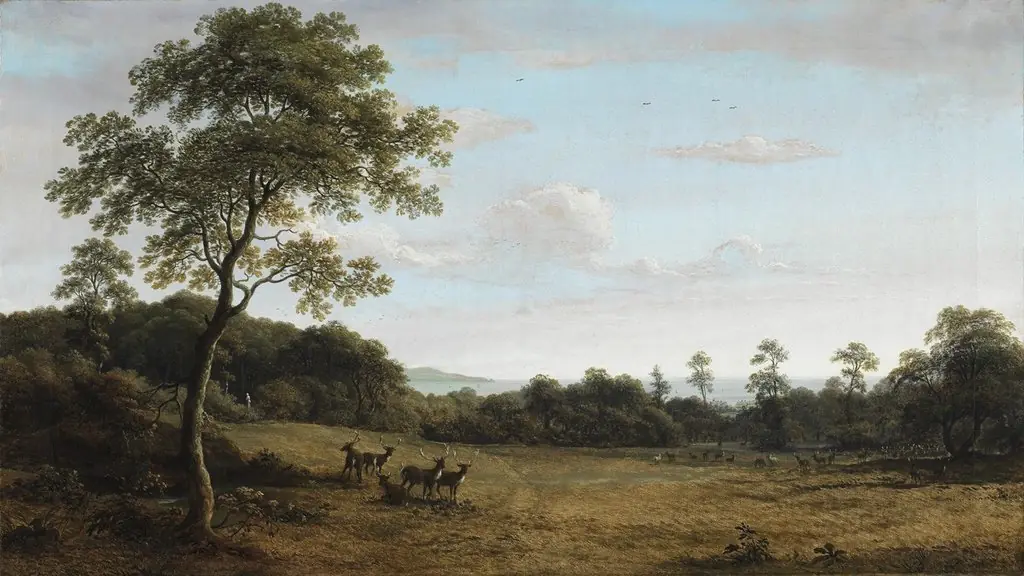 View in Mount Merrion Park
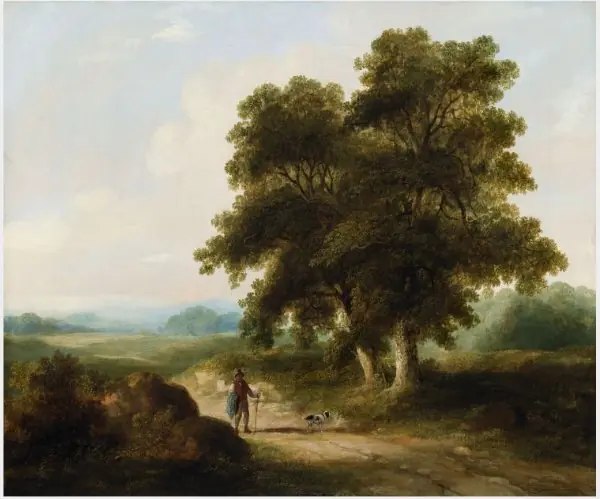 A Landscape, Homeward Bound
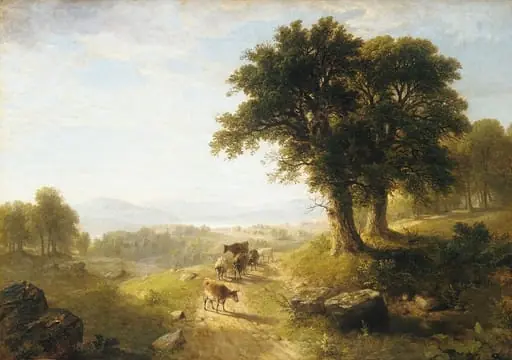 River Scene
 Baijerilainen vuoristomaisema, kopio Franz Hengsbachin mukaan